
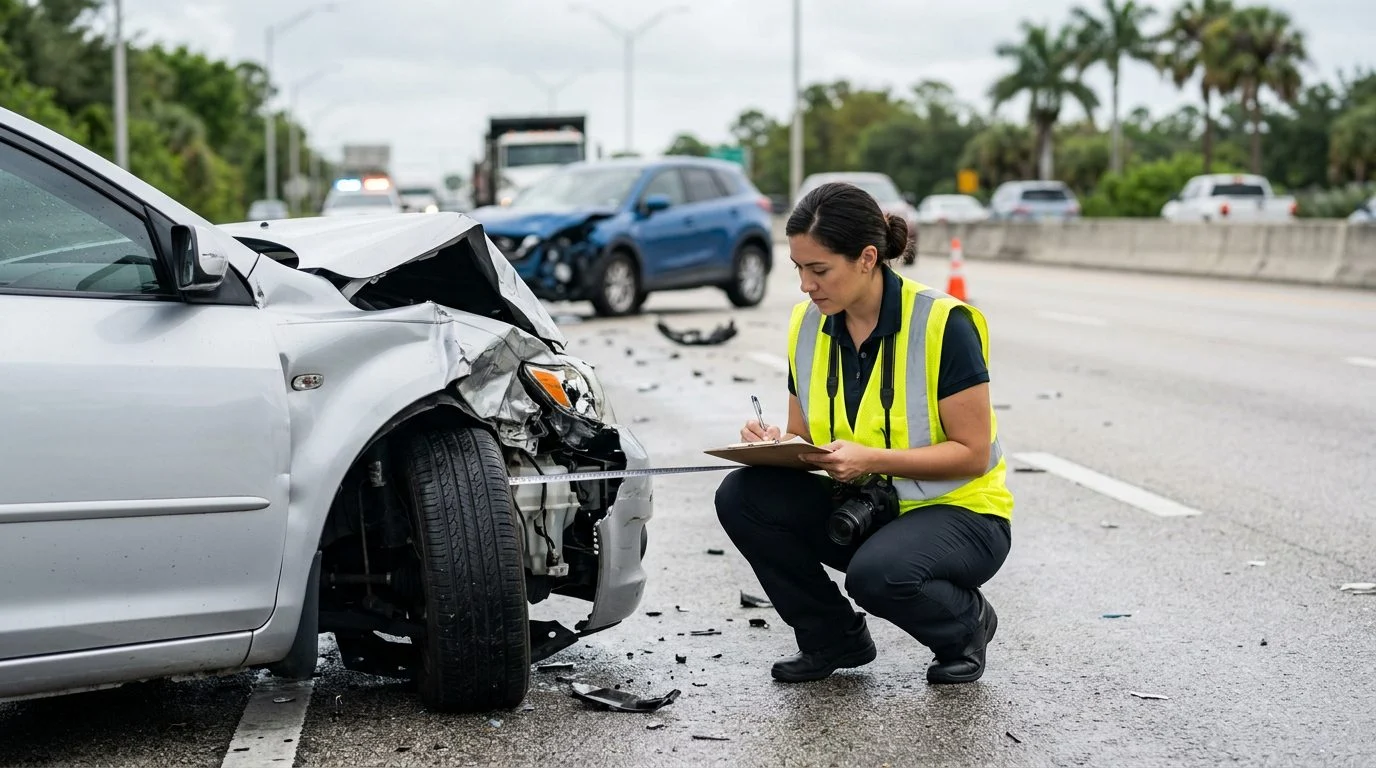
Florida Car Accident Claims
Waiting on Car Accident Settlement Money in Florida? Here's What Shapes the Timeline
Every claim moves at its own pace. This guide explains, in plain language, what affects how long a settlement takes, from CHG Personal Injury Lawyers, a Florida-based firm.
About CHG Personal Injury Lawyers
Florida
Florida-based personal injury firm
Free
Confidential first consultation, no obligation
Licensed
Attorneys admitted to The Florida Bar
By CHG Lawyers · Published October 21, 2026
How Long Does It Take to Get Settlement Money From a Car Accident in Florida?
Igor Hernandez, CHG Personal Injury Lawyers, Miami, Florida
There is no single answer for how long it takes to get settlement money from a car accident in Florida. The time depends on your injuries, your medical care, who caused the crash, how the insurer reviews the claim, and whether a lawsuit becomes necessary. Settlement money usually follows a signed agreement and a payout. Your bank’s clearing of the check is a separate step after that.
Not sure what your next step is?
Talk it through with our team — the first consultation is free, confidential, and carries no obligation.
Why There Is No Single Answer to How Long It Takes to Get Settlement Money From a Car Accident
No one can give you a fixed number of days or months for a car accident settlement. Each claim has its own facts, and results are never promised. Waiting for money while bills arrive and your body keeps healing is hard. That stress is real, and wanting clear answers makes sense.
Timing usually varies for four main reasons. First, injuries and treatment shape how long a claim stays open. A claim needs medical records that reflect the injury and the care. Second, fault may be disputed. Third, the insurance company reviews the claim on its own schedule. Fourth, some claims need a lawsuit before they settle. Your own facts decide which of these apply to you.
Factors That May Affect the Timeline of Your Settlement
Several factors can affect how long a claim takes, and most depend on the facts of the crash and your care. Medical treatment is one. Your records and bills document what happened and what care you received. That documentation may be relevant to a claim, depending on the facts. It does not promise a faster or larger payment. For background on how injuries are documented, read our soft-tissue injury guide.
Fault is another factor. When drivers disagree about who caused the crash, the review takes longer. Fla. Stat. § 768.81 governs how fault is apportioned, so fault disputes can matter a great deal to the final result.
Coverage is a third factor. Policy limits may not be known until the insurer discloses them. Under Fla. Stat. § 627.4137, an insurer that may provide liability coverage must provide a sworn statement of coverage within 30 days after a written request.
Finally, the number of people involved matters. Pedestrians, passengers, and multi-vehicle crashes can involve more parties and more steps. Our pedestrian accident claims guide covers those situations. A pedestrian claim depends on the same factors and on the specific facts of the crash.
The Main Stages From the Crash to a Settlement
A car accident claim usually moves through five stages, and each one can take its own amount of time. The stages can overlap, and not every claim follows the same order.
Stage 1: Reporting the crash. You, or someone acting for you, reports the crash and opens a claim with the insurer. Police reports and accident details become part of the file.
Stage 2: Medical care and records. You receive treatment, and your providers create records and bills. Those records must be gathered and reviewed. This stage often runs as long as your care continues.
Stage 3: Investigation. Those handling the claim gather evidence, such as photographs, witness statements, and vehicle damage records.
Stage 4: Demand and negotiation. A demand letter asks for a specific resolution. Negotiation may take several rounds before both sides agree or reach an impasse.
Stage 5: Settlement or lawsuit. If the parties agree, they sign a settlement agreement. If a fair resolution is not reached, a lawsuit may be needed. Any stage can take longer than expected, so plan for flexibility.
Florida Rules and Deadlines That Can Affect Timing
Florida statutes set rules on recovery and filing deadlines, and these rules can shape your timeline. Each rule depends on the facts, and exceptions may apply.
Under Fla. Stat. § 627.737, a plaintiff may recover damages for pain, suffering, mental anguish, and inconvenience only if the injury meets specific permanency criteria, and only in a tort action against the owner, registrant, operator, or occupant of a motor vehicle with required security, or against any person or organization legally responsible for her or his acts or omissions. Those include significant and permanent loss of an important bodily function, permanent injury within a reasonable degree of medical probability other than scarring or disfigurement, significant and permanent scarring or disfigurement, or death. The same statute lets a defendant ask the court to test whether the plaintiff can meet that threshold. That request can add steps before trial.
Comparative fault. Fla. Stat. § 768.81 governs how fault is apportioned. In a products liability action alleging that injuries received in an accident were enhanced by a defective product, the trier of fact considers the fault of all persons who contributed to the accident. Whether this applies depends on whether the case is a negligence action to which this section applies. Under Fla. Stat. § 768.81(6), in a negligence action, a party found more than 50 percent at fault for their own harm may not recover any damages. Florida’s comparative fault statute, Fla. Stat. § 768.81, provides that in a negligence action to which the section applies, a party found to be greater than 50 percent at fault for his or her own harm may not recover any damages. That rule does not apply to an action for damages for personal injury or wrongful death arising out of medical negligence pursuant to chapter 766. The same statute, Fla. Stat. § 768.81, states that its rules do not apply to an action to recover actual economic damages resulting from pollution. They also do not apply to an action based upon an intentional tort, or to a cause of action for which chapter 403, chapter 498, chapter 517, chapter 542, or chapter 895 specifically provides for the doctrine of joint and several liability. Under Fla. Stat. § 768.81(6), in a negligence action, the fault a court assigns to the injured person determines whether the 50 percent bar applies: a party found more than 50 percent at fault for their own harm may not recover any damages.
Under Fla. Stat. § 95.11, an action founded on negligence generally must be filed within two years. Under Fla. Stat. § 95.031, a cause of action accrues when its last element occurs, which is not always the crash date. Other rules may apply, so confirm your dates early.
Insurers and direct suits. Whether a claim can go forward directly against an insurer is a question of Florida law. A lawyer can review how it applies to your claim. This is one reason a claim often runs through settlement discussions with the insurer first.
What Happens After a Settlement Is Signed and When the Money Arrives
Once a settlement is agreed, you usually sign a release, the paperwork is finished, and then funds are paid out. Each step can take its own time.
A release is a written agreement that generally resolves the claim against the people it names. Under Fla. Stat. § 768.041, a release with one party generally does not release others who may be liable for the same tort. Read the terms carefully and ask questions before you sign.
Repayment claims often come next. Medical providers, health plans, and others may have rights to be repaid. Under Fla. Stat. § 768.76, in an action where liability is admitted or determined by the trier of fact and damages are awarded to compensate the claimant, a court reduces the award by collateral sources. There is no reduction for sources that hold a subrogation or reimbursement right. Any reduction is offset to the extent the claimant or family members paid, contributed, or forfeited to secure the collateral source benefit. Those rights can affect how much remains after repayment. These steps are why payment usually comes after the paperwork is complete, not right after the agreement.
The bank is the last step. Once a check is issued, the bank’s clearing process is separate. Clearing depends on the bank, the check type, and the bank’s own policies. This article gives no fixed number of days for clearing. Ask your bank and the responsible lawyer what applies to your payment.
Have questions about what happened?
Ask our team directly. The first conversation is free, confidential, and there is no obligation to continue.
Why Early Offers Come Quickly and What to Consider Before Accepting One
An early offer may arrive before the full extent of your injuries and treatment is known. That is why reviewing it carefully matters. An offer is a starting point for discussion, not a final judgment on your claim.
Before you respond, consider a few questions. Are your medical bills complete? Has your ongoing care been documented? Has lost income been recorded? Do you know which repayment claims may apply? Have any future medical needs been evaluated? Your answers may be relevant to whether the offer fits your facts.
Accepting an offer generally ends the claim against the parties covered by the release. So the decision should rest on the facts of your case, not on pressure to close the file. In a lawsuit, offers of judgment follow separate rules. Under Fla. Stat. § 768.79, if a plaintiff does not accept a defendant’s offer of judgment within 30 days, and the judgment is one of no liability or is at least 25 percent less than the offer, the defendant is entitled to recover reasonable costs and attorney’s fees from the date the offer was filed, and the court sets them off against the award, but the court may, in its discretion, decide the offer was not made in good faith and disallow the award. This matters at the litigation stage, not at the start of a claim.
Florida-Specific Considerations for Car Accident Claims
Florida statutes govern car accident settlements for drivers, passengers, and pedestrians in Miami, Orlando, Tampa, Jacksonville, and other Florida communities. Each case still depends on its own facts, and no result can be promised.
Miami readers can learn more on our Miami car accident page. For an overview of Florida practice, see our Florida personal injury lawyers page. For the basics of fault in Florida, read our comparative fault explainer (Fla. Stat. § 768.81(6)).
Frequently Asked Questions About Car Accident Settlement Timing
How long does it take to get settlement money from a car accident?
It depends on your injuries, your treatment, fault, the insurer’s review, and whether a lawsuit is needed. No fixed timeline can be promised.
How long does it take to settle a pedestrian accident in Florida?
It depends on the facts of the crash and the same factors that affect other car accident claims. No timeline is promised.
Can a dollar amount be predicted from a general article?
No. A general article cannot predict what any claim may be worth, and results are not promised.
Do settlement checks clear immediately?
Not always. Clearing depends on the bank, the check type, and the bank’s own policies.
What happens after a settlement is signed?
Usually the release is finalized, repayment claims and paperwork are resolved, and then funds are paid out. The section above on settlement payouts explains each step.

Talk With Igor Hernandez About Your Car Accident Timeline
If you’re waiting on an insurer, juggling medical visits and bills, and wondering whether an offer is fair, you don’t have to work through the timeline alone. Igor Hernandez is the responsible lawyer for this page, and CHG Personal Injury Lawyers serves clients throughout Florida from its Miami office. Contact CHG Personal Injury Lawyers to ask about your situation. The initial consultation is free, confidential, and carries no obligation to continue.
CHG charges no attorney’s fees and no case costs unless there is a recovery. CHG no cobra honorarios de abogado ni costos del caso si no hay recuperación.
Want to know where you stand?
Tell us what happened and our team will walk you through the options available to you, at no cost.
What Affects How Long Settlement Money Takes
Your injuries and treatment
Settlement talks usually begin once your medical picture is clear enough to understand the full impact of the crash. Follow your doctors' care plan, even when your case is still under review.
Documentation
Medical records, bills, police reports, and proof of lost work all help build a complete claim. Gaps in paperwork can slow every step.
Insurance company review
Insurers investigate the crash, the coverage involved, and the damages claimed. How quickly they respond depends on the facts and on how many parties are involved.
Disputed fault
When the parties disagree about who caused the crash, the negotiation process often takes longer.
Whether a lawsuit is needed
If a fair resolution cannot be reached through negotiation, filing a lawsuit adds time, but it can also move the case forward when talks stall.
Think Before You Sign
An early offer from an insurance company may arrive quickly, but it may not reflect your full medical needs or long-term losses. Speak with a lawyer before you accept any payment or sign a release.
Steps That Can Help Protect Your Claim
Keep every record
Save medical bills, visit notes, pharmacy receipts, pay stubs, photos, and correspondence with insurers.
Keep up with treatment
Attend appointments and follow your doctors' instructions. Ask your providers about any questions regarding your care.
Limit statements to insurers
Be cautious about recorded statements and social media posts about the crash. Let a lawyer help you respond to insurance requests.
Act promptly
Deadlines apply to car accident claims in Florida. Contacting a lawyer early gives your case the best chance to be organized from the start.
Have Questions About Your Car Accident Claim? Talk With Us.
Related practice areas
- Car Accident Settlements in Florida: What Your Case May Be Worth
- Nerve Injury From a Car Accident: Ulnar Nerve and Compensation in Florida
- Wrongful Death After a Car Accident in Florida: Steps for the Family Left Behind
- Rotator Cuff Tear After a Car Accident: Records, Coverage, and Claims in Florida
- Car Accidents in Florida
- Car Accidents in Miami
- Car Accidents in Orlando
- Soft Tissue Injuries After a Car Accident: What They Are and Why Records Matter