

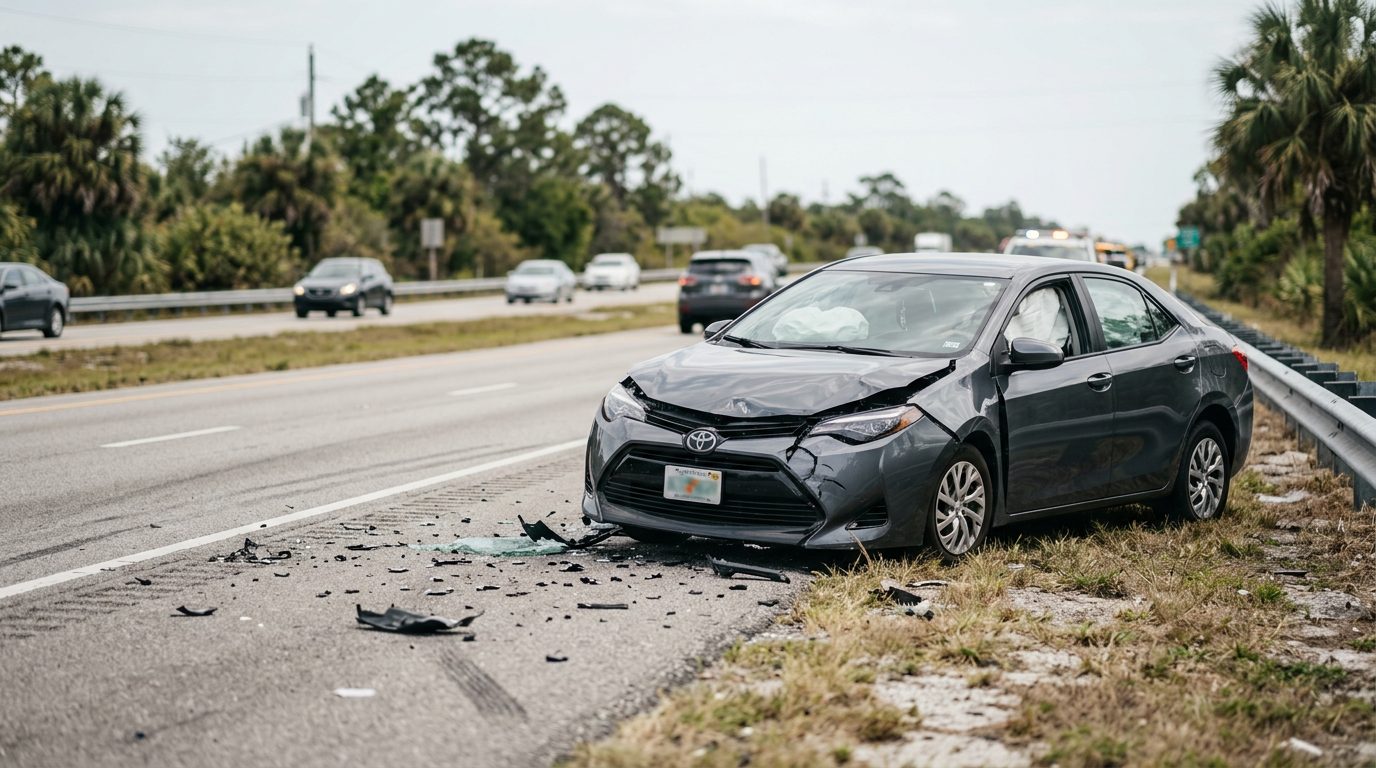
Florida Car Accident Guide
Hurt in a Florida Crash? Soft Tissue Injuries Deserve Careful Attention
Neck, back, and muscle injuries can change daily life. Learn how Florida law may apply to your situation, and talk with CHG Personal Injury Lawyers about your options. CHG charges no attorney's fees and no case costs unless there is a recovery.
By CHG Lawyers · Published October 14, 2026
Soft Tissue Injury from a Car Accident in Florida: A Simple Guide
A soft tissue injury damages the muscles, ligaments, tendons, or connective tissue in your body. It can cause real pain. It may not show on a basic X-ray.
This guide explains:
- What these injuries are
- Why symptoms can be slow to appear
- How Florida’s injury rules may apply
- Which records matter
This is general information. It is not legal advice. Every case depends on its own facts.
If you were hurt in a crash and are still sorting out pain, bills, and insurance calls, our team can talk with you about your options in a free first consultation, confidential and without obligation. Talk it through with our team — the first consultation is free, confidential, and carries no obligation.
What a Soft Tissue Injury Means After a Car Accident
A soft tissue injury damages the muscles, ligaments, tendons, or connective tissue around your bones and joints. After a crash, you may feel it in your neck, back, shoulders, or hips.
Muscles move your body. Ligaments connect bone to bone. Tendons connect muscle to bone. A sudden jolt can stretch, bruise, or tear any of them in a moment.
Doctors use several terms for these injuries:
- Sprain: a stretched or torn ligament.
- Strain: a stretched or torn muscle or tendon.
- Contusion: a bruise to muscle or other soft tissue.
- Whiplash: a neck injury caused by a sudden back-and-forth movement of the head.
Medical terms vary by provider. Your records may use different words for the same problem. That is normal. It is worth noting when you review them.
A soft tissue injury can be serious even when a basic X-ray looks normal. Only a medical provider can diagnose your injury. Only a provider can decide which tests you need.
Describe all your pain fully. Include how it affects your sleep, your work, and your daily tasks.
Why Symptoms Can Appear Hours or Days After a Crash
Pain, stiffness, or headaches can start after a crash. They do not always start right away.
Some people feel shaken but mostly okay at the scene. Later that day, or in the days that follow, they notice symptoms.
Adrenaline, a hormone your body releases under stress, may hide pain for a while. This is a possibility, not a certainty. It varies from person to person.
Feeling fine at the scene does not mean you were not hurt.
Report every symptom to a doctor, even mild ones. Describe:
- Where it hurts
- When it started
- What makes it better or worse
A record made close to the accident can help show what you reported and when.
Consider keeping a simple daily symptom log. Write down:
- Pain locations
- How strong the pain feels, on a scale you choose
- Activities you could not do
- Sleep problems
- Any medicine you took
You may find this useful when you talk with your doctor or a lawyer.
Waiting to see whether pain fades on its own carries a risk. Missed appointments can leave gaps in your records. Gaps can become a point of dispute later.
Warning Signs That Need Emergency Care
Get emergency medical care right away if you have numbness, tingling, or new weakness. Also seek urgent care for:
- Loss of bladder or bowel control
- A severe or worsening headache
- Confusion
- Chest pain
- Trouble breathing
These signs can point to injuries beyond soft tissue, such as spinal cord or brain injuries. Only a medical provider can evaluate them. If you cannot get to care safely, call 911.
According to NINDS spinal cord injury information, the spinal cord has three layers of protective tissue. Cerebrospinal fluid (the clear fluid around the spinal cord) surrounds it. This fluid acts as a cushion against shock or injury.
NINDS also describes cervical nerves C1 to C7. These are the nerves in your neck. They carry signals to the neck, shoulders, arms, hands, and diaphragm (the muscle below your lungs that helps you breathe). This is one reason neck symptoms that spread into the arms or hands need prompt medical evaluation.
Your health comes first. Questions about insurance and claims can wait until you have been checked.
Florida PIP: What Medical Coverage May Apply After a Crash
Florida’s Personal Injury Protection (PIP) coverage may help pay initial medical and disability benefits after a crash. PIP is a type of no-fault auto insurance coverage. They also depend on your policy.
Florida uses a no-fault system for many auto crashes. The PIP rules are in Fla. Stat. § 627.736. That statute governs medical and disability benefits.
The statute also sets conditions on when initial care must be received. Timing matters. The statute also lists exclusions. One exclusion covers injuries suffered while committing a felony.
PIP is a benefit paid under an insurance policy. It is not, by itself, a claim against the driver who caused the crash. Keep that difference in mind when you read insurance letters.
Coverage depends on your policy and the facts of your case. Do not assume PIP will cover all your bills.
Ask for your policy terms in writing. Keep a record of every claim you submit and every decision you receive.
Pain and Suffering Claims and the Florida Permanency Threshold
In a Florida car accident case, pain and suffering damages generally require meeting a permanency threshold. This is a required level of lasting injury. The threshold comes from Fla. Stat. § 627.737.
Florida’s motor-vehicle statute, Fla. Stat. § 627.737, sets conditions on when a person may bring a claim for pain, suffering, mental anguish, and inconvenience. This is generally true only if the injury meets certain conditions. The injury must consist, in whole or in part, of:
- A significant and permanent loss of an important bodily function
- A permanent injury within a reasonable degree of medical probability (a level of medical certainty), other than scarring or disfigurement
- Significant and permanent scarring or disfigurement
- Death
Whether an injury meets this threshold depends on the medical evidence in each case. The statute also has conditions and exceptions. A general summary cannot decide your claim.
Under the statute, a defendant may file an appropriate motion asking the court, before the trial or pretrial hearing, to determine whether the plaintiff will be able to meet the statute’s conditions. Medical documentation of permanency may matter early for that reason.
Florida’s comparative fault rule is in Fla. Stat. § 768.81. Comparative fault means each party’s share of blame. In a negligence action, the court enters judgment against each party. The judgment is based on that party’s percentage of fault. Your own share of fault may reduce what you can recover.
The rules that apply depend on the facts of your claim.
Not sure what your next step is?
Talk it through with our team — the first consultation is free, confidential, and carries no obligation.
How Soft Tissue Injuries Are Documented and Proven
Medical records, provider notes, and imaging results (such as X-rays and MRIs) may be among the most important documents in a soft tissue claim. Scene evidence can matter too.
Documentation that may be relevant includes:
- Emergency room, urgent care, and follow-up visit records
- Imaging reports, if your provider ordered tests
- Photos of your vehicle, the scene, and your visible injuries
- The police report and the names of any witnesses
- Bills, receipts, and records of prescriptions and therapy
A medical provider’s opinion about whether the crash caused your injury can be part of the proof. It is evidence to weigh. It is not a promise of how a case will turn out.
The other side may raise gaps in treatment, inconsistent statements, or prior injuries. Tell your doctor about past neck or back problems. This keeps your records accurate.
Florida law also addresses how medical expenses are proven. Where applicable, they must be coded under CPT or HCPCS codes (standard medical billing codes) in effect when services were rendered.
The statute also addresses whether treatment was referred under a letter of protection. A letter of protection is a promise of payment from any judgment or settlement.
Keep copies of all bills, letters, and insurance communications from the start.
Lost Wages, Medical Bills, and What Affects a Claim
Medical bills and lost income are economic losses. They may be part of a claim, depending on the facts and the rules that apply.
Florida’s comparative fault statute, Fla. Stat. § 768.81, defines economic damages. The definition includes past lost income and medical expenses, among other items.
We cannot give a dollar amount or a range for any case. A claim’s value depends on the specific facts, the medical evidence, fault, and the rules that apply. No one can predict that from general information.
Start a folder for work records. Save:
- Pay stubs
- Work schedules
- Any letter from your employer about missed days or changed duties
Write down each day you could not work, and why.
Your situation may differ from others. This is true even when injuries look similar on paper.
Florida Deadlines and Why Timing Matters
Florida sets time limits for filing lawsuits. These limits can be short. The details of your claim matter.
The general deadline for many negligence lawsuits is in Fla. Stat. § 95.11.
Accrual rules and exceptions depend on the facts. Accrual is the point when the clock starts. A general summary cannot tell you your deadline.
Section 95.11 also sets separate limits for medical malpractice claims. For those claims, it generally allows two years. The two years run from the incident, or from when it was or should have been discovered. The outer limit is four years. Exceptions apply.
Different deadlines can apply to PIP claims, claims against government entities, and other claim types. This page is general information only.
Review your situation promptly. Waiting can make it harder to gather records, photos, and witness information.
Talk With CHG Personal Injury Lawyers About Your Accident
You may be reading this while in pain. You may be handling medical bills or returning insurance calls. You may be helping a family member who was hurt in a crash.
You do not have to sort out the medical, insurance, and legal questions alone.
Common Questions
Does every soft tissue injury need an MRI?
Not every injury needs the same tests. A medical provider decides which tests are needed.
Can I recover pain and suffering after a Florida car accident?
Florida’s motor-vehicle statute, Fla. Stat. § 627.737, sets conditions on these claims, including a permanent-injury requirement, so the answer depends on the facts of each case. Comparative fault may limit recovery.
What is a letter of protection?
It is an arrangement. A provider treats you in exchange for a promise of payment from any judgment or settlement.
Igor Hernandez is the lawyer responsible for this page. Our practice covers personal injury cases, including car accidents, truck accidents, and slip and fall cases. We represent people throughout Florida.
If you want to talk through your accident, our team can review the facts with you. We offer a free first consultation. It is confidential and without obligation.
You can also read more in our car accident settlements guide for Florida.
CHG charges no attorney’s fees and no case costs unless there is a recovery. Every case is different. No result can be promised. Nothing on this page predicts the outcome of any claim.
Consulta en español:
CHG no cobra honorarios de abogado ni costos del caso si no hay recuperación. Ofrecemos una consulta inicial gratuita, confidencial y sin compromiso. Igor Hernandez es el abogado responsable de este contenido, admitido en Florida como miembro de The Florida Bar.
Lawyer responsible for this page:
Igor Hernandez, admitted in Florida as a member of The Florida Bar.
How CHG Personal Injury Lawyers Can Help
Florida Focus
CHG is a Florida-based personal injury practice that serves people hurt in crashes across Florida, including in Miami, Orlando, Tampa, and Jacksonville.
Organized Claim Review
We help you gather and organize the medical records, crash reports, and other documents that may matter to your claim.
Support for Your Family
We keep you informed in plain language, so you can focus on your recovery while we handle the legal details.
Clear Fee Terms
CHG charges no attorney's fees and no case costs unless there is a recovery.
Do Not Skip the Medical Check
Feeling okay at the scene does not rule out an injury. After any crash, ask a medical provider to evaluate you, and follow the care plan you are given. Keep copies of every record and bill.
Steps to Take After a Florida Car Accident
1. Get Medical Care
Let a medical provider evaluate your neck, back, and muscles. Your health comes first, and clear medical records help document your condition.
2. Document the Scene
If it is safe, take photos of the vehicles, the roadway, and visible injuries. Write down what you remember while it is fresh.
3. Keep Your Records
Save crash reports, insurance correspondence, receipts, and notes about missed work or daily limits caused by your injury.
4. Speak With CHG
Contact CHG Personal Injury Lawyers for a free, confidential first consultation with no obligation to continue.