

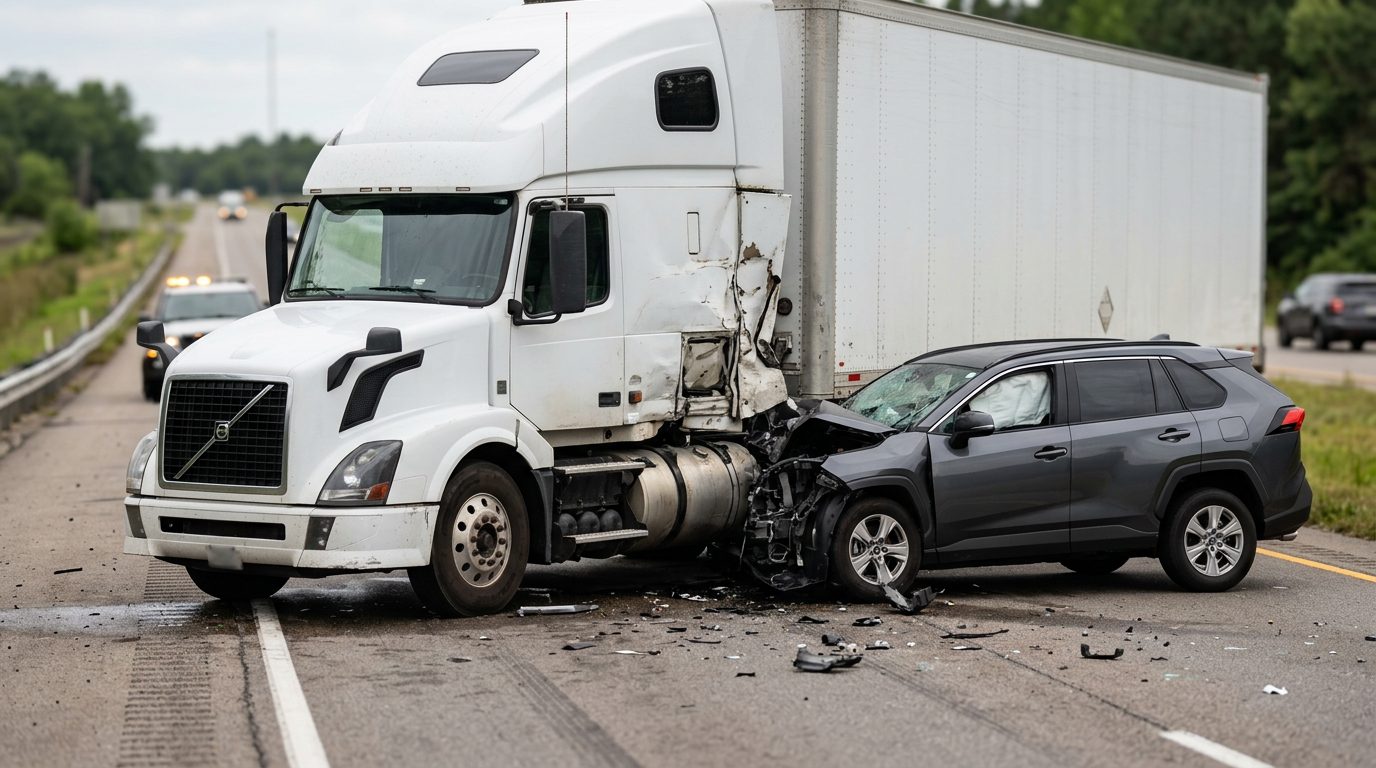
T-Bone Accidents
Understanding T-Bone Accident Settlements
What factors determine payout value, and how to protect your claim
By CHG Lawyers · Published September 07, 2026
T-Bone Accident Settlement: Average Payout & Compensation Guide
An average payout for a T-bone accident typically ranges from $5,000 for minor injuries to $1,000,000 or more for catastrophic injuries. The exact amount depends on injury severity, liability clarity, insurance limits, and evidence strength. This guide explains what your T-bone accident claim may cover, what drives settlement value, and how to pursue fair compensation.

Not sure what your next step is?
Talk it through with our team — the first consultation is free, confidential, and carries no obligation.
What Is a T-Bone Accident and Why It’s Dangerous
A T-bone accident is a side-impact collision. One vehicle strikes the side of another, usually at an intersection when a driver fails to yield, runs a red light, or turns left into oncoming traffic.
The side of a vehicle has far less protection than the front or rear bumper. People on the impact side face severe injury risk.
Common injuries include: – Broken bones – Internal injuries – Spinal cord damage – Traumatic brain injury
The force transfers directly into the passenger compartment. This often causes permanent, life-altering injuries.
What a T-Bone Accident Claim Covers
Your claim can include both economic and non-economic damages.
Economic damages are out-of-pocket costs: – Emergency and ongoing medical care (surgery, rehabilitation, therapy) – Lost wages and lost earning capacity – Vehicle repair or replacement – Transportation and home care or modifications – Medical equipment and mobility aids
Non-economic damages compensate for pain and suffering: – Physical pain and emotional distress – Loss of enjoyment of life – Permanent scarring, disfigurement, or disability – Loss of consortium (loss of companionship if a family member was injured)
Wrongful-death damages apply if someone was killed: – Funeral and burial expenses – Lost financial support to the family – Loss of companionship and guidance
Punitive damages (rare) may apply if the driver acted with gross negligence or intentional misconduct.
Settlement Ranges: What the Data Shows
Settlement amounts for T-bone accidents vary based on injury severity:
| Injury Severity | Typical Range |
|---|---|
| Minor soft-tissue injuries | $5,000–$25,000 |
| Moderate injuries (significant fractures, moderate back/neck injury) | $25,000–$100,000 |
| Severe injuries (spinal cord injury, traumatic brain injury, amputation) | $100,000–$1,000,000+ |
These ranges reflect published settlement data but aren’t predictive of your case. Each claim is unique.
A 25-year-old with a spinal cord injury faces decades of care and lost earning potential. That commands a far higher settlement than a 65-year-old with the same injury.
A case with clear liability settles faster and often for more. If the other driver ran a red light and hit you broadside, liability is strong.
Factors That Determine Your Settlement Value
Severity of injury is the primary driver. Catastrophic injuries—paraplegia, quadriplegia, traumatic brain injury, amputation—command settlements in the hundreds of thousands or millions. They affect lifetime earning capacity, require ongoing medical care, and cause permanent impairment.
Liability and fault matter enormously. Under Florida Statute §768.81, Florida follows a “modified comparative negligence” rule. You can recover even if partially at fault, but your recovery is reduced by your percentage of fault. If the other driver clearly violated your right-of-way, liability is strong and settlement value rises.
Medical evidence strengthens your claim. Comprehensive documentation of injuries, ongoing treatment, expert medical testimony, and imaging (CT scans, MRI) all support higher valuations.
Lost income and earning capacity are calculated carefully. If the injury prevents you from working, your attorney calculates future lost wages based on your age, occupation, and earning history.
Insurance policy limits cap recovery. If the at-fault driver has only $25,000 in liability coverage but your damages total $200,000, you recover $25,000 from their policy. Your own underinsured motorist (UM) coverage may bridge the gap. UM/UIM coverage is optional in Florida and applies only if you purchased it.
Evidence quality influences negotiation. Police reports, witness statements, traffic camera footage, and accident reconstruction reports all strengthen your position.
Common T-Bone Injuries and Settlement Impact
Broken bones and fractures typically settle for $15,000–$75,000, depending on recovery time and long-term complications.
Neck and back injuries range from $20,000–$150,000+. Chronic pain, disc herniation, or spinal cord involvement significantly increases value.
Traumatic brain injury (TBI) settlements range from $50,000–$500,000+ depending on cognitive and physical impairment, rehabilitation needs, and permanent disability.
Spinal cord injury and paralysis (paraplegia or quadriplegia) typically command $500,000–$5,000,000+ because of lifetime care, mobility aids, home modifications, and lost earning capacity. The Christopher & Dana Reeve Foundation reports that the average lifetime cost of care for someone with high tetraplegia (quadriplegia) exceeds $4.7 million.
Amputation or limb loss settlements range from $300,000–$2,000,000+ depending on which limb, your age, occupation, and prosthetic needs.
Severe burns affecting large body surface areas settle for $100,000–$1,000,000+ depending on reconstructive surgery needs and permanent scarring.
Have questions about what happened?
Ask our team directly. The first conversation is free, confidential, and there is no obligation to continue.
Who Is Typically at Fault in a T-Bone Accident?
The driver who violates the other’s right-of-way is usually at fault. Common scenarios include:
- Running a red light and striking a vehicle in the intersection
- Failing to yield at a stop sign
- Turning left in front of oncoming traffic
- Speeding through an intersection
- Distracted or impaired driving
Fault isn’t always one-sided. Both drivers may share fault if both were speeding, distracted, or violated traffic laws. Your attorney will analyze police reports, witness testimony, and traffic camera footage to establish fault and determine whether comparative negligence applies.
Sometimes a third party is also liable—a vehicle manufacturer (if a defect contributed), a city (for poor road maintenance or signal timing), or a business (if the accident occurred on their property).
How the T-Bone Accident Claims Process Works
Step 1: Immediate aftermath. Seek medical attention, call police, document the scene with photos, collect witness contact information, and report the accident to your insurance company.
Step 2: Investigation. Your attorney gathers the police report, your medical records, witness statements, and may hire an accident reconstruction expert. This establishes how the collision occurred and who was at fault.
Step 3: Demand letter. Your attorney sends a detailed demand letter to the at-fault driver’s insurance company. It outlines your injuries, medical treatment, lost wages, and settlement demand.
Step 4: Negotiation. The insurance company responds with a counteroffer. Negotiations continue until you reach a settlement or decide to proceed to litigation.
Step 5: Settlement or trial. If a settlement is reached, you receive compensation. If not, the case may go to trial before a judge or jury.
Timeline: Straightforward cases may settle in 3–6 months. Complex cases with severe injuries, disputed liability, or multiple defendants may take 1–3 years or longer.
Remember: Florida’s statute of limitations for personal injury claims is 2 years from the date of the accident. If you don’t file suit within that window, you lose the right to pursue your claim.
Why Settlement Amounts Vary So Widely
No two T-bone accidents are identical. Florida requires drivers to carry $10,000 in personal injury protection (PIP) and $10,000 in property damage liability; bodily injury liability coverage is not generally required (Fla. Stat. §§ 324.022, 627.736). The strength of evidence differs—clear liability cases settle faster and for more than disputed-fault cases.
Negotiation skill matters: experienced attorneys often secure significantly higher settlements than unrepresented claimants.
Jurisdiction and jury pool also influence outcomes. Settlements and jury verdicts vary by location and jury composition.
Most importantly, the long-term impact of the injury drives value. An injury that heals in weeks is worth far less than one causing permanent disability. Catastrophic injuries affect lifetime earning capacity, require ongoing medical care, and cause permanent impairment. Insurance companies adjust settlement offers accordingly.
Before You Accept a Settlement Offer
Don’t rush. Insurance companies often make low initial offers hoping you’ll accept quickly. Experienced attorneys know how to counter and negotiate.
Understand your damages. Make sure you’ve accounted for all medical costs, lost wages, future care, and non-economic damages before accepting.
Consider long-term impact. If your injury is permanent or will require ongoing treatment, ensure the settlement covers lifetime needs.
Get legal review. An attorney can advise whether an offer is fair and what your claim may be worth based on comparable cases.
Know finality. Once you sign a settlement agreement, you typically cannot pursue further claims related to that accident.
Want to know where you stand?
Tell us what happened and our team will walk you through the options available to you, at no cost.
Frequently Asked Questions
What is the average payout for a T-bone accident?
Settlement value ranges from $5,000 for minor injuries to $1,000,000+ for catastrophic injuries. Your specific case depends on injury severity, liability, and damages.
How much of a settlement will I get after attorney fees and costs?
Attorneys typically take 33–40% of the settlement as a contingency fee. Medical liens or other costs may apply. Your attorney will explain all deductions upfront.
Can I recover if I was partially at fault?
Yes, under Florida’s comparative negligence rule. Your recovery is reduced by your percentage of fault, but you can still recover unless you’re more than 50% at fault.
How long does a T-bone accident claim take?
Simple cases may settle in 3–6 months. Complex cases with severe injuries may take 1–3 years.
What if the at-fault driver has no insurance or insufficient coverage?
Your own uninsured motorist (UM) or underinsured motorist (UIM) coverage may apply. Your attorney can pursue this claim on your behalf.
Do I need an attorney?
While not required, an experienced attorney typically secures significantly higher settlements than unrepresented claimants. They handle all negotiations and paperwork.

Why CHG Personal Injury Lawyers Handles T-Bone Accident Claims
We focus exclusively on serious personal injury cases, including those arising from severe T-bone accidents that cause spinal cord injury, traumatic brain injury, amputation, and permanent disability. We represent clients nationwide, bringing consistent, high-level advocacy regardless of where your accident occurred.
Our team is licensed to practice in Florida and brings deep knowledge of Florida accident law and insurance practices. We work on contingency—you pay nothing unless we recover compensation for you. We provide bilingual support in English and Spanish and are prepared to negotiate aggressively with insurers or take cases to trial if necessary to secure fair compensation.
We gather police reports, medical records, witness statements, and expert testimony to build the strongest possible case. We understand that catastrophic injuries change lives, and we’re committed to helping you recover what you deserve.
If you’ve been hit broadside at an intersection and are dealing with broken bones, back pain, or worse, you may have a claim against the driver who failed to yield. Contact us for a free case evaluation.
No Settlement Is 'Average'
Every T-bone accident is different. Your payout depends on the severity of your injuries, the strength of liability evidence, your medical costs, lost wages, and other damages unique to your situation. Do not rely on online settlement calculators or generic ranges—your case deserves an individual review by someone who knows the facts.
Key Factors That Affect Settlement Value
Injury Severity
Medical records, diagnosis, treatment, and prognosis all matter. Catastrophic injuries—spinal cord damage, traumatic brain injury, amputation—typically result in higher claims than minor soft-tissue injuries, but every case is evaluated on its own merits.
Liability and Evidence
Clear proof of fault strengthens your claim. Police reports, witness statements, traffic camera footage, and accident reconstruction can all support your position—or complicate it. Strong liability evidence is essential.
Damages: Economic and Non-Economic
Economic damages include medical bills, surgery, rehabilitation, lost income, and future care costs. Non-economic damages cover pain and suffering, emotional distress, and loss of quality of life. Both matter in settlement negotiations.
Insurance Coverage and Limits
The at-fault driver's policy limits cap what you can recover from their insurer. If damages exceed those limits, other sources (underinsured motorist coverage, your own policy) may apply—depending on your situation.
How We Approach Your T-Bone Claim
Thorough Investigation
We gather police reports, medical records, witness accounts, and accident scene evidence to build a clear picture of what happened and who is liable.
Accurate Damage Calculation
We document all medical expenses, lost income, ongoing treatment needs, and the real impact on your life—not guesses or industry averages.
Skilled Negotiation
Insurance companies have teams of adjusters trained to minimize payouts. We advocate for fair compensation based on the facts and the law.
No Pressure, No Rush
We work on contingency—no attorney’s fees unless there is a recovery. We take the time needed to build your case and pursue the best outcome for you.
Common Questions About T-Bone Settlements
What happens if I'm partially at fault?
Florida law allows you to recover damages even if you share some responsibility—as long as you are 50% or less at fault. Your recovery is reduced by your percentage of fault. This is called comparative negligence.
How long does a settlement take?
Simple cases may settle in months. Complex cases—especially those involving catastrophic injury, multiple parties, or disputed liability—can take longer. We focus on getting you fair value, not rushing to a quick deal.
What if the case goes to trial?
Most cases settle before trial, but we are prepared to litigate if necessary. A jury will hear the evidence and decide liability and damages. We present your case clearly and persuasively.
How much does the attorney cost?
We work on contingency: no attorney’s fees unless there is a recovery. Attorney fees in personal injury cases are typically negotiated as a percentage of the settlement or judgment. We discuss this openly before taking your case.