

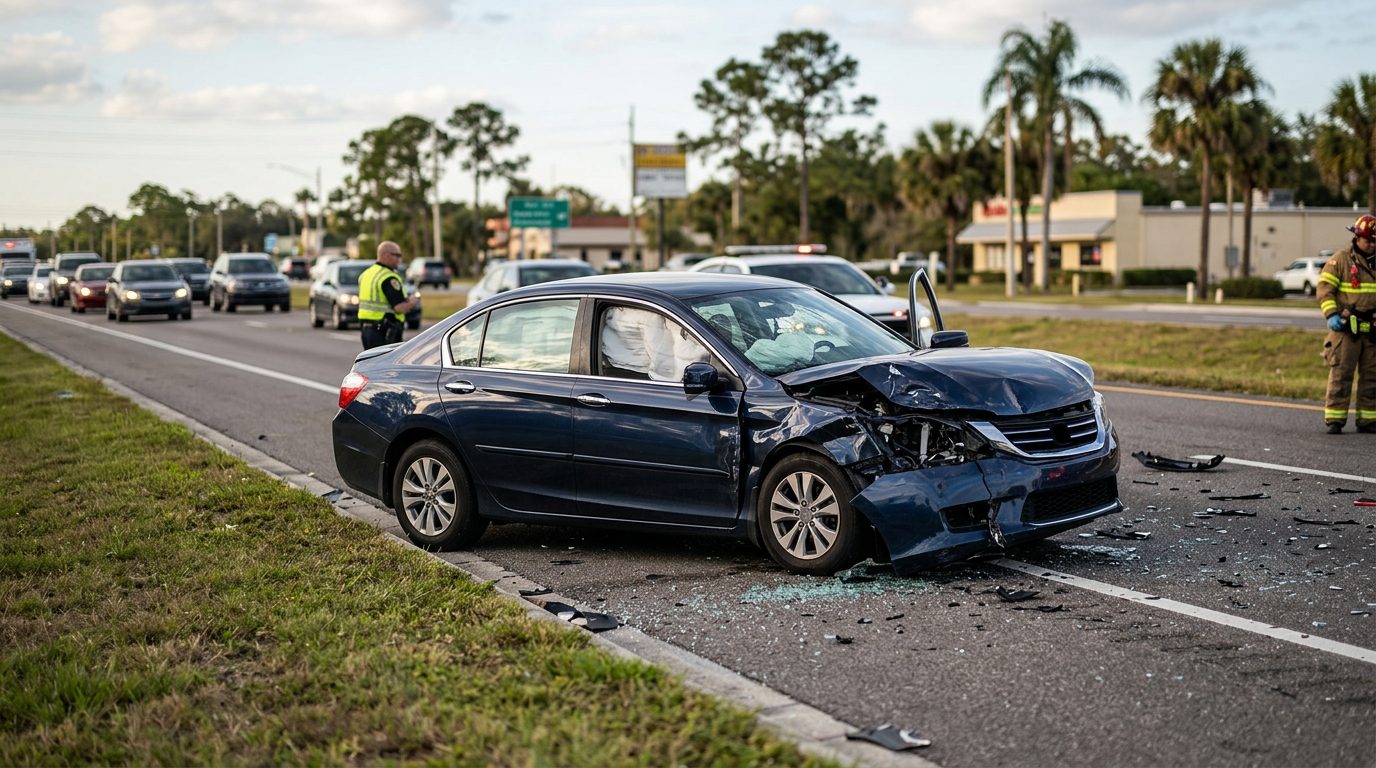
Truck Accidents
Why Fatal Truck vs. Car Accidents Are Different—and Why It Matters
When a commercial truck collides with a passenger vehicle, the injuries are often catastrophic. Learn what makes these crashes unique and what you need to know.
By CHG Lawyers · Published October 01, 2026
Wrongful Death From a Car Accident in Florida
When someone dies in a car accident caused by another person’s carelessness, Florida law lets the family file a wrongful death claim. This is a civil lawsuit—separate from any criminal case—that lets you recover money for your loss. If you’ve lost a loved one in a fatal crash, understanding how wrongful death claims work is your first step toward protecting your family.
Not sure what your next step is?
Talk it through with our team — the first consultation is free, confidential, and carries no obligation.
What Is a Wrongful Death Claim?
A wrongful death claim is a civil lawsuit filed when someone dies because of another person’s negligence or wrongdoing. In plain terms: if someone else’s careless driving caused the crash that killed your family member, Florida law gives you the right to sue for damages.
This is separate from criminal charges. A wrongful death claim doesn’t require the other driver to be convicted of a crime. You only need to prove the other driver was negligent. That means they owed your family member a duty to drive safely, they broke that duty, and they caused the fatal accident.
The burden of proof is lower in a civil claim than in criminal court. Families often recover damages even when criminal charges don’t lead to conviction.
Who Can File a Wrongful Death Claim in Florida?
In Florida, the wrongful-death claim is filed by the personal representative of the estate on behalf of the survivors, such as the spouse, children and parents (Fla. Stat. § 768.20).
The claim seeks compensation for the family’s losses—not to punish the other driver. Damages go to people left behind who depended on the deceased for income, care, or emotional support.
What Damages Can a Family Recover?
Under Florida law, a wrongful-death action is brought by the decedent’s personal representative for the benefit of the survivors and estate, and the decedent’s own personal injury claim does not survive death.
Economic damages include:
- Lost income and financial support the deceased would have provided
- Medical expenses from the accident
- Funeral and burial costs
- Estate administration costs
Non-economic damages include:
- Loss of companionship, guidance, and emotional support
- Loss of parental care (if the deceased was a parent)
- Loss of spousal relationship and intimacy
The amount varies based on the deceased’s age, earning capacity, dependents, and family circumstances. A young parent with decades of earning potential typically has a higher claim than a retired person with no dependents.
How Is a Wrongful Death Claim Different From a Personal Injury Claim?
The key difference is who brings the claim and what losses are measured.
In a personal injury claim, the injured person sues for their own pain, suffering, medical bills, and lost income.
In Florida, the wrongful-death claim is filed by the personal representative of the estate on behalf of the survivors, such as the spouse, children and parents (Fla. Stat. § 768.20).
Another critical difference: the statute of limitations (the legal deadline to file). In Florida, you generally have two years from the date of death to file a wrongful death lawsuit. This deadline is strict. Missing it bars your claim entirely.
What Makes Truck Accident Cases Different?
Truck accidents are fundamentally different from car accidents. When they’re fatal, the differences matter enormously for your family’s claim.
Size and catastrophic injury. A fully loaded commercial truck weighs far more than a passenger car. The physics are devastating. Crashes between a commercial truck and a passenger car can result in serious injury or death.
Federal regulations and multiple liable parties. Commercial trucks and drivers are subject to strict federal regulations enforced by the Federal Motor Carrier Safety Administration (FMCSA). These rules govern hours of service, vehicle maintenance, driver qualifications, and cargo loading.
When a truck accident happens, liability often extends beyond just the driver. You may have a claim against:
- The truck driver
- The trucking company (for negligent hiring, inadequate training, or failure to maintain the vehicle)
- The cargo loader (if improper loading caused the crash)
- The truck or parts manufacturer (if a defect caused the accident)
- The shipper or broker
Electronic logging devices and black boxes. Many trucks also have onboard cameras and black boxes. This data is critical evidence. It can prove whether the driver was fatigued, speeding, or violating federal regulations.
Larger insurance policies. Commercial trucking companies carry much larger insurance policies than individual drivers. This means more resources are available to compensate your family.
Have questions about what happened?
Ask our team directly. The first conversation is free, confidential, and there is no obligation to continue.
The Wrongful Death Claims Process in Florida
A wrongful death claim typically follows these steps:
1. Investigation. Your attorney gathers the police report, witness statements, medical records, and accident reconstruction evidence. In truck cases, this includes ELD data and maintenance records.
2. Determining liability. Your attorney proves the other driver or trucking company was negligent and caused the death.
3. Calculating damages. Your attorney determines what your family’s losses are worth—lost income, funeral costs, lost companionship, and other damages specific to your situation.
4. Demand and negotiation. Your attorney sends a demand letter to the insurance company and negotiates a settlement. Many cases settle at this stage.
5. Filing a lawsuit. If the insurance company won’t offer fair settlement, your attorney files a lawsuit in court.
6. Discovery and trial. Both sides exchange evidence and testimony. If the case doesn’t settle, it goes to trial.
This process takes time—often one to three years or more. But a skilled attorney can move it forward efficiently while protecting your family’s rights.
Proving Negligence in a Fatal Car Accident
To win a wrongful death claim, you must prove negligence. Negligence has four elements:
- Duty of care. The other driver owed your family member a duty to drive safely and obey traffic laws.
- Breach of duty. The other driver violated that duty through careless or reckless conduct.
- Causation. The breach directly caused the accident and your family member’s death.
- Damages. Your family suffered losses as a result.
Common causes of fatal car accidents include speeding, distracted driving, impaired driving, reckless driving, failure to obey traffic signals, drowsy driving, and unsafe lane changes.
Evidence to prove negligence includes police reports, traffic camera footage, witness testimony, accident reconstruction analysis, and cell phone records.
Florida’s comparative fault rule matters here. Under Florida Statute §768.81, even if your family member was partially at fault, you can still recover damages. The only limit: the deceased cannot be more than 50% at fault. If the deceased was 30% at fault and the other driver was 70% at fault, your family recovers 70% of the damages.
The Statute of Limitations for Wrongful Death in Florida
You have two years from the date of death to file a wrongful death lawsuit in Florida. This deadline is absolute. If you miss it, your claim is gone forever.
This is why acting quickly matters. The sooner you contact an attorney, the sooner evidence can be preserved and witnesses can be interviewed. Memories fade, evidence disappears, and witnesses move away. Early action protects your family’s claim.
Working With Insurance Companies After a Fatal Accident
After a fatal accident, the other driver’s insurance company will likely contact your family quickly—sometimes within days. They may offer a settlement.
Don’t accept an early offer. Insurance companies know that grieving families are vulnerable. Early offers are almost always far below what the claim is actually worth.
Don’t sign anything or give a recorded statement without legal advice. Anything you say can be used against your claim.
Don’t communicate directly with the insurance company. Let an attorney handle all communications. Insurance adjusters are trained to minimize claims. An experienced attorney knows how to negotiate and protect your family’s interests.
What to Do Immediately After a Fatal Car Accident
In the immediate aftermath, your family is in shock and grief. But a few practical steps can protect your legal rights:
- Preserve evidence. Take photos of the accident scene, vehicle damage, road conditions, traffic signals, and weather.
- Obtain the police report. Request it from the police department.
- Get witness contact information. Ask anyone who saw the accident for their name and phone number.
- Keep all medical and funeral documentation. These records prove the damages your family suffered.
- Do not communicate with the other driver or their insurance company without an attorney present.
- Contact an attorney as soon as possible. An early consultation protects your rights.
How an Attorney Can Help Your Family
An experienced wrongful death attorney handles the legal and investigative work so your family can focus on grieving.
Your attorney will:
- Investigate the accident thoroughly and identify all liable parties
- Obtain and analyze all evidence, including police reports and medical records
- Handle all communications with insurance companies and opposing counsel
- Calculate fair damages based on your family’s specific losses
- Negotiate settlements or file a lawsuit and represent your family in court
- Manage the legal process from start to finish
Want to know where you stand?
Tell us what happened and our team will walk you through the options available to you, at no cost.
Frequently Asked Questions
Can my family recover damages if the deceased was partially at fault?
Yes. Under Florida’s modified comparative fault rule, your family can recover damages even if the deceased was partially at fault, provided the deceased was not more than 50% at fault.
How long does a wrongful death lawsuit take?
Most wrongful death cases settle within one to three years. Complex cases, especially truck accidents, may take longer.
What if the other driver doesn’t have insurance?
You may be able to recover from your own uninsured motorist coverage or from the at-fault driver’s assets.
Do I have to go to trial?
No. Most wrongful death claims settle before trial. But if the insurance company won’t offer fair compensation, your attorney can file a lawsuit and take the case to trial.
How much is my family’s wrongful death claim worth?
The value depends on the deceased’s age, income, number of dependents, and specific circumstances. An attorney can evaluate your family’s losses and provide an estimate.
Next Steps: Getting Help for Your Family
If your family lost someone in a fatal car or truck accident in Florida, the legal process may feel overwhelming on top of your grief. But you don’t have to navigate it alone.
Our firm handles catastrophic injury and wrongful death claims. We understand the urgency and the emotional weight of these cases. We’re here to handle the legal work while you focus on your family.
Learn more about how to file a wrongful death lawsuit in Florida and damages in wrongful death cases to understand what your family may be entitled to recover.
Contact us for a free case evaluation today.
What Sets Truck Accidents Apart
Severe Injury Risk
A fully loaded commercial truck can weigh 80,000 pounds or more—up to 30 times heavier than a passenger car. The force of impact often causes spinal cord injuries, traumatic brain injuries, amputations, and other catastrophic harm.
Complex Liability
Truck accidents may involve the driver, the trucking company, the vehicle owner, a maintenance contractor, or the cargo loader. Identifying all responsible parties requires thorough investigation and knowledge of federal trucking regulations.
Strict Regulatory Framework
Commercial trucks are governed by federal safety rules covering driver hours, vehicle maintenance, cargo securement, and inspection. Violations of these rules often point to negligence.
Lifelong Impact
Survivors of serious truck crashes face permanent disability, ongoing medical care, lost income, and profound changes to daily life. Damages reflect the full scope of that burden.
Key Differences in Truck vs. Car Accidents
Physics & Force
A truck's mass and momentum create far greater destructive force than a car-to-car collision. Injuries tend to be more severe, and recovery is often longer and more costly.
Insurance & Resources
Trucking companies carry commercial liability insurance with higher policy limits than personal auto policies. However, insurers aggressively defend these claims and often dispute liability.
Evidence & Investigation
Truck accidents leave behind electronic logs, maintenance records, driver logs, dashcam footage, and cargo manifests. These documents are crucial to proving negligence and holding the right parties accountable.
Damages & Compensation
Because injuries are typically catastrophic, damages claims are substantial and may include lifetime medical care, assistive equipment, home modifications, and lost earning capacity.
Act Quickly
Evidence at a truck crash scene—skid marks, vehicle positions, cargo debris, and witness statements—disappears fast. Trucking companies and their insurers move quickly to collect and preserve evidence in their favor. The sooner you contact a lawyer, the sooner we can secure the facts that support your claim.
Common Causes of Truck Accidents
Driver Fatigue
Federal rules limit how many hours a driver can work, but violations are common. Drowsy driving slows reaction time and increases the risk of a crash.
Improper Maintenance
Brake failure, tire blowouts, and steering problems can cause a truck to lose control. Companies that skip inspections or repairs put everyone at risk.
Overloading & Cargo Shifts
A truck loaded beyond its weight limit or with unsecured cargo is harder to control and more prone to rollover, especially on curves or during emergency stops.
Speeding & Reckless Driving
A heavy truck needs more time and distance to stop. Drivers who speed or drive too fast for conditions cannot avoid collisions with other vehicles.