

Car Accidents in Hallandale Beach
Know Your Rights After a Car Accident in Hallandale Beach
If you've been injured in a crash, you may be entitled to recover damages. CHG Personal Injury Lawyers focuses on car accident claims and can help you understand your options.
By CHG Lawyers · Published September 28, 2026
Car Accidents in Hallandale Beach: Know Your Rights & Next Steps
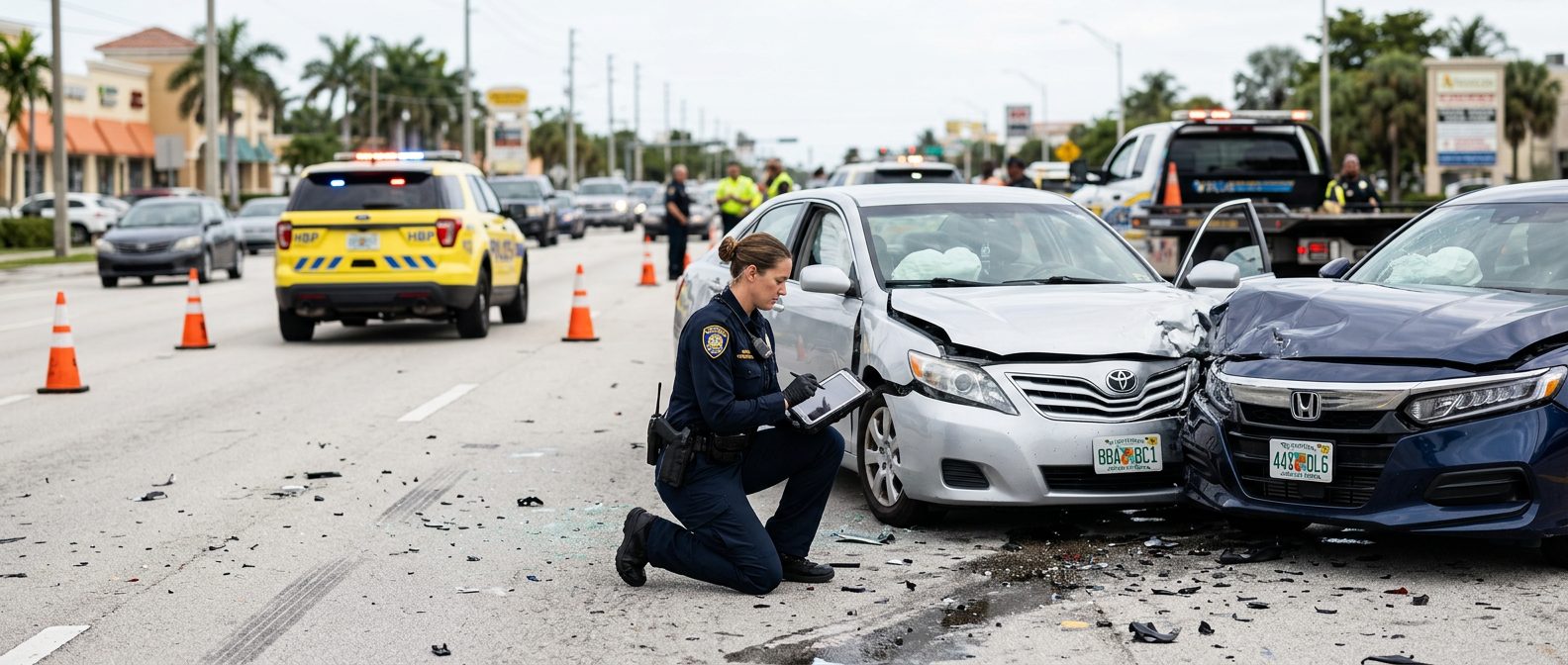
Car accidents on Hallandale Beach Boulevard happen without warning. The moments after are chaotic. You’re managing injuries, dealing with police, and handling insurance calls. Mistakes now can hurt your claim later. This guide explains what to do immediately, your legal rights under Florida law, and when you need an attorney.
If you've been injured in a crash, you may be entitled to recover damages. Talk it through with our team — the first consultation is free, confidential, and carries no obligation.
What to Do Right After a Car Accident in Hallandale Beach
Your actions in the first minutes directly affect your ability to recover compensation.
Call 911 if anyone is injured. Emergency responders document the scene officially. This record becomes critical evidence later.
Move to safety if possible. Activate hazard lights. If both vehicles can drive, move them out of traffic. If you’re injured, stay in place with doors locked.
Photograph the scene before anything moves: – Both vehicles from multiple angles, showing all damage – Road surface, weather, and lighting conditions – Traffic signals, stop signs, lane markings, and obstructions – The other vehicle’s license plate and VIN – Skid marks, debris, or other physical evidence – Street signs showing the exact location
Collect the other driver’s information: – Full name, phone number, and home address – Driver’s license number and state – Insurance company name and policy number – Vehicle make, model, year, and license plate
Get witness contact information. Ask for name, phone number, and email. Witnesses often disappear—collect details immediately.
Request the police report number from the responding officer. You’ll need this to get the official crash report.
Call your own insurance company. Report the accident factually. Do not admit fault or speculate. Keep your description brief and factual.
Seek medical evaluation the same day or next morning, even if you feel fine. Whiplash, internal bleeding, and traumatic brain injury often develop over hours or days. A medical record created soon after links the crash to your injuries. Insurance companies use timing of medical care to challenge injury claims.
Common Causes of Car Accidents in Hallandale Beach
Understanding what caused your accident proves liability. Common causes include:
- Distracted driving: texting, phone calls, eating, adjusting GPS
- Speeding: especially on Hallandale Beach Boulevard (35–45 mph posted limits)
- Running red lights or stop signs: particularly at Three Islands Boulevard intersection
- Failure to yield: unsafe lane changes, merging without checking blind spots
- Rear-end collisions: tailgating or inattention at traffic lights
- Impaired driving: alcohol or drug use impairing judgment
- Mechanical failure: brake failure, tire blowouts, steering problems
- Weather-related loss of control: rain reducing traction and visibility
Evidence that the other driver caused the accident proves negligence and liability.
Serious Injuries from Car Accidents in Hallandale Beach
Many injuries develop over hours, days, or weeks. Here’s what we see in serious cases:
Whiplash and neck injuries from rear-end collisions may not show on initial X-rays. They cause chronic pain, stiffness, reduced mobility, and require months of physical therapy.
Spinal cord injuries can result in permanent paralysis—paraplegia (loss of function in lower body and legs) or quadriplegia (loss of function in all four limbs). These injuries require lifetime medical care, assistive equipment, home modifications, and ongoing rehabilitation.
Traumatic brain injury (TBI) often has delayed symptoms: persistent headaches, memory loss, difficulty concentrating, mood changes, sleep disturbances, and cognitive impairment.
Herniated discs and back injuries range from muscle strain to severe disc herniation requiring surgery and long-term treatment.
Broken bones and fractures often require surgery, physical therapy, and extended recovery—sometimes resulting in permanent disability or chronic pain.
Internal injuries: bleeding in the abdomen, chest, or brain may not be immediately obvious but can be life-threatening.
Psychological trauma: anxiety, post-traumatic stress disorder (PTSD), and depression following a serious crash are real injuries deserving treatment and compensation.
Permanent disability and wrongful death: some accidents result in paralysis, amputation, or death—injuries that change a family forever.
If you or a loved one has been injured in a car accident in Hallandale Beach, you don't have to navigate the claims process alone. Talk it through with our team — the first consultation is free, confidential, and carries no obligation.
Florida’s “No-Fault” Law and Your Right to Sue
Florida has a unique car accident framework. Understanding it protects your claim.
Florida is a “no-fault” state. Your own auto insurance pays personal injury protection (PIP) benefits regardless of who caused the crash: 80% of reasonable expenses for medically necessary medical, surgical, X-ray, dental, and rehabilitative services, and 60% of lost gross income and loss of earning capacity, typically with a $10,000 policy limit. Fla. Stat. §627.736 governs PIP coverage.
Damages you can recover include: – Past and future medical expenses (surgery, therapy, medications, equipment) – Lost wages and reduced earning capacity – Pain and suffering – Emotional distress and loss of enjoyment of life – In catastrophic cases: lifetime care costs, home and vehicle modifications, assistive devices
Florida’s comparative-fault rule (Fla. Stat. §768.81) allows you to recover damages even if partially at fault—as long as you are 50% or less at fault. Your recovery is reduced by your percentage of fault.
Under Florida law, a wrongful death claim is brought by the decedent’s personal representative, who recovers for the benefit of the survivors and estate. These claims seek compensation for funeral expenses, lost financial support, and loss of companionship.
Why You Need an Attorney After a Car Accident in Hallandale Beach
Negotiating with an insurance company alone puts you at a severe disadvantage. Insurance adjusters are trained to minimize payouts. Their job is to protect the insurance company, not ensure you receive fair compensation. Insurance companies often make a first offer that is lower than the full value of your claim.
You have the right to full compensation, but you must know how to calculate and prove it. The value of a catastrophic injury claim depends on the facts of each case, including medical needs, lost earning capacity, and available coverage.
An attorney investigates thoroughly. We obtain police reports, witness statements, vehicle inspection reports, medical records, and expert testimony. We identify all liable parties—not just the other driver, but potentially their employer, a vehicle manufacturer, or a negligent property owner.
Your lawyer handles all negotiations. While you focus on healing, we communicate with insurance companies, demand fair compensation, and protect your rights.
If settlement negotiations fail, we file a lawsuit. We represent you in court and fight for the compensation you deserve.
You pay nothing upfront. Personal injury attorneys work on contingency—we’re paid only if you recover compensation.
How Long Does a Car Accident Claim Take in Florida?
Timeline depends on case complexity:
- Simple claims with clear liability and minor injuries settle in 2–6 months
- Moderate to serious injury cases typically take 6–18 months
- Complex cases with catastrophic injuries or multiple liable parties take 2–4 years or longer
The statute of limitations in Florida is 2 years from the date of the accident to file a lawsuit (Fla. Stat. §95.11). Do not wait—evidence fades, witnesses move away, and memories fade.
Protect Your Claim: What to Do Now
Seek medical care immediately, even for symptoms that seem minor. This creates a documented medical record.
Keep all medical records, bills, receipts, and invoices related to your treatment, medications, therapy, and equipment.
Document your injuries and limitations. Take photos of visible injuries. Write down your pain levels, physical limitations, and how the accident has affected your work and daily life.
Do not post about the accident on social media. Insurance companies monitor social media and use posts against you.
Do not accept any settlement offer without speaking to an attorney first. Early offers are almost always inadequate.
Contact a personal injury attorney as soon as possible. An attorney preserves evidence, investigates the crash, and protects your rights from day one.
Not sure what your next step is?
Talk it through with our team — the first consultation is free, confidential, and carries no obligation.
Frequently Asked Questions
What if I was partially at fault for the accident?
You may still recover damages under Florida’s comparative-fault rule, as long as you are 50% or less at fault (Fla. Stat. § 768.81(6)). Your recovery will be reduced by your percentage of fault.
Do I need a lawyer for a minor accident?
For minor injuries and clear liability, you may handle a claim yourself. But if you have any doubt about your injuries or liability, consult an attorney—initial consultations are free.
How much is my car accident claim worth?
Claim value depends on injury severity, medical expenses, lost wages, and how the accident has affected your life. An attorney can evaluate your case and provide a realistic estimate.
What if the other driver has no insurance?
Your own auto insurance may include uninsured motorist coverage, unless you reject it in writing. Your attorney can help you file a claim under your own policy.
Can I file a claim if I didn’t seek medical care immediately?
Yes, but it’s more difficult. Seek medical attention as soon as possible and explain any delay to your doctor.

Get a Free Case Evaluation
If you or a loved one has been injured in a car accident in Hallandale Beach, you don’t have to navigate the claims process alone. CHG Personal Injury Lawyers focuses exclusively on personal injury cases, including car accidents of all severity—from straightforward collisions to catastrophic injuries resulting in spinal cord damage, brain injury, amputation, or wrongful death.
We are licensed Florida attorneys. We offer a free, confidential case evaluation to discuss what happened, your injuries, and your legal options. You pay nothing unless we recover compensation for you.
Contact CHG Personal Injury Lawyers today for your free case evaluation. Call us or submit your case online—people injured in Hallandale Beach car accidents can contact us, and we’re ready to help.
What to Do After a Car Accident
At the Scene
Check for injuries and move to safety if possible. Call 911 if anyone is hurt. Exchange contact and insurance information with other drivers, and take photos of vehicle damage, road conditions, and the accident scene.
Report and Document
File a police report and notify your insurance company promptly. Keep records of all medical treatment, repair estimates, lost wages, and any communication about the accident.
Seek Medical Care
Some injuries appear days or weeks after a crash. See a doctor even if you feel fine. Medical records create a clear link between the accident and your injuries.
Consult an Attorney
Before accepting any settlement offer or giving a recorded statement, talk to a lawyer. An attorney can help you understand what your claim is worth and protect your rights.
Don't Settle Too Quickly
Insurance companies often make quick, low offers to close claims fast. Accepting too soon can leave you without compensation for ongoing medical care, lost income, or pain and suffering. An attorney can help you evaluate whether an offer is fair.
Why Choose CHG Personal Injury Lawyers
Protection of Your Rights
We handle all communication with insurance companies and opposing counsel so you don't have to. We fight for fair compensation on your behalf.
No Attorney’s Fees Unless There Is a Recovery
You pay nothing upfront. We only collect a fee if we recover money for you through settlement or judgment.
Experience with Car Accident Claims
We focus exclusively on personal injury cases, including car accidents. We know how insurance companies work and what your claim is worth.
Direct Access to Your Attorney
You work with a real lawyer, not a paralegal or call center. We're here to answer your questions and keep you informed every step of the way.
Common Questions About Car Accident Claims
What if I was partially at fault for the accident?
Under Florida's comparative-fault rule, you may still recover damages as long as you are 50% or less at fault (Fla. Stat. § 768.81(6)). Your recovery will be reduced by your percentage of fault.
Do I need a lawyer for a minor accident?
For minor injuries and clear liability, you may handle a claim yourself. But if you have any doubt about fault, ongoing pain, or the insurance company's offer, talking to an attorney can protect your interests.
How long do I have to file a claim?
Time limits apply to car accident claims. The sooner you contact an attorney, the sooner we can preserve evidence, interview witnesses, and build your case.
What damages can I recover?
You may recover compensation for medical bills, lost wages, property damage, pain and suffering, and other losses caused by the accident. An attorney can help you calculate the full value of your claim.