

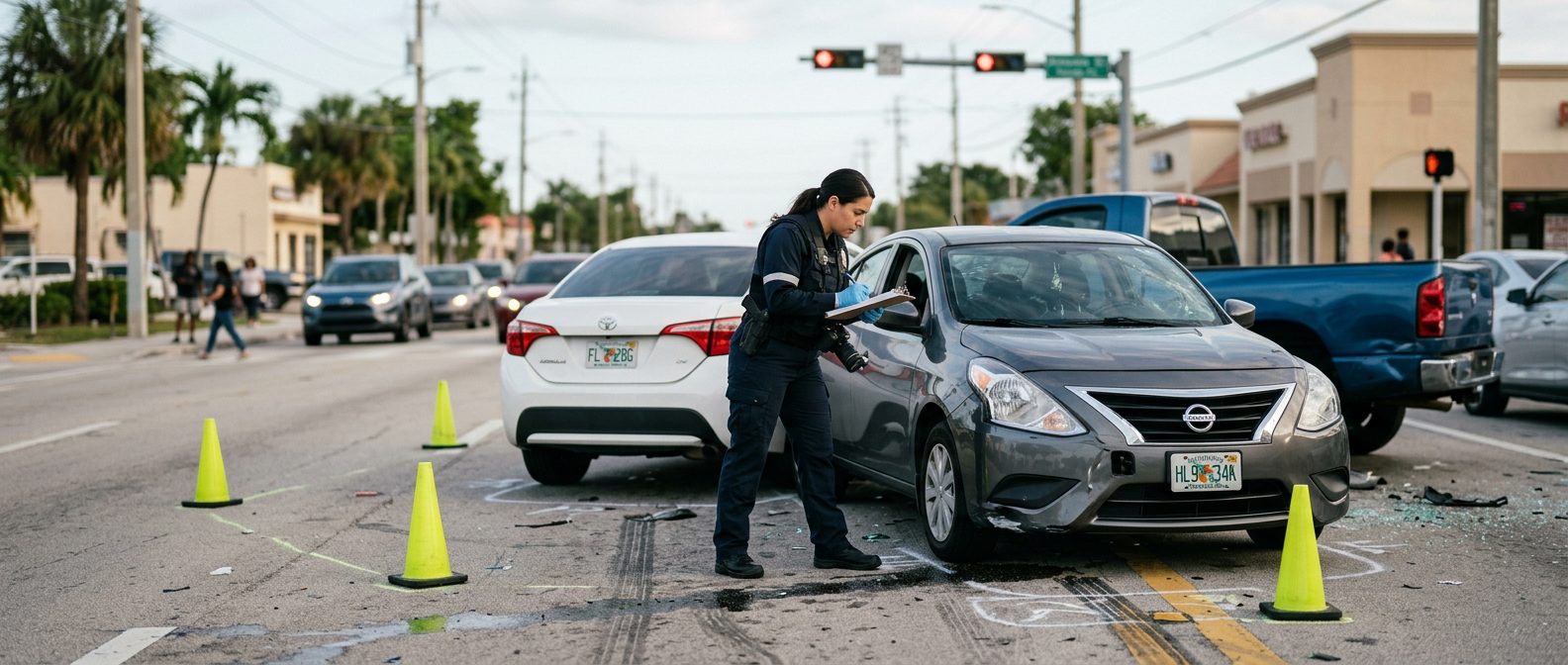
Car Accidents in Hialeah
Injured in a Car Accident? Here's What You Need to Do
Immediate steps to protect your health, your claim, and your rights after a crash in Hialeah.
By CHG Lawyers · Published September 09, 2026
Car Accidents in Hialeah: Your Legal Rights and What to Do Now
Hialeah’s busy commercial corridors—along Okeechobee Road, Palm Avenue, and the Palmetto Expressway—see constant traffic flow and frequent serious collisions. If you’ve been hurt in a crash, you have legal rights and critical steps to take right now. A car accident can cause injuries ranging from whiplash to spinal cord damage and permanent paralysis. Understanding what to do immediately, how Florida’s no-fault insurance system actually works, and when you can pursue a claim against the at-fault driver can mean the difference between fair recovery and being left short.

Not sure what your next step is?
Talk it through with our team — the first consultation is free, confidential, and carries no obligation.
What to Do Right After a Car Accident in Hialeah
Your actions in the first minutes and hours directly affect your claim’s strength and value.
Check for injuries and call for help. If anyone is hurt or the crash is serious, call 911 immediately. Do not move injured people unless there’s immediate danger (fire, oncoming traffic).
Move to safety. If your vehicle is drivable and you’re not badly hurt, move it out of traffic if possible. Turn on hazard lights. Stay at the scene and cooperate with police—leaving can result in criminal charges.
Document the scene thoroughly. Take photos of vehicle damage, road conditions, traffic signs, skid marks, and the other vehicle’s license plate and VIN. Get the names, phone numbers, and addresses of the other driver(s) and any witnesses. Write down their insurance information and policy numbers.
Report to your insurance company—carefully. Contact your insurer, but do not admit fault or sign anything beyond your insurance claim form. Stick to facts only.
Seek medical attention immediately. Even if you feel fine, see a doctor the same day or next day. Many injuries—whiplash, internal bleeding, traumatic brain injury—appear hours or days later. Medical records are the foundation of your claim’s value.
Do not post on social media. Insurance companies monitor social media. Anything you post can be used against you to minimize your claim.
How Injuries Develop in Car Accidents
The mechanism of the crash determines injury severity. Understanding this helps you recognize what you may be dealing with:
Low-speed rear-end collisions often cause whiplash and soft-tissue neck strain, which can lead to chronic pain and months of physical therapy.
Multi-vehicle crashes and high-speed collisions can cause severe spinal cord damage. The sudden deceleration and impact forces can fracture vertebrae or tear spinal nerves, resulting in paraplegia (lower-body paralysis) or quadriplegia (full-body paralysis). These injuries require specialized medical care, assistive equipment, home modifications, and lifelong support.
Truck accidents involving heavy vehicles (18-wheelers, delivery trucks) create asymmetrical impact forces. Smaller vehicles absorb disproportionate energy, leading to catastrophic injuries: severe spinal cord damage, traumatic brain injury, internal organ damage, and amputation.
High-speed frontal collisions commonly cause traumatic brain injury (TBI)—ranging from mild concussion to severe, life-altering brain damage affecting memory, cognition, motor function, and personality. TBI can cause long-term disability and require ongoing neurological care.
Crush injuries in multi-vehicle pileups or collisions with fixed objects (poles, barriers) can result in amputation or limb loss, requiring lifelong prosthetics and adaptive equipment.
Internal injuries from blunt-force trauma—bleeding, organ damage, rib fractures—may not be immediately obvious but can be life-threatening and require emergency surgery.
Florida’s No-Fault Insurance System—And Its Limits
Florida is a no-fault insurance state. This means your own car insurance (Personal Injury Protection, or PIP) covers your medical bills and lost wages up to your policy limit—regardless of who caused the crash. PIP pays 80% of reasonable medical expenses and 60% of lost income, up to the $10,000 policy limit, if you get initial care within 14 days of the crash (Fla. Stat. § 627.736). This is meant to get you treated quickly without waiting for fault determination.
But there’s a critical exception: If your injuries are serious enough, you can step outside no-fault and pursue a claim against the at-fault driver for additional damages.
What qualifies as “serious” under Florida law? Under Florida Statute § 627.737, you can sue the at-fault driver if your injuries result in significant and permanent loss of an important bodily function, a permanent injury within a reasonable degree of medical probability other than scarring or disfigurement, significant and permanent scarring or disfigurement, or death.
What damages can you recover in a personal injury claim?
- All medical expenses (past and future)
- Lost wages and lost earning capacity
- Pain and suffering
- Permanent disability or disfigurement
- Future care and therapy costs
- In catastrophic cases, lifetime medical care, home modifications, and assistive equipment
- Wrongful death damages (if the victim died)
The Asymmetry: Why Insurance Companies Undervalue Claims
Insurance companies are not neutral. They profit by paying less. Here’s how the system works against unrepresented injured people:
Insurance adjusters are trained negotiators. Their job is to minimize payouts. They make low initial settlement offers, hoping you’ll accept without legal representation.
Insurers exploit information gaps. They know the value of your claim better than you do. Without an attorney, you don’t know whether an offer is fair or far below what your case is worth. Adjusters use this advantage to push low settlements.
Unrepresented claimants miss deadlines and evidence. Without legal guidance, you may miss critical filing deadlines or fail to gather evidence before it disappears. Witnesses’ memories fade; surveillance footage is deleted; medical records are archived.
Medical providers place liens on your settlement. If you settle without legal representation, medical providers and hospitals may place liens on your recovery, reducing what you actually receive. An attorney negotiates these liens to maximize your net recovery.
Recorded statements can destroy your claim. If an insurance adjuster asks for a recorded statement, anything you say can be used against you. An attorney prevents this by handling all communication.
Having an attorney involved signals to the insurance company that you understand your rights and have legal backing.
Have questions about what happened?
Ask our team directly. The first conversation is free, confidential, and there is no obligation to continue.
Legal Deadlines in Florida
Under Florida Statute § 95.11, you have 2 years from the date of the accident to file a personal injury lawsuit. This deadline is strict. If you miss it, you lose your right to sue, regardless of the strength of your claim.
Early representation protects you because:
- Evidence is preserved while it’s fresh
- Witness statements are collected before memories fade
- Medical records are organized and reviewed
- The statute of limitations clock is managed
- Settlement negotiations can begin immediately
Florida’s Comparative Negligence Rule
If you’re found partially at fault for the accident, you can still recover damages—but your recovery is reduced by your percentage of fault. Under Florida Statute § 768.81:
- If you are 50% or less at fault, you recover the remaining percentage of damages
- If you are more than 50% at fault, you recover nothing
This is why evidence and witness testimony matter: they establish who was truly at fault. An attorney investigates the crash thoroughly to prove fault and minimize your percentage of responsibility.
Catastrophic Injuries from Car Accidents
Not all car accidents are minor. Multi-vehicle crashes, high-speed collisions, and truck accidents cause permanent, life-altering injuries:
Spinal cord injury and paralysis require specialized medical care, assistive equipment, home modifications, and lifelong support. Catastrophic injury claims involve much larger damages than routine accident claims.
Traumatic brain injury can cause long-term cognitive, memory, and personality changes requiring ongoing neurological care and rehabilitation.
Amputation or limb loss requires lifelong prosthetics, adaptive equipment, and vocational retraining.
Severe internal injuries may require multiple surgeries and long-term medical management.
Wrongful death claims can be pursued by the family of someone killed in a car accident. These cases demand experienced representation to secure fair compensation for the family’s loss.
Why You Need Legal Representation
Insurance companies are not on your side; they profit by paying less. A personal injury firm:
- Handles all communication with insurers, protecting you from statements that could hurt your claim
- Investigates the crash thoroughly and gathers evidence
- Builds a strong case for maximum compensation
- Negotiates with medical providers to reduce liens
- Prepares your case for trial if settlement fails
- Works on contingency—you pay nothing upfront; the firm is paid only if you recover
Early representation often leads to better settlements because insurers know you have legal backing and will pursue litigation if necessary.
Want to know where you stand?
Tell us what happened and our team will walk you through the options available to you, at no cost.
Next Steps: Getting Help After Your Hialeah Car Accident
Gather your medical records, insurance information, and any photos or documents from the crash. Write down what you remember about how the accident happened while it’s fresh. Do not post about the accident on social media. Contact a personal injury firm as soon as possible—there are legal deadlines for filing claims, and early representation protects your rights and often leads to better outcomes.

Frequently Asked Questions
How long do I have to file a car accident claim in Florida?
You have 2 years from the date of the accident to file a personal injury lawsuit under Florida Statute § 95.11. Don’t wait; evidence and witness memories fade.
What if I’m partially at fault for the accident?
You can still recover damages under Florida Statute § 768.81, but your recovery is reduced by your percentage of fault. If you’re 50% or less at fault, you recover the remaining percentage; if more than 50%, you recover nothing.
Can I talk to the insurance company after a car accident?
You can, but it’s risky. Anything you say can be used against you. An attorney can handle all communication and protect you.
What is the difference between no-fault insurance and a personal injury claim?
No-fault insurance (PIP) covers your medical bills and lost wages up to your policy limit, regardless of fault. A personal injury claim against the at-fault driver allows you to recover additional damages if your injuries are serious.
How much is my car accident claim worth?
Claim value depends on medical expenses, lost income, severity of injury, and other factors. An attorney can evaluate your case and give you an estimate.
What if I have a spinal cord injury or paralysis from the accident?
Spinal cord injuries and paralysis are catastrophic and require lifelong medical care, assistive equipment, and home modifications. These claims involve significantly larger damages and demand experienced representation.
If you’ve been hurt in a car crash in Hialeah and aren’t sure whether you have a claim or what it’s worth, reach out for a free case evaluation—people in your situation can contact us.
What to Do Right After a Car Accident
Check for Injuries & Call 911
Your safety comes first. If anyone is hurt—even if injuries seem minor—call 911 immediately. Police will document the scene and create an official report, which is critical for your claim.
Move to Safety & Gather Information
If it's safe, move vehicles out of traffic. Exchange names, phone numbers, addresses, insurance information, and vehicle details with the other driver. Take photos of vehicle damage, the accident scene, road conditions, and traffic signs.
Get Witness Contact Information
If anyone saw the crash, ask for their name and phone number. Witness statements can be powerful evidence later. Don't rely on memory—write it down or record it on your phone.
Seek Medical Attention
Some injuries appear hours or days after a crash. See a doctor even if you feel fine. Medical records create a documented link between the accident and your injuries—essential for your claim.
Don't Admit Fault or Delay
Never apologize, admit responsibility, or say the accident was your fault—even if you think it was. Stick to the facts with the other driver and police. And don't wait to report the crash to your insurance company or to seek legal advice. The sooner you act, the better your claim.
Why You May Need a Car Accident Attorney
Protect Your Rights
Insurance companies work to minimize payouts. An attorney ensures your claim is handled fairly and you're not pressured into a low settlement.
Handle the Paperwork
Claims involve medical records, police reports, insurance forms, and legal filings. We manage all the details so you can focus on recovery.
Understand Your Options
Not all accidents are simple. We explain what damages you may recover—medical bills, lost wages, pain and suffering—and the best path forward.
Negotiate on Your Behalf
We communicate with insurance adjusters and opposing counsel, removing the stress from you and fighting for fair compensation.
Common Questions About Car Accidents in Hialeah
What if I'm partially at fault?
Florida law allows you to recover damages even if you share some responsibility for the crash, but under Florida Statute § 768.81(6), a party found greater than 50 percent at fault for their own harm may not recover any damages. Your recovery is reduced by your percentage of fault, but you may still have a valid claim.
How much is my case worth?
Every accident is different. Damages depend on injury severity, medical costs, lost income, and other factors. An attorney can evaluate your specific situation and give you a realistic estimate.
Do I have to go to court?
Most car accident claims settle without trial. We'll negotiate with the insurance company, but we're always ready to take your case to court if needed to get you fair compensation.
How long does a claim take?
Simple cases may settle in weeks or months. More serious injuries or disputed liability can take longer. We keep you informed every step of the way.