

Car Accidents in Cooper City
What to Do After a Crash: Your Next Steps
A clear guide to protecting yourself and your claim after a car accident in Cooper City.
By CHG Lawyers · Published September 13, 2026
Car Accidents in Cooper City: What You Need to Know After a Crash
Cooper City sits in western Broward County along major traffic routes—SW 90th Avenue, Griffin Road, and Sample Road. Car accidents happen regularly here. Whether it’s a minor fender-bender or a serious multi-vehicle crash, an accident disrupts your life. You face injuries, vehicle damage, and urgent questions about what comes next. This guide walks you through the immediate steps to take, explains how Florida’s insurance system works, and helps you understand when legal guidance makes sense.

If your injuries are serious or your medical bills exceed your PIP coverage, you may have a claim against the at-fault driver's liability insurance. Talk it through with our team — the first consultation is free, confidential, and carries no obligation.
Car Accidents Happen on Cooper City Roads
Cooper City’s location puts it at the intersection of busy local streets and regional traffic patterns. Accidents occur on residential roads, at busy intersections, and along major corridors. From minor rear-end collisions to serious multi-vehicle crashes, these incidents leave drivers and passengers injured and families uncertain about their next move.
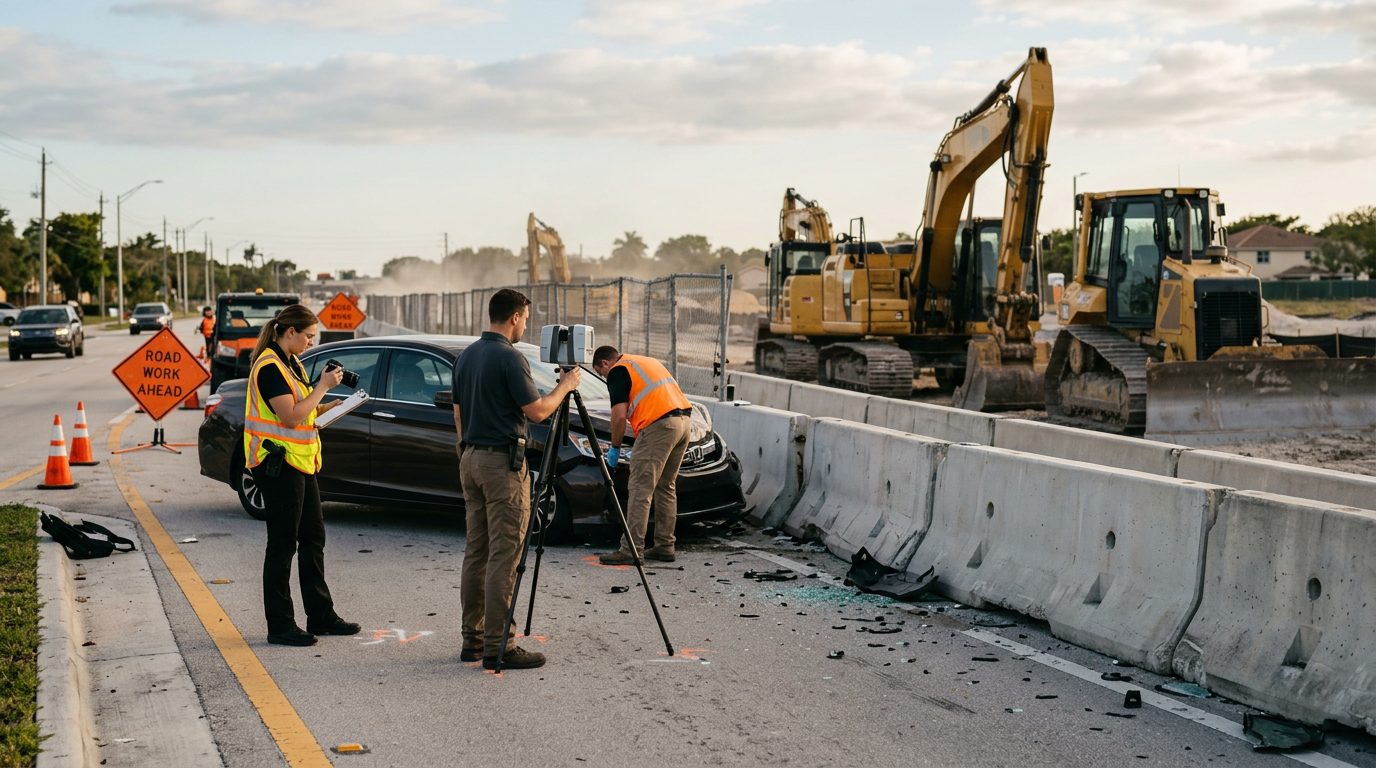
The Broward Sheriff’s Office (BSO) Traffic Unit responds to serious crashes in Cooper City. They investigate who was at fault. Local news regularly reports accidents on these roadways.
Knowing what to do immediately after a crash can protect your health, preserve evidence, and strengthen any claim you might pursue later.
What to Do Immediately After a Car Accident in Cooper City
Your first priority after a crash is safety and medical care. Here’s what to do:
Check for injuries. Ask yourself, your passengers, and anyone else involved if anyone is hurt. If you’re not sure, assume the worst and seek help.
Move to safety if possible. If vehicles are drivable and traffic allows, move them out of the active roadway. Turn on hazard lights and stay visible to oncoming traffic.
Call 911 if anyone is injured or if there’s significant vehicle damage. Law enforcement will respond, document the scene, and file an official accident report. This is critical evidence for insurance and any legal claim.
Exchange information with the other driver(s). Get their name, phone number, address, insurance company, policy number, vehicle make and model, and license plate number. Write it down or take a photo.
Take photos from multiple angles. Photograph vehicle damage, road conditions, traffic signs, weather, and the overall accident scene. These images preserve evidence that may fade or disappear.
Get witness contact information. If anyone saw the accident, ask for their name and phone number. Witness statements can be valuable if liability is disputed.
Report the accident to your insurance company promptly. Don’t delay; insurers often require prompt notice. Stick to the facts and avoid admitting fault or speculating about what happened.
Keep all documentation. Save the police report number, medical records, repair estimates, photos, witness information, and all correspondence with insurance companies.
How to Look Up an Accident Report in Florida
If law enforcement responded to your crash, an official accident report was filed. This report includes details about the crash, driver statements, and the officer’s assessment of what happened. This information strengthens insurance claims and legal cases.
You can request your accident report through the Florida Department of Highway Safety and Motor Vehicles (DHSMV) or directly from the Broward Sheriff’s Office. The report provides an independent, official record of the accident. It can be critical if the other driver disputes liability or if you later pursue a claim.
Car Accident Injuries: From Minor to Serious
Not all car accident injuries are obvious immediately. Whiplash, neck and back strain, and soft-tissue injuries are common even in low-speed crashes. Pain or stiffness may not appear until hours or days after the accident.
Seek medical attention promptly, even if you feel fine. A doctor can identify injuries you might not notice and create a medical record linking your injuries to the accident. This documentation is essential for any insurance claim or legal case.
More serious accidents can cause traumatic brain injuries, spinal cord injuries, fractures, internal bleeding, or permanent disability. These injuries often require ongoing treatment, rehabilitation, and long-term care. Document all medical visits, treatment plans, medications, and any ongoing pain or limitations in your daily life.
Understanding Your Insurance Claim in Florida
Florida is a no-fault insurance state. This means your own insurance—specifically your Personal Injury Protection (PIP) coverage—pays for your medical expenses and lost wages after an accident, regardless of who caused the crash. PIP pays 80% of reasonable medical expenses and 60% of lost income, up to the $10,000 policy limit, if you get initial care within 14 days of the crash (Fla. Stat. § 627.736).
This covers immediate medical treatment and some lost wages while you recover.
If your injuries are serious or your medical bills exceed your PIP coverage, you may have a claim against the at-fault driver’s liability insurance. The at-fault driver’s liability policy can cover your medical bills, vehicle damage, lost wages, pain and suffering, and other damages beyond what PIP provides.
Insurance companies often undervalue claims. Understanding your rights and the full extent of your injuries helps ensure you receive fair compensation.
Not sure what your next step is?
Talk it through with our team — the first consultation is free, confidential, and carries no obligation.
When to Pursue a Car Accident Claim
You have a potential claim if another driver’s negligence caused your accident. Negligence means the other driver owed you a duty of care, breached that duty through reckless or careless behavior, and caused your injury and damages.
Examples include speeding, distracted driving, running a red light, failing to yield, or violating traffic laws.
Even if you were partially at fault, Florida’s comparative negligence rule may still allow you to recover damages. Under Fla. Stat. §768.81, if you’re 50% or less at fault, you can recover damages reduced by your percentage of fault. If you’re more than 50% at fault, you generally cannot recover.
Serious injuries—those causing permanent scarring, significant limitation of bodily function, or substantial medical expenses—strengthen your claim and increase potential damages.
Damages You May Recover After a Car Accident
If you have a valid claim, you may recover compensation for:
- Medical expenses: past and future treatment, surgery, rehabilitation, therapy, and medical equipment
- Lost wages: income lost while recovering and reduced earning capacity if the injury causes permanent disability
- Vehicle damage: repair or replacement costs
- Pain and suffering: compensation for physical pain, emotional distress, and reduced quality of life
- Permanent scarring, disfigurement, or disability: ongoing limitations and their impact on your life
- Wrongful death: if the accident caused a death, surviving family members may pursue a wrongful-death claim for loss of companionship, financial support, and funeral expenses
The amount you recover depends on the severity of your injuries, the clarity of liability, and the at-fault driver’s insurance limits.
Why You Might Need a Car Accident Attorney
Insurance adjusters work to minimize payouts. An attorney protects your interests, negotiates on your behalf, and ensures you understand the value of your claim before accepting any settlement.
Serious injuries often require expert medical testimony, accident reconstruction analysis, and complex calculations of past and future damages. An attorney handles these tasks and builds a strong case based on evidence, not just the insurance company’s initial offer.
If a fair settlement cannot be reached, an attorney can file a lawsuit and represent you in court. Many car accident attorneys work on contingency—you pay nothing upfront, and they’re paid only if you recover compensation. This arrangement removes financial barriers to getting legal help when you need it most.
Cooper City Car Accidents: Local Context
Cooper City’s main traffic corridors—SW 90th Avenue, Griffin Road, and Sample Road—see regular accident activity. The Broward Sheriff’s Office Traffic Unit responds to serious crashes and investigates fault. Local accident reports are public records. Understanding your local roads and common accident patterns can help you stay safer and make sense of what happened to you.
Have questions about what happened?
Ask our team directly. The first conversation is free, confidential, and there is no obligation to continue.
Next Steps After Your Car Accident
Prioritize your health. Seek medical care and follow your doctor’s treatment plan, even for injuries that seem minor.
Gather and organize all documentation. Keep medical records, repair estimates, police reports, insurance correspondence, and photos in one place.
Report the accident to your insurance company and cooperate with their investigation. Prompt reporting protects your coverage.
Do not accept a settlement offer without understanding the full extent of your injuries and damages. Insurance companies often make low initial offers.
Consider reaching out to an attorney if your injuries are serious, liability is unclear, or the insurance company is not offering fair compensation. An attorney can review your case, explain your options, and handle negotiations on your behalf.
Frequently Asked Questions
How long do I have to file a car accident lawsuit in Florida?
You generally have 2 years from the date of the accident to file a negligence lawsuit in Florida.
What if I was partially at fault for the accident?
Under Florida’s comparative negligence rule, you can still recover damages if you’re 50% or less at fault (Fla. Stat. § 768.81(6)). Your recovery is reduced by your percentage of fault.
What should I do if the insurance company denies my claim?
If your claim is denied or you believe the offer is unfair, an attorney can review the denial, investigate further, and pursue a lawsuit if necessary.
Do I need to hire an attorney for a minor car accident?
For minor injuries and clear liability, you may handle the claim yourself. For serious injuries, unclear fault, or an unreasonable insurance offer, an attorney’s help is invaluable.
If you’ve been injured in a car accident in Cooper City and aren’t sure whether you have a claim or what your recovery might look like, reach out to our team. We handle these situations and can review your case at no cost to understand your options.
Immediate Steps After a Car Accident
Check for Injuries & Call 911
Your safety comes first. If anyone is hurt, call emergency services immediately. Even if injuries aren't obvious, some symptoms appear hours or days later. Get medical attention and keep all records.
Move to Safety & Document the Scene
If it's safe, move vehicles out of traffic. Take photos of vehicle damage, road conditions, traffic signs, and the overall scene. Get the other driver's name, phone number, address, insurance company, and policy number.
Report the Accident & Preserve Evidence
File a police report in Cooper City. Get the report number and officer's name. Write down what happened while it's fresh. Collect contact information from witnesses. Don't admit fault or sign anything except for police and medical personnel.
Notify Your Insurance & Seek Legal Guidance
Report the accident to your insurance company promptly. Before giving a recorded statement or signing a settlement, talk to a car accident attorney who can explain your rights and options.
Don't Wait to Get Legal Help
Florida law sets a deadline for filing a lawsuit after a car accident. The sooner you speak with an attorney, the sooner we can protect your claim, gather evidence, and help you understand what your case may be worth.
Why You Need an Attorney After a Car Accident
We Handle Insurance Companies
Insurance adjusters work to minimize payouts. We negotiate on your behalf so you're not pressured into accepting less than your claim is worth.
We Gather & Preserve Evidence
Accident scenes change, witnesses move away, and records disappear. We act quickly to collect police reports, medical records, photos, and witness statements before they're lost.
We Know the Deadlines
Florida law gives you a limited window to file a lawsuit. Missing that deadline means losing your right to recover. We make sure nothing falls through the cracks.
We Focus on Your Recovery
While you heal, we handle the legal work. Our focus is on getting you fair compensation for medical bills, lost wages, pain, and other damages—so you can focus on getting better.