

Losing a Hand or Arm Changes Everything. Your Claim Should Account for All of It.
If a serious accident or someone else's negligence cost you a hand or arm, you face a lifetime of adjustment, medical care, and financial strain. We help you understand your rights and pursue full accountability.
Why Families Turn to CHG
Licensed
Attorneys admitted to the Florida Bar
Nationwide
We take catastrophic-injury cases across the U.S.
English & Español
Bilingual guidance for you and your family
Catastrophic
Focused on life-altering injuries
By CHG Lawyers · Published July 31, 2026
Fingers, Hands, and Arm Amputations: Upper-Limb Loss Injury Claims Explained
Did you lose a finger, hand, or arm because someone else was careless? You may have a hand and arm amputation injury claim. That claim can seek money for your medical care, prosthetics, lost income, and the lifelong impact of losing part of your body.
Losing an arm or hand changes how you work, care for yourself, and live each day. Buttoning a shirt, holding a child, driving, typing — simple tasks can become hard or impossible. This is a catastrophic, permanent injury. It is not a routine one.
This page explains what counts as an upper-limb amputation. It also covers how these losses happen, what a claim can pay for, and how fault works. This is educational information, not legal advice. For the bigger picture, see our main guide on amputation and limb-loss injury claims.
Not sure what your next step is?
Talk it through with our team — the first consultation is free, confidential, and carries no obligation.
What counts as an upper-limb amputation injury
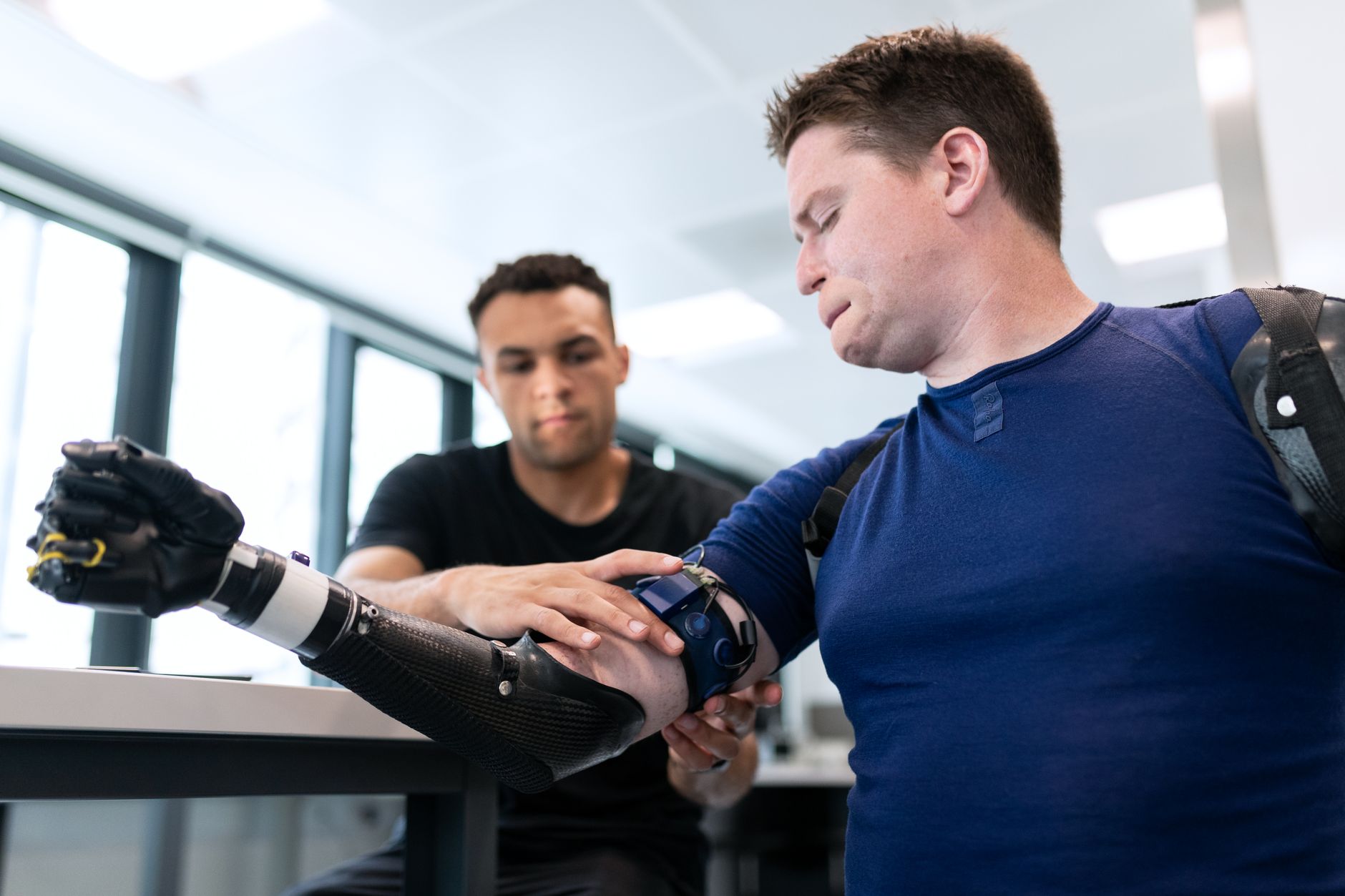
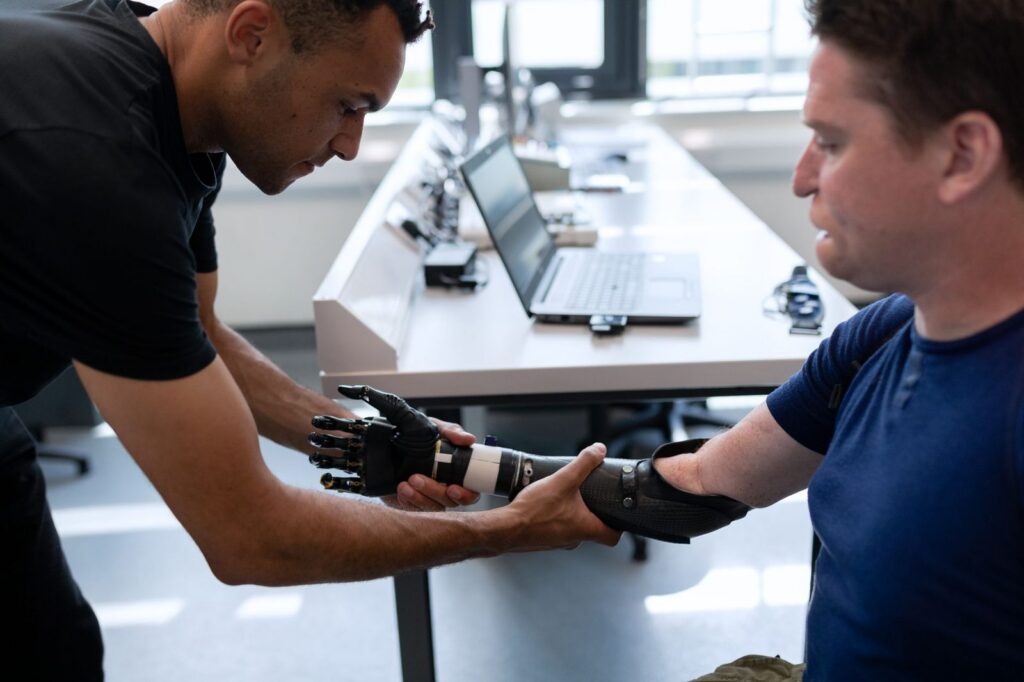
An upper-limb amputation is the loss of any part of the arm. This can range from a fingertip to the whole limb at the shoulder. Rehab teams sort these by level. Each level changes what a prosthetic (an artificial limb) can restore:
- Finger and thumb loss — partial or full. The thumb alone does about 40% of hand function. That is why even losing just the thumb is treated as a serious impairment.
- Wrist disarticulation / hand loss — loss of the hand at or near the wrist.
- Below-elbow (transradial) amputation — loss of the forearm below the elbow.
- Above-elbow (transhumeral) amputation — loss above the elbow joint.
- Shoulder disarticulation — loss of the entire arm at the shoulder.
Doctors and prosthetists (specialists who make artificial limbs) use these standard levels. The higher the level, the more joints and function the person loses. The prosthesis also gets more complex.
There are two main ways a limb is lost. A traumatic amputation happens when the limb is severed in the accident itself. A surgical amputation happens when doctors cannot save a badly damaged limb and must remove it. Severe crush injuries and degloving injuries (when skin and tissue are stripped away) often lead to surgical amputation.
This page covers permanent, life-altering loss. It does not cover minor cuts or fractures that heal.
How fingers, hands, and arms are lost in serious accidents
Most upper-limb amputations come from high-force accidents. Others come from someone else’s failure to keep people safe.
Truck and highway crashes. A loaded tractor-trailer can weigh up to 80,000 pounds. That is about 20 to 30 times a passenger car. The crushing forces in a truck crash can easily sever or destroy a limb. These forces rarely stop at one injury. Limb loss in a truck crash often comes with a traumatic brain injury or a spinal cord injury. That is because the body absorbs energy in more than one place at once. A full-value claim must account for every catastrophic injury, not just the amputation. Learn more on our truck accident page.
Machinery and equipment accidents. Conveyors, presses, saws, and poorly guarded equipment can sever or mangle a hand or arm in an instant.
A violent attack on someone else’s property. Suppose you were shot, stabbed, or beaten in your apartment parking garage, at a hotel, or outside a store. And suppose the gate was broken, the lights had been out for weeks, or there was no security despite crime nearby. When a property owner fails to provide reasonable security, and that failure lets an attack happen, the owner may be legally responsible for your injuries. The legal term for this kind of claim is negligent security. But you don’t need to know the term to have a case. You just need to have been hurt on a property that wasn’t kept reasonably safe.
Medical negligence and complications. A missed infection, a surgical error, or a delayed diagnosis can turn a treatable injury into one that requires amputation.
The thread in these cases is the same. Another party’s carelessness often causes the loss.
Why the dominant hand and your line of work matter
Losing your dominant hand or arm usually hurts daily life and earning power more than losing the other side. Your dominant hand does most of your writing, tool use, and fine tasks.
Your job matters too. Some careers depend heavily on fine motor skill or hand strength. Think of surgeons, tradespeople, mechanics, musicians, dentists, and drivers. For these workers, upper-limb loss can end a career or force costly retraining.
People often ask how a dominant-hand injury settlement is valued. The honest answer: it depends. It depends on the function you lost, your job, your age, and your future needs. There is no fixed figure. And no lawyer can guarantee a specific outcome.
What a hand and arm amputation injury claim can seek to recover
A claim can seek both your out-of-pocket losses and the human cost of the injury. In the catastrophic cases our attorneys handle, these categories come up again and again.
- Medical costs — emergency surgery, reconstruction, hospital stays, and rehab.
- Prosthetics — the device itself, plus a lifetime of replacements, repairs, and upkeep. Advanced myoelectric arms (arms powered by your muscle signals) can cost tens of thousands of dollars. They usually need replacing every few years, so this is a repeat cost, not a one-time one.
- Lost wages and lost earning capacity — pay you missed and income you may never earn again, including retraining.
- Therapy and support — occupational and physical therapy, home and vehicle changes, and assistive devices.
- Non-economic harm — pain and suffering, disfigurement, and loss of enjoyment of life.
In the most tragic cases, a serious infection or complication after amputation can take a life. When that happens, the family may bring a wrongful-death claim. We cover that path with care on our page about amputation complications and wrongful death.
Have questions about what happened?
Ask our team directly. The first conversation is free, confidential, and there is no obligation to continue.
How much compensation is a hand or limb loss worth?
There is no set price for losing a hand or a limb. The value of a claim depends on the facts of your case. It does not come from a chart or a formula.
Key factors include:
- Which limb was lost.
- Whether it was your dominant side.
- How severe the injury is.
- Whether other catastrophic injuries occurred.
- Your age, your job, and your future care needs.
- Who was at fault.
Damages usually fall into two groups. Economic damages are measurable dollar losses, like medical bills, prosthetics, and lost income. Non-economic damages cover harm that has no receipt, like pain and disfigurement.
We won’t quote a number here. Be cautious of any lawyer who promises one before reviewing your case.
Injury claim vs. Social Security disability: two different things
This point confuses many people, so let’s be clear.
A personal-injury claim is a case against the person or company whose carelessness caused your loss. Social Security disability is a federal benefits program run by the Social Security Administration (SSA). They are not the same thing. They are decided by different bodies, and they pay for different things.
The SSA decides who qualifies based on your ability to work under its own medical rules. For the current rules, rely on official SSA guidance. A personal-injury claim can seek things disability benefits do not. That includes pain and suffering, full lost earning capacity, and future care and prosthetics. Many injured people pursue both. Money from one can affect the other, so treat this as general information and talk to a professional about your situation.
Proving fault and building an upper-limb amputation claim
To win, you generally must show that another party’s carelessness caused your injury. In other words, someone failed to act with reasonable care, and that failure led to your loss.
For an attack on someone else’s property, the question is whether the owner provided reasonable security. Did a landlord ignore broken gates, dead lighting, or a known crime problem? Were you hurt because of it? If so, that owner may be liable under negligent security.
Strong evidence makes the difference:
- Crash or incident reports and complete medical records.
- Equipment maintenance and inspection history.
- Property security records, camera footage, and prior incident reports.
- Expert opinions on how the injury happened and what future care will cost.
Deadlines matter, and they vary by state. In Florida, most negligence claims arising on or after March 24, 2023 must be filed within two years under Fla. Stat. §95.11. Florida also follows modified comparative negligence. Under Fla. Stat. §768.81, someone found more than 50% at fault generally recovers nothing. And any recovery is reduced by your share of fault. You can read the official text at Online Sunshine. Because we take cases nationwide, the deadline and fault rules in your state may differ. Acting early helps preserve evidence before it disappears.
Getting help after an upper-limb amputation
CHG Personal Injury Lawyers focuses on catastrophic, life-altering injuries, including upper-limb amputations.
Our team includes licensed attorneys admitted to The Florida Bar. We handle cases nationwide. We also offer support in English and Spanish, so a language barrier is not an obstacle to getting answers. For location-specific information, see our pages for Florida and Miami.
Did you or a loved one lose a finger, hand, or arm? We’re ready to listen. Request a free case evaluation — no pressure and no promise of a specific result, just a clear look at your options.
Want to know where you stand?
Tell us what happened and our team will walk you through the options available to you, at no cost.
Frequently asked questions
How much compensation can you get for losing a hand?
There is no set amount. The value depends on which limb was lost, whether other catastrophic injuries occurred, your job, your age, your future care needs, and who was at fault.
Does an amputated hand qualify for disability?
It can, depending on the Social Security Administration’s criteria and your remaining function. Check official SSA guidance. And remember: disability benefits are a separate federal program from your injury claim.
Can I file a claim if I only lost a finger or thumb?
Yes. The thumb alone does a large share of hand function. So finger and thumb loss can support a claim if another party’s carelessness caused it.
How long do I have to file an amputation injury claim in Florida?
Most Florida negligence claims arising on or after March 24, 2023 must be filed within two years under Fla. Stat. §95.11. Deadlines vary in other states.
Can I still recover money if I was partly at fault?
In Florida, yes, if you were 50% or less at fault. But your recovery is reduced by your share of fault under Fla. Stat. §768.81.
Be Careful With Early Settlement Offers
An insurer may offer a fast payout before the full cost of a lifetime of prosthetics, therapy, and lost earning power is known. Once you accept, you usually cannot reopen the claim. Talk to a lawyer before you sign anything.
What a Hand or Arm Amputation Claim May Cover
Medical & Surgical Costs
Emergency care, surgery, hospitalization, and ongoing treatment related to the amputation.
Prosthetics & Lifetime Care
Advanced prosthetic devices, replacements over time, physical therapy, and rehabilitation.
Lost Income & Earning Capacity
Wages you missed and the future work you may no longer be able to do.
Pain, Loss & Life Impact
The physical pain, emotional toll, and the daily activities the injury takes away.
Common Questions About Hand & Arm Amputation Claims
How much is a claim worth?
There is no set amount. Value depends on which limb was lost, whether other catastrophic injuries occurred, your job, your age, your future care needs, and who was at fault. Every case is different.
Does amputation qualify for disability?
It can, depending on the Social Security Administration's criteria and how the loss affects your ability to work. This is separate from any injury claim and often runs alongside it.
How is my future care valued?
Prosthetics wear out and must be replaced, and needs change over a lifetime. A strong claim looks decades ahead — not just at today's bills.
Who can be held responsible?
It depends on how the injury happened — a truck crash, a workplace machine, unsafe property, or medical negligence. We investigate to identify every party that may share fault.