

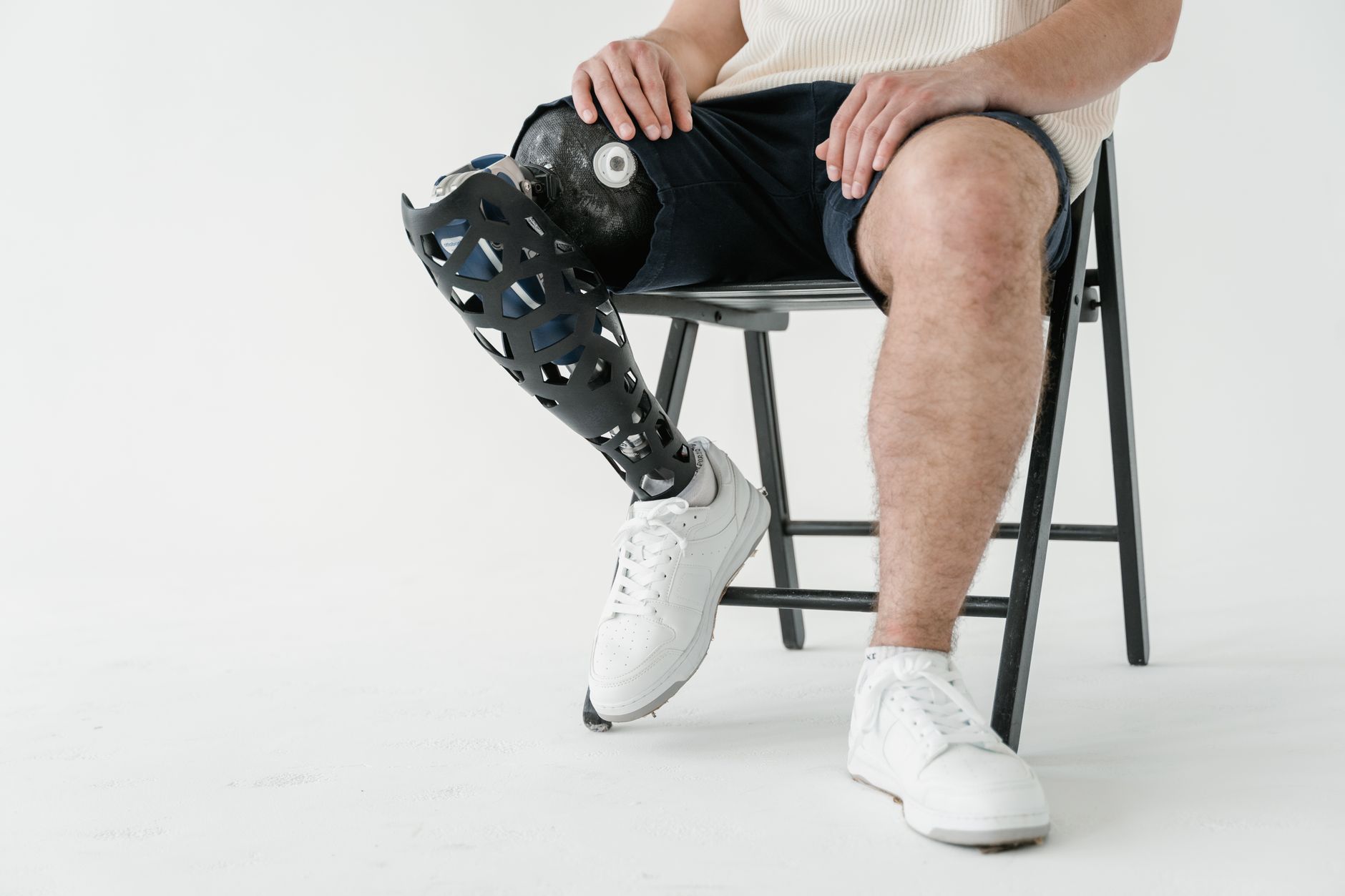
Amputation & Limb Loss Injuries
Who Is Liable for an Amputation Injury?
Losing a limb changes everything. When someone else's carelessness caused it, the law may hold them accountable. Learn who can be responsible and what your family can do next.
Focused on Catastrophic, Life-Altering Injuries
Nationwide
Cases accepted across the U.S.
Bilingual
English & Spanish resources
Licensed
Florida Bar–admitted attorneys
Free
Confidential case evaluations
By CHG Lawyers · Published August 01, 2026
Who Can Be Held Responsible When an Amputation Was Preventable?
Who is liable for an amputation depends on how and where it happened. It could be an at-fault driver or trucking company. It could be a machine or product maker. It could be an employer or another company at a job site. It could be a property owner who failed to keep people safe. It could also be a medical provider. In many cases, more than one party shares the blame.
Losing a limb changes everything. It is permanent. It is normal to want answers. You want to know how it happened and who was responsible. Many amputations are not just “bad luck.” They happen because a person or company failed to keep others safe.
This page explains, in plain words, who may be liable for an amputation. For a full overview of these cases, see our amputation and limb loss injury claims pillar page.

Not sure what your next step is?
Talk it through with our team — the first consultation is free, confidential, and carries no obligation.
What “liability” means in an amputation case
Liability means being legally responsible for harm. That harm comes from careless, reckless, or unsafe conduct. It comes down to three things:
- Someone had a duty to act reasonably.
- They failed to meet that duty.
- That failure caused a serious injury.
Proving liability means showing what a responsible person or company should have done differently. You do not need to know who is at fault before you talk to a lawyer. Figuring that out is part of the investigation. This article is general information, not legal advice about your situation.
Who is liable for an amputation injury? Common responsible parties
The at-fault party depends on the cause of the injury. Below, we match real-life situations to the people or companies who may be responsible.
Finding every responsible party matters. It affects the total money available. That money must cover a lifetime of medical care and prosthetics. The sections below walk through the most common situations our attorneys see.
Amputations caused by a serious crash, including truck accidents
When a high-force crash causes limb loss, the at-fault driver is often liable. But they may not be the only one. Crush injuries and traumatic amputations happen in severe crashes. The same violent impact can also cause spinal cord damage or a traumatic brain injury. That is why Mayo Clinic describes these crashes as causing permanent, life-altering complications.
Parties who may be responsible include:
- The at-fault driver who caused the crash
- A trucking company for unsafe practices, like pushing drivers past legal hours
- A vehicle or parts maker if a defect made the injury worse
- A company responsible for maintaining the truck
Truck cases often involve several responsible parties. The driver, the trucking company, a contractor, and even the company that loaded the cargo can each play a role. That is one reason truck accident claims are more complex than ordinary car crashes.
Amputations from a defective product or dangerous machine
When a badly designed or defective machine causes limb loss, the maker of that product may be liable. Power tools, industrial equipment, and consumer products can cut off a limb. This can happen when they lack safety guards, come with bad warnings, or are simply made wrong.
This is called product liability. It means a product maker is held responsible for harm. The responsible party might be:
- The manufacturer that built the product
- The company that designed it
- The distributor or store that sold it
A product case can also exist alongside a workplace claim. If a defective machine hurt you on the job, you may have more than one option. We explain that next.
Amputations that happen at work
If you lost a limb at work, you are usually entitled to workers’ compensation. But that may not be your only source of recovery. Workplace amputations are common around heavy equipment and machinery.
Workers’ compensation usually pays no matter who was at fault. In exchange, it usually does not let you sue your employer directly. But it often does not fully cover the lifetime cost of limb loss.
That is why third-party claims matter. A third-party claim is a claim against someone other than your employer. Another person or company may have helped cause the injury. If so, you may have this extra claim. Think of the maker of a defective machine, a subcontractor on the site, or the owner of the property. Do not assume workers’ comp is your only option.
Have questions about what happened?
Ask our team directly. The first conversation is free, confidential, and there is no obligation to continue.
Amputations after a violent attack on unsafe property
If you were attacked and lost a limb on someone else’s property, the property owner may share responsibility. They may be at fault for failing to keep you safe. Picture someone shot, stabbed, or violently beaten at an apartment complex, a parking garage, a hotel, a bar, a gas station, or a store.
Property owners are supposed to provide reasonable security. That means working locks and gates, decent lighting, security cameras, or guards where they are needed. An owner may ignore those basics. If that failure allows an attack that could have been expected, the owner can be held responsible.
The legal name for this kind of claim is negligent security. Most people who need this help have never heard the term. That is fine. What matters is the situation. You were hurt because a property owner did not do enough to protect the people they invited in.
The attacker may face criminal charges. But a civil claim against the property owner is separate. It focuses on the owner’s failure to keep people safe. It is not about prosecuting the attacker. You can learn more on our negligent security page.
Amputations linked to medical care or delayed treatment
A hospital, doctor, or facility may be liable when a preventable amputation comes from a medical mistake. This can happen after a wrong diagnosis, a delay in treatment, a surgical error, or a failure to treat an infection before it spreads.
In plain words, this is medical negligence. It means a provider gave care that fell below the accepted standard. That failure then caused serious harm. These cases are complex. They need review by qualified medical professionals to show what went wrong. No honest lawyer can promise how one will turn out.
Can more than one party be responsible?
Yes. Amputation cases often involve several responsible parties at once. A trucking company and a maintenance contractor might share fault. A workplace injury might involve both your employer’s insurer and the maker of a defective machine.
Why does this matter? More sources of accountability can affect the total money available. That money covers lifelong needs like prosthetics, therapy, and home changes.
Florida uses a modified comparative-fault rule. This rule reduces your recovery if you were partly at fault. Under Fla. Stat. §768.81, a person found more than 50% at fault for their own harm usually cannot recover damages. If you were partly at fault, your recovery may be reduced. But you are not automatically shut out.
How responsibility is proven in an amputation claim
Responsibility is proven with evidence. That evidence shows what a party did wrong. It also shows how that wrong caused the injury. In the catastrophic cases our attorneys handle, that evidence often includes:
- Accident and police reports
- Medical records and imaging
- Witness statements and photos
- Equipment inspections and maintenance logs
- Property and security records
Experts help connect the dots. Engineers can show a machine was unsafe. Medical specialists explain the injury. Life-care planners figure out the lifetime cost of prosthetics, surgeries, and care.
Timing is critical. Florida’s deadline for most injury claims is generally two years, under Fla. Stat. §95.11. Evidence can also disappear fast. Surveillance video gets erased. Machines get repaired. Acting sooner protects your claim.
What compensation may be available
There is no fixed dollar value for a lost limb. Every amputation case depends on the facts. People often ask how much an amputated leg is worth. They ask how much you get for losing a limb. The honest answer is that no one can quote a set number. Any lawyer who promises an amount is not being straight with you.
Compensation is usually built from these categories:
- Medical care, surgeries, and hospital stays
- Prosthetics and their future replacements
- Lost income and reduced earning ability
- Home and vehicle changes
- Pain, suffering, and loss of enjoyment of life
To understand how non-economic harm is valued, see our guide to pain and suffering damages in limb loss cases. Non-economic harm means losses that are not a bill, like pain.
Want to know where you stand?
Tell us what happened and our team will walk you through the options available to you, at no cost.
What families can do next
If you or a loved one lost a limb, the next step is simple. Save the evidence and get answers about who was responsible. Take a breath. You do not have to figure out the law on your own.
Our guide on steps to take after a loved one’s amputation walks you through what to do first. Florida readers can also review our Florida amputation claims page for state-specific details.
CHG Personal Injury Lawyers is a Florida-based firm. Our attorneys are admitted to The Florida Bar. We handle catastrophic cases nationwide. We publish resources in English and Spanish. To talk through your situation, request a free case evaluation.
Frequently asked questions
Who is liable for an amputation injury?
Liability depends on the cause. It may fall on an at-fault driver, a trucking company, a product maker, an employer or third party, a property owner, or a medical provider.
Can I sue if I lost a limb because of someone else’s negligence?
Yes. Another person or company’s careless or unsafe conduct may have caused your amputation. If so, you may have a claim. A lawyer can review the facts to find responsible parties.
How much is an amputated leg worth in a lawsuit?
There is no fixed value. Compensation depends on your medical costs, prosthetic needs, lost income, and other losses unique to your case.
Is workers’ compensation my only option if I lost a limb at work?
Not always. A party other than your employer may have helped cause the injury. If so, you may have an extra third-party claim. That party could be a machine maker or a subcontractor.
How long do I have to file an amputation claim in Florida?
Florida’s deadline for most injury claims is generally two years under Fla. Stat. §95.11. Talk to a lawyer quickly, because evidence can disappear.
Who Might Be Held Liable
An At-Fault Driver
A driver whose careless or reckless conduct caused a crash that led to a crush injury or the loss of a limb.
A Trucking Company
In serious truck crashes, the carrier, its maintenance provider, or others in the chain may share responsibility for how the collision happened.
A Product or Equipment Maker
A defective machine, tool, or vehicle part that malfunctioned and caused a limb to be severed or damaged beyond saving.
A Property Owner
When an owner failed to keep a property reasonably safe, or failed to provide security that could have prevented a violent attack.
A Medical Provider
Where negligent care, a delayed diagnosis, or a preventable complication led to an amputation that should not have been necessary.
An Employer or Third Party
Depending on the circumstances, an employer or another company whose unsafe conduct contributed to the injury may bear responsibility.
Evidence Can Disappear Quickly
Vehicles get repaired, equipment gets replaced, and security footage is often erased within days. If you or a loved one has suffered limb loss, preserving proof early can be critical. Speaking with an attorney promptly helps protect your rights.
Common Situations That Lead to Amputation Claims
Truck & Vehicle Crashes
High-force collisions—especially with large commercial trucks—can cause crush injuries so severe that a limb cannot be saved.
Dangerous Machinery or Products
Unguarded industrial equipment, defective power tools, or faulty parts can result in traumatic limb loss.
Violent Attacks on Unsafe Property
When someone is shot or assaulted on a property that failed to provide reasonable security, the resulting wounds can lead to amputation. This is known as a negligent security claim.
Medical Negligence
A missed infection, surgical error, or delayed treatment can force an amputation that proper care might have prevented.