

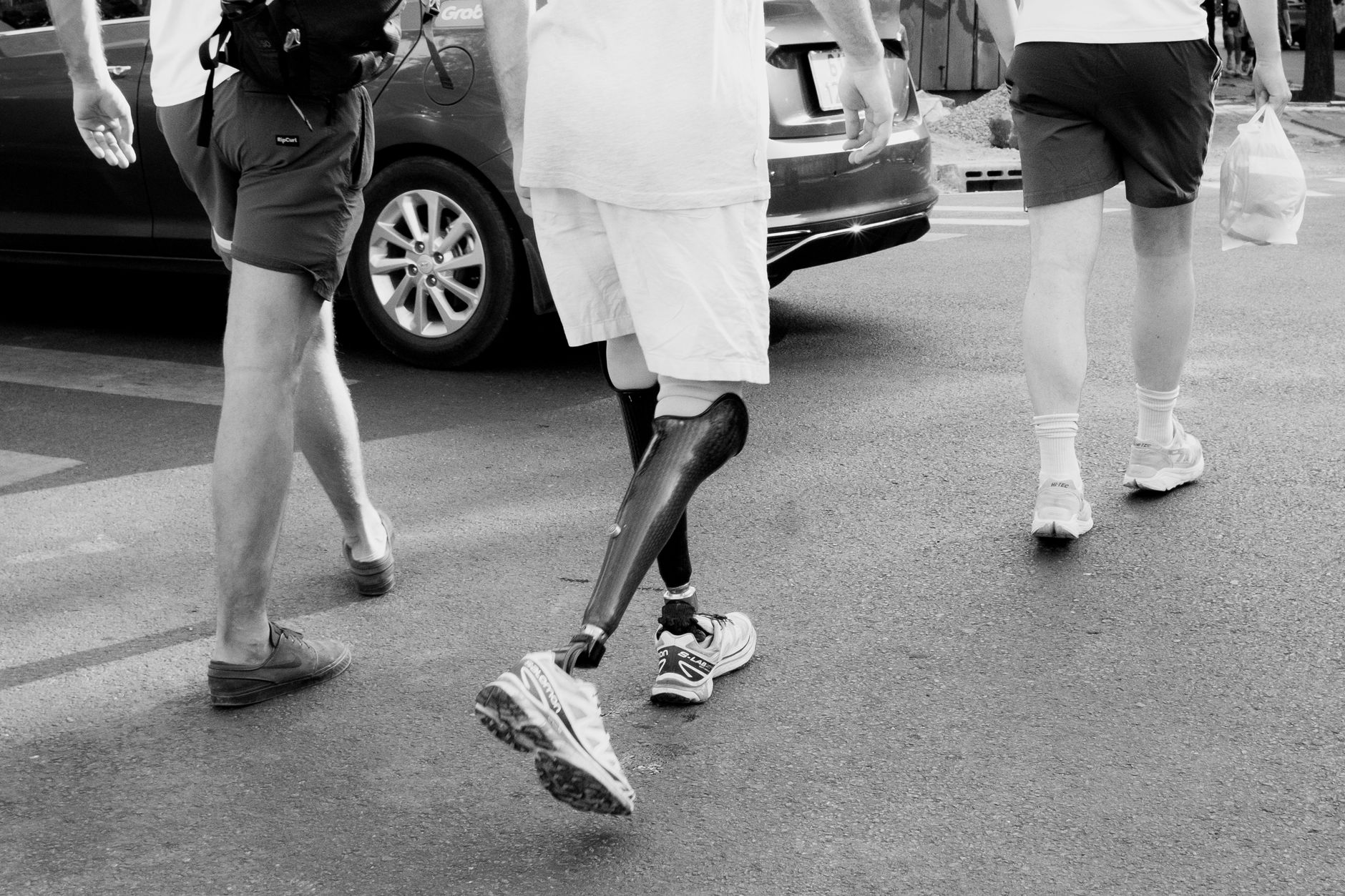
Amputation & Limb Loss Injuries
You Lost a Limb in an Accident. Here's What to Do First.
Losing an arm, leg, hand, or foot changes everything in an instant. These first steps protect your health, your recovery, and your right to hold the responsible party accountable.
Focused on Catastrophic, Life-Altering Injuries
Nationwide
Cases accepted across the U.S.
Florida Bar
Licensed, admitted attorneys
EN / ES
Bilingual client support
Free
Confidential case evaluation
By CHG Lawyers · Published August 06, 2026
What to Do After an Amputation Accident: First Steps for Families
If a loved one just lost a limb in an accident, do this in order: call 911, press firmly on the wound to slow the bleeding, and keep the person still and warm until paramedics arrive. Those three actions come first — everything else on this page can wait until your loved one is safe.
We wrote this as a checklist for a terrifying moment, not a law lecture. It starts at the scene, walks through the hospital and early recovery, and — near the end — gently explains why how the accident happened may matter for your family’s future. You can read only the section you need right now and come back later.
This is general information, not medical or legal advice. Always follow your 911 dispatcher and the doctors caring for your loved one.
Not sure what your next step is?
Talk it through with our team — the first consultation is free, confidential, and carries no obligation.
If This Just Happened: What to Do Right Now
Call 911 first. Then focus on the bleeding and on keeping the person calm and still.
The immediate priorities are the person’s airway, breathing, and circulation, getting medical help on the way, and reassuring them, per MedlinePlus. While you wait for paramedics:
- Slow the bleeding. Press firmly on the wound with a clean cloth or sterile dressing, as Cigna’s emergency guidance explains. A complete amputation sometimes bleeds less than you’d expect — don’t let that fool you into easing up.
- Lay them down and keep them warm. Covering them helps prevent shock.
- Stay and talk. Your steady voice matters more than the right words.
Do what you can and hand off the moment paramedics arrive. You are not expected to do this perfectly.
What to Do With the Amputated Body Part
Wrap the amputated part in a clean, damp cloth or gauze, seal it in a plastic bag, and set that bag on ice. Never put the body part directly on ice — direct cold damages the tissue and can end any chance of reattaching it.
Surgeons decide whether reattachment (they call it replantation) is possible partly by how well the part was preserved and how fast it reaches them. So the steps are:
- Wrap the part in clean, damp gauze or cloth.
- Seal it in a plastic bag.
- Set the sealed bag on ice or in cool water — the bag, never the part.
- Bring it with your loved one to the hospital.
Then hand it to responders and let them manage it. Replantation isn’t always possible even when everything is done right — but preserving the part correctly gives surgeons their best shot.
What Is a Traumatic Amputation?
A traumatic amputation is the sudden loss of a limb or extremity in an accident, rather than through planned surgery. In plain terms, a hand, arm, foot, leg, finger, or toe is torn off or damaged so badly it can’t be saved. Motor-vehicle and truck crashes are recognized causes, along with heavy machinery, workplace accidents, and crush injuries.
Doctors describe two types:
- Complete amputation: the body part is fully separated.
- Partial amputation: some tissue still connects the limb, but the damage is severe.
Both are life-altering, and both often mean permanent limb loss and a changed daily life. In the catastrophic cases our attorneys handle, families are often stunned by how fast one accident rewrites everything — the job, the home, the routines.
What Happens During Emergency and Surgical Care
In the ER, the team first stabilizes your loved one, controls blood loss, and assesses the injury before any decision about surgery.
Once the person is stable, surgeons weigh the options. In plain language:
- Replantation: reattaching the limb, when the tissue and timing allow.
- Completion amputation: surgically finishing an amputation the accident started, when the limb can’t be saved.
- Shaping a healthy residual limb (the “stump”): so it can heal and, later, support a prosthetic.
Sometimes the limb can’t be saved even when it was preserved well. That is heartbreaking, and it is a medical reality of severe trauma, not a failure on anyone’s part.
A practical tip from families who’ve been here: keep a small notebook or a note on your phone. Write down the surgeon’s name, medications, and the “next step” you’re told after each conversation. Fear scrambles memory, and notes let you and your family stay on the same page.
How Long Recovery and Healing Take
Surgical wounds after an amputation generally take about two to three months to heal, though timelines vary widely by person and injury, per the Cleveland Clinic.
Healing usually moves through stages:
- Wound healing. The residual limb must stay bandaged, clean, and dry until the stitches (sutures) come out, per Johns Hopkins Medicine.
- Swelling goes down. The limb needs time to settle into a stable shape.
- Prosthetic readiness. Fitting comes only after the limb has healed and its shape has stabilized.
Think in weeks and months, not days. Only the treating team can give a real timeline for your loved one, and recovery is rarely a straight line.
Have questions about what happened?
Ask our team directly. The first conversation is free, confidential, and there is no obligation to continue.
Supporting Your Loved One Through Early Recovery
The best support blends practical help with patience — because this is physical and emotional at the same time.
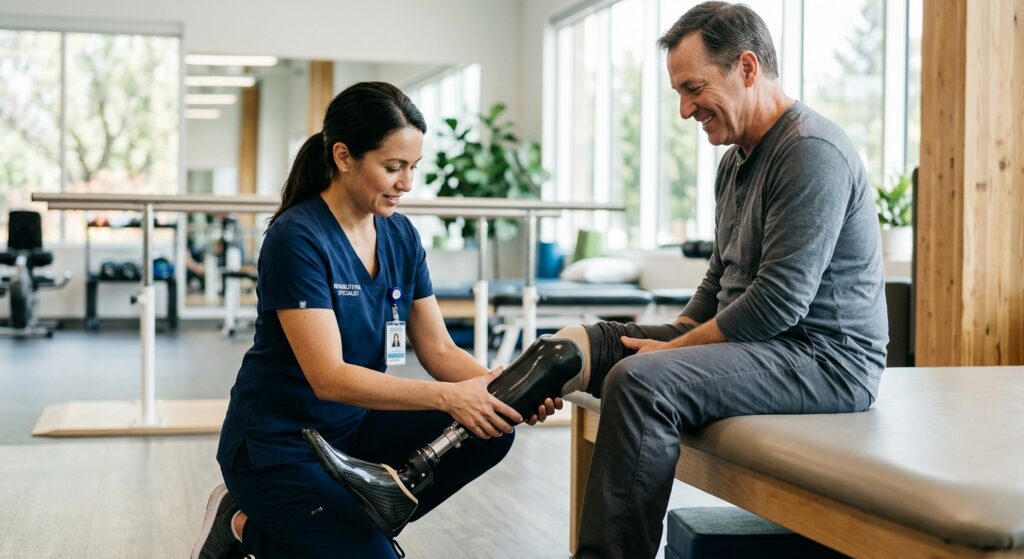
Physical and occupational therapy usually starts soon after surgery, beginning with gentle range-of-motion exercises and building toward strength, balance, and daily skills, per PAM Health.
A few things families often aren’t warned about:
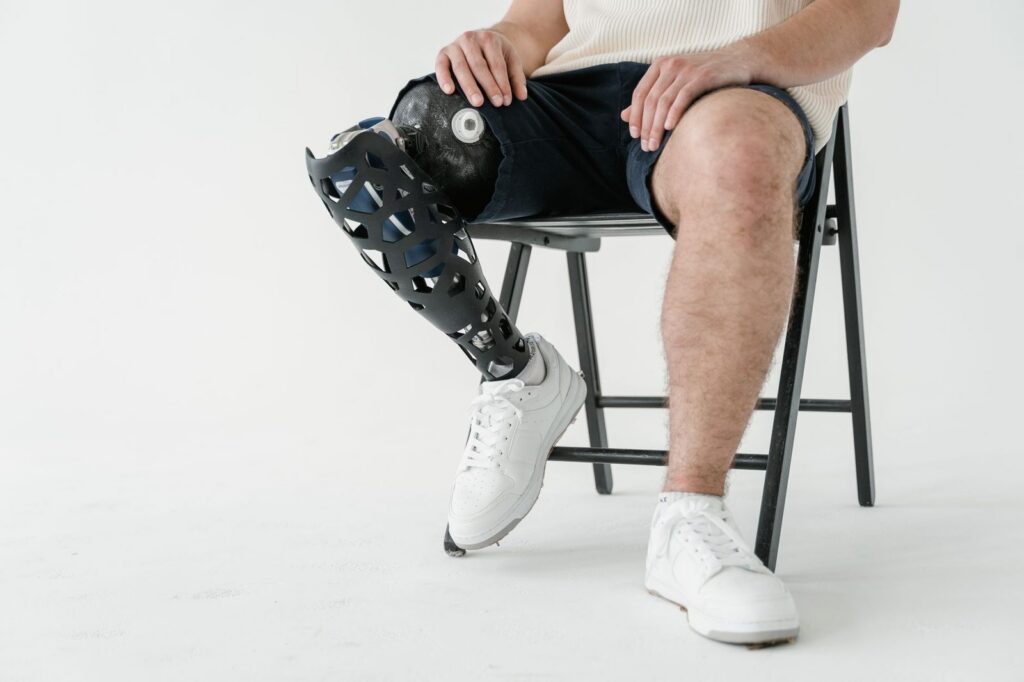
- Prosthetics take time — and keep taking it. The first fitting happens after healing, and a prosthetic isn’t a one-and-done device: it is adjusted, refitted, and eventually replaced over the years.
- Phantom limb sensation is common. Your loved one may feel pain or sensation where the limb used to be. It is real, not imagined, and the care team can help manage it.
- Grief is part of this. Losing a limb is a genuine loss. Anger, sadness, and fear are normal. Counseling and support groups help.
As a caregiver, you’ll juggle appointments, home changes, and your own exhaustion. Make the home safer for a wheelchair or crutches, keep a shared calendar, and accept help when it’s offered.
How the Accident Happened — and Why It Matters
Many traumatic amputations happen because someone else was careless — and that fact can matter enormously for your family’s future.
Think about how the injury occurred. Common examples:
- A truck crash caused by a speeding, distracted, or fatigued driver, or by a trucking company that cut corners on safety.
- Dangerous machinery without proper guards or training.
- A violent attack on someone else’s property.
That last one needs plain language, because most people don’t know it can be a claim. Say your loved one was shot, stabbed, or beaten at an apartment complex, a parking garage, a hotel, a bar, or a gas station — and the property had broken gates, dark walkways, no working cameras, or no guards where danger was foreseeable. When a property owner fails to provide reasonable security and someone is seriously hurt, the owner may share the blame. Lawyers call this negligent security, a type of premises-liability claim. You don’t need to know the term to have a case — you just need to tell someone what happened.
Understanding the cause isn’t about blame for its own sake. It’s about seeing what options your family may have to cover the very real costs ahead.
Protecting the Record While You Focus on Healing
You can protect your family’s rights with a few simple habits, even while your energy goes to your loved one.
What actually helps:
- Keep every medical record and bill. Start one folder or one phone photo album — don’t scatter it.
- Photograph the injuries and the scene if you safely can, or ask someone to.
- Write down what happened while it’s fresh. Small details fade within days.
- Save witness names and contact info, plus any police or incident report numbers.
- Track how life changes — missed work, care hours, and out-of-pocket spending.
One caution: be careful with insurance companies. An adjuster may call early and sound kind. Do not give a recorded statement or sign anything before you understand your rights. Early words can be used later to reduce or deny a claim.
The Costs and Losses a Limb-Loss Injury Creates
A traumatic amputation creates costs that stretch across a lifetime — not just the first hospital bill:
- Lifetime medical care, including revision surgeries and follow-ups.
- Prosthetics, which wear out and are replaced repeatedly over the years.
- Rehabilitation and therapy, often ongoing.
- Home and vehicle modifications for accessibility.
- Lost income and reduced earning ability, if your loved one can’t return to the same work.
- Physical pain and emotional toll — real losses that don’t come with a receipt.
A personal-injury claim exists to help a family cover these long-term needs. We can’t promise any particular result, and we won’t. What we can do is help you understand, honestly, what your family is facing.
Talking With a Lawyer: Why Early Matters
Talking with a lawyer early helps because evidence disappears, deadlines run, and lifetime costs are hard to value alone.
A lawyer who handles catastrophic amputation cases will:
- Investigate how the accident happened and who is responsible.
- Preserve evidence — trucking logs, security footage, maintenance records — before it’s lost or overwritten.
- Work with medical and economic experts to value lifetime care.
- Deal with insurers so your family doesn’t have to.
Timing matters. In Florida, the deadline to file most negligence claims is two years for causes of action that accrued on or after March 24, 2023, under Fla. Stat. §95.11. Florida also follows a modified comparative-negligence rule: under Fla. Stat. §768.81, a person found more than 50% at fault generally recovers nothing. Deadlines vary by case and state, so early guidance protects your options.
CHG Personal Injury Lawyers represents victims of catastrophic injuries in Florida — including Miami, Orlando, Tampa, and Jacksonville — and nationwide. Our attorneys are licensed and admitted to the Florida Bar, and we publish resources in both English and Spanish.
If you’re unsure what to do after an amputation accident, you can request a free case evaluation. There’s no obligation, and it costs nothing to ask questions.
Want to know where you stand?
Tell us what happened and our team will walk you through the options available to you, at no cost.
Related Resources
- Amputation and limb-loss injury claims — the full overview.
- Truck accident claims.
- Catastrophic injury claims.
Frequently Asked Questions
What is it called when you lose a limb in an accident?
It’s called a traumatic amputation — the sudden loss of a limb from an accident rather than a planned surgery.
What is the correct action for a body part that has been accidentally amputated?
Wrap it in clean, damp gauze or cloth, seal it in a plastic bag, set the bag on ice, and bring it to the hospital. Never place the part directly on ice.
How long does it take for the stump of an amputated limb to heal?
Surgical wounds generally take about two to three months to heal, though the exact timeline varies by person and injury, per the Cleveland Clinic. Only the treating doctors can give a real estimate.
How soon does physical therapy start after amputation surgery?
Therapy usually begins soon after surgery with gentle range-of-motion exercises, then builds toward strength and daily skills over time.
How long do I have to file an injury claim after a limb-loss accident in Florida?
For most negligence claims that accrued on or after March 24, 2023, the deadline is two years under Fla. Stat. §95.11. Deadlines vary, so ask a lawyer early.
Your First Steps After a Traumatic Amputation
Get Emergency Medical Care
A traumatic amputation — the sudden loss of a limb in an accident — is a medical emergency. Call 911 and get to a hospital immediately. Nothing matters more than stabilizing your health.
Preserve the Severed Limb
If a body part is amputated, wrap it in clean, damp gauze or cloth, seal it in a plastic bag, and place the bag on ice. Bring it to the hospital — surgeons may be able to use it in treatment.
Follow Every Medical Instruction
Attend follow-up appointments, wound care, and rehabilitation. Consistent treatment supports your recovery and creates a clear record of the harm you've suffered.
Document What Happened
When you're able, save photos, names of witnesses, and any records tied to how the accident happened. These details can matter later when someone else's negligence caused your injury.
Be Careful What You Sign or Say
In the days after a serious injury, an insurance company may contact you with a quick settlement offer or ask for a recorded statement. Amputation is a permanent, lifelong injury, and early offers rarely reflect the full cost of future medical care, prosthetics, and lost income. Talk to an attorney before agreeing to anything.
Why the Cause of Your Accident Matters
Truck and Serious Crashes
Amputations often follow high-force collisions, including truck accidents. When another driver or company was at fault, you may have a claim for your losses.
Unsafe Property
If you were attacked, shot, or hurt on someone else's property — an apartment complex, parking garage, hotel, or business — and lost a limb because the owner failed to provide reasonable security, the property owner may be responsible. This is called negligent security.
Lifelong Costs
Prosthetics, surgeries, home modifications, therapy, and lost earning ability add up over a lifetime. A full claim looks at the future, not just today's bills.
Support for Your Family
Catastrophic injuries affect the whole household. We help families understand their options with clear, plain-language guidance.