

Amputation Injury Claims
Pain and Suffering After Amputation: What Your Losses Are Worth
Losing a limb changes every part of your life. The law recognizes that harm goes far beyond hospital bills. Here is a plain-language look at pain and suffering damages in an amputation case.
Representing People With Life-Altering Injuries
Nationwide
Catastrophic injury cases accepted
FL Bar
Licensed, Florida-admitted attorneys
English & Español
Bilingual client resources
Free
Confidential case evaluations
By CHG Lawyers · Published August 01, 2026
Understanding Pain and Suffering Damages in Limb Loss Cases
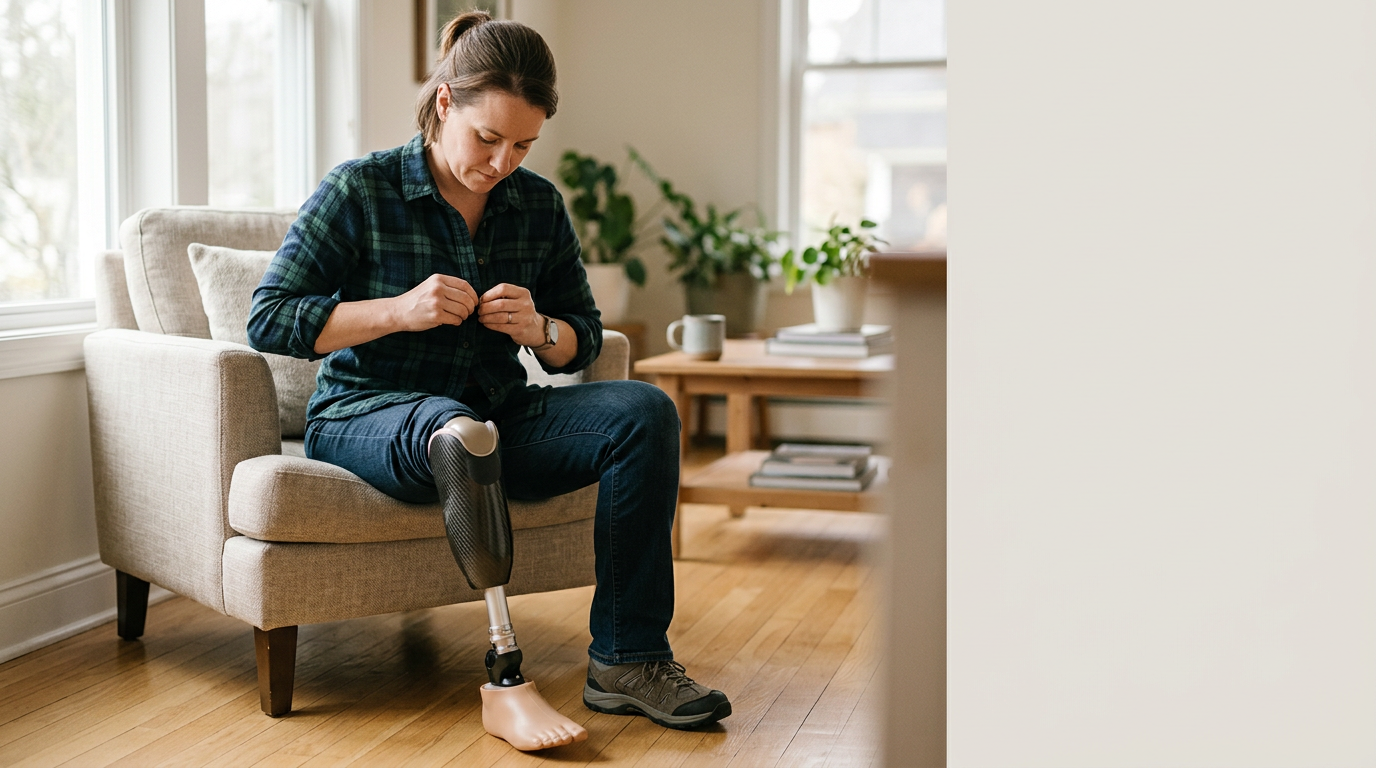
The morning after an amputation, the hardest part often isn’t the surgery. It’s reaching for a coffee cup that isn’t there. It’s buttoning a shirt one-handed. It’s feeling a foot that no longer exists start to ache at 2 a.m.
Losing an arm, leg, hand, or foot doesn’t end when the wound heals. It changes every ordinary hour of your day. It changes the people who love you, too.
The law has a name for this lifelong human cost: pain and suffering damages. This part of a claim exists because some losses have no receipt.
This page explains what pain and suffering covers. It shows how it’s valued, what makes it larger or smaller, and how you prove it. We can’t promise you a dollar amount or a result. But we can help you understand this part of a claim — in plain language, in English or Spanish.

Not sure what your next step is?
Talk it through with our team — the first consultation is free, confidential, and carries no obligation.
What “pain and suffering” means in an amputation case
Pain and suffering is payment for the personal harm caused by a permanent injury. It covers pain, fear, and loss that no invoice can capture. This is harm you can’t put a price tag on.
Limb loss is a catastrophic, permanent injury. It is not a broken bone that mends in six weeks. According to the Amputee Coalition, an estimated 2.1 million Americans live with limb loss. That number is expected to grow.
That figure isn’t just a statistic. It means a large community understands what you’re facing. The law sees the harm as real and lasting.
Our attorneys handle catastrophic cases. In these cases, this human loss is often the single largest part of what a person has endured. Yet it’s the easiest part to under-count if no one records it with care.
Economic vs. non-economic damages: where pain and suffering fits
Pain and suffering is one type of non-economic damages. These are losses without a fixed price tag. A full claim usually has two sides.
Economic damages are your money losses you can measure. In an amputation case, these often include:
- Emergency care, surgery, and hospital stays
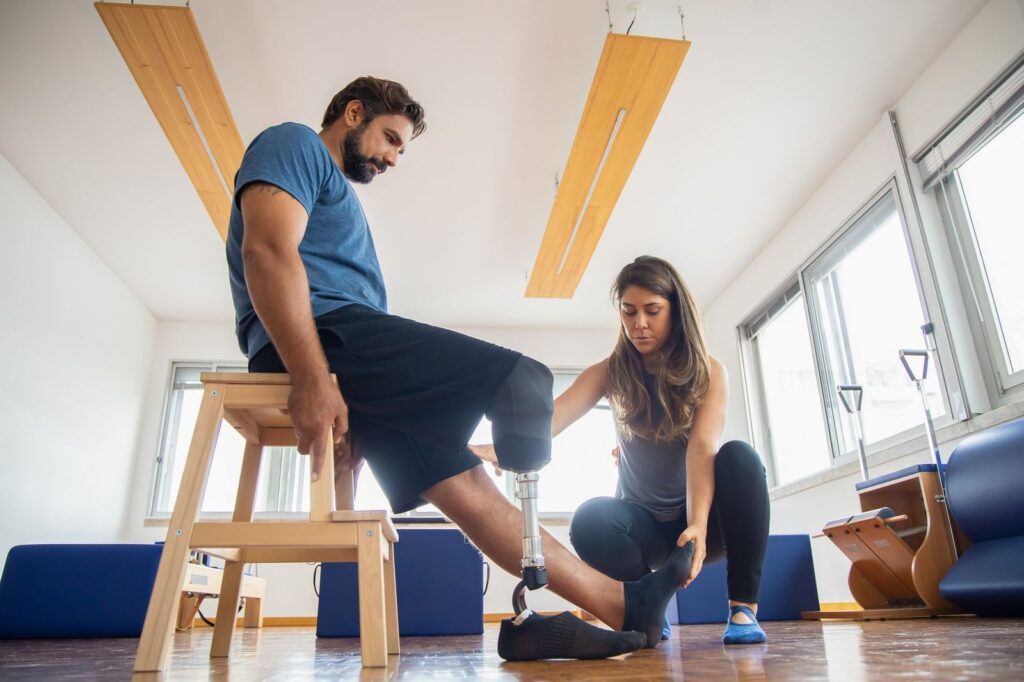
- Prosthetic limbs, plus future replacements and upkeep. A myoelectric arm can cost tens of thousands of dollars. It is usually replaced every three to five years.
- Rehabilitation, physical therapy, and occupational therapy
- Lost wages and reduced future earning power
- Home and vehicle changes, like ramps, wider doors, and hand controls
- In-home care or help with daily tasks
Non-economic damages cover the human cost. These include pain and suffering, emotional distress, loss of enjoyment of life, and disfigurement. A strong claim counts the bills and the life behind them.
What pain and suffering actually covers after limb loss
Physical pain. It begins with surgery and wound healing. It often continues as residual-limb pain — pain at the amputation site. Many people also live with phantom limb pain. This is a real, medically recognized pain that feels like it comes from the limb that is gone. It is often long-lasting. The law treats it as part of your suffering, not something imagined.
Emotional and psychological harm. Grief, depression, anxiety, and post-traumatic stress are common after limb loss. Rebuilding trust in a changed body takes time and courage. These are injuries, not weakness.
Loss of enjoyment of life. You used to do things without thinking — running, playing an instrument, driving, lifting your own child. Now they may take planning, adaptation, or another person’s hands. Losing that independence is one of the hardest parts of limb loss.
Disfigurement. A visible amputation affects self-image, relationships, and how you feel walking into a room. That impact counts.
These effects are lifelong. That permanence is what separates catastrophic limb loss from a temporary injury.
How is pain and suffering calculated in a limb loss claim?
There is no single fixed formula. Lawyers, insurers, and juries use general methods to put a value on this harm. Two are commonly discussed:
- The multiplier method. Your economic damages (bills and wages) are multiplied by a number. That number reflects how serious and lasting the injury is. A permanent amputation with chronic pain usually sits at the higher end.
- The per-diem method. A daily dollar value is set for your suffering. It is multiplied by the number of days the effects will last. For a permanent injury, that timeline can stretch across a lifetime.
These are starting points, not guarantees. Insurers and juries can look at the same facts and reach different results. That’s exactly why documented evidence carries so much weight.
Be careful of any website that advertises a “typical” or “average” amount. Without your facts, that number tells you nothing.
Factors that influence the value of pain and suffering
- Level and location of the amputation. Losing a finger differs from losing a hand, arm, or leg. A below-knee (transtibial) amputation differs from an above-knee (transfemoral) one. Losing an arm disrupts daily tasks differently than losing a leg.
- Age, occupation, and lifestyle. A younger person lives with the loss longer. A physical job or active life can mean a bigger disruption.
- Severity and duration of pain. Ongoing residual-limb and phantom limb pain add to the harm.
- Documented emotional effects. Anxiety, depression, and PTSD carry weight when they are recorded and treated.
- Impact on independence and relationships. Needing help with daily tasks, or losing the ability to work, matters.
- Strength of the evidence. A clear, credible, well-documented account carries more weight than a vague one.
Have questions about what happened?
Ask our team directly. The first conversation is free, confidential, and there is no obligation to continue.
How much can I claim for pain and suffering?
Amounts vary widely and depend entirely on your facts. Anyone who quotes a set figure without knowing your case isn’t giving you real information.
A good outcome isn’t just a large headline number. It’s a full, honest accounting of your lifelong harm, financial and human. What you can recover may also depend on available insurance coverage and state law.
In Florida, your own share of fault can reduce your recovery under the comparative-fault rule (below). The strongest step isn’t an online estimate. It’s building a thorough record and getting a professional evaluation.
Proving pain and suffering: the evidence that matters
Because these losses have no receipts, documentation is everything. Strong evidence often includes:
- Medical records, pain-management notes, and your treating doctor’s testimony
- Mental health records and evaluations showing emotional impact
- A personal journal describing daily pain, struggles, and setbacks
- “Before and after” photos and testimony from family, friends, and coworkers
- A life-care plan (an expert report of your lifelong needs) and expert testimony
Our attorneys handle these cases. Building this record early makes a real difference. Memories fade and details slip away. The sooner your story is captured, the stronger the non-economic side of the claim.
When someone else’s negligence caused the limb loss
You may have a claim when another person’s or company’s carelessness led to your amputation.
Serious accidents. Truck crashes and other severe collisions can crush a limb or tear it off. So can medical negligence when care falls below accepted standards.
Attacked on someone else’s property. Say you were shot, robbed, stabbed, or beaten in an apartment complex, a parking garage, a hotel, a gas station, an ATM, or a store. Say you lost a limb because of it. Now say the property owner had ignored warning signs: broken gate locks, a security camera that hadn’t worked in months, burned-out parking-lot lights, or no guard where crimes had already happened.
When an owner fails to provide reasonable security and a foreseeable attack follows, the injured victim may have a claim against that property owner. The legal name for this kind of claim is negligent security. But you don’t need to know the term to have the case. You just need to have been hurt on a property that should have been safer.
Fault and deadlines in Florida. Florida follows a modified comparative-negligence rule under Fla. Stat. §768.81. If you’re found more than 50% at fault, you generally recover nothing. Otherwise, your damages are reduced by your share.
Timing matters too. As of a 2023 change to the law, the general deadline to file a negligence lawsuit is two years under Fla. Stat. §95.11. Deadlines and rules differ by case and by state, so talk to a lawyer promptly.
If a loved one did not survive: wrongful death and the family
The most catastrophic outcome of any injury is death. If your loved one didn’t survive, we are deeply sorry.
When someone dies because of another’s negligence, surviving family members may bring a wrongful-death claim. In Florida, that claim falls under the Wrongful Death Act, Fla. Stat. §768.21. It lets certain family members recover for losses like companionship, guidance, and mental pain and suffering from the loss.
The focus stays where it belongs — on the family and their next steps. You should not have to face the legal system alone while you grieve.
Want to know where you stand?
Tell us what happened and our team will walk you through the options available to you, at no cost.
How a catastrophic injury lawyer helps value these damages
Here, a catastrophic injury lawyer’s core job is simple. It is to make sure your full harm is documented and no loss is overlooked. That means bringing in medical, vocational, and life-care experts to show the lifelong impact of your amputation.
It also means making sure your non-economic losses stand beside your bills — not behind them — while you and your family focus on healing.
CHG Personal Injury Lawyers are licensed attorneys admitted to the Florida Bar. We handle catastrophic injury cases nationwide. If you or someone you love lost a limb because of another’s negligence, request a free case evaluation. There’s no cost to learn where you stand.
Related resources
- Our main amputation and limb loss claims page.
- Amputation claims in Florida.
- Amputation claims in Miami and Orlando.
Frequently asked questions
What does pain and suffering mean in an amputation case?
It’s payment for the physical pain and emotional harm of losing a limb. It is separate from medical bills and lost wages.
Does phantom limb pain count toward pain and suffering damages?
Yes. Phantom limb pain is a recognized condition, and it is often chronic. It is part of the physical suffering these damages consider.
How is pain and suffering calculated for limb loss?
There’s no fixed formula. Lawyers often discuss the multiplier method and the per-diem method. But every case turns on its own facts.
How much can I claim for pain and suffering after an amputation?
Amounts vary widely based on your specific injury and its lifelong impact. No one can honestly promise a set figure without reviewing your case.
Can I recover pain and suffering if I was partly at fault in Florida?
Possibly. Under Fla. Stat. §768.81, you generally recover nothing if you’re more than 50% at fault. Otherwise, your damages are reduced by your share.
How long do I have to file an amputation injury lawsuit in Florida?
The general deadline for a negligence claim is two years under Fla. Stat. §95.11. Deadlines vary by case, so speak with a lawyer promptly.
What Pain and Suffering Can Cover
Physical Pain
The pain of the injury itself, surgeries, rehabilitation, and ongoing discomfort — including chronic phantom limb pain, a medically recognized condition after amputation.
Emotional Harm
Anxiety, depression, grief over the loss of your limb, and the mental strain of adapting to a permanent change in your body and daily life.
Loss of Enjoyment
The activities, hobbies, work, and everyday moments you can no longer do the way you once could.
Impact on Relationships
Strain on your role in your family and your ability to connect and participate the way you did before your injury.
These Damages Are Separate From Your Bills
Pain and suffering is distinct from medical costs and lost wages. Because these losses are harder to put a number on, insurers often undervalue them — which is why it helps to have a lawyer document the full picture of how your injury affects your life.
How We Help Document Your Losses
Building the Full Record
We gather medical records, expert opinions, and evidence of daily impact to show the true scope of your suffering.
Centering Your Experience
Your day-to-day reality — pain, limitations, and emotional toll — is at the heart of how we present your claim.
Supporting Your Family
Amputation affects everyone in the household. We account for how your injury has changed life for those closest to you.
Plain-Language Guidance
We explain your options clearly, in English or Spanish, so you can make informed decisions without legal jargon.