

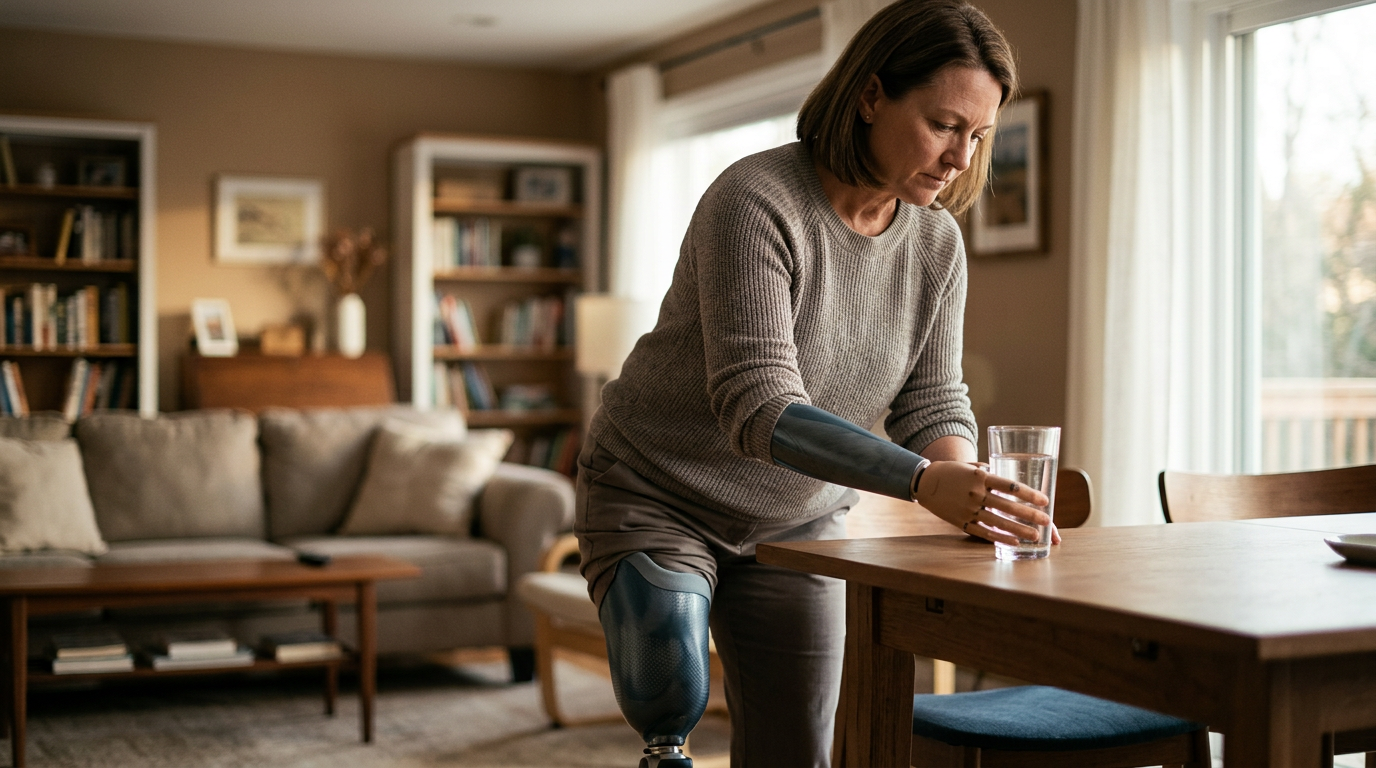
Amputation Injuries | Orlando, Florida
A Car Crash Changed Your Life. You Do Not Have to Face the Claim Alone.
Amputation and limb loss can reshape your work, your family, and your future. CHG Personal Injury Lawyers helps injured people and their families across Florida understand their options after a car accident.
By CHG Lawyers · Published October 14, 2026
Amputation Injuries Orlando: Car Accidents, Florida’s No-Fault System, Your Rights, and Recovery
Amputation injuries can change your daily life. That is why the first hours after an Orlando car accident matter. Understanding how Florida’s insurance system works matters too.
The I-4 corridor has heavy traffic all day. Maybe it’s a minor fender-bender on US-17/92 on the way to an Orlando Magic game. Maybe it’s a serious collision. Either way, what you do right away can shape your claim.
This guide explains Florida’s no-fault system in plain language. It walks you through key steps after a car accident in Orlando. It also explains when legal guidance becomes essential.
Not sure what your next step is?
Talk it through with our team — the first consultation is free, confidential, and carries no obligation.
Immediate Actions After an Orlando Car Accident
Safety first. If anyone is hurt, call 911 right away. If vehicles can be moved safely and no one is hurt, move them out of traffic. This helps prevent secondary crashes.
Exchange information with the other driver: – Full name, phone number, and address – Driver’s license number – Vehicle registration and VIN – Insurance company name and policy number
Document the scene: – Photograph vehicle damage from several angles – Capture road conditions, traffic signals, lane markings, and weather – Note the time of day and the lighting – Take photos of your injuries, even if they seem minor
Get witness information. Ask anyone who saw the crash for their name, phone number, and what they saw. Witnesses can be hard to find later. Their contact information is irreplaceable.
Request the police report number. If the Florida Highway Patrol or Orlando Police Department responds, get the officer’s name, badge number, and accident report number. This report becomes the official record of the crash.
Drivers in some minor crashes may be able to self-report the crash through the Orlando Police Department.
How Florida’s No-Fault Insurance System Works
Florida is a “no-fault” state for personal injury protection (PIP) benefits. These benefits are set out in § 627.736. The system can be confusing because it works differently than many people expect.
Here’s what it means in plain language:
After a crash, your own insurance may provide Personal Injury Protection (PIP) benefits, and under Fla. Stat. § 627.736 those benefits may include medical benefits covering eighty percent of all reasonable expenses for medically necessary medical, surgical, X-ray, dental, and rehabilitative services. This is up to your PIP policy limit. Your insurer covers these costs up to your policy limits. This coverage is called “Personal Injury Protection” or PIP coverage.
Example: You are stopped at a red light on I-4. Another driver rear-ends you. Whether PIP coverage applies to your medical bills depends on your policy and the facts of your case.
For those damages, you may need a separate claim against the at-fault driver. Florida law sets specific requirements for this claim.
The 51% Rule: When You Can Sue the Other Driver
Under Florida Statute § 768.81, a party found to be greater than 50 percent at fault for his or her own harm generally may not recover any damages in negligence actions filed after March 24, 2023, and medical negligence actions are excluded from this rule. Whether it applies depends on the facts of each case. Florida calls this comparative negligence.
Whether comparative fault limits recovery in your case depends on the facts of your case and on applicable Florida law (Fla. Stat. § 768.81(6)).
If you are found partially at fault, your recovery is reduced by your percentage of fault.
Example: A driver runs a red light and hits your car. You are found 15% at fault for not seeing the vehicle in time. You may be able to sue the other driver. Any recovery would be reduced by 15%.
This rule applies to liability claims. Generally, a claim for these losses is made against the other driver, the at-fault party, rather than filed directly against that driver’s insurance company.
Serious Injury Threshold: When No-Fault Insurance Isn’t Enough
Florida law recognizes that some crashes cause permanent, life-altering harm. For pain, suffering, mental anguish, and inconvenience, Florida law generally requires that the injury fall within the categories described in § 627.737(2). That section is referenced in § 627.727(7). Whether your injury meets this requirement depends on the facts and medical records of your case.
Under Florida’s serious injury threshold, damages for pain, suffering, mental anguish, and inconvenience from bodily injury are generally available only if the injury meets the statute’s requirements. Comparative fault may also limit recovery under § 768.81.
The Financial Reality of Catastrophic Injury
A catastrophic injury is more than a medical event. It is a permanent change to your life and your family’s future.
Lifetime care needs after a catastrophic injury, including amputation, can be substantial. They vary by person. Your doctors can explain what your own care may involve.
These costs may include hospitalization, rehabilitation, medical equipment, home modifications, attendant care, and lost earning capacity.
A person who becomes unable to work may lose income for many years. Under Florida’s comparative fault statute, economic damages include past and future lost income, reduced to present value, and medical expenses (§ 768.81).
Families may also need to pay for a wheelchair-accessible vehicle, home modifications, ongoing medical care, and assistive technology. The financial impact can be significant.
Families may face hard choices. One parent may leave work to provide care. Medical debt may build up. Savings may run out. A claim against the at-fault driver may be available when no-fault benefits alone do not cover a loss. This depends on the facts and on applicable Florida law.
Have questions about what happened?
Ask our team directly. The first conversation is free, confidential, and there is no obligation to continue.
How to Document Your Claim
Immediately after the crash: – Photograph your injuries, even minor ones, and repeat as they heal – Keep all medical records, test results, and imaging (X-rays, MRIs, CT scans) – Save all receipts for medical treatment, medications, and medical equipment – Document lost wages (pay stubs, employer statements, tax returns) – Keep all communications with insurance companies (emails, letters, recorded calls) – Write down what you remember about the crash while it’s fresh
Ongoing: – Follow all medical treatment recommendations – Keep a journal of your symptoms, pain levels, and how the injury affects your daily life – Note any permanent changes, such as inability to work, need for help, or lifestyle changes – Save receipts for any out-of-pocket expenses related to the crash
This documentation may become evidence in your claim. Insurance companies and, if necessary, a jury may rely on it.
The Timeline: No-Fault vs. Liability Claims
No-fault claims are handled through your own PIP coverage. How long a claim takes depends on the facts of each case. It also depends on the insurer’s process and the benefits involved.
Liability claims for serious injuries can take longer. The process typically unfolds in these steps:
-
Investigation: Your attorney and the at-fault driver’s insurer gather evidence. This may include police reports, medical records, witness statements, and expert opinions.
-
Demand letter: Your attorney sends a detailed claim to the at-fault driver’s insurer. It explains the crash, your injuries, and the damages you are seeking.
-
Negotiation: The insurer responds with a counteroffer. Back-and-forth negotiation may occur. It may lead to a settlement.
-
Lawsuit (if necessary): If settlement fails, your attorney may file a lawsuit. Discovery, the exchange of evidence, follows. Expert witnesses may be retained. The case may be tried before a jury or settled before trial.
Filing deadlines: Florida’s time limits for filing suit are set by statute. The deadline that applies depends on the type of claim and the facts of your case. See § 95.11.
Do not wait. Waiting can make evidence harder to gather. Memories fade. Witnesses become harder to locate.
When to Reach Out for Legal Guidance
You should consider talking with a personal injury attorney if:
- Your injuries are serious or permanent
- Your medical expenses are higher than your PIP benefits
- You have lost time from work or cannot return to your job
- The at-fault driver’s insurance company is disputing fault
- You are unsure whether your injury meets Florida’s serious injury threshold
- The crash involved multiple vehicles, commercial vehicles, or unclear liability
- You were injured by a rideshare driver, a commercial truck driver, or on someone else’s property
An attorney can explain what Florida law may allow in your situation. They can handle negotiations with insurance companies. They can also help protect your rights.
Frequently Asked Questions
What should I do immediately after a car accident in Orlando?
Check for injuries. Call 911 if anyone is hurt. Move to safety if possible. Exchange information with the other driver. Take photos of the scene and vehicle damage. Get witness contact information. Request the police report number from the responding officer.
How does Florida’s no-fault insurance system work?
Your own insurance (Personal Injury Protection, or PIP) may include medical benefits for eighty percent of all reasonable expenses for medically necessary medical, surgical, X-ray, dental, and rehabilitative services, depending on the facts of your case and applicable Florida law. This is up to the $10,000 policy limit, under § 627.736.
Whether the medical benefits described under Fla. Stat. § 627.736 apply may depend on whether the individual receives initial services and care within 14 days after the motor vehicle accident. Medical benefits may be limited to $2,500 if a provider determines that you did not have an emergency medical condition.
What is the 51% rule in Florida?
Under Florida’s comparative fault law, § 768.81, a party found to be greater than 50 percent at fault for his or her own harm may not recover any damages. Under Florida law, a party found to be greater than 50 percent at fault for his or her own harm generally may not recover any damages in negligence actions filed after March 24, 2023, and medical negligence actions are excluded from this rule. If you are partially at fault, your recovery is reduced by your percentage of fault.
When can I sue the other driver after a car accident?
Whether and when you can sue depends on the facts of your case and the type of claim. Pain and suffering in a Florida motor-vehicle claim generally requires meeting the permanency threshold referenced in § 627.727(7). Filing deadlines are set by statute. See § 95.11.
What damages can I recover in a serious injury claim?
Economic damages may include past and future lost income and medical expenses (§ 768.81).
Pain and suffering and other non-economic damages in a Florida motor-vehicle claim generally require meeting the permanency threshold. Comparative fault may limit recovery (Fla. Stat. § 768.81(6)). Which categories apply depends on the facts of each case.
How long does a car accident settlement take in Florida?
The time varies with the facts of each case. No-fault claims and liability claims move at different speeds. A lawsuit can extend the process.
Are car accident reports public records in Florida?
You may be able to request a copy of your crash report from the agency that responded. This may be the Orlando Police Department or the Florida Highway Patrol. You will generally need the report number and crash date.
Want to know where you stand?
Tell us what happened and our team will walk you through the options available to you, at no cost.
What Comes Next
The financial and emotional reality of a catastrophic injury can be permanent. You have the right to understand your options. You can also learn what Florida law may allow in your situation.
People in your situation often have questions about what happened and what comes next. Contact us for a free, confidential first consultation with no obligation to continue. CHG charges no attorney’s fees and no case costs unless there is a recovery. We will listen to your story, explain how Florida’s system works in your case, and tell you what you can do.
How CHG Approaches Amputation Claims
Focus on the person
Your medical needs, prosthetics, rehabilitation, and daily life come first. We work to document the full impact of your injury.
Careful case review
Car accident claims often depend on crash reports, medical records, and insurance information. We review each piece to understand what happened and what it means for your case.
Serious injury focus
Our practice concentrates on catastrophic injury claims, including amputation and limb loss, spinal cord injuries, and traumatic brain injuries.
Serving Florida communities
We represent people across Florida, including Orlando and the surrounding areas, and we explain each step in plain language.
Before You Speak With an Insurance Adjuster
Insurance representatives may ask for a recorded statement soon after a crash. Your words can be used later, so consider speaking with an attorney before giving one. Each case depends on its own facts.
Steps to Take After a Car Accident
Check for injuries
Call 911 if anyone is hurt, and move to safety if you are able to do so. Medical care comes first.
Document the scene
Take photos of the vehicles, the road, and any visible injuries. Note the time and location of the crash.
Gather information
Exchange insurance and contact details with the other driver, and collect names of any witnesses. Request the police report number from the responding officer.
Keep your records
Save medical bills, prescriptions, prosthetic and rehabilitation records, and notes about missed work and daily limitations.
Talk With an Attorney About Your Amputation Injury
Related practice areas
- Amputation & Limb Loss Injury Claims: A Guide for Victims and Families
- Amputation Injuries in Tampa
- Truck Accident Amputation Lawyer: Help After Losing a Limb in a Crash
- Traumatic Amputation Lawyers: Legal Help After Losing a Limb
- Traumatic Amputation Injury Lawyers
- Traumatic Amputation from a Truck Accident: Legal Help for Victims
- Traumatic Amputation After a Truck Accident: Your Legal Options
- Spinal Cord Injuries: A Guide for Victims and Families Facing Paralysis