

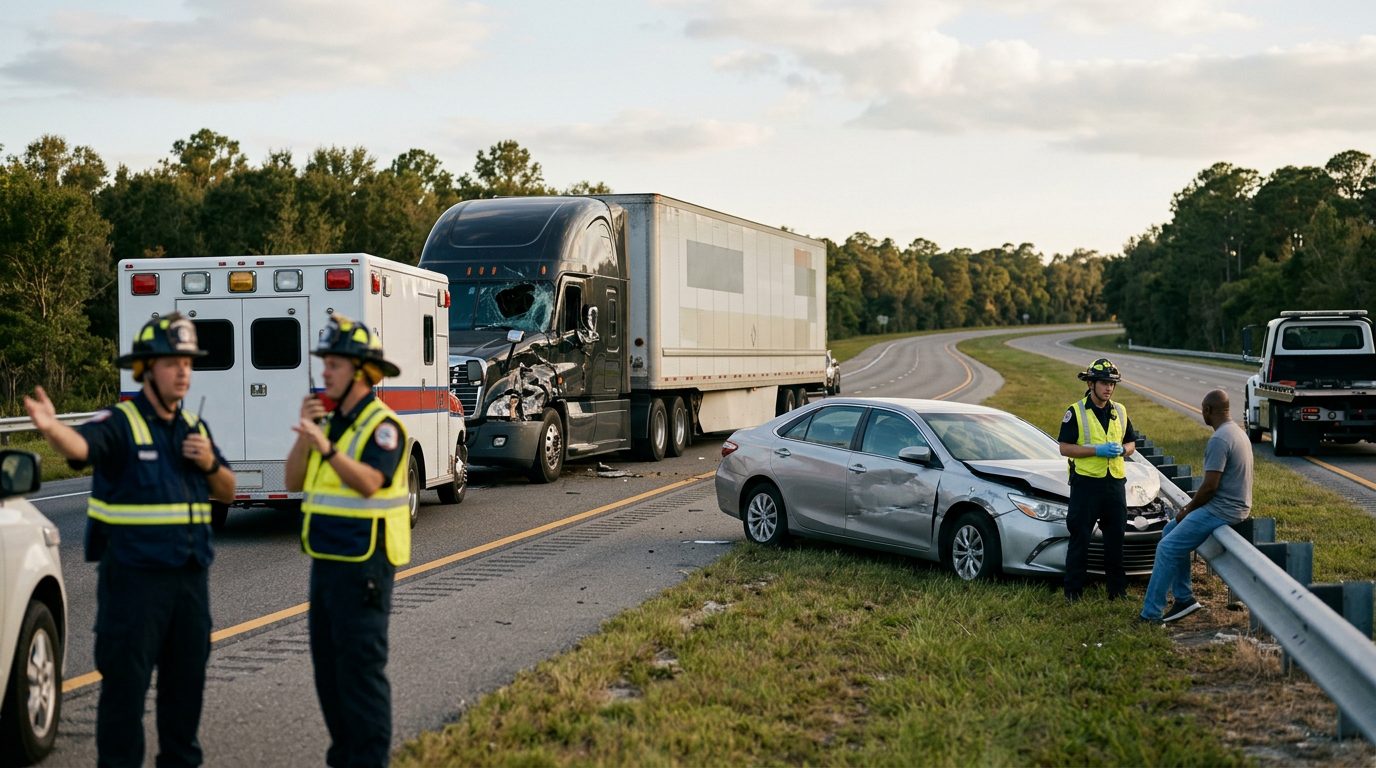
Catastrophic Truck Accident Injuries
Amputation After a Truck Crash: Your Claim Guide
When a truck accident results in limb loss, you face medical, financial, and life-altering challenges. Learn what you need to know about pursuing a claim—and how to move forward.
By CHG Lawyers · Published August 19, 2026
Truck Accident Amputation Injury Claim: Complete Guide to Compensation & Your Legal Rights
You lost a limb in a truck accident. Your life has changed forever. Beyond the immediate trauma and surgery, you face decades of prosthetic replacements, rehabilitation, home modifications, and lost earning potential. The at-fault party—the truck driver, the trucking company, or both—bears legal responsibility for these costs.
A truck accident amputation injury claim is a legal action that seeks to recover compensation for all of these damages: emergency surgery, prosthetics and their lifetime replacement, rehabilitation, lost income, pain and suffering, and the full cost of adapting to permanent limb loss. If the amputation or its complications led to death, your family can pursue a wrongful-death claim.
This guide walks you through what these claims cover, what affects the amount of compensation, how the legal process works step-by-step, and why having experienced attorneys matters when your injury is permanent and life-altering.
Not sure what your next step is?
Talk it through with our team — the first consultation is free, confidential, and carries no obligation.
How Truck Accidents Cause Amputation
Amputation in a truck accident occurs through specific, catastrophic mechanisms:
Crush injuries. A limb becomes trapped between the truck and another vehicle, a guardrail, or debris. A multi-ton truck—often 80,000 pounds or more when fully loaded—crushes the limb so severely that amputation is the only way to save your life.
Severe lacerations and tissue damage. High-speed collisions tear tissue so badly that surgeons cannot repair or save the limb. The damage is too extensive for reconstruction.
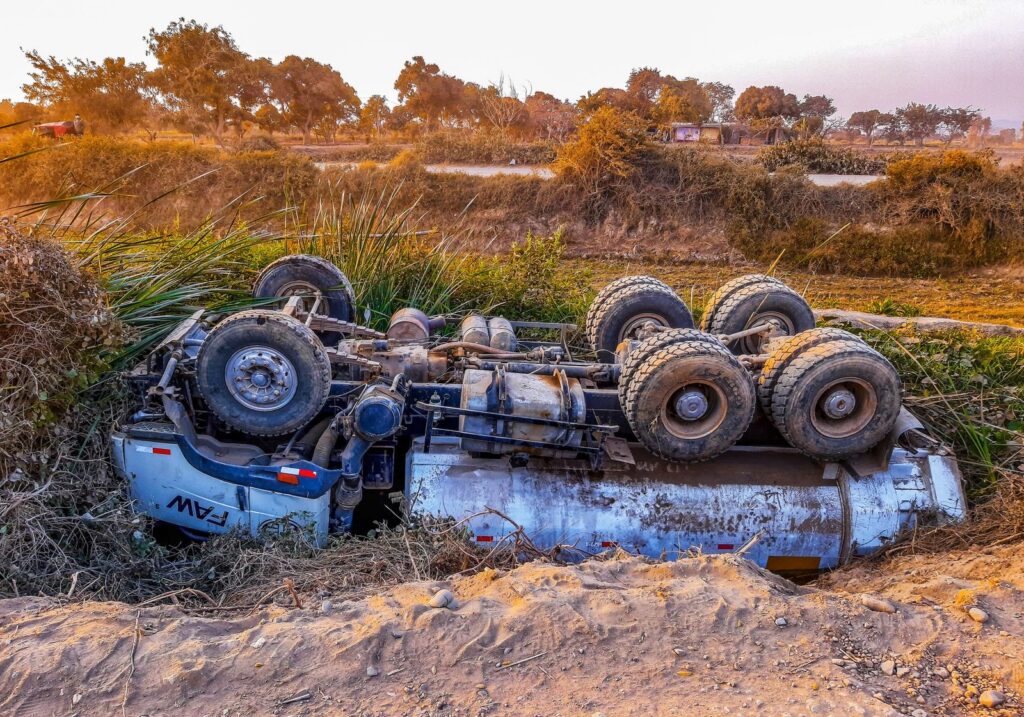
Rollover and jackknife crashes. The truck’s trailer shifts violently, rolling the truck onto its side or causing it to jackknife across multiple lanes. Occupants in nearby vehicles are crushed or have limbs severed.
Blind-spot collisions. Truck drivers have large blind spots on all sides—especially on the right side and directly behind the trailer. A smaller vehicle crushed alongside the truck during a lane change or turn can leave occupants with trapped or severed limbs.
Brake failure and underride crashes. A vehicle slides under a truck’s trailer when the truck cannot stop. Occupants are crushed, often resulting in amputation of the lower extremities or fatal injuries.
What a Truck Accident Amputation Injury Claim Covers
In catastrophic-injury cases, a truck accident amputation claim typically includes:
Emergency and ongoing medical care. Emergency surgery, hospitalization, infection treatment, and follow-up procedures to stabilize your condition and prevent life-threatening complications.
Prosthetic devices and limb replacement. The cost of a prosthetic limb ranges from $20,000 for a basic prosthetic foot to over $100,000 for advanced bionic limbs with microprocessor control. Prosthetics need replacement every 3–5 years due to wear. These lifetime costs are included in your claim. A person who loses a leg at age 35 may need 10–15 prosthetic replacements over their lifetime.
Rehabilitation and physical therapy. Relearning how to move, balance, and perform daily tasks with a prosthetic or adapted techniques. This often takes months or years. It includes occupational therapy, gait training, and psychological counseling.
Home and vehicle modifications. Ramps, accessible bathrooms, modified vehicle controls, grab bars, widened doorways, and other adaptations to make daily life and work possible.
Lost wages and earning capacity. Income lost during recovery and the reduced earning potential if you cannot return to your previous job or career. This includes the difference between your pre-injury and post-injury earning capacity over your remaining working years.
Pain and suffering. Compensation for physical pain, emotional trauma, loss of enjoyment of life, and the psychological impact of permanent limb loss.
Wrongful-death benefits. If the amputation or complications led to death, your family can pursue a wrongful-death claim for funeral costs, lost financial support, and loss of companionship.
How Much Compensation for an Amputated Limb?
There is no fixed formula. Compensation depends on the specific facts of your case and is built from two categories:
Economic damages are calculable and documented: – Emergency surgery and hospitalization – Prosthetics and replacements over your lifetime – Physical therapy and rehabilitation – Home and vehicle modifications – Lost wages during recovery – Reduced earning capacity over your remaining working years – Medical equipment, supplies, and ongoing care
Factors that affect your award:
- Your age and occupation. A 30-year-old construction worker with 35 years of earning potential typically receives more compensation than a 65-year-old retiree. The lifetime cost of prosthetics, care, and lost earning potential is much greater.
- The limb lost. Upper-limb amputations (arm, hand) often result in different compensation than lower-limb amputations (leg, foot). They affect work capacity and daily functioning differently.
- Your earning history and future earning potential. Higher earners typically receive larger awards because their lost income is greater.
- The severity of the amputation and any secondary injuries. A single amputation differs from multiple amputations or amputation combined with spinal cord injury or traumatic brain injury.
- The strength of liability evidence. How clear is it that the truck driver or company was at fault? Strong evidence of negligence or recklessness increases settlement value.
- Whether the case settles or goes to trial. Juries often award more than insurance companies initially offer. Trials are also unpredictable.
Every claim depends on its own facts, so no specific amount can be predicted from the injury alone.
Common Causes of Truck Accident Amputation Injuries
Understanding what caused your accident helps establish liability and strengthens your claim.
Driver fatigue. Tired drivers lose control, drift into other lanes, or fail to brake in time.
Speeding and reckless driving. Excessive speed reduces the driver’s ability to steer or stop. It increases the force of impact. A fully loaded truck traveling at 65 mph may need 300 feet or more to stop.
Blind-spot collisions. Truck drivers fail to check mirrors or use cameras before changing lanes or turning. This crushes nearby vehicles. The right-side blind spot extends 20 feet or more beyond the truck’s side.
Brake system failures. Defective brakes or inadequate maintenance cause the truck to collide with vehicles ahead. Federal regulations require regular brake inspections.
Improper cargo loading. Unsecured or overloaded cargo shifts during transit. This causes the truck to tip, jackknife, or lose control. Federal weight limits exist for a reason—exceeding them increases the risk of catastrophic accidents.
Distracted driving. Texting, eating, or other distractions cause the driver to miss hazards or fail to react.
Mechanical defects. Tire blowouts, steering failures, coupling failures, or defective brakes can cause the truck to veer into other traffic or lose control suddenly.
Our attorneys investigate all potential causes and hold all responsible parties accountable—the driver, the trucking company, the cargo loader, equipment manufacturers, and maintenance providers.
Have questions about what happened?
Ask our team directly. The first conversation is free, confidential, and there is no obligation to continue.
How the Truck Accident Amputation Injury Claim Process Works
Here’s what to expect, step-by-step:
Step 1 – Initial consultation. You meet with an attorney to describe the accident, your injuries, and your medical treatment. The attorney reviews police reports, medical records, insurance information, and the circumstances of the crash to assess your claim. This consultation is typically free and confidential.
Step 2 – Investigation. The firm hires accident reconstructionists, medical experts, and engineers to determine what caused the crash and who is liable. We obtain truck maintenance records, driver logs, hours-of-service records, company safety policies, and communications between the trucking company and driver. We also gather witness statements and review dashcam or surveillance footage if available.
Step 3 – Demand and negotiation. Once liability and damages are clear, the firm sends a detailed demand letter to the at-fault party’s insurance company. This letter includes medical records, expert reports, calculations of economic damages, and arguments for non-economic damages. Most cases settle during this phase through negotiation.
Step 4 – Litigation (if needed). If the insurance company refuses a fair offer, the case goes to court. Your attorney presents evidence, expert testimony, medical records, and your testimony to a judge or jury. Discovery—the exchange of documents and depositions—occurs during this phase.
Step 5 – Settlement or verdict. If you settle, you receive compensation and the case closes. If a jury decides in your favor, they award damages. If they rule against you, you may appeal.
Timeline: Simple cases with clear liability may settle in 6–12 months. Complex cases involving significant injuries, multiple parties, or disputed liability often take 2–3 years or longer.
Why Choose CHG Personal Injury Lawyers for Your Truck Accident Amputation Injury Claim
Exclusive focus on catastrophic injuries. Truck accident amputations are a core part of our practice.
Our team includes attorneys licensed in Florida and admitted to the Florida Bar.
Serving Florida from a Florida base. Based in Florida, we serve clients throughout the state, including Miami, Orlando, Tampa, and Jacksonville.
Bilingual resources. We serve English- and Spanish-speaking clients, ensuring clear communication and access to justice.
Contingency-fee model. You pay nothing unless we recover compensation for you. This removes financial barriers and aligns our interests with yours.
Comprehensive expert coordination. We work with accident reconstructionists, medical specialists, prosthetics experts, vocational rehabilitation counselors, and life-care planners to build a complete picture of your lifetime needs and costs.
Empathetic, plain-language approach. We avoid legal jargon and center the human impact of your injury and your needs—not just legal theory.
Frequently Asked Questions
Q: What if I was partly at fault for the accident?
Under Fla. Stat. §768.81, Florida follows comparative negligence. Even if you were partially at fault, you may still recover compensation if you were 50% or less at fault. Your award will be reduced by your percentage of fault. For example, if you are found 20% at fault and your damages are $500,000, you would recover $400,000.
Q: How long do I have to file a claim?
Fla. Stat. §95.11 sets Florida’s statute of limitations for personal injury claims at two years from the date of the accident. For wrongful death, it is two years. Do not delay—evidence can be lost, witnesses’ memories fade, and critical details become harder to reconstruct.
Q: Will my case go to trial?
Most cases settle before trial. We are prepared to litigate if the insurance company will not offer fair compensation. Your attorney will advise you on the best path forward based on the strength of your case and the insurance company’s position.
Q: What if the truck driver was an independent contractor?
The trucking company may still be liable under vicarious liability or negligent hiring and retention laws. We investigate all responsible parties to maximize your recovery.
Q: Can I claim compensation for pain and suffering?
Yes. Pain and suffering damages compensate you for physical pain, emotional distress, loss of enjoyment of life, and the psychological impact of permanent amputation. These damages are often substantial in amputation cases.
Q: What happens if I die from complications of the amputation?
Your family can pursue a wrongful-death claim against the at-fault party. They can seek compensation for funeral costs, lost financial support, and loss of companionship. Wrongful-death claims recognize that the death of a family member is the most catastrophic outcome.

What to Do Now
Gather your medical records. Collect all hospital discharge summaries, surgical reports, prosthetics evaluations, and ongoing treatment notes. These form the foundation of your damages claim.
Document the accident. If you have photos of the crash scene, vehicle damage, or your injuries, keep them safe. Obtain a copy of the police report from the responding agency.
Keep a record of expenses and lost income. Track all medical bills, travel costs, lost wages, and other out-of-pocket expenses related to your injury. This documentation strengthens your claim.
Do not discuss the accident with the insurance company without legal counsel. Anything you say can be used against you. Let your attorney handle all communications.
Contact CHG Personal Injury Lawyers for a free case evaluation. We will review your case, answer your questions, and explain your legal options with no obligation. We represent clients nationwide and understand the full scope of your lifetime needs. Get your free evaluation today.
Want to know where you stand?
Tell us what happened and our team will walk you through the options available to you, at no cost.
Why You Need Legal Help After Amputation
Protect Your Rights Against Negligence
Truck accidents often result from driver error, mechanical failure, or company negligence. We investigate to identify who is liable and hold them accountable.
Navigate Complex Claims
Amputation claims involve multiple parties—the truck driver, the trucking company, maintenance contractors, and insurers. We handle the legal complexity so you can focus on recovery.
Recover Full Compensation
Amputation damages include medical costs, prosthetics, rehabilitation, lost wages, and lifelong care needs. We fight for fair compensation that reflects your permanent injury.
Act Within the Deadline
Florida law sets strict time limits on filing injury claims. Waiting too long can cost you your right to recover. Early legal action preserves evidence and strengthens your case.
What Happens After a Truck Amputation Injury
Immediate Medical & Emergency Care
Amputation requires emergency surgery, infection prevention, and trauma care. Hospital bills, emergency transport, and specialist treatment accumulate quickly. Document all medical records and expenses from day one.
Prosthetic Fitting & Rehabilitation
After amputation, you'll need prosthetic limbs, physical therapy, and occupational therapy to regain mobility and independence. These devices and services are expensive and often require ongoing replacement and adjustment.
Long-Term Care & Adaptation
Amputation changes your ability to work, drive, and perform daily tasks. You may need home modifications, assistive equipment, or ongoing medical care. These lifetime costs are recoverable in your claim.
Investigation & Claim Filing
We investigate the crash, identify negligent parties, gather evidence, and file your claim within Florida's legal deadlines. Early action preserves witness statements, vehicle data, and other critical proof.
Time Is Critical
Under Florida law, you have a limited window to file a personal injury claim after a truck accident. Evidence disappears, witnesses move, and memories fade. The sooner you act, the stronger your case.
Common Questions About Truck Amputation Claims
What if I was partly at fault for the accident?
Florida follows comparative negligence (Fla. Stat. § 768.81(6)). Even if you were partially at fault, you may still recover compensation if you were 50% or less at fault. Your award will be reduced by your percentage of fault. For example, if you are found 20% at fault and your damages are $500,000, you would recover $400,000.
What damages can I recover?
Amputation claims cover medical expenses (surgery, prosthetics, therapy), lost wages and earning capacity, pain and suffering, permanent disability, home and vehicle modifications, and future care costs. We calculate the full value of your lifetime needs.
Who can be held liable?
The truck driver, the trucking company, the vehicle owner, maintenance contractors, and manufacturers may all share liability. We investigate the entire chain to identify every responsible party and maximize your recovery.
How much does it cost to hire an attorney?
We work on contingency: no attorney’s fees unless there is a recovery. You pay nothing upfront, and we only collect a fee if we secure compensation for you. This means our interests align with yours.