
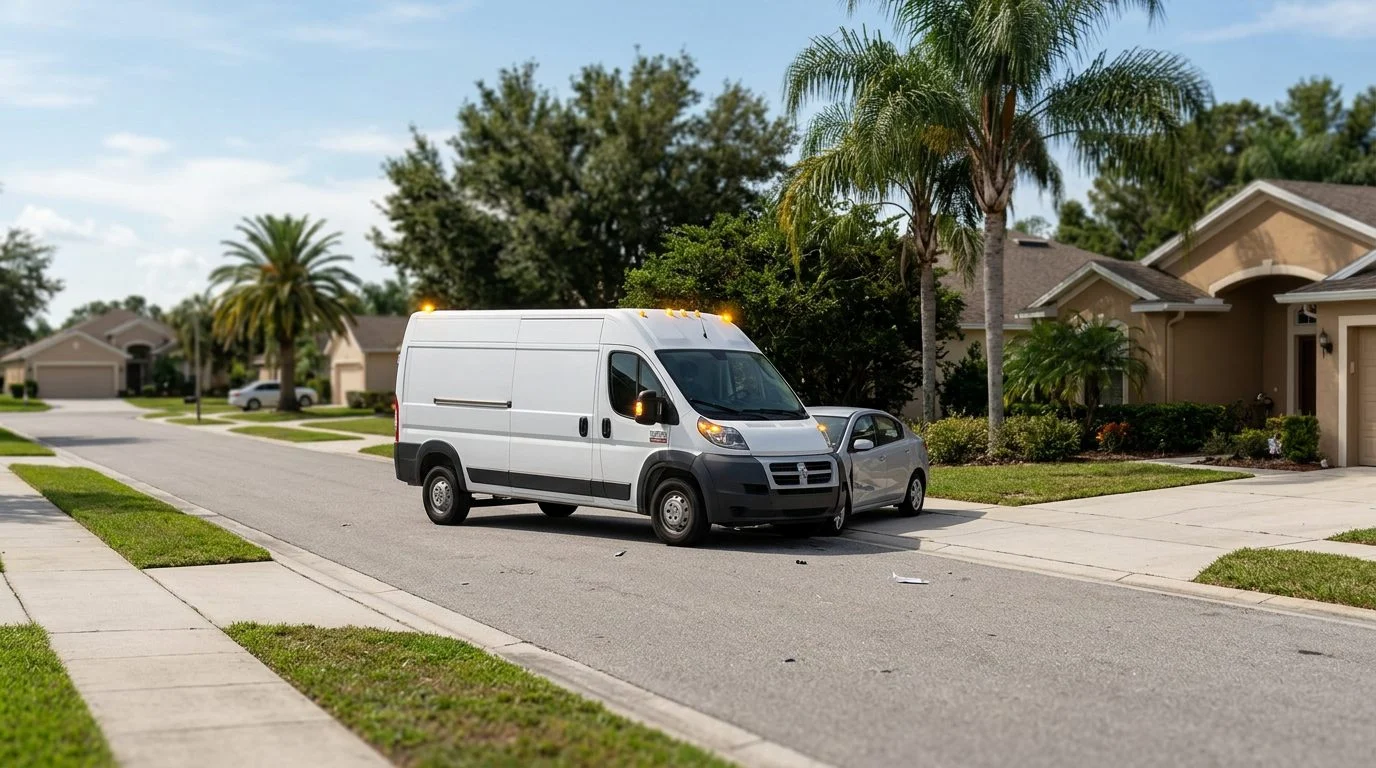
Amazon Delivery Crashes | Florida
Hurt by an Amazon Delivery Vehicle? Learn Who May Be Responsible
A delivery crash can involve the driver, the company that employs or contracts the driver, the vehicle's owner, and others. Here is how to start sorting out who may be involved.
By CHG Lawyers · Published November 27, 2026
If an Amazon delivery van hit you, or someone you love, the questions come fast. Who pays the medical bills? Who is responsible for the damage? In many cases, more than one party may be liable, and the facts decide which ones.
Short answer: the driver, the company that employs the driver, and sometimes Amazon itself may each face a claim. This page explains how Florida law sorts out that question. It is general information, not legal advice. For an overview of this case type, read our Amazon truck accidents page.
If an Amazon Delivery Vehicle Hit You or Someone You Love
The first step is to know that you’re not alone in feeling overwhelmed. Many people reading this are hurt, worried, or helping a family member who is. The paperwork can feel impossible right after a crash.
An Amazon delivery crash often has several moving parts. The driver, the company that put the driver on the road, and several insurers may all be involved. That makes it hard to know who to deal with first.
Start with the crash report. Florida law requires a Florida Traffic Crash Report, Long Form, for crashes that result in death, personal injury, or any indication of complaints of pain or discomfort, and for crashes that involve a commercial motor vehicle. The report must be submitted within 10 days after the officer finishes the investigation. Under § 316.066, the parties, their legal representatives, and their insurers can access it. Write down the crash report number and keep it.
Keep your own records too. Save photos, witness names and phone numbers, medical records, and receipts. Keep every letter from an insurance company.
If an Amazon van crash has left you or someone you love with bills and unanswered questions, our team is ready to talk it through with you. Talk it through with our team — the first consultation is free, confidential, and carries no obligation.
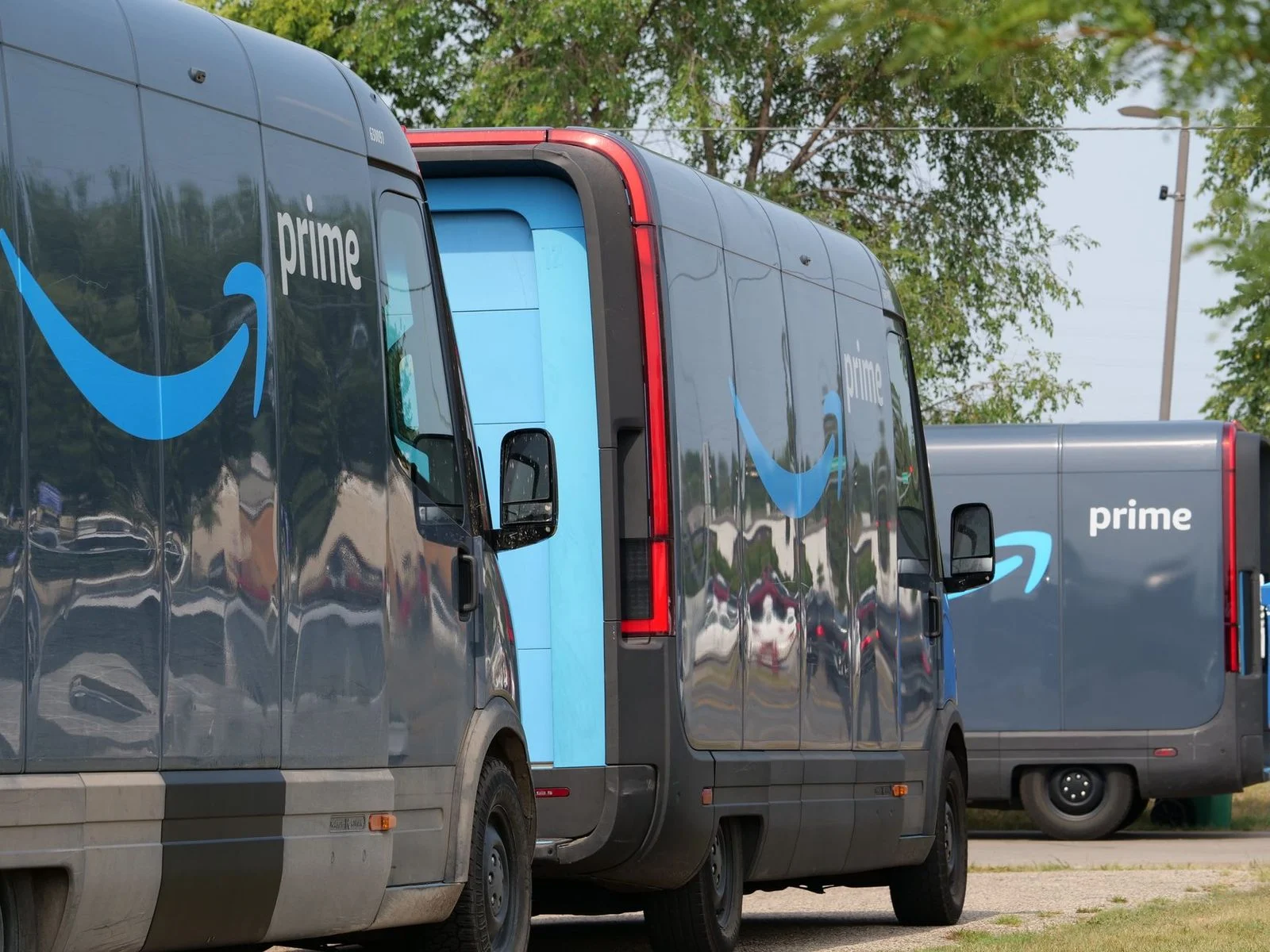
Who Can Be Held Liable After an Amazon Delivery Driver Crash
Liability depends on who employed or controlled the driver and the vehicle when the crash happened. Several parties may fall into that group.
The driver can be liable if careless driving caused the crash. Speeding, distraction, and failing to yield are common examples. Negligence is the usual basis for these claims.
Most Amazon routes are run by Delivery Service Partner (DSP) companies. A DSP often hires the driver, sets the schedule, and may own or lease the van.
Amazon may face a claim in some situations. The question is how much control it had over the driver’s work and routes. The logo on the van alone doesn’t answer it.
Vehicle owners and leasing companies have their own rules. Under 49 U.S.C. § 30106, a rental or leasing owner that is engaged in the trade or business of renting or leasing motor vehicles is not liable just for owning the vehicle for harm arising from its use during the period of the rental or lease, but only if it had no negligence or criminal wrongdoing of its own.
So, can you sue Amazon after a delivery truck crash? Sometimes. A claim is possible in some situations, and it turns on the arrangement and the crash facts. Many claims name more than one party at once.
Why Contractor Status Matters in Amazon Delivery Crash Cases
Many Amazon delivery drivers work for an independent DSP. That means the company that directly employs the driver may not be Amazon.
Courts and insurers often look at who controls the work. Useful facts include who sets routes and schedules, who requires uniforms and branding, and who requires use of a company app or device. They also include who trains and supervises the driver, and who owns, inspects, and maintains the van.
Two legal ideas come up often. A direct claim means the company itself was negligent in hiring, retaining, training, or supervising the driver. A direct claim turns on what the company knew or should have known, and those points are often contested.
Federal rules for trucking companies can matter too. Under 49 U.S.C. § 14102, the Secretary of Transportation may require a carrier that uses vehicles it doesn’t own to put the arrangement in writing. The carrier may also need to carry a copy in each vehicle, obtain liability insurance, and operate those vehicles under safety rules as if it owned them.
How Florida’s 51% Rule Affects an Amazon Delivery Crash Claim
In a negligence action, Florida bars recovery only when the injured person is more than 50 percent at fault; this does not apply to an action for damages for personal injury or wrongful death arising out of medical negligence pursuant to chapter 766. People often call this the 51% rule.
Florida’s comparative fault law states the rule in plain terms. Under § 768.81, in a negligence action to which this section applies, a party found greater than 50 percent at fault for his or her own harm may not recover any damages. This subsection does not apply to an action for damages for personal injury or wrongful death arising out of medical negligence pursuant to chapter 766. Your own share of fault can also reduce what you recover.
In a negligence case, the court enters judgment against each liable party based on that party’s percentage of fault. The law does not make each defendant pay the full amount. So if fault is split among a driver, a delivery company, and others, each share is decided on the evidence.
Chapter 2023-15, Laws of Florida provides: “Except as otherwise expressly provided in this act, this act shall apply to causes of action filed after the effective date of this act.” A defendant who wants to blame someone not in the lawsuit must plead that person’s fault. That is why early evidence matters.
Insurance Coverage in Amazon Delivery Accident Cases in Florida
Several insurance policies may apply. Whether the driver was working at the time often shapes which ones come into play.
The delivery company’s commercial auto policy may apply if the driver was on the job. The driver’s personal policy may apply if the driver was not working. Your own policy may also matter, including coverage for an at-fault driver with little or no insurance.
According to the Florida Department of Highway Safety and Motor Vehicles, Florida requires personal injury protection (PIP) and property damage liability insurance. PIP is no-fault medical coverage. Florida’s PIP rules appear in § 627.736.
An injured party who is entitled to bring suit under the provisions of ss. 627.730-627.7405 shall have no right to recover any damages for which personal injury protection benefits are paid or payable. Florida’s no-fault statute, § 627.737, provides that in any action of tort brought against the owner, registrant, operator, or occupant of a motor vehicle with respect to which security has been provided as required by ss. 627.730-627.7405, or against any person or organization legally responsible for her or his acts or omissions, a plaintiff may recover damages in tort for pain, suffering, mental anguish, and inconvenience because of bodily injury, sickness, or disease arising out of the ownership, maintenance, operation, or use of such motor vehicle only in the event that the injury or disease consists in whole or in part of: (a) significant and permanent loss of an important bodily function; (b) permanent injury within a reasonable degree of medical probability, other than scarring or disfigurement; (c) significant and permanent scarring or disfigurement; or (d) death.
Uninsured and underinsured motorist coverage can be another source of recovery. Under § 627.727, uninsured motorist limits are generally not less than the bodily injury limits the named insured bought, or a lower limit that complies with the insurer’s rating plan and that the named insured selects. Fla. Stat. § 627.727 reads: “The limits set forth in this subsection, and the provisions of subsection (1) which require uninsured motorist coverage to be provided in every motor vehicle policy delivered or issued for delivery in this state, do not apply to any policy which does not provide primary liability insurance that includes coverage for liabilities arising from the maintenance, operation, or use of a specifically insured motor vehicle.” A proposed settlement may also require written notice to underinsured motorist insurers before you sign a full release. Don’t sign any statement or release until you understand it.
Deadlines and Evidence After an Amazon Delivery Truck Crash
Florida generally gives two years to file a lawsuit for negligence (Fla. Stat. § 95.11(5)(a)). Deadlines apply to most actions other than for recovery of real property, and a missed one can end a claim.
Some claims follow different time limits under § 95.11, such as an action for money paid to any governmental authority by mistake or inadvertence, which has a two-year period. Don’t assume the standard two-year period fits every situation. Talk with a lawyer early.
Evidence can fade quickly. Collect it while it’s fresh. Useful items include photos of the van and the scene, the crash report, witness contact information, and any dashcam or security footage. Medical records and records of lost work matter too.
Delivery-company records may also be relevant. These can include route and driver-assignment information. A lawyer can request those records as part of a claim.
Not sure what your next step is?
Talk it through with our team — the first consultation is free, confidential, and carries no obligation.
Frequently Asked Questions About Amazon Delivery Driver Crashes in Florida
What happens if an Amazon delivery driver gets in an accident?
The crash is reported, often on a police crash report, and insurers are notified. The companies and insurers then investigate fault and which coverage applies.
Can you sue Amazon after a delivery truck crash?
Possibly, but only in some situations. The answer turns on how much control Amazon had over the driver’s work and on the crash facts.
What does Florida law say about being more than 50 percent at fault?
Under § 768.81, in a negligence action to which this section applies, any party found to be greater than 50 percent at fault for his or her own harm may not recover any damages. This section does not apply to certain actions, including any action based upon an intentional tort. Partial fault can still reduce a recovery.
Is Amazon liable for their drivers?
Not automatically. Liability depends on who employed and controlled the driver and the vehicle when the crash happened.
What if a passenger or cyclist was hurt?
Those claims can follow different paths. A consultation can cover those details for your situation.
How much is an Amazon crash claim worth?
A claim’s value depends on the facts of each case. General information cannot predict an amount.
Not Sure What Your Next Step Is?
If you’re recovering, handling bills, or helping a family member sort through the paperwork, you may feel stuck. That’s a hard place to be.
CHG Personal Injury Lawyers is Florida-based and serves clients throughout Florida. The firm handles truck accidents, including Amazon delivery crashes. Igor Hernandez, one of the firm’s lawyers, is responsible for this page.
CHG charges no attorney’s fees and no case costs unless there is a recovery. The first consultation is free, confidential, and carries no obligation to continue. Some matters are referred to, or handled with, other law firms, and the firm will tell you if that applies.
If you want help working out who is responsible for your crash, contact CHG Personal Injury Lawyers to talk it through.
How We Help Florida Families After a Delivery Crash
Gathering the Records
We help collect the crash report, photos, delivery records, and medical documentation that can show what happened.
Identifying Everyone Involved
Delivery crashes can involve several companies and insurers. We look at each party whose conduct may be connected to the crash.
Focusing on Recovery
Serious injuries affect the whole family. We aim to keep you informed so you can focus on your health and your loved ones.
Clear, Plain-Language Guidance
Our team explains each step in terms you can understand, in English or Spanish.
Protect Your Evidence Early
Keep your photos, the crash report number, witness contact details, and all medical records. Follow your doctors' care, and contact our team before speaking with an insurance adjuster about the crash.
Questions Families Often Ask
What happens after an Amazon delivery crash?
A police report is often prepared, and the companies and insurers involved are notified. Each party's role is then investigated.
Can a family sue Amazon?
Our team can review your situation.
Who else might be involved?
The driver, the delivery contractor, the vehicle owner, and other companies may all be part of the investigation.
How do I get started?
Contact CHG Personal Injury Lawyers for a free, confidential consultation with no obligation to continue.