
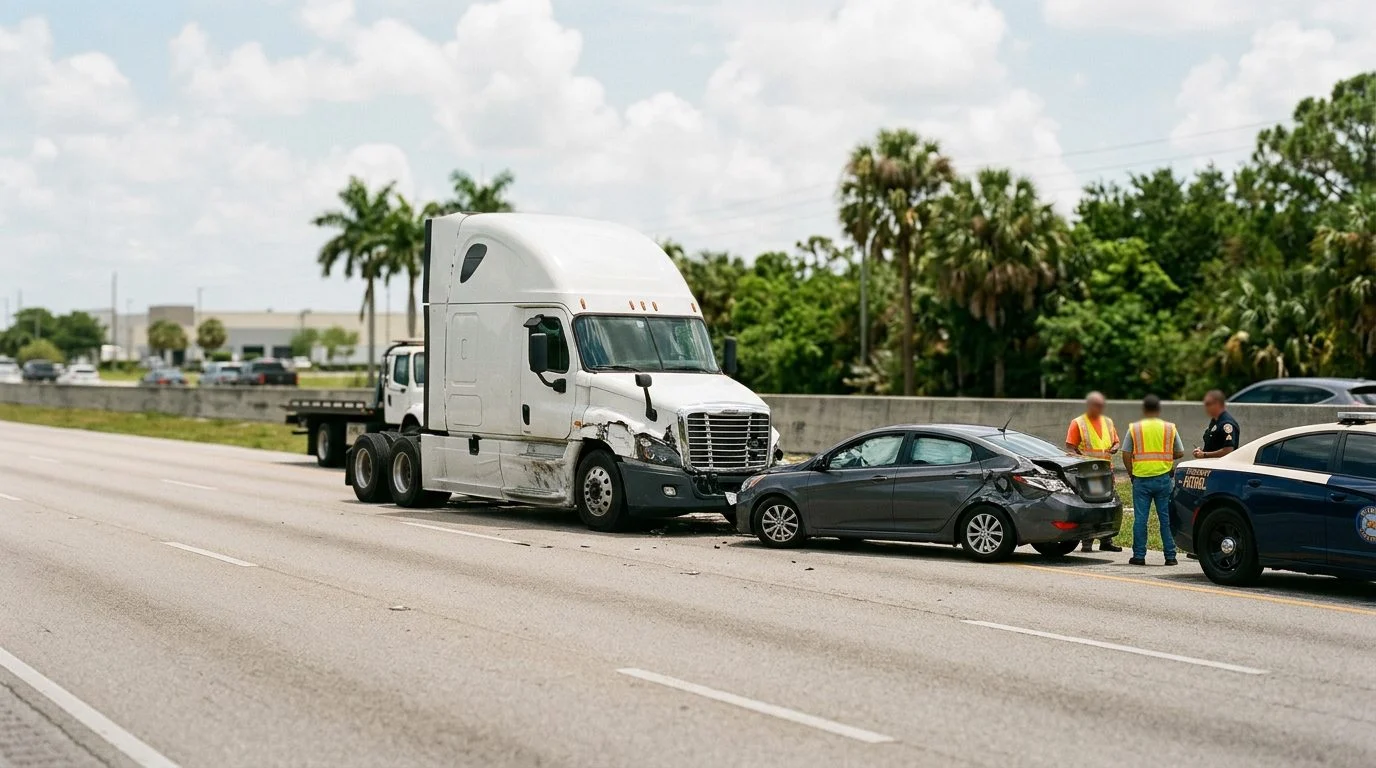
Florida Truck Crash Injuries
Hurt in a Delivery Truck Crash? Find Out Who Pays Your Medical Bills
Bills can arrive while you are still recovering. Here is how the pieces usually fit together, and where to start.
By CHG Lawyers · Published November 14, 2026
Who Pays Medical Bills After a Delivery Truck Crash in Florida
A delivery truck crash in Florida can leave you with hospital bills. You may need treatment for a long time. You may also miss work and paychecks. Many people ask who pays medical bills after a delivery truck accident, and who pays first. The answer is rarely just one insurer.
Not sure what your next step is?
Talk it through with our team — the first consultation is free, confidential, and carries no obligation.

In Florida, Several Sources May Pay
Several sources may pay your bills. These include:
- Your own Personal Injury Protection (PIP) coverage. PIP is no-fault coverage that you carry yourself.
- Your health insurance
- Medicare or Medicaid, where they apply
- The liability insurance of the at-fault driver or the company that owns the truck
The Florida Motor Vehicle No-Fault Law covers Sections 627.730-627.7405 of the Florida Statutes.
The Short Answer
Your own PIP coverage and your health insurance are usually the first sources to check. Medicaid may also apply. When it does, its role is different from the other sources. The at-fault party’s liability insurance is another main source.
The order in which these sources pay matters. That order depends on:
- The facts of your crash
- Your policies
- Who was hurt
This page explains the usual framework. It also shows you the questions to ask.
Early steps make every later step easier. These include getting medical care and keeping records.
Why a Delivery Truck Crash Raises Different Billing Questions
Delivery trucks and vans often involve more than one business. One company may own the vehicle. A contractor may drive it. The truck may also carry the name of a different delivery service partner.
Each of these businesses may have its own insurance. That means more than one insurer may be involved.
Who was hurt also matters. A driver, a passenger, a pedestrian, and a cyclist may each have different coverage paths. The answers are in each person’s own policies.
The crash report helps sort this out. It lists the parties’ names, addresses, and insurance companies.
Florida’s No-Fault System: Your PIP Coverage Comes First
For most people, your own PIP coverage is the first place to look. PIP can help pay medical bills caused by the accident.
Florida’s PIP benefits statute sets the rules for emergency care. You can read the full terms in Florida’s PIP benefits statute.
Your policy and the statute set the details. These include limits and who qualifies. Read your own policy carefully. Keep a copy with your bills.
Vehicle owners must carry the required security. A “tort” is a civil wrong. It can lead to a lawsuit for damages.
Your providers may also be asked for records. Follow your doctors’ care plan throughout.
Health Insurance, Medicare, and Medicaid: Other Payers That May Step In
Health insurance can pay bills that PIP does not cover. It may also pay while a liability claim is still open.
Medicare follows its own rules. According to the CMS Medicare Secondary Payer overview, a liability insurer generally pays first for accident-related care. This applies when a Medicare beneficiary is injured. Medicare pays second.
Medicaid works differently. Under Florida’s PIP benefits statute, PIP benefits are subject to the Medicaid program. This applies if the Agency for Health Care Administration pays medical assistance related to a motor vehicle accident.
The insurer must then repay the full amount of those benefits to the Medicaid program. It must do so within 30 days after it receives notice of the Medicaid payment.
Under Florida’s collateral sources statute, Medicare, Medicaid, and workers’ compensation benefits are not treated as collateral sources.
Keep a record of every payer and claim number. Also keep every explanation-of-benefits statement. This statement shows what each payer paid. It also shows what it did not cover.
Not sure what your next step is?
Talk it through with our team — the first consultation is free, confidential, and carries no obligation.
Claims Against the At-Fault Driver and the Delivery Company’s Insurer
A liability claim is separate from PIP. It asks the at-fault driver’s insurer, or the insurer of the business that owns the truck, to pay for harm the driver caused. PIP does not replace this claim.
Florida limits pain-and-suffering damages in these cases. Under Florida’s tort exemption statute, you may recover them only in certain situations. The injury must include one of the following:
- Significant and permanent loss of an important bodily function
- Permanent injury within a reasonable degree of medical probability, other than scarring or disfigurement
- Significant and permanent scarring or disfigurement
- Death
Medical bills and lost wages are economic losses.
Ask each insurer for its coverage information. Under Florida’s insurer disclosure statute, a liability insurer must provide a sworn statement within 30 days of a written request. That statement includes the following, along with a statement of any policy or coverage defense which the insurer reasonably believes is available at the time of filing such statement:
- The insurer’s name
- Each insured’s name
- The coverage limits
- A copy of the policy
If the at-fault driver’s coverage falls short, your own uninsured or underinsured motorist coverage may matter. Under Florida’s uninsured motorist statute, those limits must generally be no less than your bodily injury limits.
There are exceptions. One is if you chose a lower limit under the company’s rating plan. Another is if the policy does not provide primary liability insurance. That coverage must cover liabilities from the maintenance, operation, or use of a specifically insured motor vehicle.
Liens, Unpaid Bills, and What Happens to Your Settlement
A lien is a legal claim against money from a settlement. A lien can reduce what you keep.
Some providers treat patients in exchange for a promise of payment. That payment would come from any judgment or settlement. Florida calls this a letter of protection, as defined in Florida’s medical expense evidence statute.
That same statute limits what can be proven about medical costs. For treatment that has already been paid or satisfied, the evidence is limited to the amount actually paid. This is true no matter who made the payment.
Unpaid bills can go to collections. Call each provider early. Ask about billing questions, payment plans, and itemized bills. An itemized bill lists each charge separately.
Check every charge against the explanation of benefits. Do this before any settlement talks begin.
How Florida’s 51% Fault Rule Affects Who Pays
Under Florida’s comparative fault statute, a party found more than 50 percent at fault for his or her own harm may not recover any damages. This applies in a negligence action to which the statute applies. The bar does not apply to an action for personal injury or wrongful death arising out of medical negligence under chapter 766.
Insurers sometimes argue that a driver, passenger, or pedestrian shares the blame. The truck’s data, witness statements, and the crash report can all bear on that percentage.
Florida’s 2023 fault-rule changes apply to lawsuits filed after March 24, 2023. Under Chapter 2023-15, Laws of Florida, the act applies to causes of action filed after its effective date, except as otherwise expressly provided in the act.
Florida Deadlines: Why Timing Matters for Medical Bill Claims
For injuries that accrued after March 24, 2023, Florida’s filing limit for a general negligence lawsuit is two years. “Accrued” means the point when the legal clock starts. It applies to causes of action that accrue after its effective date.
The timing depends on when a claim accrued. So contact the firm promptly. We can review how the deadline applies to your situation.
You can read Florida’s limitations statute at Fla. Stat. § 95.11.
Wrongful death claims brought by family members have their own timing rules. Review them promptly.
Do not assume the clock waits until treatment ends. Talk with a lawyer early. That way, you know the deadline from the start.
Steps That Help Protect Your Medical Bill Claim
Early steps protect both your health and your claim.
- Get care promptly. Follow your doctors’ instructions. Keep a record of every appointment.
- Report the crash to police. Ask for the crash report. It can help identify the parties and their insurers.
- Take photos. Capture the scene, the truck’s markings, your injuries, and any visible damage.
- Keep every record. Save bills, receipts, pharmacy records, mileage logs, and pay stubs that show lost income.
- Save names. Record the driver’s name, the company’s name, and the name of any delivery service partner shown on the truck.
- Review before you sign. Do not sign releases or give recorded statements to an insurer until you have reviewed them.
Not sure what your next step is?
Talk it through with our team — the first consultation is free, confidential, and carries no obligation.

Talk With CHG Personal Injury Lawyers About Your Delivery Truck Bills
A delivery truck or van crash may have left you with bills. You may not know which insurer should pay first. You do not have to sort it out alone.
Our team can review your PIP coverage. We can also review your health and government coverage, the at-fault party’s insurance, and any liens on your bills.
CHG Personal Injury Lawyers is a Florida personal injury firm. Igor Hernandez is the responsible lawyer for this page. The firm’s lawyers are licensed in Florida.
The first consultation is free, confidential, and carries no obligation to continue. CHG charges no attorney’s fees and no case costs unless there is a recovery.
You can contact our team here.
Frequently Asked Questions
Who pays first after a delivery truck crash in Florida?
For many crash bills, your own Personal Injury Protection (PIP) coverage is the first place to look. This is part of Florida’s no-fault system.
Can a hospital place a lien on my settlement?
A provider may assert a lien or a letter of protection tied to a settlement. Ask about it early.
How does Florida’s comparative fault statute treat a party found more than 50 percent at fault?
Under the statute, in a negligence action to which the section applies, any party found to be greater than 50 percent at fault for his or her own harm may not recover any damages; this does not apply to an action for personal injury or wrongful death arising out of medical negligence under chapter 766. The statute’s exceptions and conditions apply.
Common Sources of Payment After a Crash
Your Own PIP Coverage
Florida's no-fault system includes Personal Injury Protection (PIP) coverage on your own auto policy, which is often the first coverage to review after a crash.
Health Insurance
Your health plan may cover treatment, though coverage rules, networks and reimbursement terms vary and should be reviewed with care.
The Truck Company's Insurance
When a commercial vehicle is involved, the trucking company and its insurer may be part of the picture. Coverage questions are often complex and move quickly.
Liens and Letters of Protection
Some providers ask for a lien or a letter of protection tied to a future settlement. These documents can affect what remains for you, so ask about them early.
Before You Sign Anything
Do not sign a lien, a letter of protection, or a settlement release without first speaking with a lawyer. Ask the provider and the insurer to explain every document in writing.
Steps to Take Now
Get Medical Care
Seek treatment right away and follow your doctors' care plans. Your health comes first, and records of your treatment matter later.
Keep Your Records
Save medical bills, pay stubs, photos of the scene, and any letters from insurers. Write down what happened while the details are fresh.
Limit Statements
Be careful about what you say to the trucking company or its insurer. A brief conversation with a lawyer can help you avoid misunderstandings.
Call Us for a Free Review
Our team can help you sort out PIP, health insurance, liens and other bills. Our first consultation is free, confidential, and comes with no obligation to continue.