
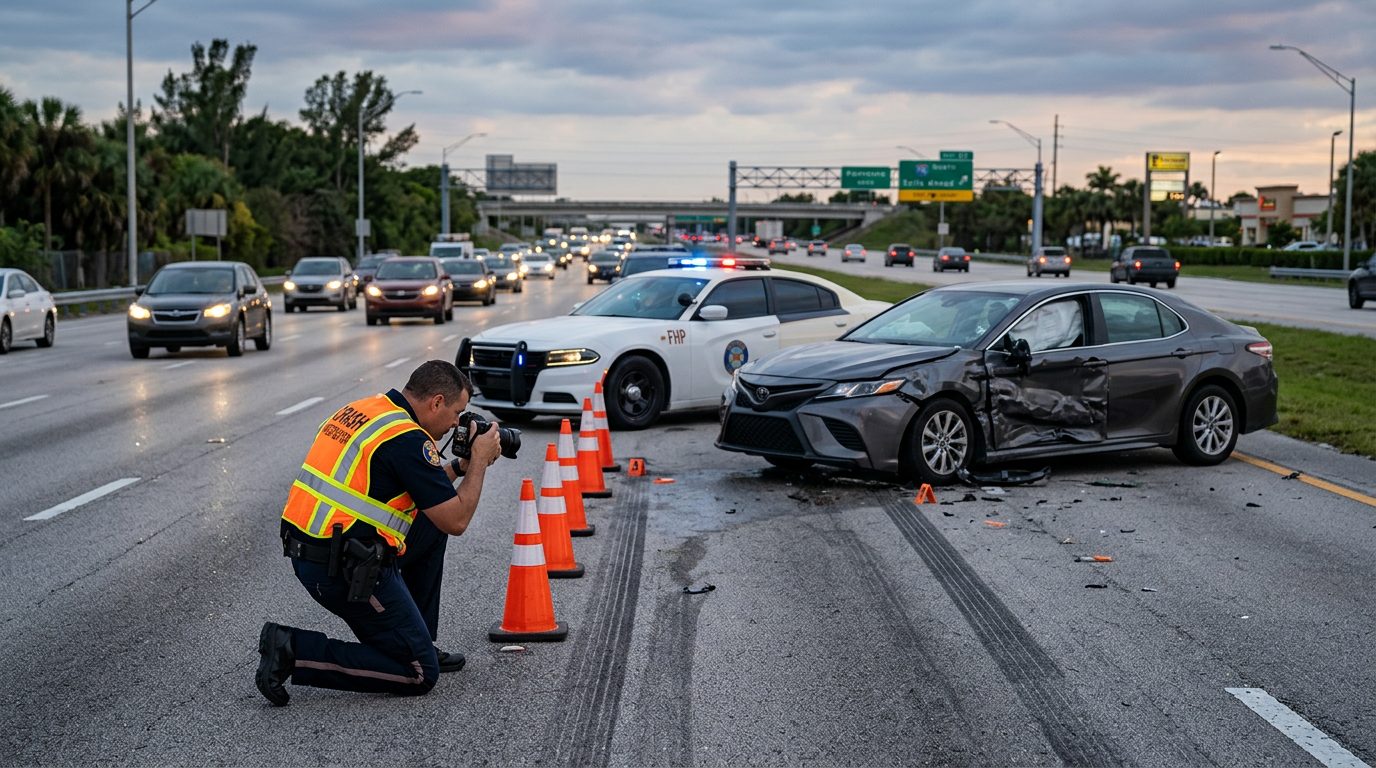
Florida Wrongful Death Claims
When a Government Agency May Be Responsible for a Family's Loss
Losing someone in an accident is overwhelming, and claims against public entities come with their own paperwork. Here is how the process works and how our Florida team can help your family take the next step.
By CHG Lawyers · Published November 28, 2026
Wrongful Death Government Entity Claim Deadline in Florida
Losing someone in a crash or accident involving a city bus, county vehicle, or public property is devastating. When a government entity may be responsible, Florida has special rules. These rules add steps before a wrongful death lawsuit can move forward. Keeping track of those steps is hard while you are grieving.
Not sure what your next step is?
Talk it through with our team — the first consultation is free, confidential, and carries no obligation.
What special notice and deadline rules apply if the death was caused by a city, county, or other government entity?
Florida’s sovereign immunity statute, § 768.28 sets extra conditions.
Sovereign immunity means the government can be sued only when the law allows it.
A death caused by a city bus, a county vehicle, a dangerous road, or a public facility may fall under that statute.
Florida’s Wrongful Death Act still decides two things:
- Who may bring the claim
- What damages a family can seek, meaning the money a family can ask for
Under § 768.20, the action is brought by the decedent’s personal representative. The personal representative is the person in charge of the deceased person’s estate.
Each step has its own timing.
Deadlines are strict. A missed step can put a family’s claim at risk. Grieving families often need help seeing which steps apply first.
Why Florida Claims Against Government Entities Follow Different Rules
Government entities in Florida can be sued only to the extent the law allows. Section 768.28 lifts that protection in specific situations.
One situation is a death caused by the negligent, or careless, act of an employee. The employee must have been acting within the scope of the job. That means the employee was doing their work duties.
The statute covers the state, its agencies, and its subdivisions. Subdivisions are local units of government, such as counties and cities.
Finding out which government body was responsible is a key question on its own. Families may not learn until later that a public agency was involved. A crash report that lists a county vehicle is one common example. Finding that answer early helps you know which steps to take first.
The pre-suit steps also give the agency a chance to review the claim. Pre-suit means before a lawsuit is filed. That review is one reason these steps matter.
Skipping or rushing these steps can cause problems later. This is true even when the family has a strong account of what happened.
The Written Notice and the Wrongful Death Claim Deadline
The first step is a written claim. You present it in writing to the appropriate agency and, unless the claim is against a municipality, county, or the Florida Space Authority, to the Department of Financial Services. Sending it does not start the lawsuit. But it is a required step before a lawsuit can move forward.
The timing comes from § 768.28. For a wrongful death claim, the claimant must present the claim in writing within 2 years after the claim accrues. The claimant is the person making the claim.
Read that statute closely. Or have someone check the timing for your family’s case right away.
Keep proof of delivery, such as a certified mail receipt. Write down the date you sent the claim. Also write down the address it went to.
Describe what happened clearly and accurately. List the losses your family is claiming. The agency reviews that description, so careful wording matters.
Keep a copy of everything you send. Do not wait to mark the date on your calendar. Deadlines in this area are strict. A missed one can block the claim entirely.
The Waiting Period Before a Lawsuit
The timing rules in § 768.28 control when a lawsuit against a government entity can be filed. Confirm them for your family’s case right away.
Put each date on a calendar, counting from the day the cause of action accrues; filing the claim does not change that date. Bring the date of death and every letter from the agency to any consultation. Early records make it much easier to check which dates apply to your family.
Suit Deadlines and Damages in a Florida Wrongful Death Claim
Separate deadlines apply to the lawsuit itself. These differ from the notice deadline.
Florida’s general rule is that a negligence lawsuit must be filed within two years. See § 95.11.
The notice steps can change how that timing works. So confirm it promptly.
Florida law also spells out who may recover money. Under § 768.21:
- A surviving spouse may recover lost companionship and protection.
- A surviving spouse may also recover mental pain and suffering from the date of injury.
- Minor children may recover lost parental companionship, instruction, and guidance.
- Each parent of a deceased minor child may recover mental pain and suffering.
The personal representative may recover the decedent’s lost earnings for the estate. This is reduced by lost support of survivors, not counting contributions in kind (non-cash help). The decedent is the person who died.
The statute also lets a survivor recover medical or funeral expenses that the survivor has paid.
Not sure what your next step is?
Talk it through with our team — the first consultation is free, confidential, and carries no obligation.
What the Family Can Do Next
The most useful next steps are simple. Identify the government body. Protect evidence. Track every date.
Start with the incident or crash report. It often names the agency involved. Then gather what you can while details are still fresh.
- Identify the agency. Check reports and any signs, vehicle markings, or notices tied to the incident.
- Preserve evidence. Save photos, video, texts, and records of bills and funeral costs.
- Keep every letter. Note the date each letter from the agency arrived.
- Write down the details. Record the date of death and the names of any witnesses.
CHG Personal Injury Lawyers charges no attorney’s fees and no case costs unless there is a recovery.
Talk With Our Florida Lawyers About Your Family’s Situation
You may be reading this while grieving. You may also be making decisions for your family at the same time.
If a city bus, county vehicle, or public property played a part in your loved one’s death, the notice timing may feel urgent. You do not have to sort out the government steps alone.
Igor Hernandez, one of the firm’s lawyers, and our team at CHG Personal Injury Lawyers, a Florida-based firm, can talk through two things. They can explain which government body may be involved. They can also explain what the timing means for your family.
Contact our team for a free, confidential consultation with no obligation to continue.

Frequently Asked Questions
What is the deadline to file a wrongful death claim against a government entity in Florida?
Claims against a government agency in Florida follow the written-notice rules in Florida Statute § 768.28. Deadlines apply, so contact the firm promptly. Under that statute, a wrongful death claim against the state or one of its agencies or subdivisions must be presented in writing to the Department of Financial Services within 2 years after the claim accrues. Other deadlines can also apply, so contact CHG Personal Injury Lawyers promptly.
Does the written notice deadline apply to every government agency?
The written notice requirement generally applies to state agencies, counties, cities, and other local government bodies in Florida. The exact steps depend on which government body is responsible for the incident.
Is the deadline to file the lawsuit the same as the deadline to give notice?
No. The notice deadline and the lawsuit deadline are separate. The lawsuit deadline can work differently when a government entity is involved.
Florida’s general wrongful death filing period is two years, under § 95.11. Claims against government entities can follow their own timing rules. Families should not wait to find out which deadlines apply.
What happens after a written claim is filed with a government agency?
In wrongful death actions against a government agency, the claim must first be presented in writing to the Department of Financial Services within 2 years after it accrues. § 768.28 sets this rule for wrongful death claims: the claim must be presented in writing to the Department of Financial Services within 2 years after it accrues. The statute also sets the timing that follows, so it should be checked for your family’s situation.
A lawsuit may then be possible. No outcome can be predicted in advance. CHG Personal Injury Lawyers can explain how these steps may apply to your family’s situation during a free, confidential consultation.
How our Florida team supports grieving families
Careful written notice
Claims against government entities begin with a written notice. Our lawyers help families prepare and track that notice correctly.
Attention to every requirement
We review each step of the notice process so that important requirements are not overlooked.
Family-centered guidance
We keep the family's needs at the center, from the first call through every decision that follows.
No fees unless there is a recovery
CHG charges no attorney's fees and no case costs unless there is a recovery.
Deadlines apply to government claims
Claims against government agencies follow strict written-notice rules. Do not wait to learn what they require. Contact the firm promptly so your family can understand the steps in front of you.
Steps families often take first
Gather the basics
Keep the death certificate, accident or incident reports, and any letters from agencies together in one place.
Write down what you remember
Notes about dates, names, and conditions can help your attorney reconstruct what happened.
Be cautious with statements
Talk with a lawyer before giving recorded statements to government representatives.
Reach out early
Contacting our team early helps us explain the notice steps and what follows for your family.