
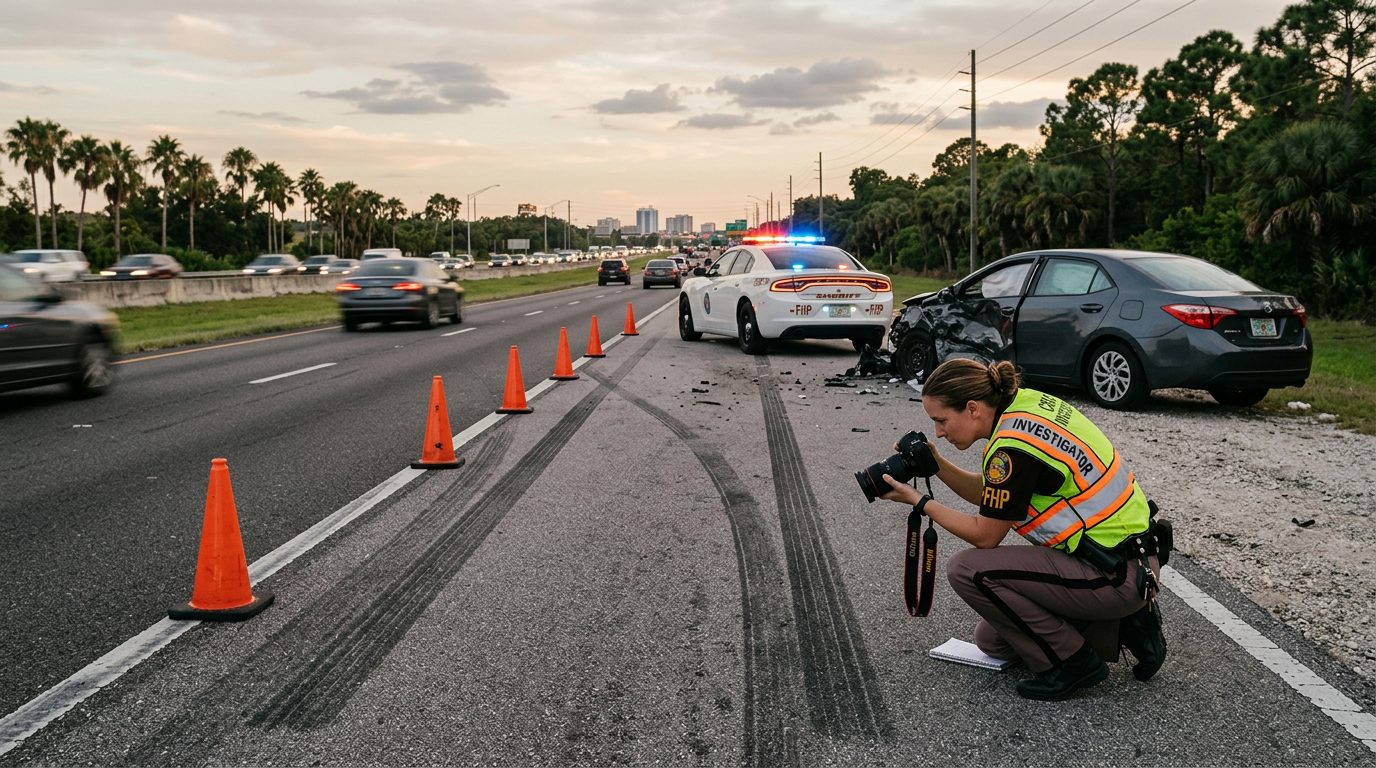
Wrongful Death | Serving Families Throughout Florida
When a Florida Family Loses a Loved One, Clear Answers Matter
Plain-language guidance for families facing the legal and financial questions that follow a sudden, preventable death.
Why Families Contact CHG Personal Injury Lawyers
Florida-Based
Serving families throughout Florida
Licensed
Attorneys admitted to The Florida Bar
Free
Confidential first consultation
By CHG Lawyers · Published November 26, 2026
Losing a family member in a crash, a fall, or another wrongful act is painful. Families often have hard questions. Many ask what the law lets them recover. They also ask who shares in it.
Florida’s wrongful death law answers these questions in general terms. This guide explains the damages and beneficiaries that Florida recognizes. It uses plain language.
What types of damages can families recover in a Florida wrongful death case, and how are they divided among beneficiaries?
Florida families can recover economic losses. These include lost support and household services. They can also recover non-economic losses. These include mental pain and suffering, which the statute allows only for certain survivors, and loss of companionship, which a surviving spouse may recover (minor children may recover lost parental companionship, instruction, and guidance).
The statute says which survivors may recover each kind of loss. The amount for each survivor must be stated separately.
A wrongful death claim is brought for the survivors. It is not brought for the person who died. The decedent’s personal representative sues “for the benefit of the decedent’s survivors and estate” (Fla. Stat. § 768.20).
The personal representative is the person who acts for the estate in court. The money goes to the people left behind and to the estate. The exact division depends on your family’s facts. It depends on who survived and what each person lost.
Losing someone you love leaves your family with hard questions, and you don't have to answer them alone. Our team offers a free, confidential consultation to talk through your options. Talk it through with our team — the first consultation is free, confidential, and carries no obligation.
Who Can Recover Damages in a Florida Wrongful Death Claim?
The spouse, children, and parents of the person who died can recover. Certain blood relatives and adoptive brothers and sisters can recover too. Blood relatives count as survivors only if they were partly or wholly dependent on the decedent for support or services.
The statute defines “minor children” as children under 25. This applies regardless of the age of majority, which is the age when a person is legally an adult. This matters because some losses are tied to minor children.
Adult children have a narrower path. They can recover for lost parental companionship, instruction, and guidance. But adult children may do so only if the decedent left no surviving spouse.
Florida law also requires every potential beneficiary to be named in the lawsuit. This includes the estate. Each person’s relationship to the decedent must be stated too (Fla. Stat. § 768.21).
The claim is filed by the personal representative. Families often ask who this is. The answer comes from the estate’s paperwork. A lawyer can help you sort it out.
What Economic Damages Can Florida Survivors Recover?
Economic damages are money losses a family can measure. They include lost financial support, lost household services, medical bills, and funeral costs.
Survivors may recover the value of lost support and services. This covers the period from the date of injury to the date of death. They may also recover future losses from the date of death. Those future amounts are “reduced to present value.” This means they are adjusted to what they are worth today.
Support includes contributions in kind as well as money. “In kind” means help that is not cash, such as goods or services. Services means tasks, usually of a household nature, regularly performed by the decedent that will be a necessary expense to the survivors (Fla. Stat. § 768.18).
A survivor who paid medical or funeral bills may recover them. Keep every receipt and statement.
The estate has its own claim. It may recover the decedent’s lost earnings from injury to death. The support survivors would have received is subtracted from that amount. Interest is added.
In some cases, the estate may also recover lost net accumulations. These are savings the decedent would probably have kept and left to the estate.
These figures take careful work. Pay records, tax returns, and household budgets all matter.
What Non-Economic Damages Are Available to Spouses, Children, and Parents?
Non-economic damages cover losses that have no price tag. They include companionship, guidance, and mental pain and suffering. Florida law allows a surviving spouse to recover loss of companionship, protection, and mental pain and suffering. Minor children, and all children if there is no surviving spouse, may recover lost parental companionship, instruction, and guidance and mental pain and suffering. For medical negligence claims, adult children and parents of an adult child may not recover these damages. Each group has its own rule. Each group has its own rule.
A surviving spouse may recover for the loss of the decedent’s companionship and protection. The spouse may also recover mental pain and suffering from the date of injury (Fla. Stat. § 768.21).
In Ripple v. CBS Corp. (Fla. 2024), the Florida Supreme Court held that a surviving spouse does not bring a separate loss of consortium claim in this situation. A loss of consortium claim is a separate claim for the loss of a spouse’s companionship and marital relationship. Under the Act, then, the surviving spouse does not pursue a distinct cause of action based on loss of consortium (Ripple v. CBS Corp.).
The court also held that the “marriage before injury” rule does not bar a surviving spouse’s recovery under that subsection. This rule is about when the marriage took place relative to the injury (Ripple v. CBS Corp.).
Minor children may recover lost parental companionship, instruction, and guidance. Under Florida law, a surviving spouse, minor children of the person who died, and all children of the person who died if there is no surviving spouse may recover for mental pain and suffering from the date of injury. Each parent of a deceased minor child may do so, and each parent of an adult child may do so if there are no other survivors. For medical negligence claims, adult children may not recover the lost parental companionship, instruction, and guidance damages, and parents of an adult child may not recover mental pain and suffering damages.
Each parent of a deceased minor child may recover mental pain and suffering from the date of injury. Under Florida law, each parent of an adult child may recover for mental pain and suffering if there are no other survivors (Fla. Stat. § 768.21).
The statute names these categories. Families often feel these losses first and read the law later. The losses it names are deeply personal.
How Are Wrongful Death Damages Divided Among Beneficiaries?
Florida law requires the amount for each survivor and for the estate to be stated separately in the verdict. A verdict is the final decision in the case.
A verdict must state the amount awarded to each survivor and to the estate. Each one is a separate figure. This gives each beneficiary a clear, separate figure (Fla. Stat. § 768.22).
Families sometimes disagree about how to divide the money.
What Is the Deadline to File a Florida Wrongful Death Claim?
A limitations statute sets the deadline for filing a case.
Certain deaths caused by intentional acts follow a different rule. An arrest, formal charges, or a conviction is not required (Fla. Stat. § 95.11).
Deadlines apply. Other timing rules may matter, depending on the facts of the case. Do not wait while you sort out the paperwork. Contact the firm promptly so the deadline is not missed.
Not sure what your next step is?
Talk it through with our team — the first consultation is free, confidential, and carries no obligation.
How Does a Florida Wrongful Death Case Involving a Truck Crash, Drowning, or Other Accident Change the Damages?
The type of accident mainly affects who may be legally responsible.
Florida law covers a death caused by a wrongful act, negligence, default, or breach of contract or warranty. That includes deaths on navigable waters (Fla. Stat. § 768.19).
A truck crash may involve several possible parties. These include the driver, the vehicle owner, or the company that operated the truck. A drowning may involve a property owner, a watercraft operator, or another party. It depends on what happened. Related topics include truck crash claims and drowning cases.
Each family’s claim is its own. Damages are those specified in the wrongful death act.

Talk With Igor Hernandez About Your Family’s Options
Igor Hernandez, a Florida Bar admitted lawyer at CHG Personal Injury Lawyers, can talk with families. He can explain how these rules may apply to their situation.
The firm is Florida-based. It represents clients throughout Florida.
Can a parent recover if a child died?
Yes. Each parent of a deceased minor child may recover mental pain and suffering from the date of injury.
How long do families have to file?
Deadlines apply, so act promptly.
If you are arranging a funeral, reading bills, and trying to understand what the law allows, you are carrying a heavy load. Request a free consultation and talk through your family’s options.
CHG Personal Injury Lawyers charges no attorney’s fees and no case costs unless there is a recovery.
Attorney advertising.
How Our Firm Supports Grieving Families
Compassion First
We understand that a claim is never only about paperwork. We take time to listen to what your family has lost.
Clear Explanations
Our lawyers explain the damages Florida law may address, in plain language, so you can make informed decisions.
Focused on the Family Left Behind
Our firm focuses on helping surviving spouses, children, and parents understand what they can pursue next.
Bilingual Resources
We publish English and Spanish educational content so families can learn at their own pace and in their own language.
Steps Families Can Take Now
Keep Important Records
Gather the death certificate, accident or incident reports, medical and funeral bills, and pay records for the person who died.
Write Down Memories
Note what happened, who was there, and how your loved one's death has changed daily life for your family, while the details are fresh.
Preserve Evidence
Photos, videos, texts, and property connected to the incident can be important. Ask us what should be kept and where it should be stored.
Reach Out Early
Deadlines apply to wrongful death claims in Florida. Speaking with our team early gives your family more time to understand its options.
Important: Act Promptly
Florida deadlines apply to wrongful death claims, and evidence can be lost over time. If your family is considering a claim, contact our firm as soon as you can. Please continue following the guidance of your loved one's medical providers and any other professionals involved in your family's care.