


Traumatic Brain Injury Resources
When a Brain Injury Changes the Person You Love
Personality shifts after a traumatic brain injury are real, common, and deeply confusing for families. This guide explains why they happen, what to expect, and how to protect your loved one's future.
By CHG Lawyers · Published August 05, 2026
Behavioral and Personality Changes After a Brain Injury: A Family’s Guide
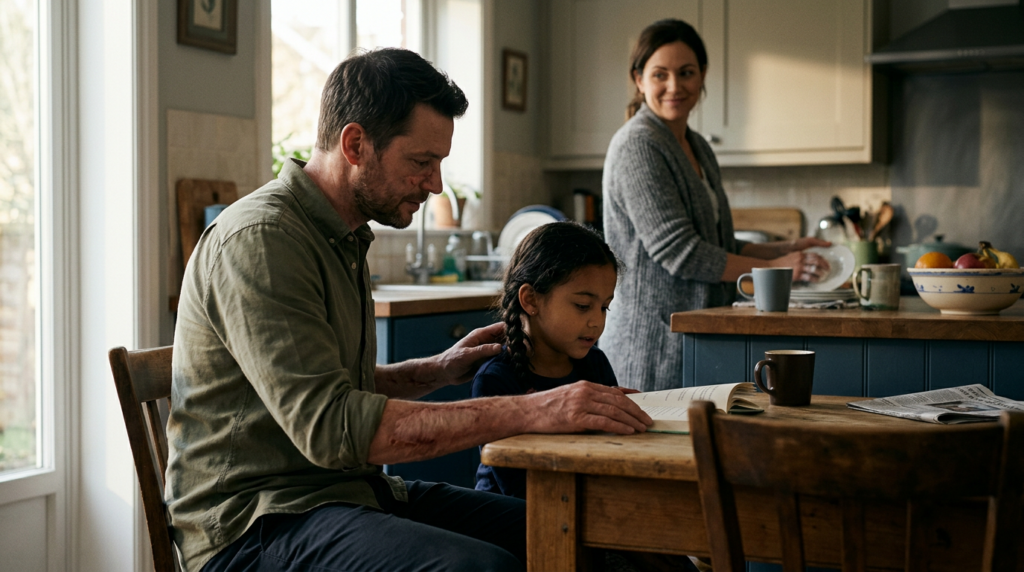
Does the person you love now feel like a stranger? Maybe they are quick to anger. Maybe they seem flat and distant. Maybe they act in ways that frighten you. There is a name for what you’re feeling. Many families call it grieving someone who is still alive. The person is here. They are breathing, in the next room. And yet the husband, mother, or son you knew seems gone.
You are not imagining it. You are not failing them. This guide is written for you—the spouse, parent, adult child, or caregiver. It is not for the survivor or for doctors. It explains why a moderate-to-severe traumatic brain injury (TBI) changes personality. It gives you a tool you can use tonight. It points you to real support. And it covers your options if someone else caused the injury.
If you're in Florida, our Florida traumatic brain injury lawyer page explains how we can help. Talk it through with our team — the first consultation is free, confidential, and carries no obligation.
When the person you love seems like a different person
You may catch a flash of the person you knew. Then a stranger’s temper or silence returns. That back-and-forth is exhausting. And it is real.
This guide is about moderate-to-severe TBI. This is brain trauma that causes lasting change. It often comes from a truck crash, a serious fall, or a violent attack. We are not talking about a routine bump on the head.
These changes have a medical explanation. They are not proof that your family is broken. They do not mean the love is gone. They are the injury speaking.
Why a brain injury changes personality and behavior
Personality lives in the brain. When certain areas are damaged, how a person feels, reacts, and controls impulses changes too.
The frontal lobes sit just behind the forehead. They control judgment, impulse control, planning, and emotions. They are easily hurt in serious head trauma. That is why a person may lose their filter, act on impulse, or struggle with anger after a TBI.
Here is the most important thing to remember: the injury is driving the behavior. It is not a choice. It is not a character flaw. It is not a sign that love is gone. Your loved one is not being difficult on purpose.
These changes can appear right away. They can also show up weeks or months later. Sometimes they surface as the person becomes more aware of what they lost. The Model Systems Knowledge Translation Center is funded by the National Institute on Disability, Independent Living, and Rehabilitation Research. It notes that emotional problems are common after TBI. These include anxiety, depression, mood swings, and irritability. Every brain heals on its own timeline.
Common personality and behavior changes after TBI
The effects vary from person to person. But several patterns show up again and again. Knowing them helps you respond with patience instead of shock.
Irritability, anger, and aggression
Small frustrations can trigger large reactions. This often comes from a damaged ability to control impulses. It is made worse by the deep frustration of tasks that used to be easy.
Impulsivity and poor judgment
Your loved one may say or do things without thinking. They may spend money carelessly, make risky choices, or blurt out hurtful comments. The brain’s “stop and think” system is injured.
Apathy and emotional flatness
Some survivors seem to lose all motivation. They may sit for hours or show little interest in things they once loved. Families often mistake this for depression or laziness. Often it is the injury itself dulling drive and emotion.
Emotional lability and mood swings
A person may cry or laugh in a way that doesn’t match the moment. This is called emotional lability—sudden, hard-to-control emotions. It can feel jarring for everyone.
Anxiety, depression, and withdrawal
As awareness returns, many survivors feel anxious or depressed. They may pull away from the people they love. Social withdrawal is common and painful to watch.
Reduced self-awareness
Often the person doesn’t realize they’ve changed. This is one of the hardest parts for families. Your loved one may insist they’re fine while everyone else sees a difference. Disinhibition—a loss of social filters—can make this very clear in public.
For a fuller picture of how these injuries affect the whole person, see our main guide on traumatic brain injuries.
The A-B-C tool: turning chaos into a pattern you can predict
Difficult behavior rarely comes from nowhere. The A-B-C approach is widely used by rehabilitation teams. It helps families find the pattern behind an outburst. Then you can head it off next time. Here is how to actually use it.
Keep a small notebook or a note on your phone. Every time a hard moment happens, write down three things:
- A — Antecedent: what happened in the minutes right before.
- B — Behavior: what your loved one actually did.
- C — Consequence: what happened right after, including how you responded.
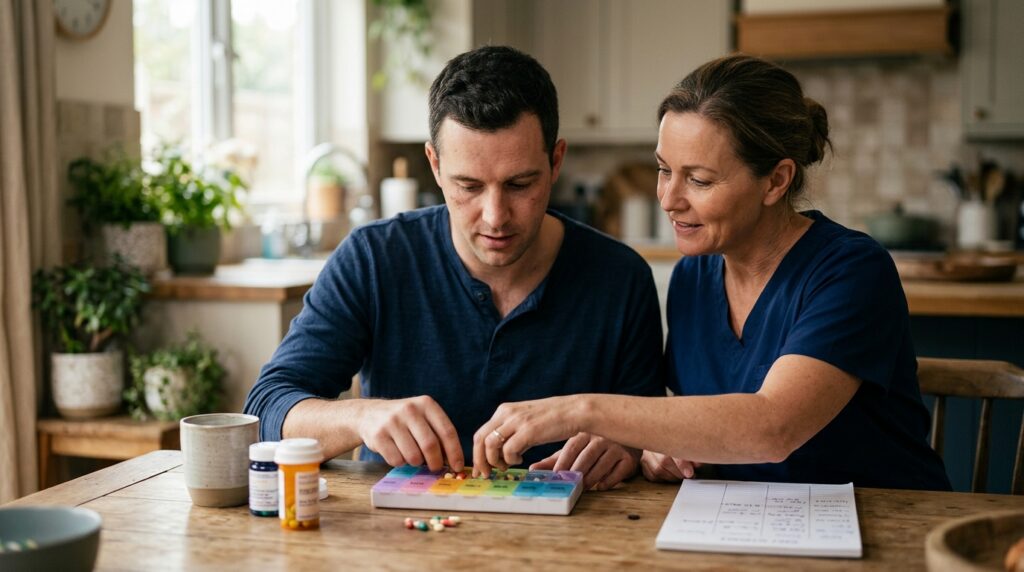
After a week or two, patterns emerge. Maybe anger flares when the room is loud and crowded. Maybe outbursts happen late in the day when your loved one is worn out. Common triggers include fatigue, overstimulation, hunger, and pain.
A real example. Say your loved one snaps almost every evening around dinner. Your log shows the same picture again and again. The TV is blaring while you cook and set the table. And it’s the end of a long day. There is your antecedent—noise plus late-day fatigue. The fix isn’t a lecture. It’s the environment. Turn the TV off. Serve an earlier, calmer meal. Then watch whether the evenings settle. Small changes to the environment often shrink big reactions.
This is an educational overview, not medical advice. A neuropsychologist or rehabilitation team can build a plan for your loved one.
Practical strategies for families and caregivers
None of these “fix” the injury. But they make daily life calmer for everyone.
- Keep routines steady. Predictable days lower anxiety. Try to hold meals, therapy, and bedtime at the same times.
- Reduce overstimulation. Lower noise, dim harsh lights, and clear clutter. Busy spaces overwhelm an injured brain.
- Stay calm during outbursts. Don’t argue or reason mid-conflict. Respond to the emotion, not the words. A steady, quiet voice helps calm things down.
- Keep instructions simple. One step at a time. Allow extra time to process and respond.
- Use breaks and redirection. When tension rises, gently shift attention or offer a rest.
- Protect your own wellbeing. Caregiver burnout is real. Sleep, ask for help, and consider a support group.
Coping with a loved one’s brain injury is a marathon, not a sprint. Give yourself grace on the hard days.
Not sure what your next step is?
Talk it through with our team — the first consultation is free, confidential, and carries no obligation.
Support you can reach today
You do not have to carry this alone. And you don’t have to invent the wheel. National organizations exist for families in exactly your position:
- The Brain Injury Association of America runs a National Brain Injury Information Center (1-800-444-6443). It can connect you to a state affiliate in Florida or wherever you live.
- The Model Systems Knowledge Translation Center publishes free, plain-language TBI fact sheets in English and Spanish. Rehabilitation researchers review them.
If safety is at risk right now, act on it. Is there any threat of violence? Does your loved one talk about self-harm? Treat it as an emergency. Call 988 (the Suicide & Crisis Lifeline) or 911. Watch for warning signs: growing aggression, talk of suicide, deepening depression, or a sudden sharp change in behavior. All of these deserve prompt professional attention.
When to seek professional help
Seek a professional evaluation whenever behavior changes are severe, worsening, or unsafe. Several professionals can help:
- Neurologists diagnose and manage brain conditions.
- Neuropsychologists assess thinking, mood, and behavior and design coping plans.
- Rehabilitation specialists guide recovery and daily function.
- Counselors and therapists support both the survivor and the family.
- Speech-language pathologists help with communication and social skills.
One more warning: a second head impact during recovery can cause serious, sometimes deadly harm. Protecting your loved one from further blows to the head matters. To understand this danger, read our resource on second-impact syndrome.
Long-term care, decisions, and the road ahead
Many families face changes that last months, years, or a lifetime. Planning ahead lets you make steady decisions instead of crisis decisions.
Long-term TBI changes often mean ongoing therapy, supervision, and support. The costs add up fast: therapy bills, in-home help, lost income, and the unpaid hours family members spend as caregivers. These are real, lasting expenses.
Sometimes the injury is severe enough that your loved one can no longer make safe choices about money or medical care. When that happens, families may need legal decision-making authority. Our guide on guardianship after a brain injury explains how that process works.
You don’t have to make these heavy decisions all at once. And you don’t have to make them alone.
When the brain injury was caused by someone else
Did your loved one’s brain injury come from someone else’s carelessness? If so, that person or company may be legally responsible for the harm.
Think about how it happened. Was it a truck accident, where a tired or reckless driver hit your family member? Or was your loved one assaulted, robbed, or attacked in a place that was supposed to be safe? This could be an apartment complex, a parking garage, a hotel, a gas station, or a store. Maybe the property owner ignored broken locks, dead lighting, or missing security cameras and guards. If a violent attack followed, that owner may share the blame. In plain terms, that failure can support a claim. Lawyers call this “negligent security.” You can learn more on our negligent security page.
Here is what many families don’t realize: a claim isn’t only about medical bills. The lost personality. The round-the-clock supervision. The therapy. The caregiving your family now provides. These human losses can be part of a catastrophic injury claim. When a brain injury takes a life, the family may bring a wrongful death claim for the loss they now carry. In the catastrophic-injury cases our attorneys handle, these hidden, human costs are often the most life-altering part of the story.
A few Florida legal points matter here. For claims arising on or after March 24, 2023, Florida generally gives you two years to file most injury claims under Fla. Stat. §95.11. Florida also follows a modified comparative-negligence rule under Fla. Stat. §768.81. This is a shared-fault rule. A person found more than 50% at fault generally recovers nothing. Deadlines and rules vary by state. That matters because we take cases nationwide.
We cannot promise any specific result. Every case is different. But you can learn where you stand at no cost. CHG Personal Injury Lawyers is based in Florida. We publish resources in English and Spanish. We take catastrophic-injury cases nationwide. If you’re in Florida, our Florida traumatic brain injury lawyer page explains how we can help. Or you can request a free case evaluation any time.
You are not alone
Personality changes after a brain injury are a recognized, well-documented part of serious TBI. They are not a private failing your family caused. Naming what’s happening is powerful. It lets you respond with strategy and compassion instead of guilt.
And if someone else’s negligence caused your loved one’s brain injury, you deserve to understand your options. Contact CHG Personal Injury Lawyers for a free, no-obligation case evaluation.
Have questions about what happened?
Ask our team directly. The first conversation is free, confidential, and there is no obligation to continue.
Frequently asked questions
Why does a brain injury change someone’s personality?
A brain injury damages the areas that control mood, judgment, and impulses—especially the frontal lobes. So behavior and emotions change with them.
Is it normal for a loved one to become angry or aggressive after a TBI?
Yes. Irritability, anger, and aggression are common. The injury weakens the brain’s ability to control impulses.
Can personality changes after a brain injury be permanent?
They can be. Some improve with time and therapy. Others last a lifetime after a severe injury. A medical team can help you understand what to expect.
Does the person with a TBI realize they have changed?
Often not. Reduced self-awareness is a common effect. Your loved one may not notice changes that seem obvious to everyone around them.
Can we recover compensation for the emotional and behavioral effects of a brain injury someone else caused?
Possibly. When negligence causes a catastrophic brain injury, the emotional and behavioral toll and caregiving costs can be part of a claim. A free case evaluation can explain your options.
How can families cope with a loved one’s behavior changes after a brain injury?
Keep routines steady. Reduce overstimulation. Stay calm during outbursts. Track triggers with the A-B-C tool. And get support for yourself. A neuropsychologist can build a plan for your loved one.
Common Personality Changes After a TBI
Irritability and Anger
The injury can weaken the brain's ability to control impulses, leading to short tempers, aggression, or outbursts that feel out of character.
Emotional Swings
Sudden crying, flat affect, or rapid mood changes are common when the areas that regulate emotion are damaged.
Poor Judgment and Impulsivity
Damage to the frontal lobes can affect planning, decision-making, and self-control, so a loved one may act without thinking things through.
Withdrawal and Apathy
Some survivors lose interest in relationships, hobbies, or daily activities they once cared about deeply.
Remember: This Is the Injury, Not the Person
Personality changes after a TBI are a medical symptom of brain damage—not a choice your loved one is making. Documenting these changes with treating doctors is important for both care and any legal claim.
How Families Can Cope
Build a Care Team
Neurologists, rehabilitation specialists, and neuropsychologists can identify what's driving the changes and create a treatment plan.
Keep a Symptom Journal
Note behavioral changes, triggers, and patterns. This helps doctors adjust care and creates a record of how the injury affects daily life.
Protect Yourself Too
Caregiver burnout is real. Lean on support groups, respite care, and mental-health resources so you can keep showing up.
Understand the Long-Term Costs
Lifelong therapy, in-home care, and lost income add up. Knowing the true costs matters if someone else's negligence caused the injury.
How CHG Personal Injury Lawyers Can Help
Focused on Catastrophic Injuries
We concentrate on life-altering harms like traumatic brain injuries, spinal cord damage, and severe burns—not routine claims.
Building the Full Picture
We work to document the medical, emotional, and financial toll a TBI takes on the whole family.
Bilingual Support
We publish and communicate in English and Spanish so families can get answers in the language they're most comfortable with.
Licensed Florida Attorneys
Our attorneys are admitted to the Florida Bar and handle catastrophic-injury cases across the country.