


Spinal Cord Injury Guide · Florida & Nationwide
A Spinal Cord Injury Changes Everything. You Don't Have to Face It Alone.
A clear, plain-language guide for people living with paralysis and the families standing beside them — what the diagnosis means, what comes next, and how the law can help you rebuild.
Standing With Catastrophic Injury Victims
Licensed
Attorneys admitted to the Florida Bar
Nationwide
We take catastrophic cases across the country
Bilingual
Guidance in English and Spanish
Free
No-cost, no-obligation case evaluation
By CHG Lawyers · Published August 15, 2026
Spinal Cord Injuries: A Plain-Language Guide for Victims and Families
Most online writing about spinal cord injuries is made for nurses, therapists, and doctors. It’s full of clinical terms no one explained to you. This guide is different. It’s for the person sitting in an ICU waiting room. It’s for the family trying to understand what just happened to someone they love.
Maybe you’re reading this in a hospital hallway, tired and scared. Here is the honest truth about the first days. You will have to make decisions before you understand the words being used. You’ll hear “C5,” “incomplete,” “ASIA A,” and “halo brace.” You’ll get discharge paperwork while you’re still in shock. And somewhere in the middle of it, an insurance adjuster may call and sound friendly.
We’ll explain what those words mean. We’ll cover what the coming years may cost. Then — only after you understand your situation — we’ll explain your legal options if someone else caused this. We earn the right to talk about a claim by first helping you get your footing.

If your family lost someone in a serious accident, a wrongful-death claim may help you seek accountability and support for what lies ahead. Talk it through with our team — the first consultation is free, confidential, and carries no obligation.
What this guide covers (and what it doesn’t)
This guide is about catastrophic, permanent spinal cord injuries. These are the kind that change a life or end one. It is not about a strained back, a bulging disc that heals, or ordinary pain. We focus on injuries that cause lasting paralysis, permanent harm, or death.
You’ll learn what a spinal cord injury is. You’ll learn how doctors classify it, what causes it, and the real long-term costs. We’ll also explain how a claim against a careless party can help pay for a lifetime of care. CHG Personal Injury Lawyers is based in Florida. We publish resources in English and Spanish, and we take catastrophic cases nationwide.
This is educational information, not legal or medical advice. For medical questions, the treating team is your best source. For legal questions about your own facts, talk to a licensed attorney.
What a spinal cord injury actually is
The spinal cord is a bundle of nerves. It’s about as thick as your finger. It carries every signal between the brain and the body. When it’s damaged, the brain can no longer send or receive messages below the injured point. That’s why the injury level matters so much.
The result is usually loss of movement, loss of feeling, or both. According to the Mayo Clinic, a spinal cord injury can also cause loss of bowel and bladder control. It can change sexual function. And with higher injuries, it can cause trouble breathing.
This is nothing like a sore back. Those heal. A catastrophic spinal cord injury usually does not. Most come from sudden trauma, like a crash or a violent attack. A smaller number come from medical events or disease.
Reading the language on the whiteboard: complete vs. incomplete, and levels
Doctors describe these injuries two ways. You’ll see both written on the whiteboard in the room.
How complete the damage is. A complete injury means no movement or feeling remains below the injured level. An incomplete injury means some function survives. The American Spinal Injury Association created the scale doctors use worldwide. It’s called the ASIA Impairment Scale, graded A (complete) through E (normal). When you hear “ASIA A” or “AIS C,” that’s what they mean.
Where on the spine it happened. The spine has four regions, top to bottom: cervical (neck), thoracic (mid-back), lumbar (lower back), and sacral (base). The higher the injury, the more of the body it affects. A “C4” injury is at the fourth neck vertebra. A “T12” is near the bottom of the mid-back.
- Paraplegia affects the lower body. It usually comes from thoracic, lumbar, or sacral injuries.
- Quadriplegia (also called tetraplegia) affects all four limbs. It usually comes from injuries in the neck.
That’s why two people with “a spinal cord injury” can live completely different lives. One may walk with braces. Another may need a ventilator to breathe. Learn more on our page about paralysis, paraplegia, and quadriplegia.
What causes these injuries
Motor vehicle crashes, falls, acts of violence, and sports incidents are leading causes, per the Mayo Clinic.
Truck crashes deserve special attention. That’s roughly 20 times a typical car. When that force reaches a passenger cabin, the spine takes loads it was never built to survive. In the truck cases our attorneys handle, spinal damage often happens on the first impact. See how truck crashes cause spinal cord injuries and how a truck accident spinal cord injury lawyer can help.
When a violent attack causes the injury
Here’s a situation many families don’t realize can be a legal claim. Suppose someone is shot, beaten, stabbed, or otherwise attacked at a place that was supposed to be safe. That could be an apartment complex, a parking garage, a hotel, a gas station, an ATM, or a store. If the property owner failed to provide basic security, and that failure opened the door to the attack, the owner may share the blame for the injury.
Basic security means things like working locks and gates, working lights, and cameras. Where the risk is known, it can also mean guards. Say an owner is in a neighborhood with a history of violent crime. If that owner ignores these basics and someone is paralyzed as a result, the law calls it negligent security. It’s a type of premises liability, meaning a property owner’s legal duty to keep people reasonably safe. See our page on negligent security.
The first days: warning signs, the ER, and what not to do
Certain signs after a crash or fall point to a possible spinal injury. They demand emergency care. The Mayo Clinic lists extreme back or neck pain, weakness or paralysis, numbness, loss of bladder or bowel control, and trouble breathing.
If you suspect a spinal injury, do not move the person. The only exception is immediate danger, like fire. Wrong movement can turn an incomplete injury into a complete one. Call 911 and keep them still.
At the hospital, the team uses CT and MRI imaging and nerve exams. These help find and grade the injury. The first phase is about stabilizing the spine and preventing more damage. This is done sometimes with surgery and sometimes with a brace. Ask the treating team to explain every term they use. Write your questions down as they come to you, because they won’t all come to mind at once.
Life after a spinal cord injury: what actually changes
Recovery is measured in months and years, not days. After the ICU comes acute inpatient rehabilitation. This often means physical and occupational therapy several hours a day. The person relearns how to move between surfaces, dress, and manage a body that no longer responds the way it did.
Everyday health becomes a daily project. Managing bladder and bowel function after a spinal cord injury is part of ongoing care. So is guarding against pressure sores and blood clots. For higher injuries, there is also a dangerous blood-pressure spike called autonomic dysreflexia.
The home usually has to change too. That can mean ramps, wider doorways, a roll-in shower, ceiling lifts, and sometimes a first-floor bedroom. These are not small costs. Our guide to home modifications and paralysis costs breaks them down. And the emotional weight is real for everyone. A spouse or parent often becomes a full-time caregiver and gives up a job to do it. That loss is real, and the law counts it.
Not sure what your next step is?
Talk it through with our team — the first consultation is free, confidential, and carries no obligation.
The long-term cost — the part families never see coming
Lifetime costs for a severe spinal cord injury run into the millions. This is where a rushed settlement does the most damage.
The National Spinal Cord Injury Statistical Center at the University of Alabama at Birmingham keeps the nation’s largest SCI database. Its published figures make the point plainly. The first year alone after a high tetraplegia (C1–C4) injury can top $1.2 million. Each year after that can run into the hundreds of thousands (in the Center’s dollar estimates). Estimated lifetime costs for a 25-year-old with high tetraplegia surpass $5 million. Lower-level injuries cost less, but they still reach well into seven figures.
Those numbers cover medical care, surgery, therapy, medication, equipment, home changes, and paid attendant care. They do not include lost wages. And most people with a serious SCI cannot return to their old work, or any work. The lesson is clear. A fast insurance check almost never covers a lifetime of need. That’s why you should understand the full cost before signing anything.
When someone else’s negligence caused it
If another person’s or a company’s carelessness caused the injury, they may be legally responsible. The law calls that carelessness negligence. It takes many forms. A trucking company might push drivers past legal hours-of-service limits. A driver might run a red light. A property owner might leave a complex with broken gates and dead lighting in an area with a known crime problem.
Compensation in these cases can cover medical bills, projected lifetime care, lost income, and reduced earning ability. It can also cover the human losses — pain, suffering, and the daily changes to how someone lives. See catastrophic injury claims for how these cases work.
One Florida rule to know: the state follows modified comparative negligence under Fla. Stat. §768.81. A person found more than 50% at fault for their own harm generally cannot recover damages. That’s exactly why how fault gets investigated matters so much.
Wrongful death: when a spinal cord injury is fatal
When a spinal cord injury takes a life, surviving family members may be able to bring a wrongful-death claim. Florida’s Wrongful Death Act (Fla. Stat. §768.16–768.26) allows this. A death is the most catastrophic outcome there is. The law gives families a path to accountability.
No claim brings back the person you lost. But it can cover the costs your family now carries. It can also hold the responsible party answerable. In Florida, a personal representative brings these claims on behalf of surviving family members. Our page on the spinal cord injury wrongful death lawyer explains what your family can do next, with care and without graphic detail.
Time limits — and why footage disappears fast
Legal claims have hard deadlines called statutes of limitations. Missing one can end your right to recover, no matter how strong the facts.
In Florida, the general deadline for a negligence-based injury claim is two years. This applies to causes of action that started on or after March 24, 2023, under Fla. Stat. §95.11. Deadlines differ by case type, so never assume yours.
There’s a second clock too, and it runs faster. Truck engine and tracking data can be overwritten within days. Security cameras at apartments and gas stations often loop and erase footage in a week or two. Witnesses move and memories blur. Acting early is how the proof gets saved before it’s gone. See our Florida spinal cord injury statute of limitations guide.
How a catastrophic-injury attorney helps
In the cases our attorneys handle, the work starts right away — while evidence still exists. In practice, that means:
- Investigating the cause. We pull crash data, truck black-box downloads, property security and 911-call records, maintenance logs, and witness accounts. We send preservation letters so footage isn’t erased.
- Documenting the full cost. We work with physicians and life-care planners to project what a lifetime of care truly costs — not just today’s bills.
- Handling the insurers. We deal with the adjusters and negotiations so the family can focus on recovery.
Our attorneys are licensed and admitted to the Florida Bar. We can’t promise a specific result. No honest lawyer can, and Florida Bar rules forbid it. What we offer is a free case evaluation and straight answers. Contact us for a free case evaluation.
Across Florida and nationwide
CHG Personal Injury Lawyers is based in Florida and takes catastrophic spinal cord injury cases nationwide. We serve clients across the state, including in Orlando, Tampa, and Jacksonville. We offer resources in English and Spanish, so language is never a barrier.
Have questions about what happened?
Ask our team directly. The first conversation is free, confidential, and there is no obligation to continue.
Frequently asked questions
Can a spinal cord injury heal, or is the damage permanent?
Many catastrophic spinal cord injuries cause permanent loss of movement or feeling. Incomplete injuries may keep some function. Only the treating doctors can explain the outlook for a specific person.
What does “ASIA A” or “incomplete” on the whiteboard mean?
The ASIA Impairment Scale grades injuries A through E. “A” (complete) means no movement or feeling below the injury. Grades B through D describe more and more preserved function. “E” is normal. An “incomplete” injury means some signal still crosses the injured area.
What is the difference between paraplegia and quadriplegia?
Paraplegia affects the lower body, usually from thoracic, lumbar, or sacral injuries. Quadriplegia affects all four limbs, usually from injuries in the neck.
How long do I have to file a spinal cord injury claim in Florida?
The general deadline is two years for negligence claims that started on or after March 24, 2023, under Fla. Stat. §95.11. Deadlines vary by case, so ask an attorney early. Also note that key evidence like camera footage can vanish within days.
How much does lifelong spinal cord injury care cost?
Published NSCISC figures put first-year and lifetime costs for the most severe injuries into the millions of dollars. The exact amount depends on the injury level and the person.
Does the firm take spinal cord injury cases outside Florida?
Yes. CHG Personal Injury Lawyers is based in Florida and handles catastrophic spinal cord injury cases nationwide.
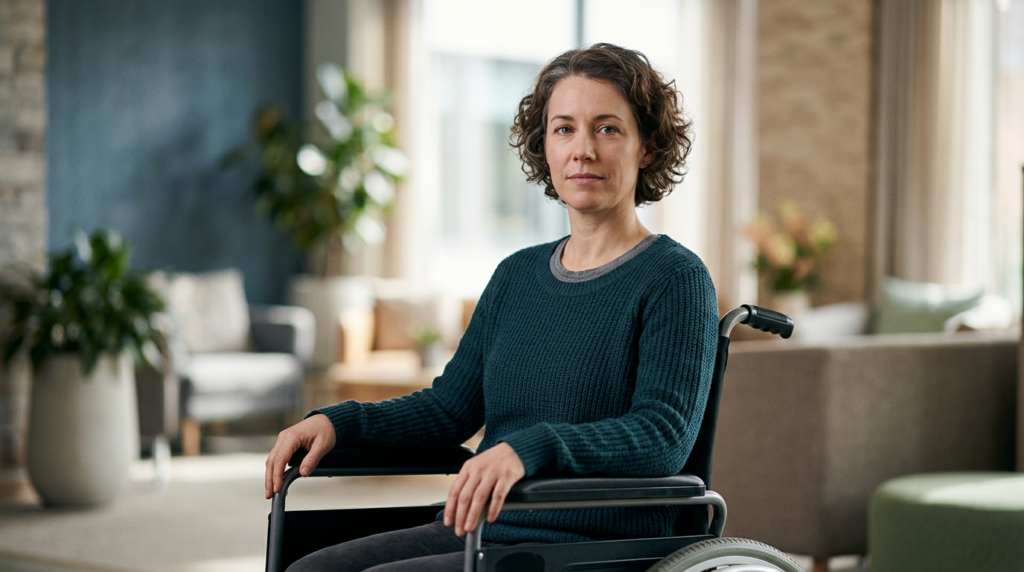
Talk to us about your situation
Maybe someone else’s carelessness caused a spinal cord injury in your family. You don’t have to sort this out alone. A short conversation can help you understand your options and the deadlines that may apply. That includes the ones that run out quietly while footage gets erased.
This guide is educational, not legal advice. Only a conversation about your own facts can clarify what you can do next. We can’t promise a specific outcome. But we can listen, explain, and help you understand your rights.
Reach out today for a free, no-obligation case evaluation. We’re here to help, in English and Spanish, across Florida and nationwide.
Understanding a Spinal Cord Injury Diagnosis
Complete vs. Incomplete
A complete injury means no movement or feeling below the level of injury. An incomplete injury may leave some function. Only the treating doctors can explain what a specific injury means for one person.
Paraplegia & Quadriplegia
Paraplegia affects the legs and lower body; quadriplegia (tetraplegia) affects the arms, trunk, and legs. Both often require lifelong care, equipment, and home changes.
The ASIA Scale
You may see "ASIA A" through "ASIA E" on a hospital whiteboard. It is a medical grading of how much movement and sensation remain — a starting point, not a final verdict, and one your doctors should walk you through.
The Lifetime Cost
Catastrophic spinal cord injuries can bring surgeries, rehabilitation, adaptive equipment, home modifications, and long-term attendant care. A well-documented claim aims to account for all of it.
Watch the Insurance Clock
Insurers may reach out early with quick offers or requests for recorded statements. Deadlines to file a claim are limited and vary by state and situation. Speak with a licensed attorney before signing anything or giving a recorded statement.
How CHG Personal Injury Lawyers Can Help
We Investigate What Happened
Truck crashes, unsafe property, and other serious accidents leave evidence that can disappear. We work to preserve it and identify who is responsible.
We Speak for the Whole Family
Spinal cord injuries affect everyone at home. We listen to your situation and handle the legal burden so you can focus on recovery and care.
We Handle Catastrophic Cases
Our focus is life-altering harm — paralysis, brain injury, amputation, severe burns, and wrongful death — not routine claims.
Licensed and Accountable
Our attorneys are admitted to the Florida Bar and take catastrophic cases nationwide, following the professional rules that protect you.
When Someone Else May Be Responsible
Truck Accidents
A collision with a large commercial truck can cause devastating spinal damage. These cases often involve multiple parties — the driver, the trucking company, and their insurers.
Unsafe Property & Violent Crime
If you or a loved one was assaulted, shot, or attacked at an apartment complex, parking garage, hotel, or business — and the owner failed to provide working locks, lighting, cameras, or security — the property owner may be liable. The law calls this negligent security.
Other Serious Accidents
Spinal cord injuries also arise from other catastrophic collisions and from medical negligence. We can review how the injury occurred and whether a claim exists.
When a Loved One Is Lost
A death is the most catastrophic outcome of all. If your family lost someone in a serious accident, a wrongful-death claim may help you seek accountability and support for what lies ahead.