

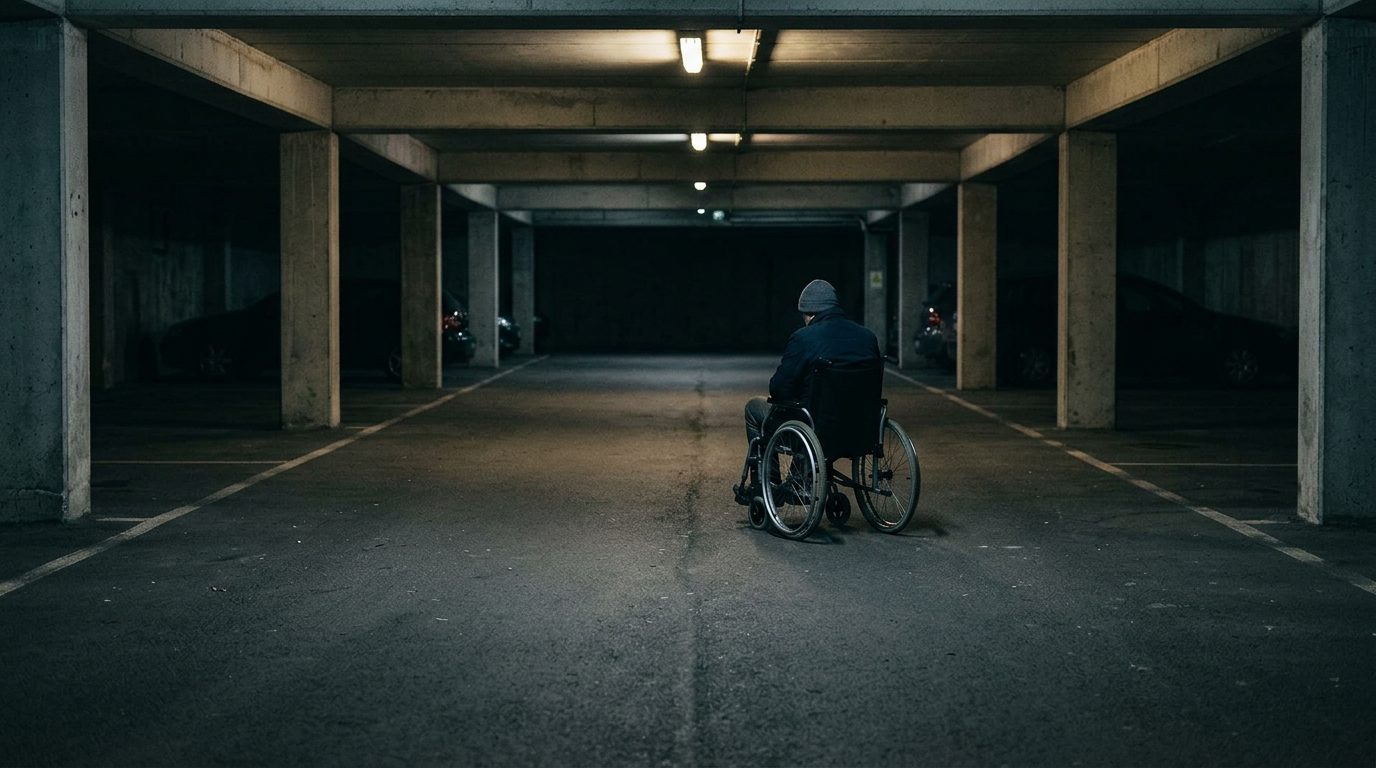
Negligent Security | Paralysis After Attack
Paralyzed After an Attack on Someone Else's Property
If you were assaulted, shot, or attacked on a property where the owner failed to provide reasonable security, you may have a claim. We focus exclusively on catastrophic injuries and hold property owners accountable.
By CHG Lawyers · Published September 02, 2026
Paralyzed After Attack on Property: Your Negligent Security Claim
You were attacked on someone else’s property. An apartment complex, parking lot, hotel, bar—somewhere you had every right to be. The attack left you paralyzed. The attacker committed a crime. But the property owner may also be legally responsible.
This is called a negligent security claim. It’s separate from the criminal case. A property owner’s failure to provide reasonable security can make them liable for your injuries. You can pursue both the criminal case and a civil claim at the same time.
If you’re living with paralysis now—or caring for someone who is—you face enormous medical, financial, and emotional challenges. A negligent security claim can hold the property owner accountable and help recover the compensation you need for lifetime care.
If you were assaulted, shot, or attacked on a property where the owner failed to provide reasonable security, you may have a claim. Talk it through with our team — the first consultation is free, confidential, and carries no obligation.
Criminal Case vs. Your Civil Negligent Security Claim
Two separate legal processes unfold after an attack on unsafe property.
The criminal case holds the attacker accountable. Police investigate. Prosecutors charge the attacker with assault, attempted murder, or other crimes. If convicted, the attacker may be imprisoned.
Your civil negligent security claim holds the property owner accountable. You sue for the owner’s failure to provide reasonable security. This claim focuses on the owner’s negligence, not the attacker’s guilt.
These cases run independently. You do not need the attacker caught, convicted, or even identified to have a civil claim. The criminal outcome does not determine your civil claim.
Why the criminal case isn’t enough: Police and prosecutors cannot order the property owner to pay your medical bills, rehabilitation costs, home modifications, or lifetime care expenses. Only a civil lawsuit can recover the compensation you need.
What Paralysis Means: Understanding Your Injury
Paralysis from a spinal cord injury is catastrophic and permanent. It changes how you move, work, live independently, and relate to others.
Spinal cord injuries are classified using the ASIA Impairment Scale (AIS), which ranges from complete loss of function to normal function.
Paraplegia (lower-body paralysis) results from injury to the thoracic, lumbar, or sacral spine. People with paraplegia retain arm and hand function but lose movement and sensation in the legs and lower body.
Quadriplegia (all-four-limb paralysis) results from injury to the cervical spine. People with quadriplegia lose movement and sensation in both arms and legs. They may lose some respiratory function depending on the injury level.
Both are permanent conditions. According to the Christopher & Dana Reeve Foundation, approximately 17,000 new spinal cord injuries occur in the United States each year. Over 5.4 million people live with paralysis.
Care needs and costs vary significantly based on injury level and severity. A person with paraplegia may regain some independence with adaptive equipment. A person with quadriplegia may require 24/7 personal care assistance. Your civil claim must account for these specific costs.
What Property Owners Owe You: The Duty of Care
Property owners have a legal duty to keep their property reasonably safe. This duty includes providing reasonable security to protect visitors and tenants from foreseeable violent crime.
Under Florida law, property owners must exercise reasonable care to maintain their premises safely. When a property owner knows (or should know) that violent crime is foreseeable, they must take reasonable steps to prevent it.
Reasonable security typically means:
- Working locks and gates on doors, windows, and entry points
- Adequate lighting in parking areas, hallways, stairwells, and common spaces
- Security cameras that are monitored and maintained
- Alarm systems connected to police or security monitoring
- Security personnel on-site, especially in high-crime areas
- Prompt response to safety complaints and reports of suspicious activity
If a property owner knew (or should have known) the property was unsafe and failed to prevent attacks, the owner can be held responsible. This is negligent security.
How to Prove the Property Owner Is Liable
To prove a property owner is liable for your paralysis, your claim must establish four elements:
1. Duty of care. The owner owed you a legal duty to provide reasonable security. You were lawfully on the property as a tenant, guest, customer, or visitor.
2. Breach of duty. The owner failed to provide reasonable security. This might mean broken locks, inadequate lighting, no cameras, no alarm system, or failure to respond to prior complaints.
3. Causation. The breach directly caused your injury. The attacker accessed or targeted you because of the security failure. For example, a broken front gate or unlit parking lot enabled the attack.
4. Damages. You suffered real, measurable harm—paralysis, medical bills, lost income, lifetime care costs, pain and suffering, and loss of enjoyment of life.
All four elements must be present. Your attorney will investigate the property’s security history, the foreseeability of the attack, and the owner’s failure to act.
The Strongest Evidence: Prior Crimes and Incidents
Prior incidents of crime or violence are the strongest evidence in a negligent security claim. If the property had a history of assaults, robberies, shootings, or sexual assaults, the owner had notice the property was dangerous.
Your attorney will investigate:
- Police reports and crime statistics for the property and surrounding area
- Prior incidents reported to the property owner
- Tenant complaints about safety
- Prior lawsuits or claims against the property owner
- Security incident logs maintained by the property
- Insurance claims filed by the property owner
Even one prior incident—a robbery, assault, or shooting—can establish that the attack was foreseeable. The owner should have taken additional security measures.
Inadequate security measures also support a negligent security claim:
- Non-functioning locks or gates
- Missing or burned-out lighting
- Security cameras that don’t work or weren’t monitored
- No alarm system or alarm not connected to monitoring
- Lack of security personnel or inadequate staffing
- Failure to respond to safety complaints
Industry standards for similar properties provide a benchmark. An apartment complex in a high-crime area should have more security than a rural property. Expert testimony shows what reasonable security should have looked like.
Not sure what your next step is?
Talk it through with our team — the first consultation is free, confidential, and carries no obligation.
Expert Witnesses: Building Your Negligent Security Case
Security professionals testify about what reasonable security should have been in place. They assess whether the property’s security was adequate for its location and crime history. They explain whether the breach enabled the attack.
Medical specialists (neurologists, physiatrists, and rehabilitation specialists) testify about your spinal cord injury, your current and future medical needs, and your prognosis.
Economists quantify your lost earning capacity, lifetime medical costs, home modification expenses, and personal care assistance costs over your lifetime.
Vocational rehabilitation specialists assess your ability to return to work and calculate lost income and future earning potential.
These experts help prove what reasonable security should have looked like and what your injuries will cost over a lifetime.
Lifetime Care Costs: What Your Claim Covers
Paralysis requires ongoing, often lifelong support. Damages you can recover in a negligent security claim include:
Medical care: Emergency treatment, surgery, hospitalization, rehabilitation, ongoing doctor visits, medications, imaging, and medical equipment (wheelchairs, ventilators, catheters, and adaptive devices).
Home and vehicle modifications: Wheelchair ramps, accessible bathrooms and kitchens, modified vehicles, grab bars, lifts, and other adaptive technology.
Personal care assistance: Attendants, nursing care, physical therapy, occupational therapy, and other support services—often needed 24/7. According to Mayo Clinic, personal care assistance is often the largest component of lifetime care expenses.
Lost income and earning capacity: If you cannot return to work, your claim includes compensation for lost wages and future earning potential over your lifetime.
Pain, suffering, and loss of enjoyment of life: Compensation for the permanent impact on your quality of life, relationships, independence, and psychological well-being.
Lifetime care costs for spinal cord injury vary widely based on injury level and severity. A person with paraplegia may have lifetime costs ranging from $1 million to $3 million or more. A person with quadriplegia may have lifetime costs exceeding $5 million or more. The property owner’s liability insurance often covers these damages.
The Florida Statute of Limitations: Act Now
In Florida, you generally have two years from the date of the attack to file a negligent security claim under Florida Statute § 95.11.
This deadline is strict and critical. If you miss it, you lose your right to sue the property owner. Do not delay—consult an attorney right away.
What Happens Next: Your Path Forward
If you were paralyzed in an attack on unsafe property, here’s what typically happens:
Gather evidence: Collect your medical records, police reports, incident reports from the property, photos of security features (or lack thereof), and witness statements.
Consult with an attorney: An attorney who focuses exclusively on catastrophic injury claims can evaluate the property’s security history, investigate prior incidents, and assess your claim’s strength.
Investigation: Your attorney will obtain the property’s security records, incident reports, prior police calls, tenant complaints, and insurance information. They will also obtain expert opinions on what reasonable security should have looked like.
Demand and negotiation: Your attorney will send a demand letter to the property owner’s insurance company. This details your injuries, damages, and the owner’s negligence. Many cases settle during this phase.
Trial (if necessary): If the insurance company refuses to settle fairly, your case may go to trial. A jury will hear evidence about the owner’s negligence and award damages if they agree the owner is liable.
Have questions about what happened?
Ask our team directly. The first conversation is free, confidential, and there is no obligation to continue.
You May Have a Right to Compensation
You may have a negligent security claim against the property owner. The owner’s failure to provide reasonable security—working locks, lighting, cameras, or guards—may have enabled the attack that paralyzed you.
This is a separate claim from the criminal case. You can pursue both. The property owner’s insurance is often available to cover your damages. Compensation from a civil claim can help cover your lifetime medical care, home modifications, personal assistance, lost income, and other costs.
An attorney who focuses exclusively on catastrophic injury claims can help you understand whether you have a claim and what it might be worth. If you were paralyzed after being attacked on someone else’s property, contact us for a free case evaluation to discuss your options and the compensation you may deserve.

Frequently Asked Questions
Can I sue a property owner if I was attacked on their property?
Yes, if the owner failed to provide reasonable security and that failure enabled the attack. You may have a negligent security claim.
Do I need the attacker to be caught or convicted to sue the property owner?
No. Your civil claim focuses on the property owner’s negligence, not the attacker’s guilt or innocence. You can proceed even if the attacker is never found.
What is the difference between a criminal case and a civil negligent security claim?
The criminal case holds the attacker accountable through police and prosecutors. The civil claim holds the property owner accountable for failing to provide reasonable security. They are separate processes with different goals.
How long do I have to file a negligent security claim in Florida?
Generally, two years from the date of the attack. This deadline is strict—consult an attorney right away.
What counts as reasonable security?
Working locks and gates, adequate lighting, security cameras, alarm systems, security personnel, and prompt response to safety complaints. What’s “reasonable” depends on the property type, location, and crime history.
How much can I recover in a negligent security claim?
Damages include medical care, home and vehicle modifications, personal care assistance, lost income, and pain and suffering. Lifetime costs for spinal cord injury claims can range from $1 million to $5 million or more, depending on the severity of injury.
What if the property owner claims they didn’t know about prior crimes?
Your attorney will investigate the property’s crime history, police records, tenant complaints, and prior incidents. Property owners are responsible for knowing about foreseeable dangers, even if they claim ignorance.
What is the difference between paraplegia and quadriplegia?
Paraplegia is lower-body paralysis (loss of movement in the legs and lower body). Quadriplegia is all-four-limb paralysis (loss of movement in both arms and legs). Both are permanent. Care needs and costs vary significantly based on the level of injury.
Why Property Owners Can Be Held Responsible
Duty to Provide Security
Property owners have a legal obligation to maintain reasonable security measures—working locks, adequate lighting, cameras, or guards—to protect visitors from foreseeable harm.
Your Claim Is Separate From Criminal Prosecution
You can pursue a civil claim against the property owner even if the attacker is never caught or convicted. Your case focuses on the owner's negligence, not the criminal case.
Evidence of Negligence
We investigate whether prior incidents, broken security systems, inadequate lighting, missing cameras, or lack of staff contributed to the attack and your injury.
Catastrophic Injury Focus
We focus exclusively on the most serious, life-altering injuries—including paralysis and spinal cord damage from violent attacks. Your case deserves dedicated attention.
Time Matters
Evidence can disappear, witnesses' memories fade, and security footage is often deleted after a short period. The sooner you act, the stronger your case.
What Happens Next
We Investigate Your Case
We gather police reports, security footage, maintenance records, and prior incident reports to establish what the property owner knew or should have known about security risks.
We Identify Liable Parties
Property owners, management companies, and security contractors may all bear responsibility. We determine who is accountable for your paralysis or catastrophic injury.
We Build Your Claim
We document your injuries, medical treatment, lost income, and ongoing care needs. We work with medical professionals to establish the full scope of your damages.
We Pursue Fair Compensation
We negotiate with insurers and, if necessary, take your case to trial. We work on a contingency basis—no attorney’s fees unless there is a recovery.