
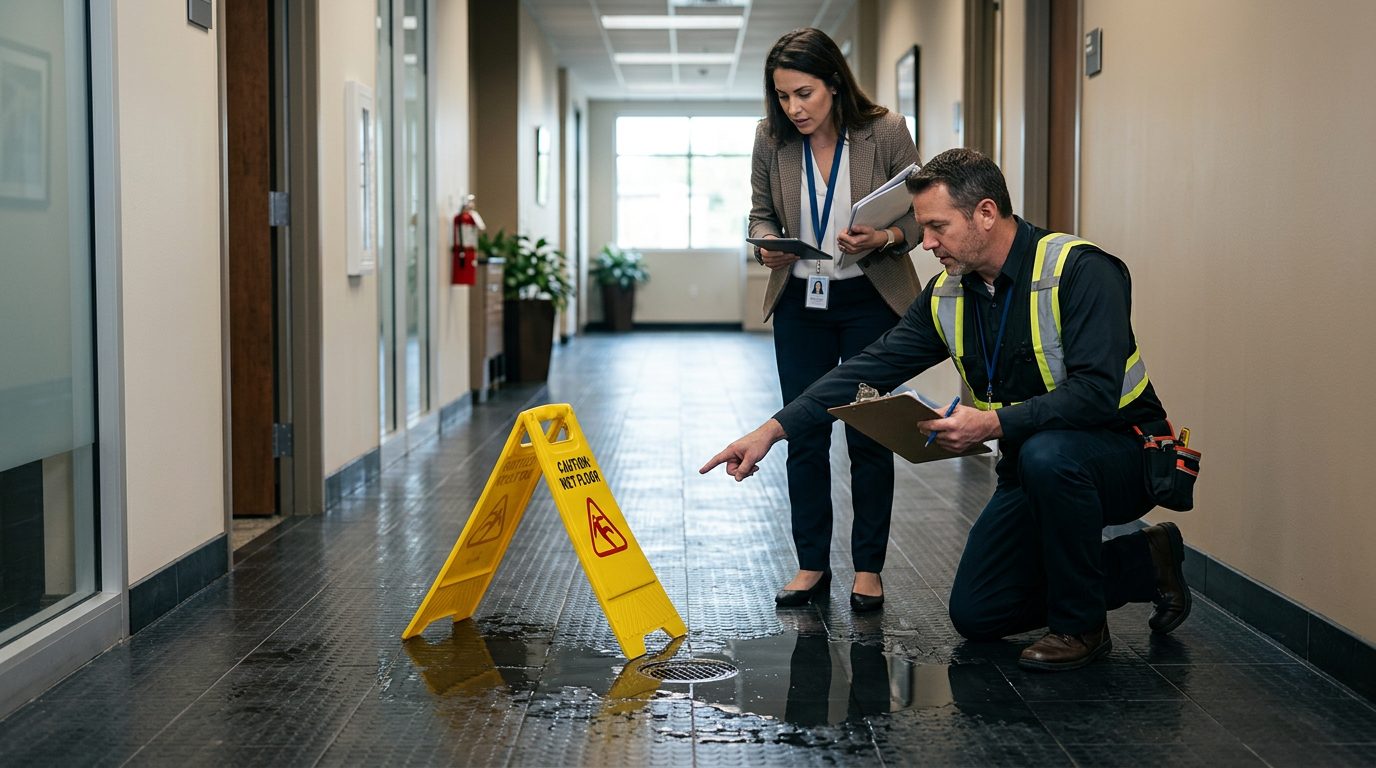
Slip and Fall Claims | Florida
How Long Do Slip and Fall Settlements Take in Florida?
CHG Personal Injury Lawyers explains, in plain language, what shapes the timing of a slip-and-fall claim, from medical treatment to insurance negotiations.
By CHG Lawyers · Published October 24, 2026
Many people hurt in a fall ask: how long do slip and fall settlements take in Florida? The honest answer is that there is no set timeline. Each claim moves at its own pace. The sections below explain the deadlines that run from the day of the fall, the stages a claim usually passes through, and the payment details that often determine what you actually receive.
Why timing matters: Florida’s filing deadlines
Florida sets filing deadlines for personal injury lawsuits under Fla. Stat. § 95.11. A missed deadline can end a claim, which is why it matters to act early, even while treatment is still underway.
The clock generally starts when the last element of the claim occurs, under Fla. Stat. § 95.031. Florida law also lists the specific circumstances that can pause, or “toll,” a deadline. Under Fla. Stat. § 95.051, “A disability or other reason does not toll the running of any statute of limitations except those specified in this section, s. 95.091, the Florida Probate Code, or the Florida Guardianship Law.” In plain terms, waiting for an insurer to respond is not among the reasons the statute lists, so the deadline keeps running while talks continue.
This is not a reason for alarm. It is a reason to plan. Contact our firm promptly so the deadline is tracked from the start.

Not sure what your next step is?
Talk it through with our team — the first consultation is free, confidential, and carries no obligation.
How long do slip and fall settlements take in Florida?
There is no fixed length, and no one can promise a specific timeline or amount. The time from fall to payment depends on your injuries, your treatment, how the property owner’s insurer responds, and whether a lawsuit is needed.
Several factors usually add time:
- Medical treatment must run its course before anyone knows the full extent of an injury.
- Insurers need time to investigate who controlled the floor and what the property knew.
- Negotiations, and a lawsuit if one is filed, can add months.
A claim that resolves through a fair early offer moves faster than one that goes to court. Some people reach a settlement within months of a fall. Others take longer, especially when injuries need surgery or a long recovery. This page explains both paths, step by step.
What are the stages of a slip and fall claim?
A slip and fall claim usually moves through six stages, and the stages often overlap. Knowing the order helps you see where your claim stands.
- Investigation. Our team gathers the incident report, photos, witness names, and any video. We also identify who owned and controlled the property.
- Medical treatment. You follow your doctors’ care and keep every record. A claim is usually valued only after treatment has progressed far enough to show the injury’s course.
- Demand. A written demand goes to the insurer. It lays out the facts, your injuries, medical bills, lost income, and the amount requested.
- Negotiation. The insurer responds, and both sides trade offers and counteroffers while they weigh who was at fault. A formal written offer of judgment carries its own clock: under Fla. Stat. § 768.79, an offer “shall be accepted by filing a written acceptance with the court within 30 days after service.”
- Lawsuit, if needed. If a fair result isn’t reached, a case is filed. Discovery, the exchange of records and sworn testimony, follows, including depositions. Mediation often comes before trial.
- Settlement and payment. You sign a release, bills and reimbursement claims are resolved, and the remaining money is paid to you.
What proof does Florida require in a store or property fall?
When a fall happens on a spill or other transitory foreign substance in a business, Florida law puts the burden on the injured person. Under Fla. Stat. § 768.0755, you must prove that the business “had actual or constructive knowledge of the dangerous condition and should have taken action to remedy it.”
Under Fla. Stat. § 768.0755, constructive knowledge may be proven by circumstantial evidence showing that:
- How long the spill was there. The statute asks whether the condition “existed for such a length of time that, in the exercise of ordinary care, the business establishment should have known of the condition.” A puddle that sat for a long time in a busy aisle is different from one that appeared a moment earlier.
- Whether the same hazard keeps happening. The condition may have “occurred with regularity and was therefore foreseeable.” A store that has repeatedly had the same leak or the same slick spot in the same place may have been on notice of the problem.
Evidence that helps answer these questions includes photographs of the hazard and the scene, the incident report, witness names, and surveillance video. Video is often overwritten within days, so requesting it early matters. This is one reason the investigation stage takes time: the records have to be gathered and read.
What steps protect your claim early?
Early steps protect your claim and your timeline:
- Report the fall to the property manager in writing, and keep a copy.
- Ask for the incident report. Photograph the hazard and the scene.
- Keep your shoes and clothing, and write down witness names.
- Ask for surveillance video early, because footage can be overwritten.
- Keep every bill, pharmacy receipt, and note about missed work.
- Talk with a lawyer before giving a recorded statement to an insurer.
Acting early keeps evidence fresh and makes it easier to track every deadline.
Have questions about what happened?
Ask our team directly. The first conversation is free, confidential, and there is no obligation to continue.
What can make a slip and fall claim take longer?
Injury severity, fault disputes, insurer delays, court schedules, and liens are the biggest timing factors. Each one can move a claim forward or slow it down.
- Severity. Fractures, head injuries, and surgery usually mean longer treatment before the full picture is clear.
- Fault disputes. Arguments about whether the hazard was visible, or whether a warning was posted, can slow talks.
- Insurer response. Some insurers act on a well-documented demand. Others delay or dispute the damages.
- Court schedules. Once a case is filed, depositions and medical testimony take time.
- Liens. Health insurers, providers, and government programs may seek reimbursement from the settlement.
How does shared fault affect what you recover?
Florida does not necessarily end a claim because the injured person bore some blame. Under Fla. Stat. § 768.81, contributory fault “diminishes proportionately the amount awarded as economic and noneconomic damages for an injury attributable to the claimant’s contributory fault, but does not bar recovery, subject to subsection (6).”
Here is what that means in a simple example. Suppose a jury finds the property owner mostly responsible for a fall, but also finds that you were partly careless, for example by not looking where you were walking. The award is reduced by your share of fault. It is not wiped out. Because the amount depends on how fault is divided, the facts of the fall, including what was visible and what warnings were posted, deserve careful review.
Why is the check smaller than the headline number?
A settlement’s headline figure is not always the amount a client receives. Several payment rules shape the net result.
- Collateral sources. Under Fla. Stat. § 768.76, the court “shall reduce the amount of such award by the total of all amounts which have been paid for the benefit of the claimant, or which are otherwise available to the claimant, from all collateral sources,” but “there shall be no reduction for collateral sources for which a subrogation or reimbursement right exists.” Whether a health plan or other payer has a reimbursement right is often the question that decides how much it may recover from your settlement.
- Releases with one party. Under Fla. Stat. § 768.041, a release or covenant not to sue as to one tortfeasor “shall not operate to release or discharge the liability of any other tortfeasor who may be liable for the same tort or death.” Signing a release with one party does not automatically end claims against others, and the release terms need to be read closely before anything is signed.
- Letters of protection. Some providers treat patients under an arrangement that promises payment from a future judgment or settlement. Florida defines a “letter of protection” as “any arrangement by which a health care provider renders treatment in exchange for a promise of payment for the claimant’s medical expenses from any judgment or settlement of a personal injury or wrongful death action.” Under Fla. Stat. § 768.0427, these arrangements are part of how medical expenses are proven and handled, so you should know whether you signed one.
- Under Fla. Stat. § 768.78, when a court award includes future economic losses that “exceed $250,000,” the defendant may pay a lump sum, with the future economic losses and expenses reduced to present value.
Because of these rules, the time to a payment can be longer than the time to an agreement, and the amount you keep can differ from the number in the headline. Our team reviews each of these items before you decide.
Frequently asked questions about slip and fall settlement timing
How long after a fall should I contact a lawyer?
Contact a lawyer as early as you can. Evidence fades, and Florida’s deadlines keep running.
Can I get paid before my treatment is finished?
Usually, a claim is valued once treatment has progressed enough to show the injury’s course. The timing depends on the facts of your case.
Will my case go to court?
Many claims resolve without a trial, but some require a lawsuit. No one can predict the outcome in advance.
What comes out of a settlement?
Medical bills and reimbursement claims are often resolved from the settlement before the remaining money is paid to you. Releases and letters of protection can also affect the net amount.
What if the property owner says I was at fault?
Under Florida’s shared-fault rules, your recovery is reduced in proportion to your share of fault, but if you are found more than 50 percent at fault, you may not recover any damages (Fla. Stat. § 768.81(6)). The facts of the fall need careful review.
Is the first consultation really free?
Yes. The first consultation is free, confidential, and carries no obligation to continue.

Want to know where you stand?
Tell us what happened and our team will walk you through the options available to you, at no cost.
Talk with CHG about your slip-and-fall timeline
CHG Personal Injury Lawyers is a Florida-based firm that handles slip-and-fall claims for people in Miami, Orlando, Tampa, Jacksonville, and other Florida communities. Igor Hernandez is the responsible lawyer for this page, and he is admitted to The Florida Bar. CHG charges no attorney’s fees and no case costs unless there is a recovery.
If you fell in a Florida store, restaurant, apartment complex, or parking lot and are still in treatment, now is the time to get answers. Florida’s deadlines apply, so reach out soon. Contact CHG Personal Injury Lawyers for your free, confidential first consultation, with no obligation to continue.
What Shapes the Timeline of a Slip and Fall Claim
Medical Treatment
A claim is often valued once treatment has progressed enough to show how the injury is healing. Follow your doctors' care, and keep records of every visit.
Evidence Gathering
Photos, incident reports, witness names, and maintenance records can fade or disappear. Gathering them early helps the claim move forward.
Insurance Negotiations
Insurers often take time to review medical bills and the facts of the fall. Negotiations can move quickly or slowly depending on the case.
Litigation When Needed
If a fair resolution cannot be reached through negotiation, a lawsuit may be filed. Court schedules can extend the overall timeline.
Don't Wait to Get Help
Evidence fades quickly, and Florida's deadlines keep running. Contact a lawyer as early as you can after a fall, even if you are still treating.
Why Florida Residents Call CHG Personal Injury Lawyers
Licensed Florida Attorneys
Our attorneys are admitted to The Florida Bar and represent injured people throughout Florida.
Free First Consultation
Your first consultation is free, confidential, and comes with no obligation to continue.
No Fees Unless There Is a Recovery
CHG charges no attorney's fees and no case costs unless there is a recovery.
Plain-Language Guidance
We explain each step in English or Spanish, so you always know what to expect next.
Responsible Attorney
Igor Hernandez is the responsible attorney for this page and works with our team on your case.