
Slip and Fall | Serving Florida
Slip and Fall Settlements in Florida: The Key Factors
A fall on someone else's property can change your health, your work, and your family's life.
Our Commitment to You
Free
First consultation, confidential and with no obligation to continue
No fee
No attorney's fees or case costs unless there is a recovery
Florida
Focused on injury cases for people across Florida
Slip and fall settlements are payments that resolve an injury claim after a fall on someone else’s property. Most of these claims end without a trial. In Florida, every claim turns on its own facts, including the injury, proof of who was responsible, and the medical and wage losses that follow, under applicable Florida law.
Maybe you slipped on a wet tile floor at a Miami grocery store. Or you tripped on a broken step outside an apartment in Orlando. Now the bills are arriving. You may be out of work. This page offers general information about these claims.
What a Slip and Fall Settlement Is and Who It Is For
A settlement is money that an owner or insurer agrees to pay. In exchange, the injured person gives up the right to sue over that fall. Most of these claims never reach a courtroom.
Customers, visitors, tenants, and guests may have a claim when a property was unsafe, depending on the facts and applicable Florida law. Common examples include:
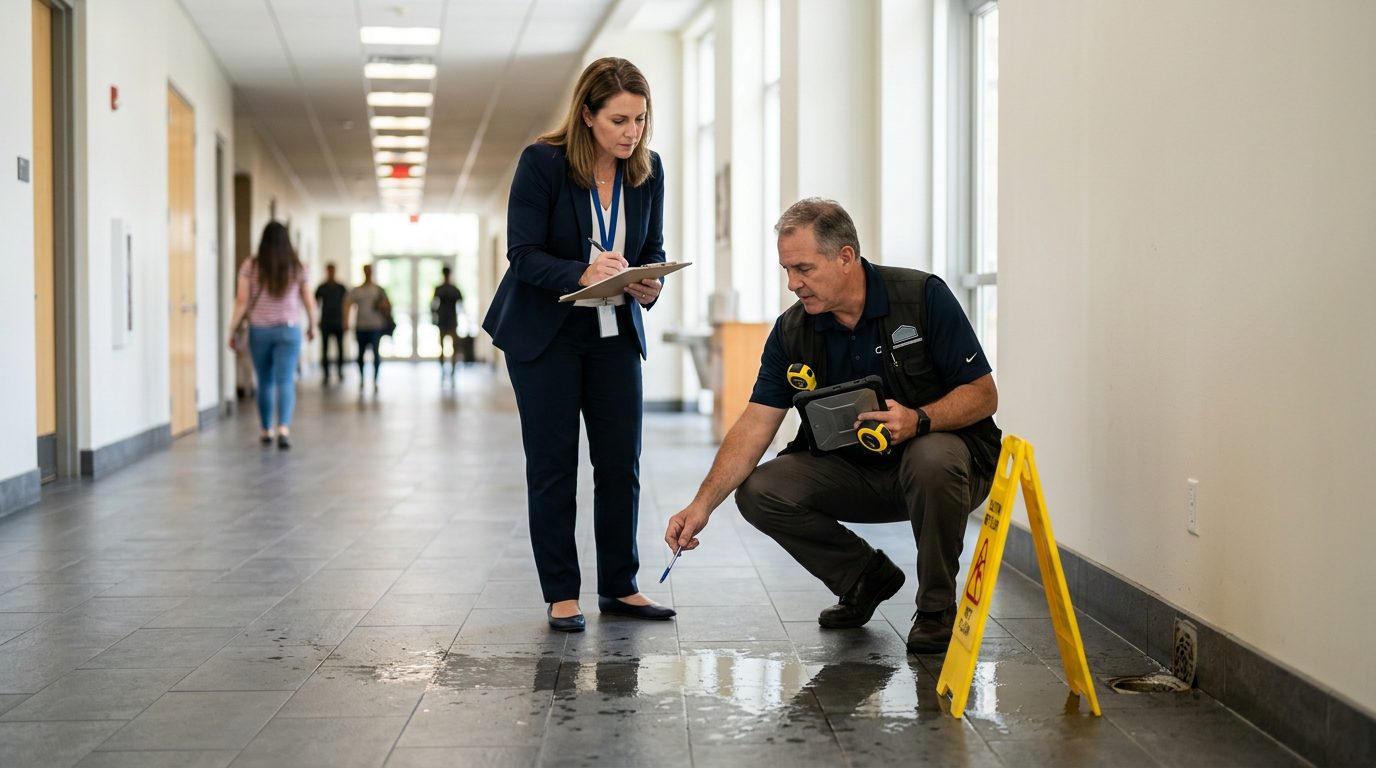
- A wet floor with no warning sign
- A broken stair or loose handrail
- An uneven parking lot or cracked sidewalk
- Poor lighting in a hallway or garage
- A hazard the owner knew about but did not fix
A settlement is not automatic. The injured person must show that the owner was responsible for the hazard. Lawyers call this type of claim premises liability.
If you are still sorting out what happened, you do not have to figure it out alone. Talk it through with our team — the first consultation is free, confidential, and carries no obligation.
What a Settlement Can Cover
A settlement can cover the bills a fall creates. It can also cover losses that do not show up on a receipt. Common categories include:
- Medical expenses: emergency care, imaging, surgery, physical therapy, and medication, both past and future
- Lost wages: pay you missed while recovering, and lost earning ability if you cannot return to the same work
- Pain and suffering: physical pain and the loss of everyday activities you once enjoyed
- Out-of-pocket costs: rides to appointments and home changes, such as a stair lift
Florida also limits how medical bills are proven. For treatment already paid, evidence is limited to the amount actually paid, no matter who paid it (Florida medical expense statute).
When a fall causes a spinal cord or brain injury, the losses can last for years. These cases need careful records of future care.
What Happens After a Slip and Fall Injury
Each case turns on its own facts, including the nature of the injury, the evidence about who was responsible, and the records of the losses that follow. No two claims look the same. Key factors include:
- Severity and permanence: A broken wrist and a spinal injury that needs long-term care can affect a person’s daily life and work in very different ways.
- Proof of the hazard: Incident reports, photos, surveillance video, and witness statements help show what happened.
- Consistent treatment: Steady, documented care is easier to value than gaps in treatment.
- Wage proof: Pay stubs, employer letters, and medical work restrictions show the income you lost.
- Insurance limits: The available coverage can cap what an insurer pays.
- Health coverage: Florida’s collateral source statute reduces an award by amounts paid or available from other sources. It does not do this for sources with a right of repayment.
Published averages and sample dollar amounts are not predictions. They cannot tell you what your claim is worth.
Florida Rules That Shape a Slip and Fall Claim
- Did the owner know, or should the owner have known, about the hazard?
- How is fault divided between the parties?
Here is how those questions work in practice:
- Knew or should have known: For a spill or wet floor, you must show the business had actual or constructive knowledge and should have acted. Actual knowledge means the business knew. Constructive knowledge means the condition lasted long enough that ordinary care would have found it, or it happened often enough to be expected (Florida transitory foreign substance statute).
- Other hazards: Broken stairs, uneven surfaces, and poor lighting are judged under the owner’s common-law duty of care. The statute says it does not change that duty.
- Shared fault: For negligence claims filed after March 24, 2023, a claimant (the injured person) who is more than 50% at fault recovers nothing. Under Florida’s comparative fault statute, contributory fault chargeable to the claimant diminishes proportionately the amount awarded as economic and noneconomic damages (Florida comparative fault statute).
- Deadline: For most claims that arose after March 24, 2023, the lawsuit deadline is two years. Deadlines can vary, so review yours early.
Not sure what your next step is?
Talk it through with our team — the first consultation is free, confidential, and carries no obligation.
How a Slip and Fall Claim Moves From Start to Settlement
A typical claim moves in order. It starts with medical care and evidence gathering. Next comes a written demand, then negotiation. A lawsuit happens only if it is needed.
- Get medical care and keep every record. Attend follow-up visits. Save bills, prescriptions, and notes.
- Report the fall. Tell the owner or manager. Ask for a copy of any incident report.
- Preserve evidence. Photograph the hazard. Keep the shoes and clothing you wore. Write down witness names.
- Document the claim. Gather bills, wage records, and treatment notes. Then present the claim to the insurer in writing.
- Negotiate. Many claims settle through talks or mediation. Mediation is a session where a neutral person helps both sides. If the insurer does not offer fair value, a lawsuit may be needed.
Timelines vary. Short, clear treatment can resolve faster. Ongoing care usually takes longer, because the full extent of the injury must be known. If treatment was under a letter of protection (an agreement where a provider waits for payment until the case settles), Florida requires that arrangement to be disclosed before those expenses can be claimed (Florida medical expense statute).
CHG Personal Injury Lawyers charges no attorney’s fees and no case costs unless there is a recovery.
Why Injured Floridians Work With CHG Personal Injury Lawyers
CHG Personal Injury Lawyers is a Florida-based firm. We represent people hurt in accidents throughout Florida, including Miami, Orlando, Tampa, and Jacksonville.
- Our practice focuses on personal injury matters.
- Igor Hernandez, the responsible attorney, is admitted to The Florida Bar.
- We handle serious and catastrophic injury claims, including spinal cord injuries, brain injuries, and severe burns. Recovery from these injuries can take years.
- We communicate in English and Spanish for families who prefer Spanish.
- We charge no attorney’s fees and no case costs unless there is a recovery.
Every claim is different. We review the facts first.

Frequently Asked Questions About Slip and Fall Settlements
What happens during a free first consultation?
The first consultation is free, confidential, and carries no obligation to continue. Our team reviews the facts of your situation with you and explains your options under Florida law.
Do insurance companies prefer to settle out of court?
Many claims do settle through negotiation. A fair offer depends on how well the claim is documented.
Do I have to go to court?
Most claims resolve before trial. Some still need a lawsuit to move forward.
What if I was partly at fault?
Florida reduces damages by your share of fault. You recover nothing if you are more than 50% at fault.
What if the store says the spill was only there a minute?
Florida looks at whether the hazard existed long enough that ordinary care should have found it. Photos, video, and witnesses matter.
How long do I have to act?
For most claims, Florida’s deadline is two years. Early review helps protect your options.
If you are still sorting out what happened, you do not have to figure it out alone. Request a free case evaluation. Our team will review your facts and explain your options.
Have questions about what happened?
Ask our team directly. The first conversation is free, confidential, and there is no obligation to continue.
What Can Shape a Slip and Fall Claim
How the fall happened
The circumstances of the fall, including what caused it and where it happened, are central to any claim. Your own account matters, and so does the record that supports it.
What the property owner knew
Florida law looks at whether the owner knew about the hazard, or should have discovered it through reasonable inspection, and what was done about it. These questions depend on the facts of each case.
Your medical records
Prompt medical evaluation and consistent treatment create a record of your injuries. Whether your symptoms are connected to the fall depends on your medical records and the facts of your case.
Timing and deadlines
Florida sets time limits for filing injury lawsuits, and those limits can have exceptions. Contact a lawyer promptly so that important dates are not missed.
Evidence at the scene
Photos, witness names, incident reports, and video footage can disappear over time. Early preservation of evidence can help support your account.
Act Early, Protect Your Options
Evidence and witness memories fade quickly, and Florida injury claims are subject to filing deadlines. Get medical care, follow your doctor's treatment plan, and speak with a lawyer as soon as you can.
Steps to Take After a Slip and Fall
1. Get medical care
See a doctor even if you feel you have only minor pain. Follow your doctor's care and keep every appointment.
2. Document the scene
If you are able, take photos of the hazard, the area around it, and any warning signs or lack of them. Write down the date, time, and location.
3. Identify witnesses
Note the names and phone numbers of anyone who saw the fall. Ask the property manager for an incident report and keep a copy.
4. Keep your records
Save medical bills, pharmacy receipts, and records of missed work. Keep a simple journal of pain and daily limitations.