
Orlando Slip and Fall | Serving Florida
Hurt at an Orlando Restaurant? Here's What to Do Next
A fall on a wet floor or a hidden hazard can change your life in a moment. Learn the steps that protect your health and your options, then talk with our team about your situation.
Why Start with CHG
Free
First consultation, confidential and with no obligation
Florida
Florida-based personal injury firm
Licensed
Attorney Igor Hernandez, admitted to The Florida Bar
No Fee
No attorney's fees or case costs unless there is a recovery
By CHG Lawyers · Published October 20, 2026
By Igor Hernandez, CHG Lawyers, Coral Gables, Florida
What to Do If You Slipped at a Restaurant or Bar in Florida
If you slipped on a spill or a wet floor at a Florida restaurant or bar, get medical care first. Then write down what you remember while it’s fresh. This page covers the facts that may help you sort out what happened.
A fall can happen in a dining room, a kitchen doorway, a restroom, or a bar area. Some people slip on a spilled drink, a missing floor mat, or an unmarked step. Whether a claim exists depends on the facts of your fall, your medical records, and Florida law.
Tell your doctor about every symptom, even ones that seem minor. Follow your doctor’s care. This page is general information, not medical advice.
If you were hurt in a slip and fall at an Orlando restaurant, here is what to know first. CHG Lawyers focuses on Florida personal injury matters, including slip and fall, and serves clients throughout Florida, including Orlando. Its bona fide office is in Coral Gables, Florida. Igor Hernandez, a member of The Florida Bar, is the responsible lawyer for this page.
If your fall at a restaurant or bar left you with open questions about the floor, the report, or your bills, our team can talk them through with you. Talk it through with our team — the first consultation is free, confidential, and carries no obligation.
Questions About the Floor and Conditions
Start with the substance itself. Was there a liquid, food, or other material on the floor? Where was it, and how large was the area? Was the area busy at the time?
Timing matters too. How long was the substance there, if you know? Florida’s statute calls a substance that got onto the floor temporarily a “transitory foreign substance.” Under Fla. Stat. § 768.0755, the injured person must prove that the business had actual or constructive knowledge of the dangerous condition. The business also should have acted to fix it.
Constructive knowledge can be shown with circumstantial evidence. Two general ideas can help explain how these claims generally work. One is a condition that existed long enough that the business should have known about it. The other is a condition that occurred with regularity, making it foreseeable.
These questions may help clarify the notice issue. They do not decide a case on their own. The same statute says it does not affect the common-law duty of care owed by a person or business in control of the premises. Notice is one part of the picture.
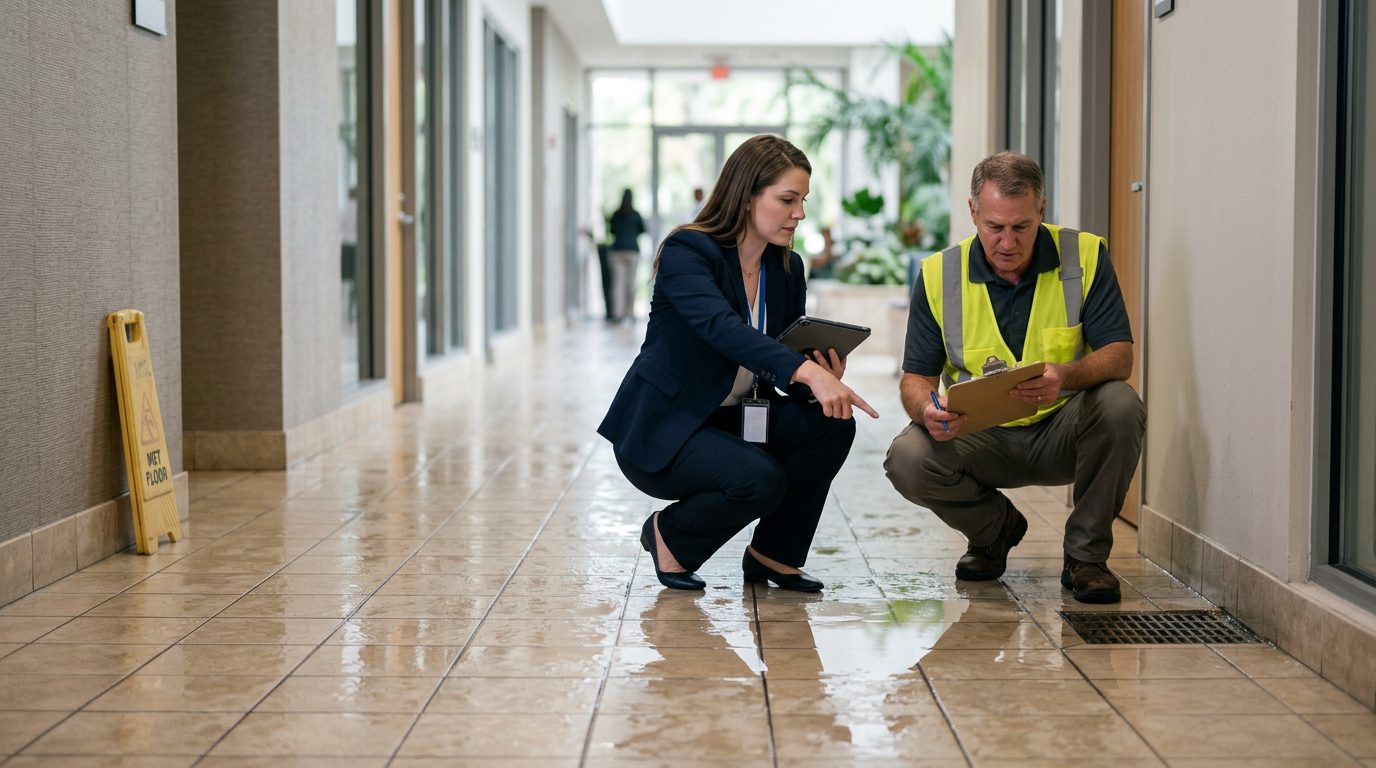
Next, look at the setting. Were there wet floor signs, cones, mats, or handrails? Was the lighting dim? Was the floor worn, uneven, or slick? Was the spot on a server route or near a bar rail? Write down what you see, and take photos if you can do so safely.
Questions About Warnings and Staff Response
Staff actions before and after your fall may help clarify what the business knew and did. Start with the people on duty when you fell.
Did any employee see the spill or hazard before you fell? Did anyone walk past it? Did anyone say something about it to you or to a coworker? Write down who said what, and roughly when.
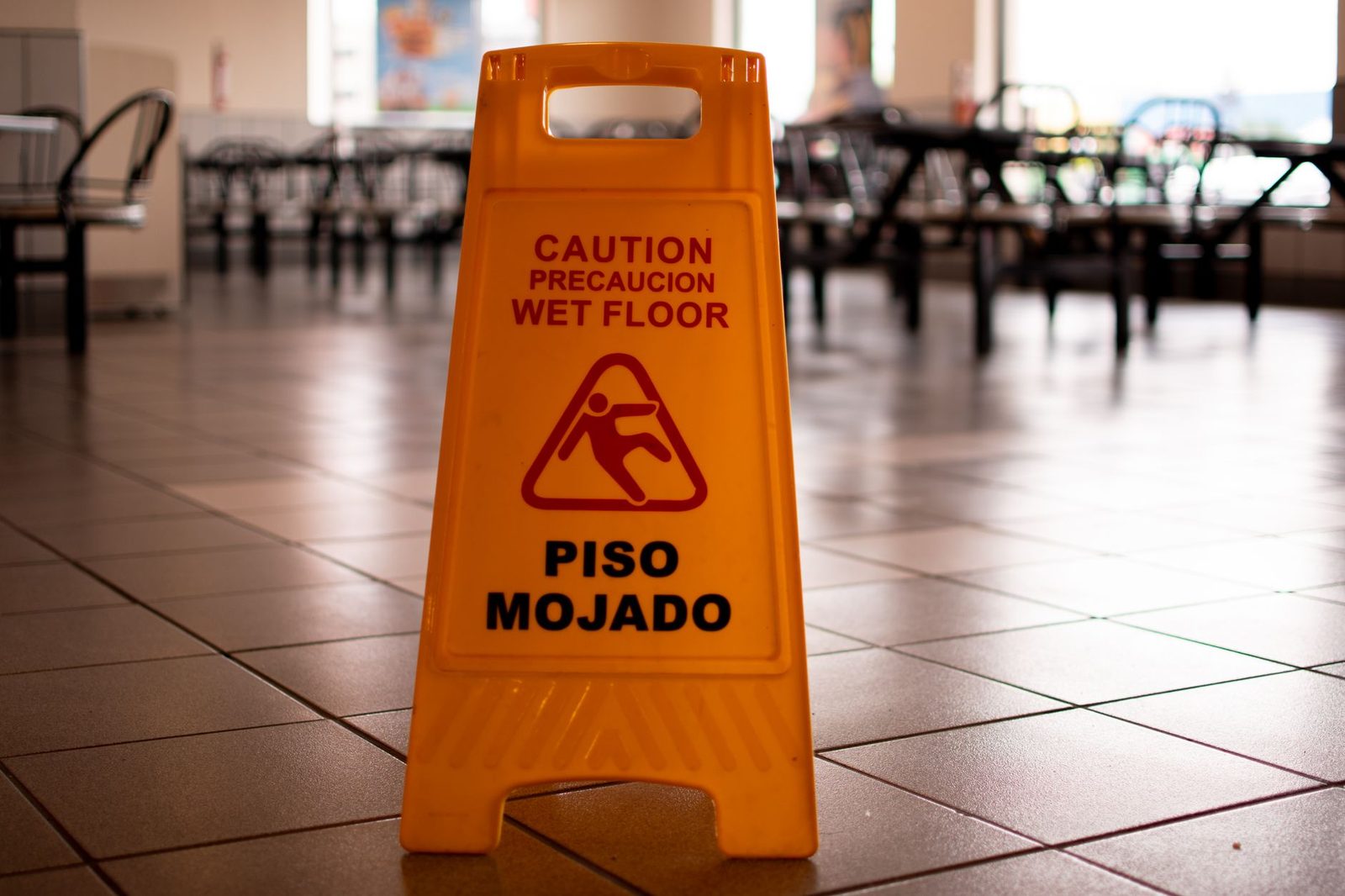
Was a warning placed, such as a wet floor sign? If so, was it there before your fall, or only afterward? Note where the sign stood.
Who cleaned up the substance, and how soon? Write down the time you recall and any staff names or descriptions.
Did staff check on you, offer first aid, or ask for your contact information? Note who helped and what they said. Keep this list apart from your medical notes.
These details may help show the timeline. They do not predict how a claim will turn out.
Questions About the Incident Report, Witnesses, and Records
A written incident report, witness names, and photos can help document what happened. Gather them early, before details fade.
Ask whether a manager or employee wrote an incident report. You can ask for a copy. The business may decline, so write down when you asked and who you spoke with. Ask for the name of the manager on duty, too.
Take photos or video of the floor, the area, and any sign, if you can do so safely. Footage from cameras may be overwritten over time. Ask about preserving any video as early as you can.
Collect names and phone numbers of anyone who saw the fall. That includes companions, other guests, and staff.
Keep receipts, the check or tab, event tickets, and any texts, emails, or messages about the fall. Then write a timeline: the time, the place, what you were doing, what you saw, and how you felt.
Not sure what your next step is?
Talk it through with our team — the first consultation is free, confidential, and carries no obligation.
Questions About Your Injury, Medical Care, and Documentation
Medical records describe your injury and treatment in your doctor’s words. Whether the fall caused a given injury depends on the facts and medical records of each case.
Get medical care and follow your doctor’s instructions. Keep every appointment note, prescription, imaging report, and bill in one folder.
Tell each doctor exactly how the fall happened, including the substance and the location. Ask that your account be noted in the chart. Bring your written timeline to every appointment.
Keep a simple daily log of symptoms and of activities you can no longer do. Note any missed work or lost income. These may be documented losses that could be relevant to a claim, depending on the facts.
Recovery and outlook vary from person to person. Ask your own doctor what to expect.
Questions About Responsibility, Workers’ Compensation, and Deadlines
Who controls the space, whether you were working, and the filing deadline can all shape what happens next. Many of these facts may not be clear yet.
Who controls the premises? It could be the restaurant or bar operator, the property owner, a management company, or a tenant. Who may be responsible depends on the facts of each case.
If you were working, as a server, cook, or bartender, workplace injuries are generally handled through workers’ compensation. Fla. Stat. § 440.11 makes an employer’s liability exclusive, with exceptions. Florida-law limits may apply.
Florida apportions damages by fault. Under Fla. Stat. § 768.81, a court enters judgment against each liable party based on that party’s percentage of fault. Your own share of fault reduces what you can recover in proportion to that share, but in a negligence action, if you are found more than 50 percent at fault for your own harm, you may not recover any damages. This bar does not apply to an action for personal injury or wrongful death arising out of medical negligence under chapter 766.
Florida sets time limits for filing lawsuits in Fla. Stat. § 95.11. Under Fla. Stat. § 95.031, a cause of action accrues when its last element occurs. Exceptions apply, and the deadline depends on the facts of your case.

Next Steps: Talking With a Florida Slip and Fall Attorney
A short conversation with Igor Hernandez at CHG Personal Injury Lawyers can help you understand whether your fall may involve a claim.
CHG Lawyers focuses on Florida personal injury matters, including slip and fall cases. The firm serves clients throughout Florida, including Orlando, from its bona fide office in Coral Gables, Florida.
In some matters, a case may be referred to, or handled together with, another law firm.
For more background, read our slip and fall overview and our Florida slip and fall guide. For Orlando, see our Orlando slip and fall page.
Frequently Asked Questions
Do I have to prove the restaurant knew about the spill?
Florida’s statute says the injured person must prove actual or constructive knowledge. Results depend on the facts of each case.
Can I get the restaurant’s incident report?
You can ask for it. The business may decline, so write down when you asked.
Does workers’ compensation apply if I was working?
Workplace injuries are generally handled through workers’ compensation, with exceptions and Florida-law limits.
Is there a deadline to file?
Yes. Florida sets time limits for lawsuits, and they depend on the facts and applicable exceptions.
If your fall at a restaurant or bar left you with open questions about the floor, the report, or your bills, our team can talk them through with you. CHG charges no attorney’s fees and no case costs unless there is a recovery. Contact CHG Lawyers.
Have questions about what happened?
Ask our team directly. The first conversation is free, confidential, and there is no obligation to continue.
Steps to Take After a Restaurant Fall
Get medical care right away
Some injuries, such as head injuries or back and neck injuries, may not show symptoms until later. Follow your doctor's care and keep every appointment.
Write down what happened
Note the time, the exact spot, what caused the fall, and the names of any staff or customers who saw it. Take photos while the scene is still visible.
Ask for an incident report
Request a copy of any incident report the restaurant prepares. Write down the date you asked and who you spoke with.
Keep your records
Save medical bills, receipts, prescriptions, and any messages about the fall. Keep a simple journal of pain, missed work, and daily limits.
Talk with a lawyer early
Video, cleanup logs, and witness memories can be lost over time. An early conversation helps protect the evidence that matters.
Be Careful Before You Speak With an Insurer
Insurance representatives may contact you soon after a fall. Before you give a recorded statement, accept a settlement, or sign a release, talk with a lawyer about what you are being asked to agree to.
Common Questions About Restaurant Slip and Fall Claims
Who can be responsible?
A restaurant may be responsible when a hazard such as a wet floor, torn carpet, or missing warning sign caused the fall. Every situation depends on its own facts.
Why does timing matter?
Memories fade and surveillance video is often overwritten. Taking early steps helps keep the evidence intact.
What if I was working when I fell?
If you were on the job, a different system may apply. Tell us what happened so we can explain the options that may fit your case.
What will this cost me?
CHG charges no attorney's fees and no case costs unless there is a recovery. Your first consultation is free, confidential, and carries no obligation.