
Slip and Fall | Serving Florida
Slip and Fall Settlements in Florida: Understanding Deadlines and Your Next Steps
Plain-language answers for people hurt on someone else's property and the families who support them. CHG Personal Injury Lawyers is a Florida-based firm that handles slip-and-fall cases.
By CHG Lawyers · Published November 3, 2026
Slip and Fall Settlements 2019 in Florida: Deadlines and Your Claim
Not sure what your next step is?
Talk it through with our team — the first consultation is free, confidential, and carries no obligation.

Slip and Fall Settlements 2019 in Florida: How the Deadline Works
If you’re searching for slip and fall settlements 2019 in Florida, including in Orlando, the first question is usually about time. Florida sets filing deadlines for injury lawsuits, and the period depends on the type of claim (Fla. Stat. § 95.11). This page explains how that deadline works, what can change it, and what you can do now to protect your claim. The information is general, so it can’t replace a review of your own facts.
The Short Answer: Florida’s Deadline for Most Slip and Fall Claims
Florida sets a filing deadline for most slip and fall claims, and the exact period depends on the kind of claim and when the harm occurred. Florida’s limitations statute, Fla. Stat. § 95.11, lists filing periods by type of action. Many slip and fall claims are based on negligence, which is the legal term for harm caused by someone’s carelessness.
Deadlines for injury claims can change over time, so it is important to speak with a lawyer promptly. That’s why the date of your fall matters. We explain how to check it in the next section.
A deadline limits when you can file a lawsuit. It is not a date to finish treatment or wait for an insurance answer. Many people spend months on medical care and paperwork, and the clock keeps running during that time.
Missing the deadline can end a claim, even when the facts are strong. Treat this date as urgent.
When the Clock Starts and Which Rule Applies to Your Fall
In a fall case, the date of the fall and the date the injury began are usually the key dates.
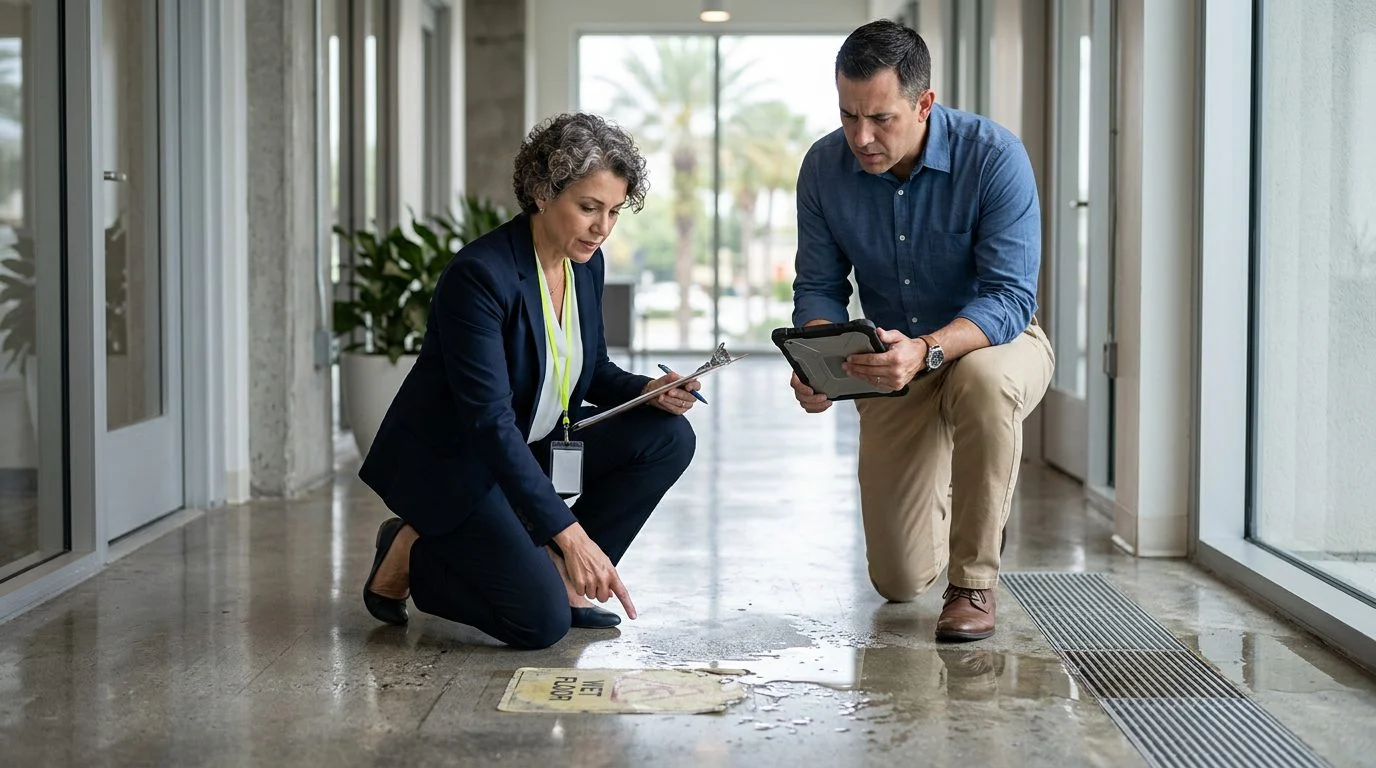
Here’s a simple way to think about it. Suppose you slipped on a wet floor in an Orlando store. Deadlines can depend on when the injury happened and on the type of claim, so contact the firm promptly to learn what applies to your situation.
Don’t rely on a guess. Write down the exact date of the fall, the date you first felt the injury, and the dates of any medical visits tied to it. Clear dates help a lawyer check the timing quickly. Pinpointing the start date is a fact question, and our team reviews it with each person.
Exceptions That Can Change the Deadline
Some claims follow different timing rules. Government involvement is the most common change. If a city, county, or state agency may share fault, the claim can follow separate notice and filing rules, so the timing can differ from a standard negligence claim.
A fatal fall raises different questions. Families facing this loss should ask about timing early.
These exceptions are why the answer depends on the facts. Bring any notices, letters, or incident reports you received to your consultation, so the timing can be reviewed.
What a Slip and Fall Claim Must Prove in Florida
If it didn’t, and you were hurt, you may have a claim. Medical bills, lost pay, and pain and suffering are common types of loss.
For a fall on a wet or slick spot in a business establishment, Florida has a specific statute that applies to transitory foreign substances, such as spills (Fla. Stat. § 768.0755). Florida law treats a slip on a temporary spill or wet spot in a business establishment differently from other falls. In general, the injured person must show that the business knew, or should have known, about the dangerous condition and should have acted to fix it. You must show the business had actual or constructive knowledge of the danger. The business should also have acted to fix it.
In a slip-and-fall on a transitory foreign substance in a business establishment, constructive knowledge may be proven by circumstantial evidence showing that the dangerous condition existed for such a length of time that, in the exercise of ordinary care, the business should have known of it, or that the condition occurred with regularity and was therefore foreseeable.
Picture a spilled drink in a grocery aisle that sat for a long stretch while staff walked past. That pattern raises the question of whether the store should have known. Subsection (2) of the statute provides that this section does not affect any common-law duty of care owed by a person or entity in possession or control of a business premises (Fla. Stat. § 768.0755).
Not sure what your next step is?
Talk it through with our team — the first consultation is free, confidential, and carries no obligation.
How Florida’s Fault Rules Affect What Can Be Recovered
Florida applies a shared-fault rule under Fla. Stat. § 768.81.
Fault still matters even when it is not the whole story.
Expect the other side to raise your own choices. They may say you were looking at your phone, ignored a warning sign, or wore worn-out shoes. These arguments are reviewed as part of the claim. Early records make it easier to answer them with facts.
Why Acting Early Protects a Slip and Fall Claim
Acting early helps protect the proof of what happened. Many fall claims begin with an incident report, medical records, and a demand or negotiation before any lawsuit is filed. Each step in a claim can take its own time. Contact the firm promptly to learn what applies to your situation.
Take these practical steps now:
- Report the fall to the property manager or owner, and ask for a copy of any incident report.
- Photograph the spot, any warning signs or missing signs, the lighting, and the shoes or clothing you wore.
- Get medical care, and follow your doctors’ instructions for your treatment.
- Keep receipts, bills, and records of missed work.
- Write down the names and contact details of anyone who saw the fall.
Video footage can be overwritten, and witnesses move or forget what they saw. That is why timing matters so much in these cases.
Talk With a Slip and Fall Lawyer in Orlando, Florida About Your Deadline
If you were hurt in a fall at a store, parking lot, or apartment building in Orlando or elsewhere in Florida, you may not know how much time is left. A short conversation can answer that question. CHG Personal Injury Lawyers is a Florida-based firm that focuses on personal injury cases across Florida, including slip and fall claims. Igor Hernandez is the responsible lawyer for this page, and he is admitted to The Florida Bar.
CHG charges no attorney’s fees and no case costs unless there is a recovery. Your first consultation is free, confidential, and carries no obligation to continue. To talk about your fall and your deadline, request your free consultation today.

Frequently Asked Questions
What should I do right after a slip and fall in Orlando?
Get medical care right away, even if you feel fine, and tell the property owner or manager what happened. If you can, photograph the spot and any hazard, and write down the names of witnesses. For a free, confidential first consultation with CHG Personal Injury Lawyers, call us to talk through your situation.
How long do I have to file a slip-and-fall lawsuit in Florida?
Florida law sets filing deadlines that depend on the type of claim, under Florida Statute 95.11. Exceptions can apply, so deadlines apply to your case and you should contact CHG Personal Injury Lawyers promptly.
Do I have to pay anything upfront to talk with CHG Personal Injury Lawyers?
No. The first consultation is free, confidential, and carries no obligation to continue. CHG charges no attorney’s fees and no case costs unless there is a recovery.
Can I still recover compensation if I was partly at fault for my fall?
Florida applies a shared-fault rule under Fla. Stat. § 768.81. Because outcomes depend on the facts, contact CHG Personal Injury Lawyers to discuss how this rule may apply to your situation.
Why Acting Early Matters
Deadlines Apply
Florida sets time limits for injury claims. Contacting a lawyer early gives your case the best chance to be reviewed while the details are still fresh.
Evidence Fades
Photos, incident reports, and witness names are easier to gather soon after a fall. Video from the property can also be overwritten over time.
Your Health Comes First
Follow your doctors' care and keep every record of treatment, medication, and follow-up visits. Those records are part of your story.
Do Not Wait to Ask Questions
Deadlines for slip-and-fall claims can be short and easy to miss. If you were hurt, contact our firm promptly so your time limits can be reviewed for your specific situation.
Steps to Take After a Slip and Fall
Get Medical Care
See a doctor even if you feel fine. Some injuries, such as head trauma or back injuries, may not show symptoms right away.
Document the Scene
If you can, photograph the spot, the hazard, and the surrounding area. Note the time, the weather, and the lighting.
Report the Fall
Tell the property owner or manager what happened and ask that the incident be written down. Keep a copy of any report.
Speak With Our Team
Our lawyers can review how Florida law applies to your fall, including deadlines, and explain your options in plain language.