
By Igor Hernandez, Attorney, CHG Personal Injury Lawyers
Hurt in a Slip and Fall?
A fall on a wet floor, a broken walkway, or an unmarked hazard can change your life. Here are the key facts Florida injury victims and their families should know before they make the next move.
A slip and fall lawsuit is a claim that a property owner’s carelessness caused your fall and the injuries that followed. For a slippery substance on the floor of a business, Florida Statute § 768.0755 requires proof that the owner knew, or should have known, about the substance and failed to clean it up or warn you. Other premises claims follow different standards. If that’s true, whether you have a claim depends on the facts of your case, your medical records, and applicable Florida law. A free, confidential consultation is a good place to start.
What a Slip and Fall Lawsuit Is and When One May Apply
A slip and fall lawsuit starts when someone gets hurt on property they did not control, because the owner or manager did not keep it safe. Whether you have a claim depends on the facts of your case and applicable Florida law. For negligence actions filed after March 24, 2023, Florida’s comparative-fault statute, Fla. Stat. § 768.81(6), provides that a party found greater than 50 percent at fault for his or her own harm may not recover damages, while a person found 50 percent or less at fault may have their damages reduced by their share of fault. This subsection does not apply to personal injury or wrongful death actions arising from medical negligence under chapter 766, and actions filed before that date remain under Florida’s prior pure comparative-fault rule. This subsection does not apply to medical negligence actions, and how it applies to any particular case depends on the facts and Florida law.
Picture a wet floor in a grocery aisle with no warning sign. You step, your feet slide out, and you land hard on your back. Weeks later you still struggle to sit, stand, or work, and the bills keep arriving. That fall was not your choice.
Lawyers call this type of claim premises liability. You don’t need to know the term to have a claim. What matters is what happened and who controlled the space.
A slip and fall claim is not the same as a simple insurance claim. Many cases begin with a claim to the owner’s insurance company, and some settle that way. If the insurer delays or offers too little, a lawsuit may become the next step. For a broader overview, see our slip and fall lawyer Florida guide.
Not sure what your next step is?
Talk it through with our team — the first consultation is free, confidential, and carries no obligation.
The Property Owner’s Duty to Keep Visitors Safe
Customers, guests, and people visiting tenants all fall into this group.
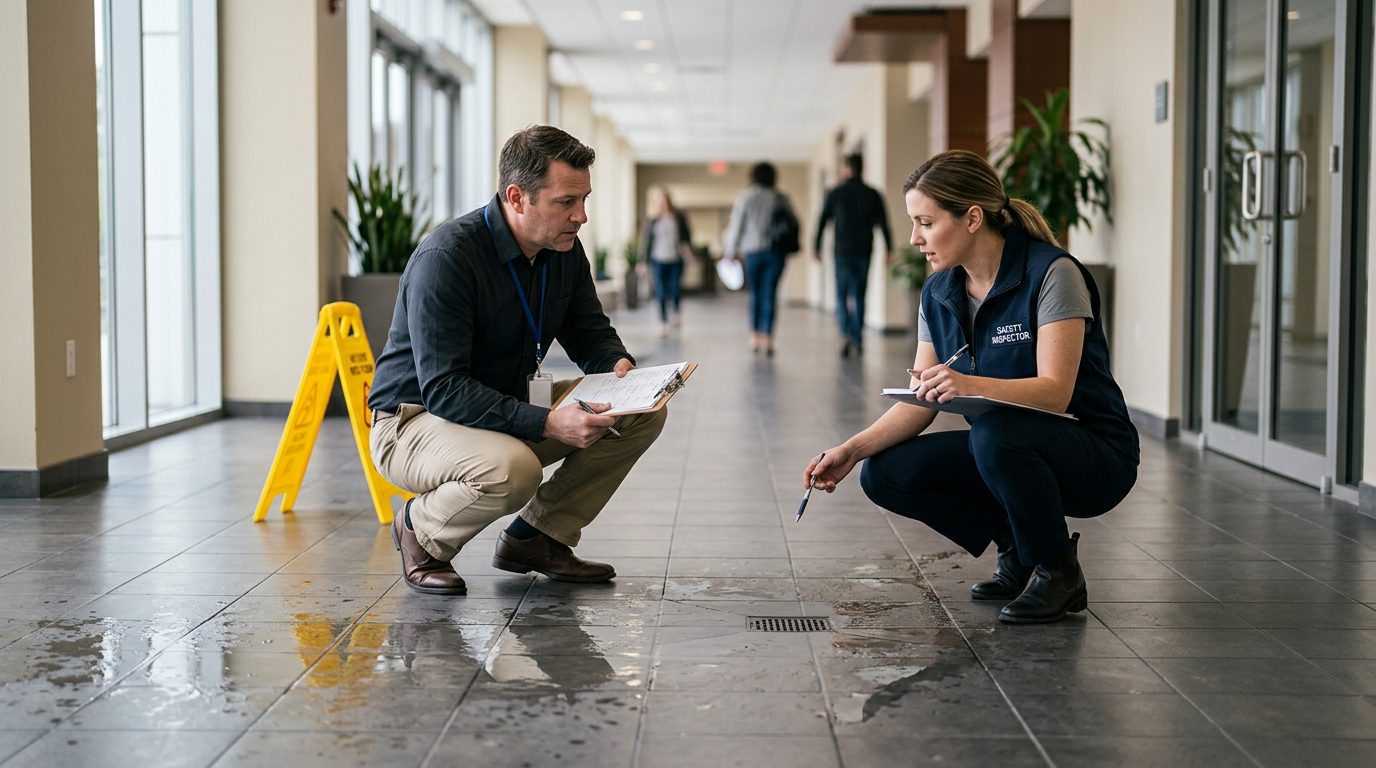
Common hazards include spills left on floors, missing handrails, cracked or uneven pavement, poor lighting, and loose rugs or mats. Each one can cause a fall in seconds.
Florida’s transitory foreign substance statute for slips in business establishments focuses on notice. Notice means the business knew, or should have known, about the danger. You must show the business had actual or constructive knowledge of the dangerous condition and should have acted to fix it.
Actual knowledge is easy to picture. An employee saw the spill and did nothing. Constructive knowledge is proven with circumstantial evidence, which means facts that point to the answer. Fla. Stat. § 768.0755 describes the circumstantial evidence that may be used to prove constructive knowledge. The first is time: the condition existed long enough that a business using ordinary care should have found it. The second is pattern: the condition kept happening, so it was foreseeable. A leak that drips at the same spot every afternoon may fit the second example.
A missing warning sign or cone can also matter. Whether it counts depends on the facts of your case. The same statute says it does not affect the broader common-law duty of care owed by whoever controls the premises.
Common Ways Slip and Fall Injuries Happen in Florida
Slip and fall injuries happen most often where many people walk, shop, dine, or park. In Florida, that includes grocery stores, restaurants, hotels, apartment complexes, parking lots and garages, and building entrances.
Rain is a real factor in Florida. Afternoon storms can leave lobby floors, walkways, and parking structures slick. A mat that slides or a freshly mopped floor with no sign can turn an ordinary walk into a fall.
Injuries vary widely. Some people break a wrist or hip. Others hurt their back or neck, or strike their head. Some injuries are not obvious right after a fall. Getting checked by a medical professional soon after a fall protects your health and creates a clear record of what happened.
A fall that looks minor can still lead to long-term needs. Serious falls can cause lasting harm, including spinal cord injuries, traumatic brain injuries, and catastrophic back and neck injuries. Those cases raise the stakes for the whole family. CHG Personal Injury Lawyers focuses on personal injury, including catastrophic injury claims.
Florida Rules and Deadlines That Shape a Slip and Fall Case
For negligence actions that accrued after March 24, 2023, Florida law sets a two-year filing period, but exceptions apply, including claims against government entities that require notice before suit and certain wrongful death claims. Deadlines apply, so contact a lawyer promptly. Fla. Stat. § 95.11 sets two years for an action founded on negligence. Missing that deadline can end a claim, so timing deserves early attention.
Florida also compares fault between the people involved. This is called modified comparative negligence (shared fault). For negligence actions filed after March 24, 2023, Fla. Stat. § 768.81 generally bars recovery by a person found to be greater than 50 percent at fault for his or her own harm. This rule does not apply to personal injury or wrongful death actions arising out of medical negligence under chapter 766, and how it applies depends on the facts of each case. In plain terms, if you were 50 percent or less at fault, you may still recover. The court enters judgment against each liable party based on its percentage of fault.
Falls at county, city, or state buildings follow different rules. Claims against government entities are governed by Fla. Stat. § 768.28, which waives government immunity only to the extent that statute specifies.
This is general information, not legal advice. Your specific facts decide which rules apply.
Evidence That Helps Prove a Slip and Fall Claim
The strongest slip and fall cases usually rest on evidence gathered early. Memories fade, floors get mopped, and video gets overwritten.
Take photos or video of the hazard, the surrounding area, the lighting, and any signs or the lack of them, as soon as you safely can. Write down the time, the weather, and what you were doing.
Get the names and phone numbers of witnesses, including employees and other customers. Ask for a copy of any incident report the business completed. If you can’t get a copy, note the manager’s name and what they said.
Keep the shoes and clothing you wore that day. Don’t wash, repair, or throw them away if you can avoid it. Worn soles and the path of the fall can help show what happened.
Store surveillance footage is often overwritten within days. Ask the business in writing to preserve it. A written request creates a record that the footage was requested.
Medical records and bills tell the story of your injury and how it affects daily life and work. Keep every appointment note, prescription receipt, and mileage log for medical visits.
Have questions about what happened?
Ask our team directly. The first conversation is free, confidential, and there is no obligation to continue.
How a Slip and Fall Lawsuit Typically Moves Forward
Most slip and fall claims begin with a demand to the owner or its insurer. Many are resolved through negotiation, and some move on to a lawsuit.
First, the claim is reported and the insurer investigates. Second, your side presents medical records, bills, and proof of the hazard, often with a settlement demand. Third, if talks stall, a lawsuit is filed in court. Fourth, both sides exchange information in a process called discovery, which can include written questions and depositions. Some cases then go to mediation, a guided discussion with a neutral third party. A small number of cases go to trial.
How long a case takes depends on the injuries, the evidence, the insurer’s response, and the court’s schedule. No one can promise a timeline.
You generally decide whether to accept a settlement offer. Your lawyer should explain each offer and what it covers before you decide.
How Florida Law Applies to Slip and Fall Claims
Every slip and fall situation depends on its own facts, medical records, and applicable Florida law.
Depending on the facts of your case and applicable Florida law, a claim may seek compensation for certain losses, such as medical care, lost income, and the effect of injuries on daily life.
Several factors matter. These include how severe and lasting the injuries are, how strong the proof of notice is, the injured person’s share of fault, and the insurance coverage available. A lasting injury often needs more time and evidence than a short injury that fully heals.
Medical bills matter too. Under Fla. Stat. § 768.0427, evidence of past treatment that has been paid is limited to the amount actually paid, regardless of the source. If treatment was given under a letter of protection, a promise to pay from a future award, the law requires disclosing the letter, itemized bills, and whether you had health coverage at the time.
Questions People Ask About Slip and Fall Settlements
Can you get compensation for a slip and fall?
Possibly, if a property owner’s carelessness caused your fall and injuries. Whether that applies to you depends on the facts and the evidence.
How hard is it to win a slip and fall lawsuit?
Outcomes depend on the evidence, the injuries, and how the law applies to your facts. No lawyer can promise a result, and general figures you read online don’t predict your case.
What if the settlement offer seems low?
Early offers often come before doctors know the full extent of an injury. Ask whether the offer accounts for future care and lost income before you decide.
Can my family bring a claim if a fall was fatal?
Depending on the facts and applicable Florida law, family members may be able to bring a wrongful death claim, and deadlines apply to these claims, so contact the firm promptly. Speaking with a lawyer quickly helps make sure deadlines aren’t missed.
Talk With a Florida Personal Injury Firm About Your Situation
If you’re reading this while in pain, worried about bills, or helping a family member through a fall they didn’t choose, you don’t have to work out the law alone. Learning your rights is a smart first step. Talking through your facts can make the next one clearer.
Reach out for a free case evaluation to discuss what happened and whether you may have a claim.
It focuses on personal injury cases, serving clients throughout Florida, including Miami, Orlando, Tampa, and Jacksonville.
Attorney advertising. This page is general information, not legal advice. No result can be promised, because every case depends on its own facts.
Want to know where you stand?
Tell us what happened and our team will walk you through the options available to you, at no cost.
How CHG Personal Injury Lawyers Can Help
Reviewing Your Facts
We look at how the fall happened, what the property owner knew or should have known, and the records that show what followed. Whether you have a claim depends on your facts, your medical records, and applicable Florida law.
Protecting Your Rights
We handle communication with insurance companies and property owners so you can focus on your recovery and your family.
Focused on Injury Cases
Our practice focuses on personal injury matters, including serious falls and premises accidents that cause lasting harm.
No Fees Unless There Is a Recovery
CHG charges no attorney's fees and no case costs unless there is a recovery.
Before You Talk to the Property's Insurer
Insurance adjusters may ask for a recorded statement soon after a fall. Before you give one or sign any release, speak with a lawyer about what you should say and what you should sign.
Get Medical Care
Follow your doctors' care and keep every record, bill, and referral.
Document the Scene
If you can, photograph the hazard, the surface, the lighting, and any warning signs or their absence. Note the date, time, and location.
Gather Witness Information
Names and phone numbers of people who saw the fall or the hazard can be valuable later.
Keep Your Records
Save the clothing and shoes you wore, receipts, photos of your injuries, and a written journal of how the injury affects your daily life.