

Slip and Fall | Florida Personal Injury
What Evidence Matters in a Florida Slip and Fall Settlement
How property owners' negligence is proven—and why documentation of the hazard, your injuries, and the owner's failure to act determines your claim's value.
By CHG Lawyers · Published September 10, 2026
Slip and Fall Evidence in Florida: What You Must Prove to Win
You slipped on a wet floor, a broken step, or debris on someone else’s property and got hurt. Now you’re wondering: do I have a claim? The answer depends on one thing: can you prove the property owner was negligent?
This guide walks you through exactly what you need to prove, what evidence matters most, and why the 2-year deadline in Florida is critical.
If you've slipped and fallen on someone else's property in Florida: You do not have to navigate this alone. Talk it through with our team — the first consultation is free, confidential, and carries no obligation.
The Core Question: What Must You Prove?
Florida law is clear. To win a slip and fall claim, you must prove three things:
- The property owner created the hazard, or knew about it, or should have discovered it through reasonable inspection.
- The owner failed to fix it or warn you.
- That failure caused your injury.
That’s it. Everything in this guide points to proving one of those three elements. The stronger your evidence on all three, the more confident the insurance company becomes—and the higher the settlement offer.
The 2-Year Deadline: Act Now
Under Florida Statute §95.11, you have exactly 2 years from the date of your fall to file a lawsuit. After that date, your claim is gone forever—no exceptions, no extensions.
If you’re reading this months after your fall, start gathering evidence immediately. If it’s been more than a year, contact an attorney now. The statute of limitations is not a suggestion; it’s a hard deadline.
Comparative Fault: The Critical Reality Most Claims Guides Ignore
Here’s what generic settlement guides won’t tell you clearly: Florida’s comparative-negligence rule can eliminate your recovery entirely.
Under Florida Statute §768.81, if a jury finds you more than 50% at fault for your fall, you recover nothing. If you’re found 50% or less at fault, your recovery is reduced by your percentage of fault.
Example: You slip on a wet floor in a grocery store. The store had no warning sign. But the store’s insurance company argues you were distracted by your phone and weren’t watching where you walked. If a jury finds you 60% at fault, you lose. If they find you 40% at fault, you recover 60% of your damages.
This is why evidence of the owner’s negligence is so critical. Strong evidence—photos showing poor lighting, witness statements that the hazard existed for hours, maintenance records proving the owner knew about it—shifts the blame away from you and onto the property owner.
Proof That the Owner Knew or Should Have Known
The strongest evidence shows the owner either knew about the hazard or failed to inspect the property reasonably.
Maintenance and inspection records are gold. If the owner’s own records show the area wasn’t inspected for weeks, or that a known hazard wasn’t addressed, that’s direct proof of negligence.
Prior incident reports are among the most powerful evidence available. If other customers fell in the same spot before you did, and the owner did nothing, that proves the owner knew the hazard existed and ignored it. Request these through your attorney during discovery if the owner won’t provide them.
Witness statements from employees or other customers corroborate your account. A statement from an employee saying “we knew that step was broken for months” or from another customer saying “I almost fell there too” is far more credible than your word alone.
A pattern of neglect in that area—broken fixtures, poor lighting, accumulated debris, or lack of maintenance—suggests the owner wasn’t inspecting or maintaining the property reasonably.
The timing of the hazard matters. A wet floor that appeared 30 minutes before you fell, with no warning sign, shows clearer negligence than a spill that appeared seconds before. A broken step that’s been there for months shows negligence. A freshly spilled drink shows less.
Photographs and Video: Document the Scene Immediately
Take photos and video of the hazard as soon as it’s safe to do so. Capture:
- The hazard itself (wet floor, broken step, debris, uneven surface) from multiple angles
- Wide shots showing the context (lighting, nearby signage, foot traffic, lack of warning signs)
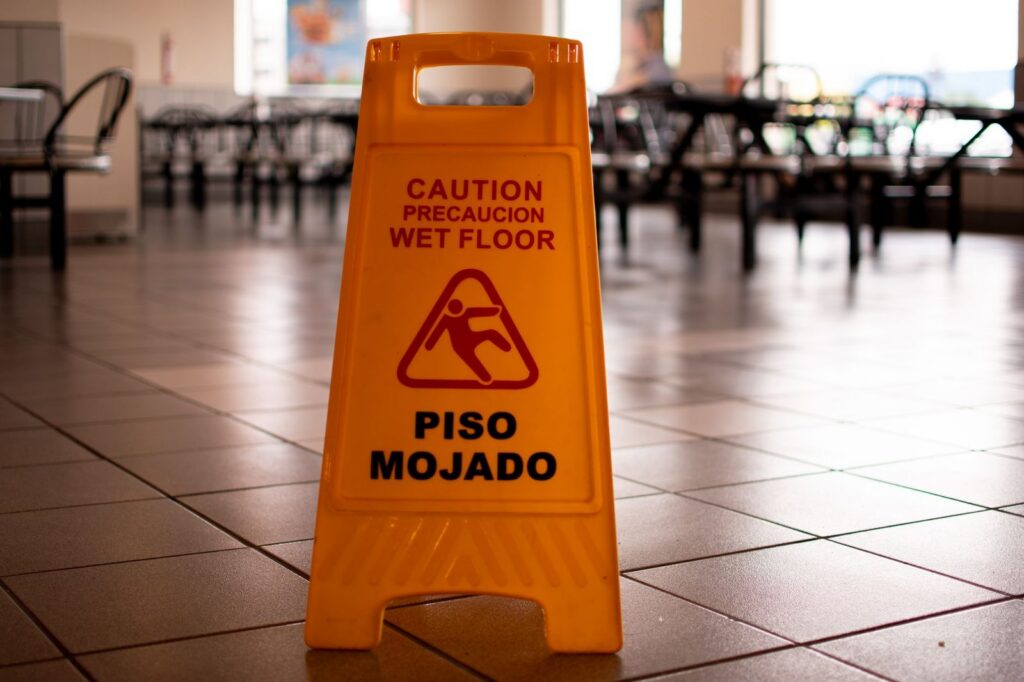
- The absence of warning cones, wet-floor signs, or barrier tape
- Lighting conditions (especially if poor lighting contributed to the fall)
- The condition of the surrounding area (cleanliness, maintenance, other hazards)
Video is more persuasive than still photos because it captures lighting, the exact size of the hazard, and the absence of warnings in a way photos cannot. A 30-second video showing a dark, unmarked step is far more convincing than a description.
If the property owner cleaned up or repaired the hazard after your fall, your photos are critical proof it existed. Without them, the owner can claim the hazard wasn’t there.
Medical Records: The Foundation of Your Claim
Seek medical attention immediately after your fall, even if your injuries seem minor. Medical records are the foundation of your entire claim.
Collect and organize:
- Emergency room or urgent care records (including the date, time, and description of how the injury occurred)
- Doctor’s notes and diagnoses
- Imaging reports (X-rays, MRI, CT scans, ultrasound)
- Physical therapy records and progress notes
- Prescriptions and medication lists
- Follow-up appointment summaries
- Any statements from your doctor about prognosis or permanent impairment
Medical records prove two critical things: that the fall caused your injury and how severe it is. Insurance adjusters use medical records to calculate damages. Without them, settlement offers are typically 50–70% lower than cases with thorough documentation.
Not sure what your next step is?
Talk it through with our team — the first consultation is free, confidential, and carries no obligation.
Your Own Detailed Account: Write It Down Now
Write down everything you remember about the fall as soon as possible. Include:
- Date and time of the fall
- Exact location (store name, aisle, parking lot section, etc.)
- What you were doing when you fell
- What caused the fall (wet floor, broken step, debris, poor lighting, etc.)
- How you fell (which foot slipped, which direction you fell, how you landed)
- What happened immediately after (did you tell an employee, was anyone nearby, did you seek medical attention immediately or later)
- Weather and lighting conditions
- Foot traffic (was the area busy or empty)
- Whether you were warned of any hazard
Specific details make your account credible. “I fell at 2:15 p.m. on Tuesday, March 14, in the produce section of SaveMart on Main Street. The floor was wet from a spilled drink. There was no wet-floor sign. I slipped on my right foot and fell forward onto my left knee” is far more persuasive than “I slipped on a wet floor.”
Your attorney will use this account to build a clear narrative and identify what evidence to gather.
Witness Statements: Get Names and Contact Information
Get the names, phone numbers, and email addresses of anyone who saw your fall or the hazard.
Witness statements corroborate your account and establish that the hazard was obvious or that the owner was negligent. A statement from another customer who nearly fell on that wet floor, or from an employee who knew the hazard existed, is powerful evidence. Written or recorded statements (video or audio) are stronger than verbal ones.
If witnesses are reluctant to speak, your attorney can subpoena them during discovery.
Incident Reports and Property Records: Request Them Early
If you fell at a business, ask the manager or owner for a copy of the incident report filed at the time. Request maintenance and inspection records for the area where you fell.
These records may show:
- The owner knew about the hazard
- The owner failed to inspect the area
- Prior complaints or incident reports from other people who fell in the same spot
Prior incident reports are among the most powerful evidence available. They prove the owner knew the hazard existed and failed to address it.
If the owner refuses to provide these records voluntarily, your attorney can request them through the legal discovery process.
Injury Severity: How It Affects Settlement Value
Settlement amounts in Florida slip and fall cases vary widely. They depend on two things: injury severity and the strength of negligence evidence.
Minor Injuries: $2,000–$10,000
Minor injuries include small cuts, minor sprains, or bruising that resolve within weeks with little or no medical treatment. Even with clear negligence evidence, these cases settle in the lower range because damages are limited.
Example: You slip on a wet floor, fall, and scrape your knee and hand. You visit urgent care, get bandaged, and recover fully within 2 weeks. Medical costs are $300. Even with strong negligence evidence, settlement offers typically range from $2,000–$10,000.
Moderate Injuries: $10,000–$50,000
Moderate injuries include fractures, significant soft-tissue damage (torn ligaments, muscle strains requiring ongoing physical therapy), or injuries causing time away from work. These cases involve substantial medical treatment and longer recovery periods.
Example: You fall on a broken step, fracture your ankle, and require surgery and 3 months of physical therapy. Medical costs total $15,000. You miss 2 months of work. With strong negligence evidence and thorough medical documentation, settlement offers typically range from $10,000–$50,000.
Serious Injuries: $50,000+
Serious injuries include those requiring surgery, causing permanent disability, chronic pain, mobility limitations, or long-term ongoing care. These cases can settle for substantially more.
Example: You slip on a wet floor in a parking garage with poor lighting, fall, and suffer a severe head injury causing cognitive impairment, or a spinal injury causing chronic pain and limited mobility. You require ongoing medical care, physical therapy, or assistive devices. With strong negligence evidence, thorough medical documentation, and clear proof of permanent impairment, settlement offers can exceed $50,000 significantly.
The key variable in all three categories is evidence. The more clearly you prove negligence and document your injuries, the higher the settlement offer is likely to be. Weak evidence of negligence, even with serious injuries, results in lower offers because the insurance company believes it can win at trial.
What Factors Drive Settlement Value (Beyond Injury Severity)
Insurance companies consider:
- Clarity of negligence: How obvious is it that the owner was negligent? Strong evidence increases value.
- Comparative fault: How likely is a jury to find you partially at fault? Evidence that the hazard was obvious or that you were distracted decreases value.
- Medical documentation: How thoroughly documented are your injuries and treatment? Gaps in medical records decrease value.
- Permanence: Are your injuries permanent or temporary? Permanent injuries are worth more.
- Lost wages: Did you miss work? Documented lost income increases value.
- Insurance policy limits: What is the property owner’s liability insurance limit? You cannot recover more than that limit.
Insurance adjusters don’t guess at settlement value. They calculate it based on evidence and comparable cases. The stronger your evidence, the higher their calculation.
Is Your Slip and Fall Claim Worth Pursuing?
If you have clear evidence of negligence and documented injuries, your claim is likely worth pursuing. Most property owners carry liability insurance specifically to cover these incidents. Your claim may be resolved without trial.
The question is whether your evidence supports your claim’s value. An attorney can review your evidence, assess your claim’s strength, and explain what your case might realistically be worth based on the facts and your injuries—not speculation.
Have questions about what happened?
Ask our team directly. The first conversation is free, confidential, and there is no obligation to continue.
How Long Does Settlement Take?
Simple cases with minor injuries and clear liability may settle within 3–6 months. Cases involving serious injuries or disputed liability take longer as medical treatment continues and evidence is gathered.
Strong evidence from the start—photos, witness statements, medical records, incident reports—speeds settlement because the insurance company has less reason to dispute facts.
Next Steps: Gather Evidence and Consult an Attorney
If you’ve slipped and fallen on someone else’s property in Florida:
- Photograph the scene if you can do so safely.
- Seek medical attention and keep all records.
- Write down your account while details are fresh.
- Get witness information from anyone who saw the fall or hazard.
- Request the incident report from the property owner or manager.
- Consult an attorney before the 2-year statute of limitations expires.
You do not have to navigate this alone. An attorney can review your evidence, assess your claim, and explain what your case might be worth based on facts and injuries.

FAQ
What is the average slip and fall settlement in Florida?
Settlement amounts vary widely based on injury severity and negligence evidence. Minor injuries typically settle for $2,000–$10,000, moderate injuries for $10,000–$50,000, and serious injuries for substantially more. The strength of your negligence evidence is the primary driver of settlement value.
How do I prove the property owner was negligent?
You must show the owner created the hazard, knew about it, or should have known through reasonable inspection. Evidence includes maintenance records, witness statements, photos, video, prior incident reports, and a pattern of neglect in that area.
What if I was partially at fault for my slip and fall?
Under Florida’s comparative-negligence rule (Fla. Stat. §768.81), if you’re found more than 50% at fault, you recover nothing. If 50% or less, your recovery is reduced by your percentage of fault. Strong evidence of the owner’s negligence helps overcome this defense.
How long do I have to file a slip and fall claim in Florida?
You have 2 years from the date of your fall to file a lawsuit under Florida’s statute of limitations (Fla. Stat. §95.11). After that deadline, your claim is gone.
Do I need medical records to pursue a slip and fall claim?
Yes. Medical records are essential. They prove causation and severity. Without them, settlement offers are typically 50–70% lower than cases with thorough documentation.
What if the property owner cleaned up or repaired the hazard after I fell?
Your photos and video are critical proof the hazard existed. Witness statements and incident reports also corroborate your account. Without documentation, the owner can claim the hazard wasn’t there.
If you’ve slipped and fallen on someone else’s property in Florida and aren’t sure whether you have a claim, contact us for a free case evaluation. We can review your evidence, assess your claim’s strength, and explain what your case might realistically be worth based on the facts and your injuries.
Evidence Disappears Quickly
Surveillance footage, incident reports, and maintenance records are often deleted or discarded within weeks or months. If you've been injured on someone else's property, document everything immediately—take photos, get witness names and contact information, and request a copy of any incident report from the property owner or manager.
The Four Pillars of Slip and Fall Evidence
The Hazard
Photos or video of the wet floor, broken step, debris, poor lighting, or other dangerous condition that caused your fall. Timestamp and location details strengthen this evidence.
Knowledge or Negligence
Proof that the property owner knew—or should have known—about the hazard. Maintenance records, prior complaints, surveillance footage, or witness statements that the condition existed for a long time all support this.
Your Injuries
Medical records, emergency room reports, imaging (X-rays, MRI), and ongoing treatment documents. The more serious and well-documented your injuries, the stronger your claim's foundation.
Causation
Clear connection between the hazard and your injury. Medical evidence linking your fall to the condition, plus your own account and any witness statements, establish this link.
How We Build Your Slip and Fall Claim
Gather and Preserve Evidence
We collect incident reports, maintenance logs, surveillance video, photographs, and witness statements before they're lost or destroyed.
Establish Negligence
We investigate whether the property owner failed to inspect the premises, failed to warn of known hazards, or failed to repair or clean up dangerous conditions—the foundation of liability.
Document Your Damages
We work with your medical providers to build a complete record of your injuries, treatment, recovery, and any lasting effects on your life and work.
Negotiate from Strength
Armed with solid evidence of the hazard, the owner's negligence, and your injuries, we pursue fair compensation on your behalf.
Common Questions About Slip and Fall Settlements
What factors affect settlement value?
The severity of your injuries, the strength of negligence evidence, the property owner's insurance coverage, and the clarity of causation all influence what a claim may be worth. Every case is different.
How long does a slip and fall claim take?
Simple cases with clear liability and minor injuries may settle within months. Complex cases involving serious injury, disputed negligence, or multiple parties can take longer. Your attorney will keep you informed throughout.
Do I need a lawyer for a slip and fall?
Property owners and their insurers are experienced at minimizing claims. An attorney protects your rights, gathers evidence before it vanishes, and negotiates on your behalf—often resulting in better outcomes than handling it alone.
What if the property owner says I was careless?
Florida law recognizes comparative fault. Even if you bear some responsibility, you may still recover if the property owner's negligence was a substantial factor in your injury. We evaluate your full situation.