
Slip and Fall Claims | Serving Florida
How Much Is a Slip and Fall Worth? Florida Guide
Medical bills, lost paychecks, and pain can follow a single misstep. Here is a plain-language look at what shapes a slip and fall claim and how to protect your rights while you recover.
Why Florida Families Call CHG
Florida
Florida-based personal injury firm
Florida Bar
Licensed attorneys admitted to The Florida Bar
Free
Initial consultation, confidential, with no obligation to continue
By CHG Lawyers · Published November 15, 2026
How Much Is a Slip and Fall Worth in Florida?
If you were hurt in a fall on someone else’s property and are asking how much a slip and fall is worth, the facts of what happened are the starting point.
No single dollar figure fits every slip and fall. The value depends on your injury, your treatment, the time you lost from work, and what the evidence shows about the hazard.
If you are recovering from a fall you did not choose, juggling appointments and missed paychecks, you do not have to sort out the claim alone. Talk it through with our team — the first consultation is free, confidential, and carries no obligation.

How Much Is a Slip and Fall Worth? Why There Is No Single Number
No fixed amount applies to every slip and fall, because each claim turns on its own facts.
Consider two people who fall in the same store. One bruises a hip and is back at work within a week. The other breaks a wrist, needs surgery, and cannot work for months. Their claims will look very different, even though the fall was the same.
Under Fla. Stat. § 768.0755, when a person slips and falls on a transitory foreign substance in a business establishment, the injured person must prove that the business had actual or constructive knowledge of the dangerous condition and should have taken action to remedy it. The owner’s responsibility sits at the center of the claim, and it shapes how the claim is valued.
Two questions come first: what caused the fall, and what the injury has cost you so far. The answers shape everything else in this guide.
What a Slip and Fall Claim Can Include
A slip and fall claim can seek economic damages, which are losses you can document, and non-economic damages, which cover pain and changes to daily life.
Florida law defines economic damages to include past and future lost income, medical and funeral expenses, and other losses that would not have happened without the injury (Fla. Stat. § 768.81). In practice, that often includes:
- Emergency care, hospital stays, and imaging
- Doctor visits, physical therapy, and prescriptions
- Future medical care tied to the fall
- Past and future lost income, including a reduced ability to work
- Non-economic losses: physical pain, emotional distress, limits on daily activities, and loss of enjoyment of life
Documentation turns these losses into a claim that can be measured. Bills, pay stubs, employer letters, and medical notes are the core of that proof. Treatment decisions belong to your doctors, and the care they recommend becomes part of your record.
Factors That Move the Value of a Slip and Fall Claim
The injury itself matters most. How lasting it is, and how well the hazard can be proven, matter nearly as much.
- Severity and permanence. Fractures, head injuries, and back or neck injuries that leave lasting limits usually need more proof than short-term soft-tissue injuries.
- Surgery and future care. Surgery or a long-term treatment plan adds medical costs, and those future costs must be documented too.
- Time away from work. Medical notes and employer records show how long you could not work.
- Strength of the evidence. Photos, reports, footage, and witness accounts show what the hazard was and how long it was there.
- Your share of fault. In a negligence action, Florida reduces an award by the share of fault chargeable to you, but does not bar recovery, unless you are found greater than 50 percent at fault for your own harm, in which case you may not recover any damages (except in medical negligence actions under chapter 766) (Fla. Stat. § 768.81).
- Insurance limits. Available coverage can shape how a claim is resolved.
What the Property Owner Had to Do
A property owner must keep the property reasonably safe and warn visitors of hidden dangers the owner knew or should have known about.
The Florida Supreme Court has said businesses owe their invitees, meaning people invited onto the property, a duty to keep conditions reasonably safe. The owner must also warn of hidden dangers that the owner knew or should have known about (Valladares v. Bank of America).
A slip on a wet or loose substance inside a business has an added proof step. You must show the business had actual or constructive knowledge of the danger and should have acted (Fla. Stat. § 768.0755). Constructive knowledge can be shown if the condition lasted long enough that a careful business should have found it. It can also be shown if the condition happened so often that it was foreseeable.
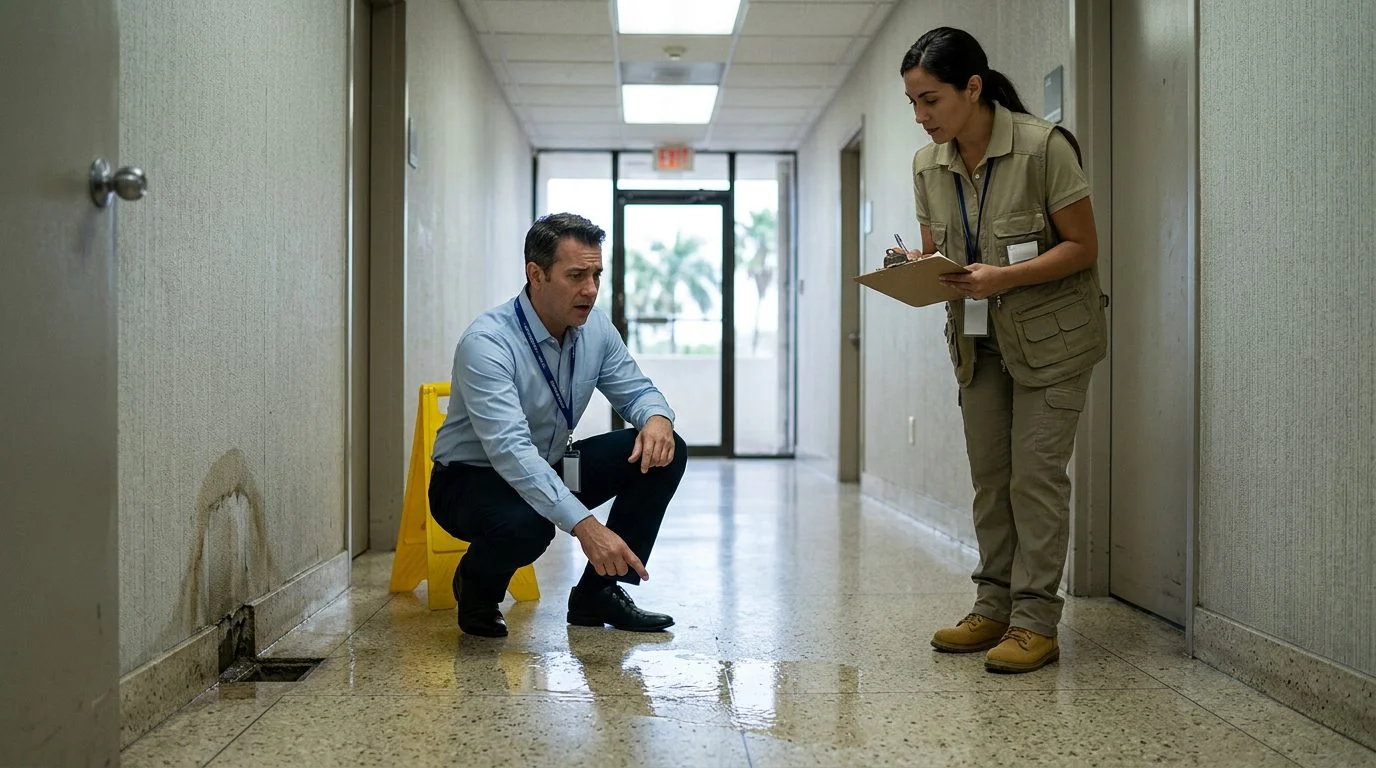
Common hazards include wet or freshly mopped floors without warning signs, torn carpet, poor lighting, debris, broken stairs or handrails, and icy walkways.
Evidence can disappear. Surveillance footage, incident reports, and witness names can be lost if no one requests or saves them promptly.
Steps That Help Protect the Value of a Claim
The first days after a fall often decide what evidence will exist later. Act early and keep records.
- Get medical care promptly. Follow the treatment plan your doctors give you. Gaps in care can be used to question how serious the injury was.
- Report the fall in writing. Tell the property manager and ask for an incident report.
- Photograph everything. Take pictures of the spot, the hazard, your footwear, and your injuries.
- Write down names. Record contact details for anyone who saw the fall.
- Keep every record. Save bills, receipts, pay stubs, and notes about missed work.
- Keep a daily journal. Note your pain, your limits, and the tasks you cannot do.
- Think before posting. Public social media posts about the fall or your activities can be reviewed by insurers.
Watch the deadline. Florida sets time limits for filing lawsuits (Fla. Stat. § 95.11).
Not sure what your next step is?
Talk it through with our team — the first consultation is free, confidential, and carries no obligation.
How the Process Works With CHG Personal Injury Lawyers
The process starts with a free, confidential first consultation, and you have no obligation to continue after it.
- Initial consultation. You describe the fall and your injuries, and the facts are reviewed at no cost to you.
- Gathering records. The firm collects medical records, incident reports, and evidence about the property. It can request that footage and reports be preserved.
- Evaluation. Your claim is measured against your documented losses and the Florida rules described above. You hear your options in plain terms.
- Resolution. The firm negotiates with the insurer. If needed, it files suit within the Florida deadline.
CHG charges no attorney’s fees and no case costs unless there is a recovery.
Igor Hernandez is the responsible lawyer for this page. CHG Personal Injury Lawyers is Florida-based and serves clients throughout Florida, including Miami, Orlando, Tampa, and Jacksonville.
Frequently Asked Questions About Slip and Fall Case Value
How much is a slip and fall worth with surgery?
Surgery can raise a claim’s value because it adds medical costs and can point to lasting effects. No single figure applies, since each claim depends on its own records.
Do injections increase a slip and fall settlement?
Treatment your doctor recommends becomes part of the medical record used to measure your losses. Whether a specific treatment affects a claim depends on the records involved, and treatment choices belong to your doctors.
How much of a settlement will I keep?
Amounts owed for medical bills can reduce what you keep. Florida law can also reduce an award by certain payments from other sources (Fla. Stat. § 768.76).
Is my claim worth pursuing if my injury seems small?
Minor injuries can still support a claim. Documented losses and evidence decide its strength, and a free consultation is where those facts get reviewed.
What is the deadline for a Florida slip and fall claim?
Florida sets time limits for filing lawsuits (Fla. Stat. § 95.11). In Florida, a lawsuit founded on negligence generally must be filed within two years, so contact a lawyer promptly.
Talk With Our Team About Your Fall
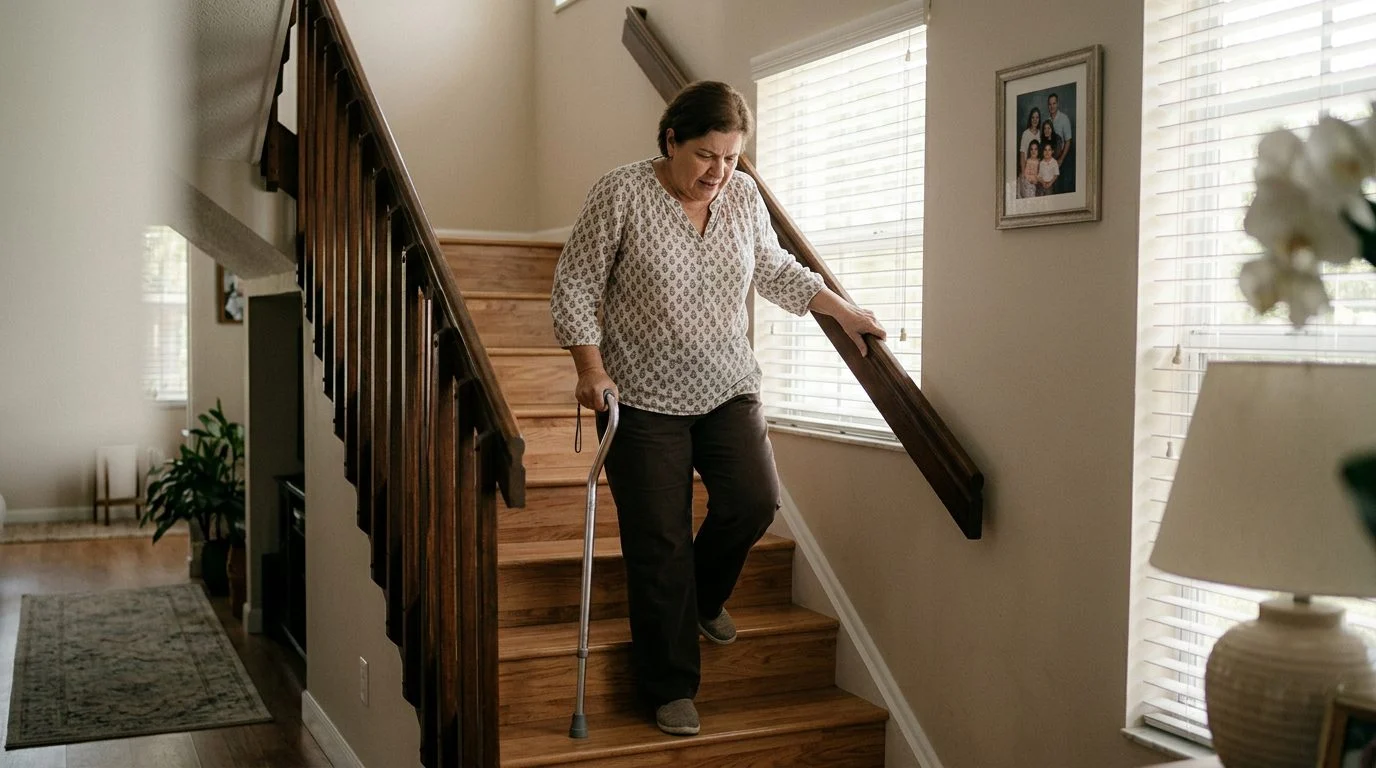
If you are recovering from a fall you did not choose, juggling appointments and missed paychecks, you do not have to sort out the claim alone. Our team can review the facts of your fall in a free, confidential consultation, with no obligation to continue. Contact CHG Personal Injury Lawyers to start that conversation.
What Shapes the Value of a Slip and Fall Claim
Your Medical Care
Records of every visit, test, and treatment your doctor recommends show what the fall has cost you physically and financially.
Income You Have Lost
Missed work, reduced hours, and future earning limits are documented through pay records and statements from your employer.
Lasting Effects
Ongoing pain, limited movement, or a changed daily routine are part of the picture, and they are best described in your doctor's own words.
Proof of the Hazard
Photos, incident reports, witness names, and maintenance records help show what caused the fall and where it happened.
Protect Your Claim From the Start
Take photos of the spot and your injuries, get names and contact details of witnesses, and keep every bill and receipt. Follow your doctor's care and tell them about every symptom. Florida deadlines can apply, so contact our team promptly.