


Slip and Fall Injuries
Injured in a Slip and Fall at a Commercial Rental Property?
You may have a claim against the property owner. We help injured people across Florida and nationwide understand their rights and pursue fair compensation.
By CHG Lawyers · Published September 21, 2026
Slip and Fall at Commercial Rental Property in Florida: Your Legal Rights
When you slip and fall at a commercial rental property—a shopping center, office building, restaurant, or apartment complex—and you’re injured, the property owner or manager may be legally responsible. Florida law requires commercial property owners to keep their spaces reasonably safe and to warn visitors of known hazards. If they fail to do so, you may have a claim for your medical expenses, lost wages, and pain and suffering.
Not sure what your next step is?
Talk it through with our team — the first consultation is free, confidential, and carries no obligation.
What Is a Property Owner’s Duty of Care?
Commercial property owners must keep their premises reasonably safe for visitors. This duty includes:
- Regularly inspecting the property for hazards
- Looking for wet floors, debris, broken stairs, poor lighting, and other dangers
- Fixing hazards promptly or posting clear warnings
If a property owner discovers a hazard—or should have discovered it through reasonable inspection—they must fix it or warn visitors. When an owner neglects this duty and someone is injured, that negligence can form the basis of a slip-and-fall claim.
How Does Florida’s Comparative Fault Rule Affect Your Claim?
This is where many slip-and-fall claims become complicated. Your own actions matter legally.
Florida uses a modified comparative-fault system under Fla. Stat. §768.81(6). Here’s how it works:
- If you are more than 50% at fault, you recover nothing.
- If you are 50% or less at fault, your damages are reduced by your percentage of fault.
Real-world example: A jury determines you were 25% at fault because you were texting while walking. The property owner was 75% at fault because they knew about a wet floor from a burst pipe, posted no warning sign, and had not mopped or cordoned off the area for two hours. You’d recover 75% of your total damages. If your damages totaled $100,000, you’d receive $75,000.
Another scenario: You fell on a poorly lit staircase. You were 40% at fault for rushing down without using the handrail. The owner was 60% at fault for failing to install adequate lighting despite prior complaints. You recover 60% of your damages.
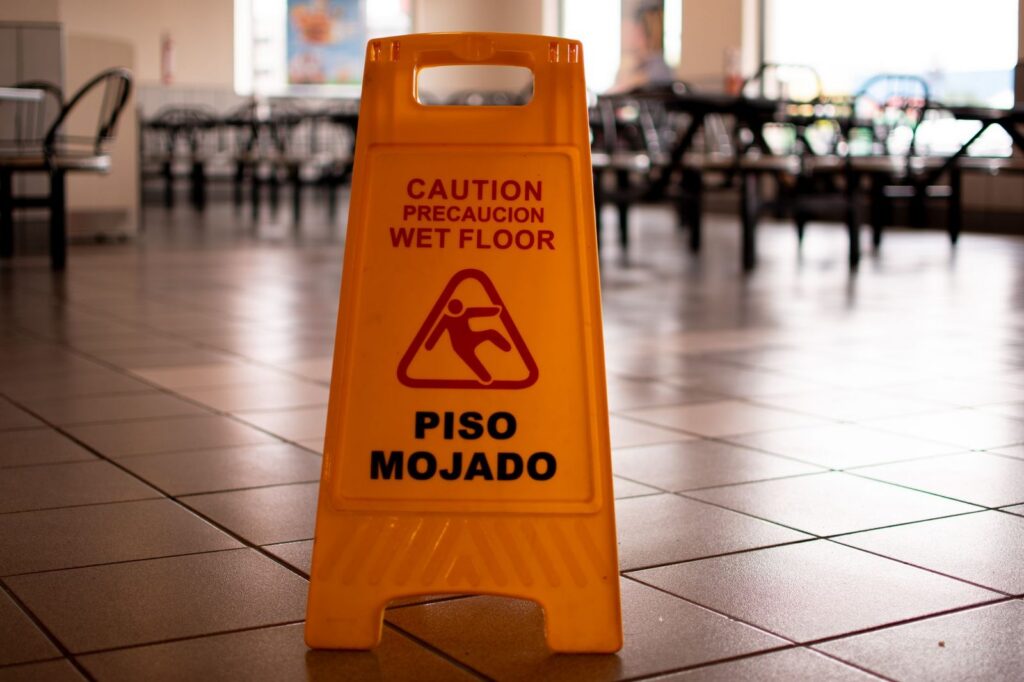
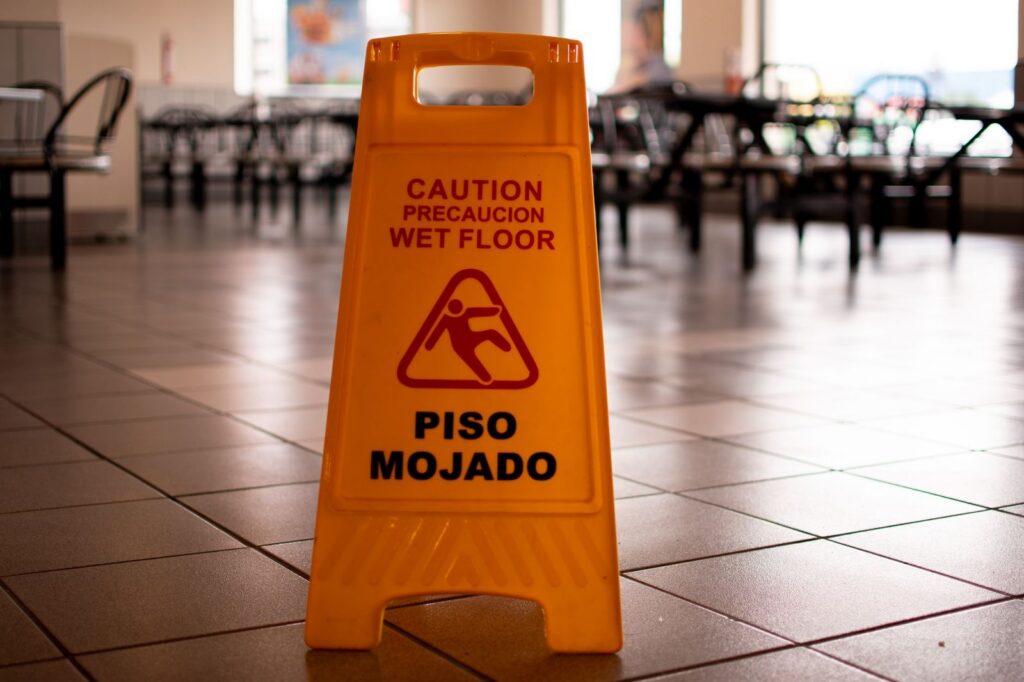
A case where you lose: You slip on a freshly mopped floor in a grocery store. A large, clearly visible wet-floor sign stands three feet away. A jury finds you 60% at fault for not heeding the warning and walking on wet tile in smooth-soled shoes. The owner is 40% at fault. You recover nothing because you exceeded the 50% threshold.
The property owner’s knowledge of the hazard is central to proving their negligence. But Florida law also considers your conduct: Did you have a reasonable chance to see and avoid the hazard? Were you distracted? Did you ignore a warning?
What Counts as Actual or Constructive Notice?
The property owner’s knowledge of a hazard comes in two forms.
Actual notice means the owner or manager directly knew about the hazard. They saw the wet floor, broken stair, or debris themselves, or an employee reported it to them. An email from a tenant about a loose banister, a maintenance worker’s note about a spill, or a manager’s own observation all count as actual notice.
Constructive notice means the owner should have known about the hazard through reasonable inspection and maintenance. If a spill sat on the floor long enough that a reasonable property manager would have found it during a normal inspection, the owner had constructive notice—even if they didn’t personally see it.
In Florida premises-liability cases, courts ask:
- How long had the hazard been there?
- What was the owner’s inspection schedule?
- Had similar hazards occurred before?
For example, if a shopping center’s floor is mopped every two hours and a spill has been there for four hours, a jury may infer the owner should have found it. If the owner has a documented history of water leaks in a particular hallway and does nothing to prevent them, constructive notice is easier to prove.
Proving constructive notice often requires evidence that the hazard existed long enough for a reasonable inspection to catch it, or that similar hazards had occurred before. Documentation of the hazard’s condition, timestamps, photographs, and the owner’s inspection schedule becomes critical.
Have questions about what happened?
Ask our team directly. The first conversation is free, confidential, and there is no obligation to continue.
What Injuries Can Result from a Slip and Fall?
Slip-and-fall injuries range widely in severity. Many people experience minor bruises or sprains that heal within weeks. Others suffer serious, life-altering injuries that cause permanent disability.
Catastrophic slip-and-fall outcomes include:
-
Spinal cord injuries and paralysis – A fall down stairs or onto a hard surface can damage the spinal cord, resulting in partial or complete paralysis (paraplegia or quadriplegia). A person may lose the ability to walk, move their limbs, or control bodily functions.
-
Traumatic brain injury – Head trauma from a fall can cause cognitive impairment, memory loss, personality changes, and long-term neurological complications. According to the National Institute of Neurological Disorders and Stroke, traumatic brain injuries range from mild concussions to severe, permanent brain damage affecting speech, movement, and consciousness.
-
Fractures requiring surgery – Hip, leg, or arm fractures often require surgery, physical therapy, and extended recovery. Hip fractures in older adults frequently lead to permanent mobility loss and nursing-home placement.
-
Internal injuries – Damage to organs or internal bleeding may not be immediately obvious but can be life-threatening and require emergency surgery.
In catastrophic-injury cases, a slip and fall that causes permanent spinal cord damage or traumatic brain injury can result in lifetime medical care, lost earning capacity, and profound changes to quality of life. The value of such claims reflects not only immediate medical bills but also future care, rehabilitation, assistive devices, home modifications, and damages for pain, suffering, and loss of enjoyment of life.
What to Do Immediately After a Slip-and-Fall Injury
Your actions in the first hours and days after a slip and fall directly affect both your health and your legal claim.
Seek medical attention immediately. Do not wait to see if you feel better. Some injuries—internal bleeding, spinal cord damage, traumatic brain injury—may not cause obvious symptoms for hours or even days. Go to an emergency room or urgent care. Describe exactly how you fell and what you hit. Be thorough about your symptoms. Keep all medical records, imaging reports, and receipts.
Report the incident in writing. Tell the property manager, owner, or their representative what happened. Ask them to file an incident report and request a copy in writing. If they refuse or claim they don’t file reports, send them a written email or letter describing the incident, the date, the time, the location, and your injuries. Keep a copy. This creates a documented record that the owner was notified.
Document the scene. Take photographs and video of the hazard exactly as you found it—the wet floor, debris, broken step, or poor lighting. Photograph the surrounding area, any warning signs (or the absence of them), and the path you took. If the hazard is cleaned up or removed before you can photograph it, that destruction of evidence can itself support your claim.
Collect witness information. Get the names, phone numbers, and email addresses of anyone who saw you fall or who saw the hazard. Ask them to write down what they saw while it’s fresh. Witnesses often disappear or forget details months later.
Preserve your own account. Write down what happened while details are fresh—the time of day, what you were wearing, what you were doing, exactly where you fell, what you hit, and how you felt immediately after. Include the weather (was it raining?) and the time of day (was it dark?).
Do not clean or discard your clothing or shoes. They may contain evidence of the hazard or the fall.
Do not sign anything from the property owner or their insurer without legal review. A quick settlement offer may be far less than your claim is worth, especially if your injuries are serious or long-term effects aren’t yet clear.
How Long Do You Have to File a Slip-and-Fall Lawsuit?
Time is critical. Under Fla. Stat. §95.11(4)(a), for most slip-and-fall claims arising on or after March 24, 2023, you have two years from the date of your injury to file a lawsuit. Claims that arose before that date generally had four years, but the deadline has since shortened.
If you miss this deadline, you lose your right to sue, regardless of how strong your case is. Property owners and their insurers often count on injured people to delay, forget, or assume they have more time. Don’t let the statute of limitations expire on your claim.
Want to know where you stand?
Tell us what happened and our team will walk you through the options available to you, at no cost.
What Evidence Do You Need?
Strong slip-and-fall claims rest on solid evidence. Immediately after your injury, gather and preserve:
- Photographs and video of the hazard (wet floor, debris, broken step, poor lighting) exactly as you found it, plus the surrounding area and any warning signs
- Witness statements from anyone who saw the fall or the hazard—get their contact information and ask them to write down what they saw
- The incident report filed with the property owner or manager—request a copy in writing and keep it
- Medical records documenting your injuries, treatment, diagnosis, and prognosis
- Your own written account of what happened, recorded as soon as possible after the fall
- Maintenance records or inspection logs from the property (your attorney can request these through discovery)
- Prior incident reports showing the owner knew about similar hazards at that location
- Receipts and invoices for all medical care, prescriptions, assistive devices, and home modifications
- Pay stubs or employment records documenting lost wages
Property owners and managers sometimes destroy or alter evidence after learning of an injury. They may clean up the scene, discard the incident report, repaint or repair the hazard, or claim they have no record of it. Documenting everything immediately protects your claim and prevents the owner from erasing the evidence.
Frequently Asked Questions
What should I do right after a slip-and-fall injury at a commercial property?
Seek medical attention immediately, even if you feel okay. Report the incident to the property manager or owner in writing and request a copy of the incident report. Take photographs of the hazard and the scene from multiple angles. Get contact information from witnesses and ask them to write down what they saw. Keep all medical records, receipts, and documentation of your injuries and lost wages.
Can I recover damages if I was partially at fault?
Yes, as long as you were 50% or less at fault under Fla. Stat. §768.81(6). Your recovery is reduced by your percentage of fault. If you were more than 50% at fault, you recover nothing.
How much is a slip-and-fall settlement worth?
Settlement value depends on the severity of your injury, your medical expenses, lost wages, the owner’s degree of negligence, and the strength of your evidence. Minor injuries may settle for a few thousand dollars. Catastrophic injuries resulting in permanent spinal cord damage, brain injury, or amputation can result in settlements or judgments in the hundreds of thousands or millions.
What’s the difference between a slip-and-fall claim and a premises-liability claim?
A slip and fall is one type of premises-liability claim. Premises liability is the broader legal principle that property owners are responsible for injuries caused by unsafe conditions on their property—which includes slip and falls, negligent security (assaults on unsafe properties), and other hazards.
Do I need a lawyer to pursue a slip-and-fall claim?
You’re not required to hire a lawyer, but property owners and their insurers have experienced adjusters and attorneys working to minimize or deny your claim. An attorney who focuses on personal injury can help you gather evidence, understand Florida’s comparative-fault rule as it applies to your specific facts, negotiate with the insurer, and protect your rights.
If you slipped and fell at a commercial rental property and suffered injuries—whether a minor sprain or a serious, life-altering condition—the property owner may be responsible for your losses. Many people in your situation reach out to discuss what happened and learn whether they have a claim. Contact us for a free case evaluation to discuss your slip-and-fall injury and next steps.
What to Do After a Slip-and-Fall Injury
Seek Medical Care Right Away
Get evaluated by a doctor immediately, even if you feel fine. Some injuries appear hours or days later. Medical records create an official record of your injury and link it to the fall.
Report the Incident in Writing
Tell the property manager or owner what happened and ask for a written incident report. Request a copy. Document the date, time, and exact location of your fall.
Document the Scene and the Hazard
Take photos and videos of the wet floor, broken step, torn carpet, poor lighting, or other condition that caused you to fall. Photograph from multiple angles and include the surrounding area.
Gather Witness Information
Get names, phone numbers, and email addresses from anyone who saw you fall. Ask them to write down what they witnessed while it's fresh in their memory.
Important: Preserve Your Evidence
The property owner may clean up or repair the hazard that caused your fall. Photographs and witness statements taken soon after your injury are critical to proving the dangerous condition existed. Don't wait—document everything while you can.
Why Property Owners Can Be Held Responsible
Duty of Care
Property owners and managers have a legal obligation to keep their premises reasonably safe. This includes fixing or warning about hazards like wet floors, broken stairs, poor lighting, and debris.
Negligence Claims
If an owner knew—or should have known—about a dangerous condition and failed to fix it or warn visitors, they may be liable for injuries that result. This is called negligence.
Documentation Matters
Incident reports, maintenance records, prior complaints, and photos of the hazard all help prove the owner was aware of or responsible for the unsafe condition.
Witness Testimony
People who saw the hazard or your fall can testify about what caused your injury and whether the condition was obvious or hidden.
Common Slip-and-Fall Hazards at Commercial Rental Properties
Wet or Slippery Floors
Spilled liquids, recently mopped floors, or condensation without warning signs or slip-resistant mats create dangerous conditions.
Broken or Uneven Surfaces
Cracked pavement, torn carpet, loose tiles, broken steps, or potholes can catch your foot and cause you to trip or fall.
Poor Lighting
Dim or burned-out lights in hallways, stairwells, parking areas, or entryways make it hard to see hazards and increase fall risk.
Inadequate Maintenance
Debris, clutter, loose handrails, or missing safety features create tripping and falling hazards that owners should have prevented.