

SLIP AND FALL CLAIMS
Negligence Slip and Fall Settlements in Florida
When a property owner fails to keep their premises safe, you may have a claim. Learn what your slip and fall injury is worth and how to pursue fair compensation.
By CHG Lawyers · Published September 21, 2026
What to Do After a Slip and Fall in Florida: First Steps to Protect Your Claim
If you’ve slipped and fallen on someone else’s property—a store, apartment complex, parking lot, or office building—your first priority is your safety and medical care. Your second priority, within hours, is documenting what happened. Those early actions directly affect whether you’ll have a strong negligence slip and fall settlement claim.
This guide walks you through the critical first hours and days after a slip and fall. You’ll know exactly what to do and why it matters to your recovery—both physical and legal.
If you were injured because the owner knew—or should have known—about a hazard and failed to fix it or warn you, you may have a claim. Talk it through with our team — the first consultation is free, confidential, and carries no obligation.
The First Hour: Safety, Medical Care, and the Incident Report
Your health comes first. Assess your condition right away. Can you move safely? Are you in pain, dizzy, confused, or losing consciousness?
If you are seriously injured, call 911. Do not refuse medical attention even if you feel okay. Shock and adrenaline can hide pain. Some injuries—head trauma, internal bleeding, spinal injuries—show up hours or days later. A fall that seems minor can cause a traumatic brain injury or spinal cord damage that only appears after medical imaging.
If you can move safely, get away from the hazard that caused your fall. Move away from the wet floor, broken step, debris, or poor lighting. Sit or lie down in a safe spot. Take time to assess how you feel.
Tell the property owner, manager, or staff right away. Tell them you have fallen and been injured. This creates an official record. Ask them to file an incident report. Request a copy for your records. That report becomes evidence of when and where the fall happened. It is often the first document an attorney will request.
The First 24 Hours: Document the Scene Before It Disappears
Documentation is the foundation of any negligence slip and fall settlement claim. Under Florida Statute § 768.81 (comparative negligence), a property owner is liable if they knew or should have known about a dangerous condition. They must fix it or warn visitors. Your photos and written notes prove that hazard existed.
This is critical: hazards are often cleaned up or repaired within hours. A wet floor is dried. A broken step is cordoned off or fixed. Debris is swept away. Once the hazard disappears, your photographic proof disappears too.
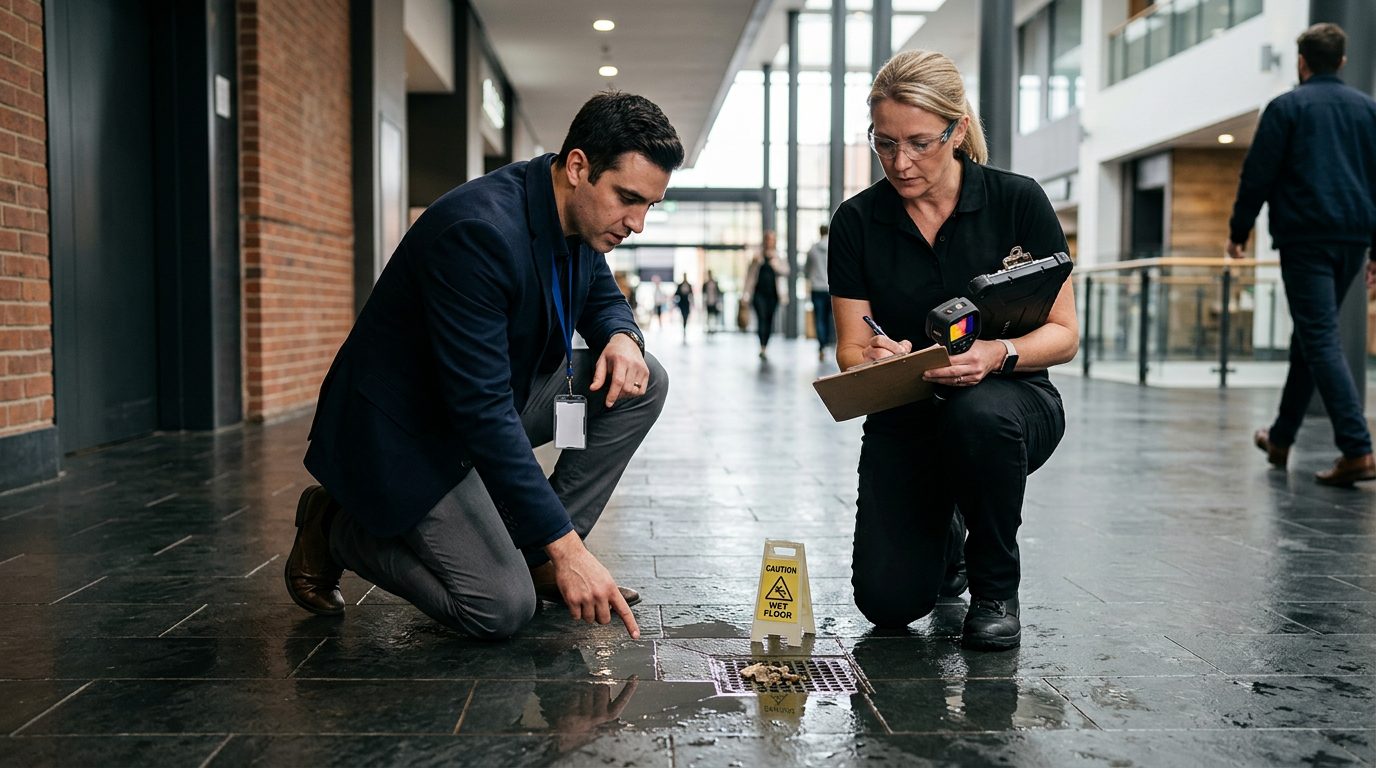
Take photographs or video of the exact spot where you fell immediately.
- Capture the hazard itself. Photograph the wet floor, uneven surface, poor lighting, broken handrail, or debris.
- Take wide shots showing the location and context.
- Take close-ups of the hazard.
- Photograph your injuries, your clothing, and your shoes. Your shoes may show evidence of contact with the hazard—wet marks, dirt, or debris that backs up your account.
Document the date, time, and weather conditions. If it was raining or snowing, photograph that. Write down the property address and the name of the business or property owner.
If the hazard is temporary, note whether warning signs were posted. If warning signs were not there, photograph the absence of warnings. This is critical. Under Florida law, a property owner’s failure to warn visitors about a known hazard is negligence. If a warning sign should have been there and wasn’t, that absence is evidence.
Once the wet floor is dried, the broken step is fixed, or debris is removed, you may have no photographic proof. Speed matters.
The First 24–48 Hours: Witness Information and Details
Eyewitnesses are among the strongest evidence in a slip and fall case. Ask anyone who saw you fall for their name, phone number, and email address.
Ask witnesses to describe what they saw: – What was the condition of the floor or surface? – Were warnings posted? – How did you fall? – Had they seen similar hazards before?
If staff or employees witnessed the fall, get their names and titles. Note the names of any managers or supervisors you spoke with.
If other customers or visitors were nearby, ask them to stay and provide contact information. Do not rely on memory. Write down witness details right away. Ask them to text or email you their information while they are still present. Witnesses may move away, change phone numbers, or forget details over time. Capture their information now.
Days 1–3: Medical Attention and the Paper Trail
Visit an urgent care clinic or your primary care physician as soon as possible. Visit even if you feel minor pain. Medical records created right after a slip and fall establish the link between the incident and your injuries. This is essential to proving negligence. Insurers use these records to calculate settlement value.
Tell your doctor exactly how the fall happened and where. This creates a medical record that documents the incident. If you go to an emergency room, keep your discharge papers. Keep any imaging results—X-rays, CT scans, MRI reports.
Follow all medical advice. Attend follow-up appointments. Complete any prescribed treatment or physical therapy. Keep all medical bills, receipts, and records. These prove the cost of your injury. They are essential to calculating settlement value.
If you develop new symptoms or pain in the days or weeks after the fall, return to your doctor. Document the change. Long-term effects—chronic pain, reduced mobility, scarring, or ongoing physical therapy—increase the value of your negligence slip and fall settlement claim.
Understanding Negligence and Florida’s Comparative Fault Rule
A property owner is negligent if they knew or should have known about a dangerous condition. They must fix it or warn visitors. That negligence is what allows you to pursue a settlement or claim.
How Florida’s Comparative Negligence Law Works
Under Florida Statute § 768.81, Florida uses a “modified comparative negligence” rule. Here’s what that means in plain language:
Even if you were partly at fault for the fall, you may still recover compensation—but only if the property owner was more at fault than you were.
Example: You wore inappropriate shoes (flip-flops) on a wet floor. That’s your 30% of fault. But the property owner failed to post a warning sign and failed to dry the floor for hours after a spill. That’s their 70% of fault. Because you are less than 50% at fault, you can recover. Your damages would be reduced by 30% to reflect your share of responsibility.
The 50% Rule: If you are found to be 50% or less at fault, you recover compensation reduced by your percentage of fault. If you are found to be more than 50% at fault, you recover nothing.
Why This Matters: The stronger your evidence that the property owner created or ignored the hazard, the lower your percentage of fault will be. Clear evidence—photos of the hazard, no warning sign, witness statements, prior complaints about the same hazard—strengthens your position and increases your recovery.
Not sure what your next step is?
Talk it through with our team — the first consultation is free, confidential, and carries no obligation.
Do Not Communicate Directly With the Property Owner’s Insurance Company
The property owner’s insurance company will likely contact you. Do not give a recorded statement. Do not sign anything without legal advice.
Insurance adjusters are trained to minimize payouts. Anything you say can be used against you. You have the right to have an attorney represent you. An attorney can handle all communications with the insurance company.
If the adjuster calls, stick to the facts. State where you fell, what caused the fall, and your injuries. Do not speculate, apologize, or accept blame. Better yet, tell them to contact your attorney.
What Factors Affect Settlement Value in a Slip and Fall Case?
Most slip and fall cases settle before trial. Settlement value depends on several factors:
Severity of your injuries: – Minor injuries (sprains, bruises) typically settle for $1,000–$5,000. – Moderate injuries (fractures requiring surgery, significant soft-tissue damage) may settle for $5,000–$25,000. – Serious injuries (traumatic brain injury, spinal cord damage, long-term disability, permanent scarring) can settle for $25,000 or more.
The range reflects medical costs, lost wages, and long-term impact.
Medical costs: The more you spend on treatment, imaging, surgery, and rehabilitation, the higher your claim value. Insurers use medical bills as a baseline for damages.
Lost wages: If you missed work due to your injury, those lost earnings are part of your claim.
Clarity of negligence: The clearer the evidence that the property owner was negligent, the stronger your settlement position. Clear evidence includes no warning sign, a known hazard, or prior complaints about the same hazard. Strong documentation drives settlement value upward.
Witness testimony: Strong eyewitness accounts that support your version of events increase settlement value significantly.
Long-term effects: If your injury causes permanent scarring, chronic pain, reduced mobility, ongoing medical care, or permanent disability, your settlement will reflect that.
Are Slip and Fall Cases Hard to Win?
Slip and fall cases are not automatically easy or hard to win. The outcome depends on the evidence.
You must prove that the property owner knew (or should have known) about the hazard. They must have failed to fix it or warn you. Strong evidence makes your case much stronger. Strong evidence includes photos of the hazard, witness statements, the property owner’s maintenance records, and prior complaints about the same hazard. Weak evidence makes settlement negotiations harder. Weak evidence includes no photos, no witnesses, or unclear how the fall happened.
This is why immediate documentation is so important. The hazard may be cleaned up or repaired within hours. Witnesses may disappear. What you capture in the first hours is often the only proof you will have.
When to Contact a Personal Injury Attorney
If you have suffered a serious injury, contact a personal injury attorney as soon as possible. Serious injuries include a fracture, head injury, significant scarring, ongoing pain, or any injury requiring surgery or ongoing medical care.
An attorney can investigate the property. They can obtain the owner’s maintenance and complaint records. They can interview witnesses. They can negotiate with the insurance company on your behalf. Many personal injury attorneys work on a contingency basis. You pay nothing unless they recover compensation for you. This removes the financial barrier to seeking legal help immediately.
In Florida, you generally have two years from the date of your injury to file a lawsuit. The sooner you reach out to an attorney, the sooner they can preserve evidence and begin building your case.

Have questions about what happened?
Ask our team directly. The first conversation is free, confidential, and there is no obligation to continue.
Frequently Asked Questions
What if I was partly at fault for the slip and fall?
Under Florida’s comparative negligence law, you may still recover compensation even if you were partly at fault. You must be 50% or less at fault. Your damages will be reduced by your percentage of fault. The key is proving that the property owner was more negligent than you were.
How long do I have to file a slip and fall claim in Florida?
You generally have two years from the date of your injury to file a lawsuit. Contact an attorney as soon as possible to meet this deadline.
Should I accept the first settlement offer?
No. Insurance adjusters often offer less than your claim is worth. An attorney can evaluate whether the offer is fair. They can negotiate on your behalf.
What if I don’t have witnesses?
Witness testimony is valuable but not required. Your medical records, photos of the hazard, the incident report, and the property owner’s maintenance records can all support your claim.
Can I recover compensation for a minor slip and fall?
Yes. Even minor injuries—sprains, bruises, soft-tissue damage—can result in medical costs, lost wages, and pain and suffering. If the property owner was negligent, you may have a claim.
If you’ve slipped and fallen on someone else’s property and are unsure whether the property owner was negligent, contact us for a free case evaluation. We work on a contingency basis. You pay nothing unless we recover compensation for you. People in your situation contact us regularly to understand their options and next steps.
Call or contact CHG Personal Injury Lawyers today. We’re here to help.
Know Your Rights
Florida law holds property owners responsible for maintaining safe conditions. If you were injured because the owner knew—or should have known—about a hazard and failed to fix it or warn you, you may have a claim. This applies whether the hazard was a wet floor, broken stairs, poor lighting, or debris left unattended.
What Affects Your Settlement Value
Medical Costs and Lost Wages
Your settlement reflects hospital bills, ongoing treatment, rehabilitation, and income you lost while unable to work. The more serious your injury, the higher these damages typically are.
Severity of Your Injury
A minor bruise settles differently than a broken bone or head injury. Permanent impairment, chronic pain, or long-term disability significantly increases settlement value.
Proof of Negligence
The stronger the evidence that the property owner was careless—incident reports, photos, witness statements, maintenance records—the stronger your claim and the better your settlement position.
Your Degree of Fault
Florida allows recovery even if you share some blame, as long as you are 50% or less at fault. Your recovery is reduced by your percentage of fault.
Why CHG Personal Injury Lawyers Handles Slip and Fall Cases
We Focus on Your Full Recovery
We pursue compensation for all your losses—medical bills, lost income, pain and suffering, and any permanent effects on your quality of life.
We Build Strong Evidence
We gather incident reports, security footage, maintenance records, and witness testimony to prove the property owner's negligence.
We Handle Negotiations and Trial
Whether settling with the property owner's insurance or taking your case to court, we advocate for fair compensation every step of the way.
We Work on Contingency
No fees unless there is a recovery. You pay nothing upfront, and we only collect a fee if we secure compensation for you.
Common Questions About Slip and Fall Settlements
What if I was partly at fault?
Under Florida's comparative negligence law, you may still recover even if you were partly at fault—as long as you are 50% or less at fault. Your damages will be reduced by your percentage of fault.
How long do I have to file a claim?
Time limits apply to slip and fall claims in Florida. Waiting too long can bar your claim entirely. Contact us promptly to protect your rights and preserve evidence.
What damages can I recover?
You may recover medical expenses, lost wages, pain and suffering, permanent scarring or disfigurement, loss of enjoyment of life, and in some cases, punitive damages if the owner's conduct was especially reckless.
Do I need a lawyer?
Insurance companies often undervalue slip and fall claims or deny them outright. An attorney levels the playing field, gathers evidence, and negotiates or litigates on your behalf to maximize your recovery.
Ready to Discuss Your Slip and Fall Claim?
Related practice areas
- Slip And Fall in Florida