
Florida Apartment Injuries
Hurt in a Florida Apartment Slip and Fall? Understand Your Options Before You Decide
A plain-language guide to what a settlement can involve, what the property owner may have failed to do, and how CHG Personal Injury Lawyers can help you and your family take the next step.
How We Serve You
Florida
Florida-based firm serving clients throughout the state
Free
Confidential first consultation with no obligation to continue
No Fee
No attorney's fees or case costs unless there is a recovery
By CHG Lawyers · Published October 19, 2026
An apartment slip and fall settlement is an agreement that ends an injury claim after someone is hurt on an unsafe floor, stairway, or walkway in an apartment building. In Florida, the property side of the claim often turns on what the owner or manager knew, or should have known, about the hazard. This guide explains the main rules in plain terms. For the broader picture, read our guide to slip and fall claims.
What is an apartment slip and fall settlement?
A settlement is an agreement to resolve a claim without going to trial. In apartment cases, the claim usually asks the responsible party to pay for the harm the fall caused.
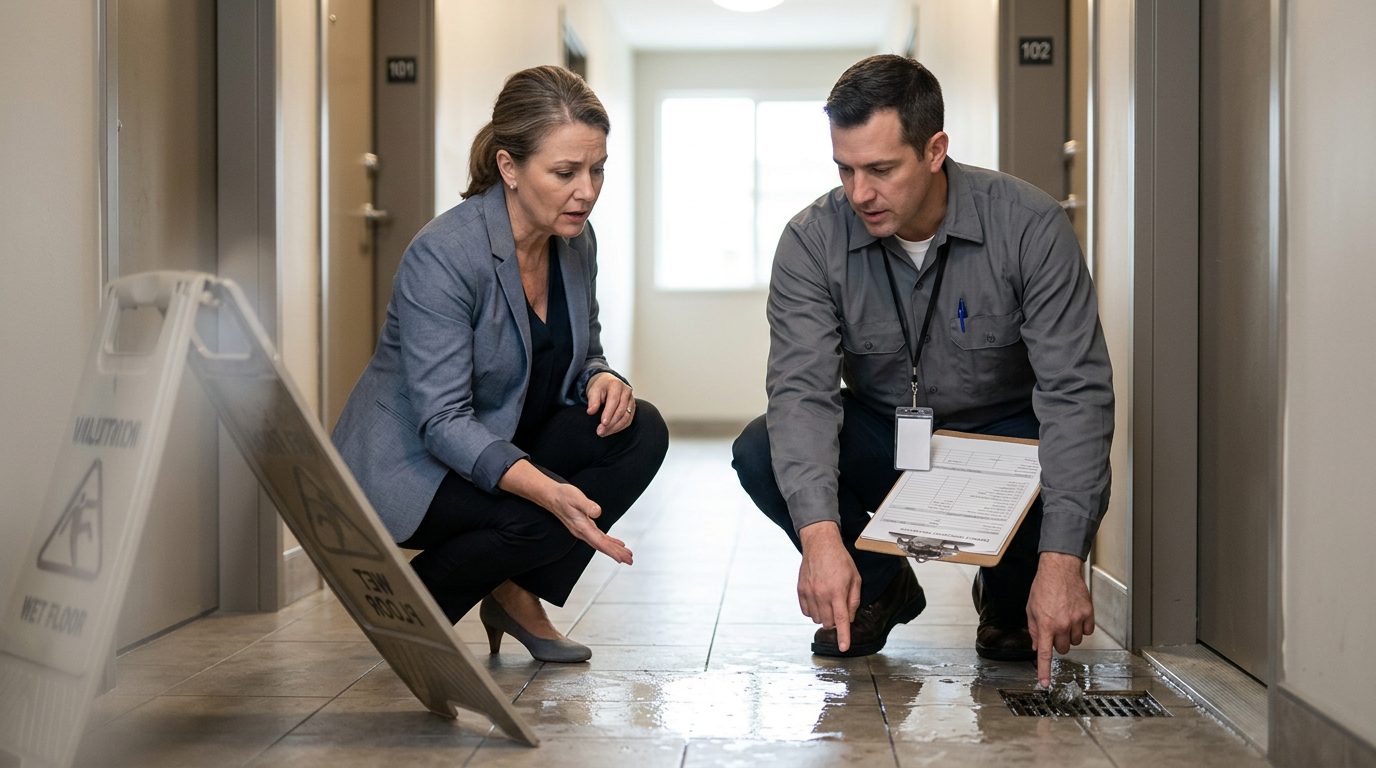
Common examples include a wet tile lobby with no warning sign, a loose stair tread, a leak that keeps pooling in a hallway, or a broken handrail that was never fixed. Each situation is different, and the details shape the claim.
Not sure what your next step is?
Talk it through with our team — the first consultation is free, confidential, and carries no obligation.
Who can be responsible for a fall at an apartment complex?
The owner, landlord, property manager, or a maintenance company may share responsibility for an unsafe condition. Who controlled the area where you fell often matters.
Florida defines multifamily residential property as “a residential building, or group of residential buildings, such as apartments, townhouses, or condominiums, consisting of at least five dwelling units on a particular parcel” (Fla. Stat. § 768.0706).
Settling with one party does not automatically end the claim against others. Florida law says a release or covenant not to sue with one party does not release other parties who may be liable for the same harm (Fla. Stat. § 768.041). Before signing any paper, know exactly who it covers.
Does the property have to know about the hazard?
Usually, yes. For a slip and fall on a transitory foreign substance in a business establishment, the injured person generally must prove that the business had actual or constructive knowledge of the dangerous condition and should have taken action to remedy it.
Florida’s statute on slips on transitory foreign substances in a business establishment says the injured person must prove “actual or constructive knowledge” of the condition and that the business should have acted to fix it (Fla. Stat. § 768.0755).
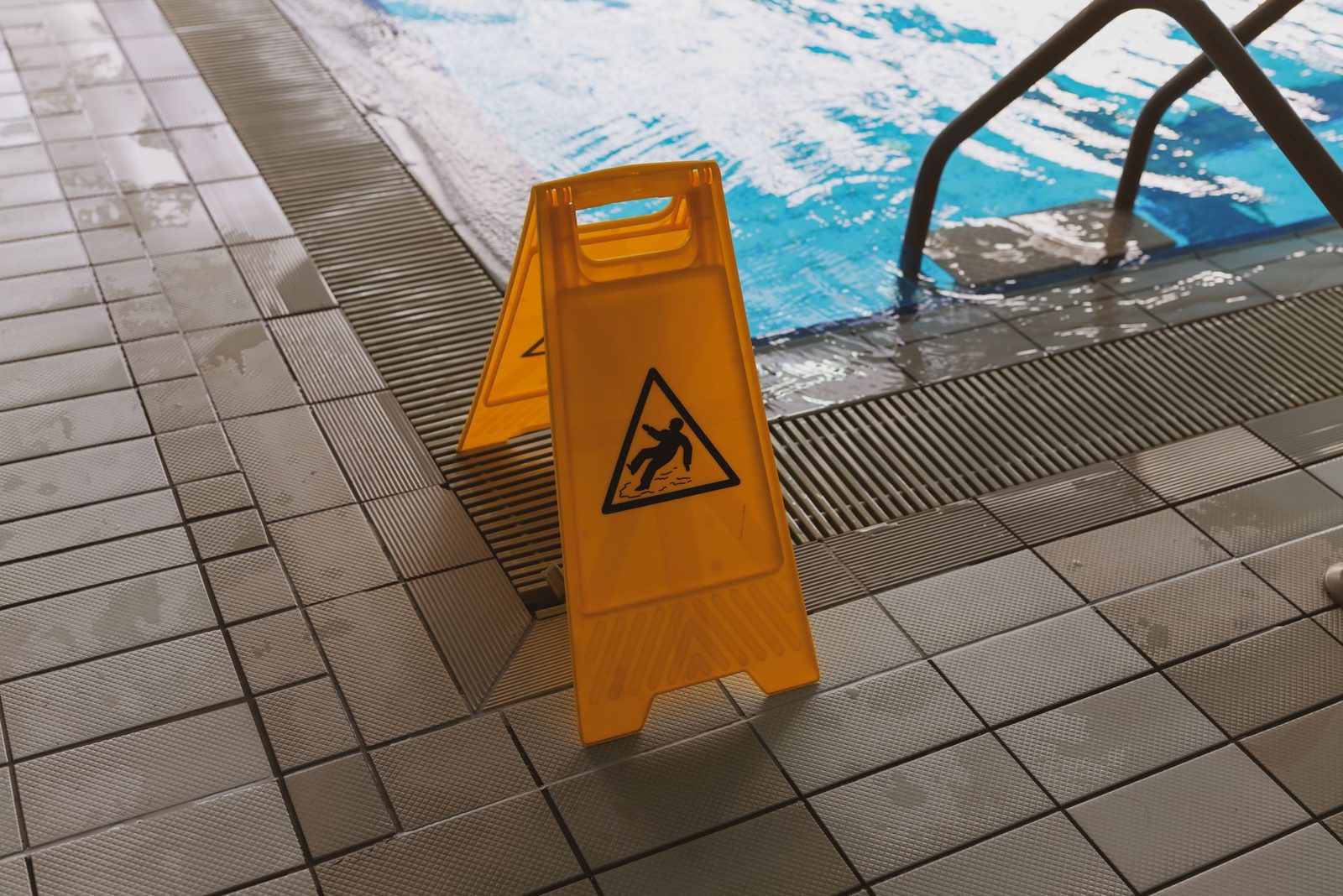
Constructive knowledge can be shown with other evidence. That evidence includes a condition that lasted long enough that ordinary care should have found it, or a condition that happened often enough to be foreseeable. A pool deck that stays slick after every rain is one example. The same statute says it does not change any other duty of care owed by whoever controls business premises (Fla. Stat. § 768.0755).
What if I was partly at fault for my fall?
Florida reduces your award by your share of fault, but a partial share of fault does not automatically end your claim. Florida’s comparative fault statute says contributory fault “diminishes proportionately” the damages attributable to it, and “does not bar recovery, subject to subsection (6)” (Fla. Stat. § 768.81).
The same statute says the court enters judgment against each liable party based on that party’s percentage of fault (Fla. Stat. § 768.81). Under Fla. Stat. § 768.81(6), in a negligence action any party found to be greater than 50 percent at fault for his or her own harm may not recover any damages, which is why the details of your fall matter. Fla. Stat. § 768.81 reads: “This subsection does not apply to an action for damages for personal injury or wrongful death arising out of medical negligence pursuant to chapter 766.”
What damages can you recover after an apartment fall?
Economic damages are the money losses you can measure. Florida includes past and future lost income, medical and funeral expenses, and other economic losses caused by the injury (Fla. Stat. § 768.81).
Insurance payments can affect the math.
How long do I have to file a claim in Florida?
Florida sets time limits for filing personal injury lawsuits, and missing one can end a claim. Under Florida’s limitations statute, a lawsuit founded on negligence must be filed within two years (Fla. Stat. § 95.11).
Under Florida’s computation rule, a cause of action generally begins when its last element occurs (Fla. Stat. § 95.031). Because the rules are strict, don’t wait to learn what applies to your case.
Have questions about what happened?
Ask our team directly. The first conversation is free, confidential, and there is no obligation to continue.
What should I know about written settlement offers?
A written offer of judgment must state that it is made under Florida’s offer-of-judgment statute, name the parties, state any amount offered for punitive damages, and state its total amount (Fla. Stat. § 768.79). An offer is accepted by filing a written acceptance with the court within 30 days after service (Fla. Stat. § 768.79). That short window is why you should understand any offer before the clock runs.
When a fall causes a head or spinal injury
A fall can cause a traumatic brain injury or a spinal cord injury that changes daily life. Some symptoms can appear later, not right away. Follow your doctors’ care closely, even if the fall seemed minor.
Learn more about traumatic brain injury claims and spinal cord injury claims.
Habits that can weaken an apartment fall claim
Several habits can make a claim harder to prove.
- Waiting to get medical care. Gaps in treatment give insurers and defense lawyers something to question.
- Not reporting the fall in writing. Tell building management in writing and keep a copy.
- Cleaning up before photos. Photograph the spot, the lighting, and any missing rail or warning sign before repairs.
- Signing papers without reading them. Know what each form releases before you sign.
- Posting about the fall online. Posts can be read out of context later.
Frequently asked questions
How long do I have to sue after an apartment slip and fall in Florida?
Missing a deadline can end the claim.
Can I sue if I slipped on a wet floor in the hallway?
You may have a claim if the property knew or should have known about the wet floor. Florida looks at how long the hazard existed and whether it happened often.
Does being partly at fault reduce my settlement?
Yes, Florida reduces your award by your share of fault. A partial share does not automatically bar your recovery.
Can health insurance reduce my apartment fall settlement?
Do I pay anything upfront to pursue my claim?
CHG charges no attorney’s fees and no case costs unless there is a recovery.
Want to know where you stand?
Tell us what happened and our team will walk you through the options available to you, at no cost.
Talk with CHG Personal Injury Lawyers
Igor Hernandez is a licensed attorney admitted to The Florida Bar. CHG Personal Injury Lawyers is a Florida-based firm that focuses on personal injury cases. We serve clients in Miami, Orlando, Tampa, Jacksonville, and across Florida. Every case turns on its own facts, and no lawyer can promise a particular result.
If a wet floor or loose stair at your apartment left you hurt and unsure who is responsible, our team can walk you through what Florida law may mean for your situation. You can request a free case evaluation for a free, confidential initial consultation with no obligation to continue.
Common Apartment Hazards That Lead to Injuries
Wet or Uneven Floors
Spills in hallways, lobbies, and laundry rooms, or worn flooring that trips residents and guests.
Broken Stairs and Railings
Loose steps, missing handrails, and poorly lit stairwells that cause falls on the way to a unit or parking area.
Icy or Cracked Walkways
Unmaintained sidewalks, pool decks, and parking lots where water pools or pavement breaks apart.
Poor Lighting
Dark walkways, garages, and entrances where residents cannot see hazards until it is too late.
What a Consultation with CHG Can Help You Understand
How the Fall Happened
We review what caused your injury, including who was responsible for maintaining the area where you fell.
The Impact on Your Life
We look at your medical treatment, lost income, and how the injury affects your daily routine and your family.
Timing Matters
Deadlines apply to injury claims in Florida, so it is important to contact us promptly after an accident.
Clear, Direct Answers
Our team explains your options in plain language, with no pressure and no obligation to move forward.
Important: Protect Your Health and Your Claim
Get medical care right away, even if your injury seems minor, and follow your doctors' instructions. Keep photos of the hazard, incident reports, and any written communication from the property. Then contact us promptly so we can review your situation.