


Catastrophic Injury Definitions
Paraplegia vs. Quadriplegia: Understanding the Difference
Both are serious spinal cord injuries with life-altering consequences. Learn how they differ and what legal options may be available to you.
By CHG Lawyers · Published August 22, 2026
What Is the Difference Between Paraplegic and Paraplegia?
Paraplegia is the medical diagnosis—permanent paralysis of the lower body caused by spinal cord damage. A paraplegic is a person living with that condition. If you or someone you love suffered a spinal cord injury in a truck crash, a fall on unsafe property, or an assault on premises with inadequate security, understanding this distinction matters for your life and your legal claim.
If your catastrophic injury resulted from someone else's negligence or wrongdoing, you may have a legal claim for compensation. Talk it through with our team — the first consultation is free, confidential, and carries no obligation.
The Plain-Language Answer
When a spinal cord is damaged in the thoracic (mid-back) or lumbar (lower-back) region, signals between your brain and legs stop. That damage is called paraplegia. The person living with that injury is called a paraplegic.
Think of it this way: diabetes is the condition; a diabetic is the person. Paraplegia is the injury; a paraplegic is you—a person with capabilities, resilience, and the right to pursue compensation if someone else’s negligence caused your injury.
What Is Paraplegia?
The spinal cord is a bundle of nerves running through the vertebral column. It carries signals from your brain to every part of your body. When the cord is damaged, those signals cannot pass below the injury level. This causes loss of movement and sensation.
How Doctors Classify Paraplegia: The ASIA Impairment Scale
Medical professionals use the ASIA Impairment Scale (American Spinal Injury Association) to classify spinal cord injuries. This tool helps doctors and patients understand injury severity and what to expect:
- ASIA A (Complete): Total loss of movement and sensation below the injury level.
- ASIA B (Incomplete): Sensation remains below the injury, but no motor function.
- ASIA C (Incomplete): Some motor function remains, but most muscles are weak.
- ASIA D (Incomplete): Most muscles below the injury retain normal or near-normal strength.
- ASIA E (Normal): Normal motor and sensory function.
Most people with paraplegia are classified as ASIA A or B. Incomplete injuries (ASIA B, C, or D) often have better recovery potential than complete injuries. The ASIA Scale helps your medical team set realistic rehabilitation goals and helps your legal team understand the permanence and scope of your injury.
The spinal cord does not regenerate with current medical technology. This permanence—confirmed by the ASIA classification—is why paraplegia is classified as a catastrophic injury. It fundamentally alters physical abilities, independence, and life trajectory.
What Is a Paraplegic?
A paraplegic is a person who has paraplegia—who lives with lower-body paralysis. The term describes the individual, not the condition itself. It is neutral, descriptive language that many people with this injury use to identify themselves.
Many paraplegics work, attend school, raise families, travel, and participate fully in their communities. They use wheelchairs, adaptive equipment, and assistive technology to maintain independence. A paraplegic is not defined by paralysis but by their capabilities, resilience, and the life they build with appropriate support and resources.
Can You Still Walk If You’re Paraplegic?
Most people with paraplegia cannot walk in the conventional sense. Spinal cord damage prevents signals from reaching the legs.
Some individuals with incomplete paraplegia (ASIA B, C, or D) may regain limited walking ability through intensive rehabilitation. This is not guaranteed and depends on the severity, location, and specific ASIA classification of the injury.
Many paraplegics use wheelchairs as their primary mode of mobility. A wheelchair is not a limitation—it is a tool that allows independence, mobility, and full participation in work, school, and community life.
Advances in rehabilitation technology, including robotic exoskeletons and functional electrical stimulation (FES), are expanding mobility options. These remain specialized, expensive, and not universally available or affordable.
Quality of life and independence are not determined by the ability to walk. Many paraplegics live full, productive, and independent lives with appropriate support and adaptive equipment.
How Is Paraplegia Different from Quadriplegia?
The key difference is location and scope:
- Paraplegia: Spinal cord injury at the thoracic (mid-back, levels T1–T12) or lumbar (lower-back, levels L1–L5) region. Affects the lower body—legs and lower torso. Arms and hands retain full function.
- Quadriplegia (tetraplegia): Spinal cord injury at the cervical (neck, levels C1–C8) region. Affects all four limbs—arms and legs—and often the torso and respiratory function. Typically involves more extensive functional limitations and higher lifetime care costs.
Both are catastrophic injuries. Both are permanent in most cases and require lifelong medical care, adaptation, and support. Understanding which type of spinal cord injury occurred is important for medical management and for calculating the full scope of damages in a legal claim.
Not sure what your next step is?
Talk it through with our team — the first consultation is free, confidential, and carries no obligation.
What Causes Paraplegia?
Traumatic causes (most common):
Motor vehicle crashes—including truck accidents—are the leading cause of spinal cord injury. According to the National Spinal Cord Injury Statistical Center (NSCISC), motor vehicle accidents account for approximately 38% of spinal cord injuries. Falls (17%), acts of violence including gunshot wounds (14%), and sports or recreational accidents (8%) are other significant traumatic causes.
Truck accidents are particularly devastating. The weight and force of a large commercial vehicle can cause severe spinal cord damage even at moderate speeds. Negligent truck operation—speeding, distracted driving, brake failure, improper cargo loading, or driver fatigue—is a common cause of preventable spinal cord injuries.
Negligent security and violent crime:
Assaults and shootings on inadequately secured property cause paraplegia when a victim is attacked or shot. The property owner failed to provide reasonable security. These incidents occur at:
- Apartment complexes and residential buildings
- Parking lots and parking garages
- Hotels and motels
- Bars and nightclubs
- Retail stores and gas stations
- ATMs and other outdoor commercial spaces
If you were assaulted, shot, robbed, or otherwise attacked on someone else’s property and suffered a spinal cord injury, the property owner may be legally responsible. They may have failed to provide reasonable security measures—working locks and gates, adequate lighting, security cameras, or trained guards. This is called negligent security or premises liability.
You may have a legal claim against the property owner even if you were also harmed by a third party (the attacker or shooter).
Other causes:
Workplace accidents, medical negligence or surgical complications, falls from height or diving accidents, and non-traumatic causes (tumors, infections, degenerative spinal conditions) account for the remainder. Many cases of paraplegia arise from accidents or wrongdoing that could have been prevented—a critical distinction for people considering legal action.
Living with Paraplegia: The Real-World Impact
Mobility and accessibility:
Most paraplegics use wheelchairs and require accessible environments—ramps, elevators, accessible bathrooms, and transportation. Inaccessible buildings, public spaces, and transportation systems create barriers to independence and participation.
Independence and employment:
Many paraplegics live independently, work, attend school, and raise families with appropriate support and adaptive equipment. Workplace accommodations, accessible housing, and assistive technology enable continued employment and economic self-sufficiency.
However, many paraplegics face employment discrimination and barriers to accessible housing. This can compound financial hardship.
Health management:
Ongoing medical care and physical therapy are standard. Secondary complications—pressure sores (decubitus ulcers), urinary tract infections, chronic pain, spasticity, and blood clots—are common and require active management. Regular medical monitoring, preventive care, and treatment of complications are lifelong necessities.
Emotional and psychological adjustment:
The transition to life with paraplegia is significant. Loss of mobility, changes in body function, and adaptation to a new identity often require counseling, peer support, and time.
Many paraplegics report strong psychological adjustment and quality of life with appropriate support. Others experience depression, anxiety, and adjustment challenges that benefit from professional mental health care.
Financial impact:
A person injured at age 25 with a 50-year life expectancy faces decades of medical expenses, equipment replacement, home care, and accessibility modifications. If negligence or wrongdoing caused your injury, compensation should account for these documented costs.
Is Paraplegia the Same as Paraplegic?
No. Paraplegia is the medical condition—the spinal cord injury and its effects. Paraplegic is the person—you or your loved one living with that condition.
The distinction matters in medical, legal, and personal contexts:
- Medical: Doctors use “paraplegia” to describe the diagnosis, ASIA classification, and treatment plan. They refer to you as a person with paraplegia or as paraplegic.
- Legal: The diagnosis of paraplegia and its ASIA classification describe the injury and its permanence. This is central to calculating damages. Your status as a paraplegic establishes your identity as the injured claimant and your right to compensation.
- Personal: How you identify—as a paraplegic, as a person with a spinal cord injury, or in other terms—is your choice. Many people embrace the term paraplegic as part of their identity. Others prefer different language. Respect for how a person identifies is important.
Understanding the terminology helps you communicate clearly with medical providers, lawyers, insurance companies, and others involved in your care or case.
Can You Fully Recover from Paraplegia?
Complete recovery—restoration of full sensation and movement—is rare with current medical technology. The spinal cord does not regenerate naturally. Research into spinal cord regeneration, neural repair, and stem cell therapy is ongoing. These treatments remain experimental and are not yet standard care.
Rehabilitation can improve strength, endurance, and function significantly. Many paraplegics achieve independence and quality of life that may surprise those unfamiliar with the condition. Adaptation and assistive technology—wheelchairs, adaptive equipment, home modifications, accessible transportation—enable work, education, community participation, and meaningful relationships.
If your paraplegia resulted from an accident or negligence, you may be entitled to compensation to cover:
- Lifetime medical care, rehabilitation, and monitoring
- Adaptive equipment and wheelchairs (which require regular replacement and maintenance)
- Home modifications for accessibility
- Accessible transportation or vehicle modifications
- Lost income and reduced earning capacity
- Pain and suffering
These resources directly support recovery, independence, and quality of life. Calculating the full scope of damages requires understanding both the medical reality and the financial impact of a catastrophic spinal cord injury.
Why the Distinction Matters in a Legal Claim
If you or a loved one suffered a spinal cord injury causing paraplegia in a truck crash, a fall on unsafe property, an assault on inadequately secured premises, or medical negligence, understanding the injury is the foundation of your legal claim.
The diagnosis of paraplegia and its ASIA classification establish:
- The permanence and severity of the injury
- The scope of lifetime medical care and adaptation required
- The basis for calculating substantial damages
Catastrophic spinal cord injuries often qualify for significant compensation. An attorney who focuses exclusively on catastrophic spinal cord injuries understands both the medical reality—including ASIA classification and long-term prognosis—and the legal framework for calculating damages. In the cases we handle, understanding the full scope of the injury—medical, financial, and personal—is essential to building a strong claim on behalf of the injured person and their loved ones.
Have questions about what happened?
Ask our team directly. The first conversation is free, confidential, and there is no obligation to continue.
Frequently Asked Questions
Is a person with no legs a paraplegic?
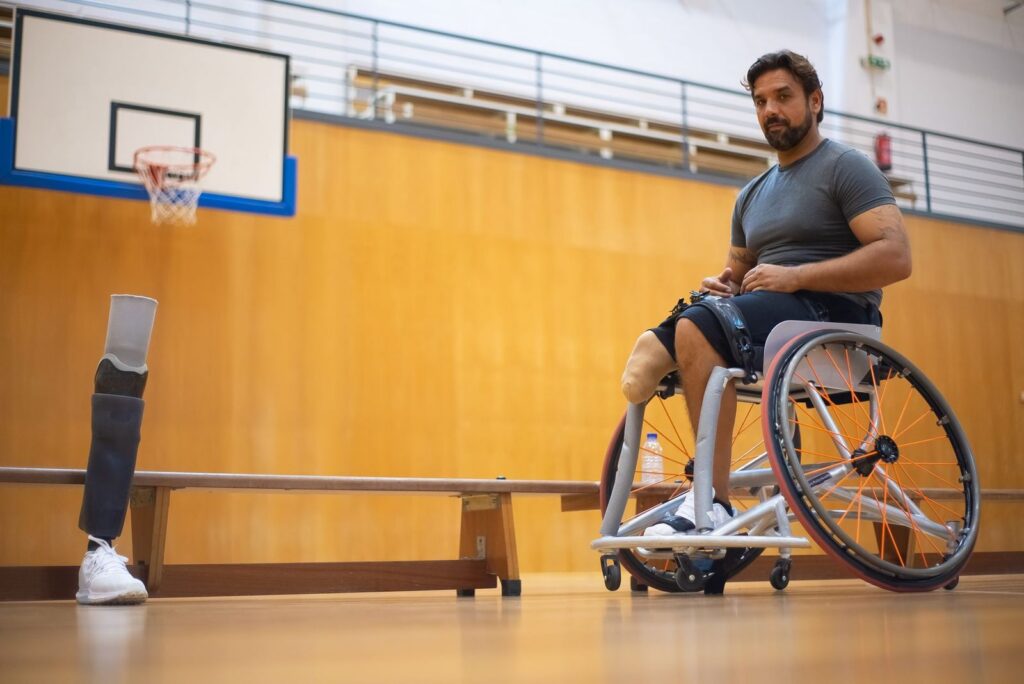
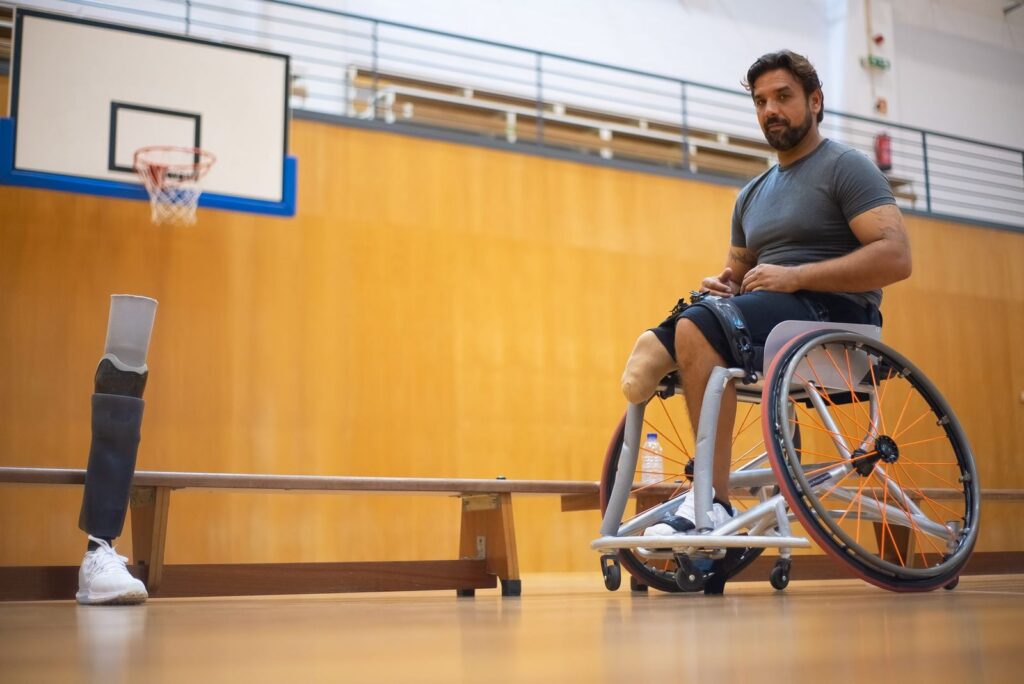
Not necessarily. Amputation (loss of limbs) is different from paraplegia (loss of nerve function and movement due to spinal cord damage). A person with no legs due to amputation is not a paraplegic unless they also have spinal cord damage causing paralysis. However, amputation is also a catastrophic injury that may entitle you to legal compensation if it resulted from negligence or wrongdoing.
What is incomplete paraplegia?
Incomplete paraplegia means some nerve signals remain below the injury level (ASIA B, C, or D classification). This allows partial movement or sensation. Recovery potential is often better with incomplete injuries than with complete paraplegia. Outcomes vary widely and depend on the specific location and severity of the damage. Rehabilitation may help improve function, but recovery is not guaranteed.
How long do paraplegics live?
Life expectancy for people with paraplegia is near normal with modern medical care and management of secondary complications. However, untreated complications—infections, pressure sores, blood clots—can affect health outcomes. Regular medical care, preventive measures, and active management of complications support long-term health and longevity.
Can paraplegia be reversed or cured?
Current medical technology cannot reverse or cure paraplegia in most cases. The spinal cord does not regenerate naturally. Research into spinal cord regeneration, neural repair, and stem cell therapy is ongoing. These treatments remain experimental. Rehabilitation and adaptive equipment can restore significant function and independence. The paralysis itself is permanent with current medical science.
Next Steps: Understanding Your Legal Options
If a truck crash, a fall on unsafe property, or an assault on inadequately secured premises left you or a loved one paralyzed, you have questions: What happened? Who is responsible? What are my legal options? What compensation might I be entitled to?
Many people in that situation do not know where to start. Our attorneys focus exclusively on catastrophic spinal cord injuries—paraplegia, quadriplegia, and other life-altering injuries caused by accidents and negligence. We understand both the medical reality, including ASIA classification and long-term prognosis, and the legal framework for pursuing compensation.
Contact us for a free case evaluation. Discuss your situation with an attorney who focuses exclusively on catastrophic spinal cord injuries. There is no obligation, and we handle cases nationwide.
Key Differences at a Glance
Paraplegia
Damage to the spinal cord in the mid-back or lower back. Results in loss of movement and sensation in the legs and lower body. The arms and hands typically remain functional.
Quadriplegia (Tetraplegia)
Damage to the spinal cord in the neck or upper back. Results in loss of movement and sensation in all four limbs—both arms and legs—as well as the torso.
Amputation
Physical loss of one or more limbs due to trauma or surgical removal. Different from paralysis caused by spinal cord injury, though both are catastrophic injuries.
Traumatic Brain Injury
Damage to the brain from a blow or jolt to the head. Can occur alongside spinal cord injury in the same accident and may cause cognitive, physical, or behavioral changes.
Important Distinction
A person with no legs due to amputation is not a paraplegic unless they also have spinal cord damage causing paralysis. Amputation and paraplegia are different catastrophic injuries—but both may entitle you to legal compensation if they resulted from negligence or wrongdoing.
Why These Distinctions Matter for Your Claim
Medical Documentation
Accurate diagnosis of your spinal cord injury—whether paraplegia, quadriplegia, or another catastrophic condition—is essential to establishing the full scope of your damages and lifetime care needs.
Lifetime Impact
The level of spinal cord damage determines mobility, independence, and care requirements for the rest of your life. These factors directly affect the value of your claim.
Liability Assessment
Understanding your injury helps establish how the accident or negligence caused it—whether a truck crash, unsafe premises, or another incident—and who is responsible.
Future Planning
Compensation must account for specialized equipment, ongoing medical care, home modifications, and lost earning capacity—all of which depend on your specific injury.
How These Injuries Happen
Paraplegia and quadriplegia result from spinal cord damage caused by serious accidents: truck collisions, falls from height, diving accidents, motorcycle crashes, violent assaults, or negligent security failures. Amputation may result from crush injuries in machinery, severe burns, or traumatic accidents. If your catastrophic injury resulted from someone else's negligence or wrongdoing, you may have a legal claim for compensation.
Common Causes of Catastrophic Spinal Cord Injuries
Truck Accidents
High-impact collisions with commercial vehicles often cause severe spinal cord damage due to the force and weight involved.
Negligent Security
Assaults or violent attacks on inadequately secured property—apartment complexes, parking garages, hotels—can result in spinal injuries if the property owner failed to provide reasonable safety measures.
Rideshare Collisions
Serious crashes involving Uber or Lyft vehicles can cause catastrophic spinal cord injuries to passengers, drivers, or pedestrians.
Unsafe Premises
Falls, diving accidents, or unsafe conditions at short-term rentals, construction sites, or other properties may cause spinal cord damage if negligence played a role.
What We Focus Exclusively On
Spinal Cord Injuries
Paraplegia, quadriplegia, and other permanent spinal cord damage from accidents or negligence.
Traumatic Brain Injuries
Serious, life-altering brain damage from head trauma in accidents or assaults.
Amputation & Limb Loss
Catastrophic loss of limbs or digits resulting from accidents, negligence, or unsafe conditions.
Severe Burn Injuries
Serious, permanent burn injuries that cause scarring, disability, or disfigurement.
Catastrophic Back & Neck Injuries
Severe, permanent injuries to the spine that cause lasting impairment or loss of function.
Wrongful Death
Fatal accidents and the legal claims available to families who have lost a loved one due to negligence or wrongdoing.
Next Steps After a Catastrophic Injury
If you or a family member has suffered a spinal cord injury, amputation, traumatic brain injury, severe burn, or other catastrophic injury from an accident, assault, or unsafe conditions, contact us for a free, confidential case evaluation. We handle cases nationwide and work on a basis of no fees unless there is a recovery.