

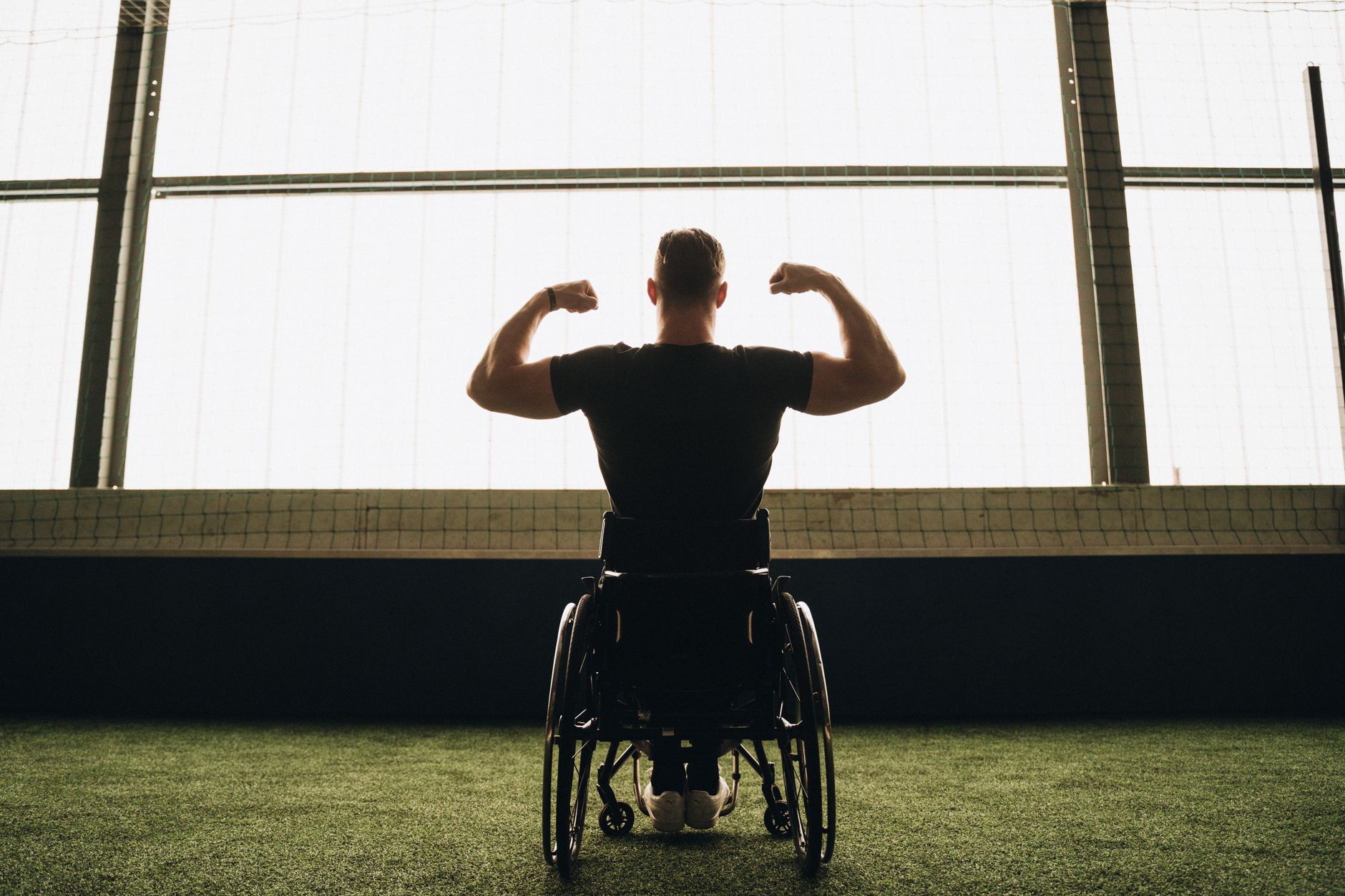
Spinal Cord Injuries & Paralysis
Can a Paraplegic Fully Recover? An Honest Answer
The truth matters when you're facing a life-altering spinal cord injury. Here is a plain-language look at what recovery can and can't mean after paraplegia — and what your family can do next.
By CHG Lawyers · Published July 30, 2026
Can a Paraplegic Fully Recover? An Honest, Plain-Language Answer
Full recovery is uncommon after complete paraplegia. But some movement or feeling can come back when the injury is incomplete. The honest answer depends most on one thing. Is the spinal cord injury “complete” or “incomplete”? No one can promise you a specific outcome. Recovery looks different for every person and every injury.
Maybe you or someone you love was just diagnosed. You are likely scared and looking for real answers. This page explains those answers in plain language. We will cover what paraplegia is. We will show why the complete-versus-incomplete difference matters so much. And we will explain what recovery can realistically look like. We will also cover your family’s options if someone else caused the injury.
Not sure what your next step is?
Talk it through with our team — the first consultation is free, confidential, and carries no obligation.
The Short, Honest Answer
Most people with a complete spinal cord injury do not fully recover. Some people with an incomplete injury get back partial function. Doctors call an injury “complete” when no signals pass below the damaged area. An “incomplete” injury means some signals still cross it.
That single difference shapes the whole outlook. It affects whether feeling returns. It affects whether walking may be possible. And it affects how much therapy can help.
We can’t tell you your exact prognosis (your likely outcome). Only your medical team can. And even they watch closely over the first weeks and months. What we can do is explain the terms clearly. That way, you understand what your doctors are telling you.
What Paraplegia Is, in Plain Language
Paraplegia is the loss of movement or feeling in the lower body and legs. It often affects the trunk too. It happens when the spinal cord is damaged below the neck. Signals from the brain can no longer travel freely to the body below the injury.
According to the Mayo Clinic, a spinal cord injury can affect movement, feeling, and control of body functions below the injury. Paraplegia is different from quadriplegia (also called tetraplegia). Quadriplegia affects the arms as well as the legs. That is because the injury is higher up in the neck.
Our attorneys handle catastrophic-injury cases. In these cases, paraplegia most often comes from serious trauma. Common causes include truck and vehicle crashes, bad falls, violent attacks on unsafe property, and medical negligence. The Christopher & Dana Reeve Foundation reports that millions of Americans live with some form of paralysis today (Reeve Foundation). You are not alone in this.
Complete vs. Incomplete Paraplegia: Why It Changes Everything
Whether an injury is complete or incomplete is the biggest factor in recovery. With a complete injury, no signals pass below the damage. So full recovery is rare. With an incomplete injury, some signals still get through. So some return of movement or feeling is possible.
Doctors measure this with the ASIA Impairment Scale (AIS). It is a standard from the American Spinal Injury Association. It grades an injury from “A” (complete) through “E” (normal). Your doctors use a hands-on exam to find your grade and the “level” of your injury.
Here is an important point of hope. In the early days, swelling and bruising around the spinal cord can hide function that later returns. As the swelling goes down, some injuries first called “complete” are changed to “incomplete.” This is why doctors often wait before giving a firm long-term prognosis. Early is not always final.
When Paralyzed, Can You Still Feel Anything?
Whether you feel anything depends on the same thing: complete versus incomplete. Some people with an incomplete injury keep partial feeling below the injury. People with a complete injury usually feel little or nothing below that level.
Feeling matters for two reasons. First, keeping some feeling is a hopeful sign. Doctors watch for it early on. Second, many people develop new or unusual feelings. This includes nerve pain (called neuropathic pain). It can feel like burning, tingling, or shooting jolts. It can happen even in areas with less movement. This pain is real, it is common, and a good care team can help manage it.
Have questions about what happened?
Ask our team directly. The first conversation is free, confidential, and there is no obligation to continue.
How Long Does It Take to Walk Again — If It’s Possible?
Most recovery, when it happens, occurs in the first 6 to 12 months after the injury. Some improvement can continue for a couple of years with steady rehab. Walking again is more realistic for certain incomplete injuries. But not everyone will walk. And that is not a failure.
We want to be honest here. False hope helps no one. Many people with paraplegia live full, active, independent lives. They use a wheelchair or other mobility devices. Getting back your independence — driving, working, parenting, traveling — is a meaningful outcome on its own. Recovery is not only about whether someone walks.
What Rehabilitation and Emerging Treatments Can Offer
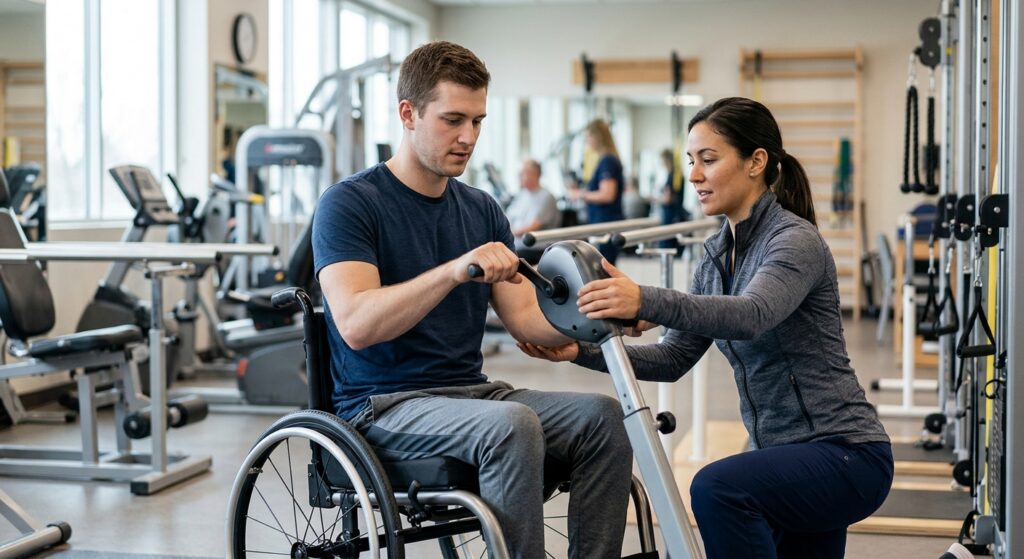
Rehab focuses on making the most of every bit of remaining function. It also builds independence. Physical and occupational therapy help you rebuild strength. They help you learn new ways to move and handle daily tasks. This work is where much of the real progress happens.
Technology adds more options. These include advanced wheelchairs and powered exoskeletons (wearable devices that support standing and stepping). Another option is functional electrical stimulation (FES). FES uses small electrical pulses to activate muscles. Researchers are also studying epidural stimulation. Here, a device sends signals to the spinal cord below the injury. These are promising areas of research, not proven cures.
Can paralysis be cured in the future? There is no cure for paralysis today. Scientists are actively studying nerve regeneration and stimulation. Progress is real. But we won’t overpromise. Any treatment decision should come from your medical team, based on your specific injury.
Living Well With Paraplegia: Life Expectancy and Long-Term Health
Many people with paraplegia live long, full lives with good, steady medical care. Life expectancy has improved a great deal over the decades. It depends heavily on the level of injury. It also depends on managing complications well.
Certain health issues need lifelong attention. The Mayo Clinic notes some common ones. These include bladder and bowel control problems, pressure injuries (bedsores), muscle spasticity (tightness), pain, and heart and breathing concerns. None of these are reasons to lose hope. They are reasons to build a strong, specialized care team and stick with it. The National Spinal Cord Injury Statistical Center tracks these long-term outcomes across the country.
When Someone Else Caused the Injury: Your Family’s Options
Did another party cause the paraplegia? If so, that party may be legally responsible for the harm. This can include a truck driver or trucking company after a crash. It can include a doctor or hospital after medical negligence. And in certain cases, it can include a property owner.
That last one surprises many families. So here is a plain example. Say you or a loved one was assaulted, shot, or attacked. Maybe it happened at an apartment complex, a parking garage, a hotel, or a store. Maybe there were broken locks, no lighting, no cameras, or missing security guards. If those failures allowed the attack to happen, the property owner may share the blame. Lawyers call this a negligent security claim. It is a type of premises-liability (property safety) case. You don’t need to know the legal term to have a case.
Why does this matter now? Lifelong rehab, equipment, home changes, in-home care, and lost income cost an enormous amount. A successful claim can help pay for the care that recovery-focused rehab requires.
In Florida, deadlines apply. The statute of limitations (the legal filing deadline) is generally two years for most negligence claims arising on or after March 24, 2023 (Fla. Stat. §95.11). Florida also uses a modified comparative-fault (shared-fault) rule. So a person found more than 50% at fault generally recovers nothing (Fla. Stat. §768.81).
We can’t promise any result. But we can explain your rights clearly and honestly. Contact CHG Personal Injury Lawyers for a free case evaluation to learn what options your family may have.
Want to know where you stand?
Tell us what happened and our team will walk you through the options available to you, at no cost.
Related Questions and Resources
Need definitions of the medical and legal terms on this page? See our catastrophic injury glossary. You can also read more about spinal cord injuries and paralysis, paraplegia, and quadriplegia. For your individual prognosis, always talk with your treating medical team.

Frequently Asked Questions
Can a paraplegic fully recover?
Full recovery is uncommon after complete paraplegia. But some movement or feeling can come back when the injury is incomplete. Recovery depends on the injury and the person.
What is the difference between complete and incomplete paraplegia?
A complete injury means no signals pass below the damaged area. An incomplete injury means some signals still get through. That allows some possible recovery.
How long does it take for a paralyzed person to walk again?
When recovery happens, most of it occurs in the first 6 to 12 months. Walking is more realistic with certain incomplete injuries. Not everyone will walk.
When paralyzed, can you still feel anything?
Some people with incomplete injuries keep partial feeling. People with complete injuries usually feel little or nothing below the injury level.
Can paralysis be cured in the future?
There is no cure today. But researchers are actively studying nerve regeneration and spinal stimulation. Any treatment choice should come from your medical team.
Complete vs. Incomplete Paraplegia
Complete Injury
No nerve signals pass below the damaged area. Movement and feeling below the injury are lost, and full return of function is uncommon.
Incomplete Injury
Some signals still cross the damaged area. Depending on the person and the injury, some movement or sensation may return, often with intensive rehabilitation.
Why Every Case Differs
Recovery depends on where the spine was injured, how severe the damage is, how quickly care began, and the individual's own healing. No two outcomes are the same.
Be Careful With Promises of Recovery
No honest doctor or lawyer can guarantee a specific medical recovery, and no one should promise you a legal result. Beware of anyone who does. What you can do is document your injury and protect your right to seek fair compensation for a lifetime of care.
Why the Cause of Your Injury Matters
Lifelong Costs Add Up
Paraplegia can mean years of medical care, home modifications, equipment, and lost income. A claim can help account for what the injury will cost over a lifetime.
When Someone Else Is at Fault
Truck crashes, unsafe property, and other negligence cause many catastrophic spinal injuries. If another party's carelessness caused the harm, you may have a claim.
Support for the Whole Family
A serious spinal cord injury changes life for everyone. We help families understand their options with clarity and respect.
Focus on Healing, Not Paperwork
While you concentrate on rehabilitation and recovery, we handle the legal work of pursuing accountability.
Serious Injuries Are All We Focus On
Catastrophic
Injury cases only
Nationwide
Cases taken across the U.S.
EN / ES
Bilingual client resources
Licensed
Florida Bar-admitted attorneys