
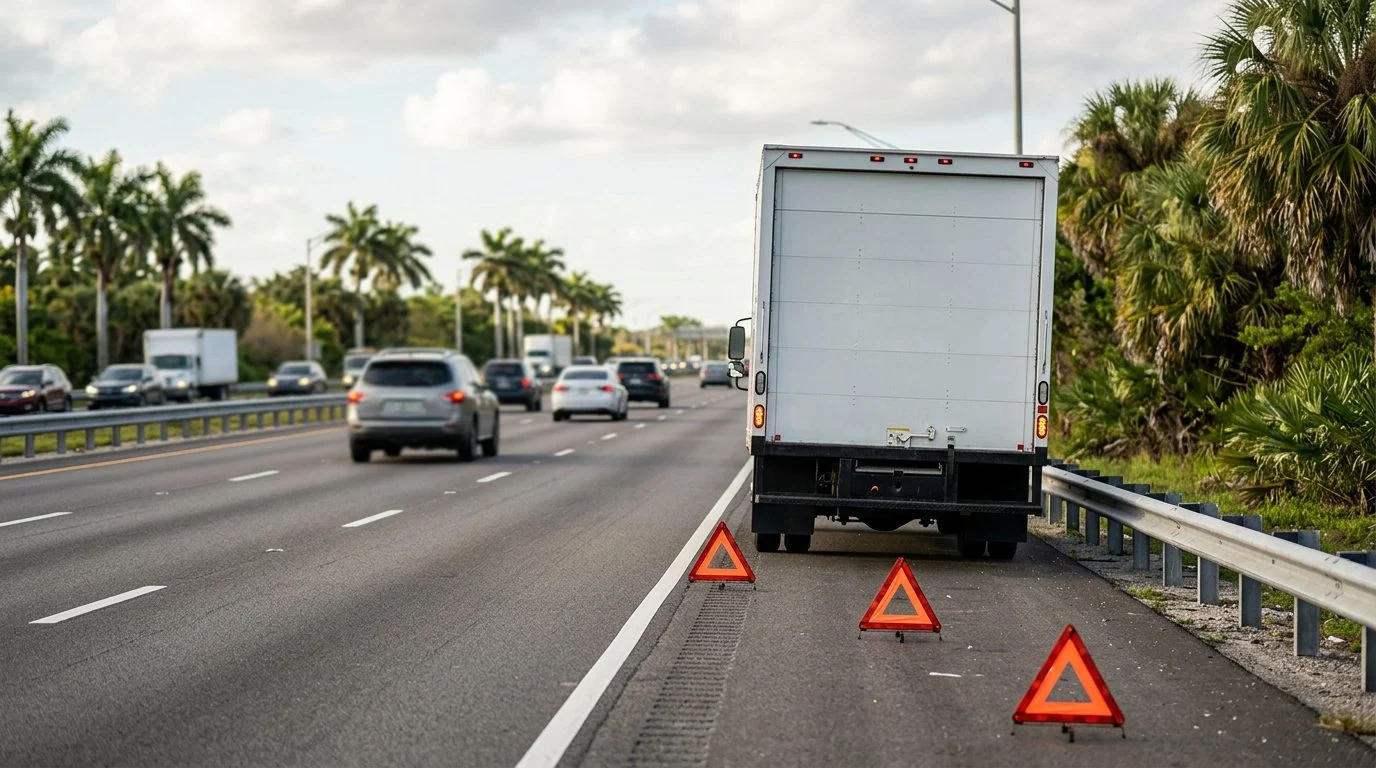
Florida FedEx Truck Accidents | Igor Hernandez, Responsible Attorney
Were You Partly at Fault? Florida Shared-Fault Rules After a FedEx Truck Crash
Being partly responsible for a crash does not automatically end your claim. Here is how Florida approaches shared fault, and the steps that can protect you while the facts are still fresh.
Our Florida Practice
Florida
Florida-based personal injury firm serving clients throughout the state
Licensed
Attorneys admitted to The Florida Bar
Free
Confidential first consultation with no obligation to continue
No fees
No attorney's fees or case costs unless there is a recovery
By CHG Lawyers · Published November 13, 2026
If you were hurt in a crash with a FedEx truck or delivery van, you may worry that your own move caused it. Partial fault does not automatically end a claim in Florida. Under Fla. Stat. § 768.81, your share of fault lowers what you can recover, but it does not bar recovery unless that share is more than 50 percent.
This page explains how that rule works, how fault gets divided in a FedEx truck crash, and what steps help protect your claim.
Being Partly to Blame Does Not Automatically End Your Claim
Partial fault usually reduces a claim in Florida, but it does not erase it on its own. Many people hurt in a FedEx crash fear that a quick lane change or a late stop makes the whole crash their fault. It compares each party’s share of fault and sets a clear line at 50 percent. Whether that line affects your case turns on the facts, including what each driver did and what the evidence shows.
If the other driver is blaming you for a FedEx truck crash, you don't have to sort out the fault dispute alone, and our team offers a free, confidential first consultation with no obligation to continue. Talk it through with our team — the first consultation is free, confidential, and carries no obligation.
How Florida’s Modified Comparative Negligence Rule Works
Florida’s modified comparative negligence rule compares each person’s share of fault in a negligence case. Comparative negligence, or shared fault, means the court does not treat one side as all right and the other as all wrong. Instead, it assigns a percentage to each party. Fla. Stat. § 768.81 says contributory fault reduces the award but does not bar recovery, subject to a separate limit.
That separate limit is the “modified” part. A party found greater than 50 percent at fault for their own harm may not recover any damages. The rule applies to negligence actions, which include many crash claims.
The 50 Percent Line, Shown With a Simple Example
A share of fault above 50 percent is the point where Florida’s rule blocks recovery. The numbers below are made up to show the math. They are illustrative only and do not predict the result of any real case.
Suppose a jury sets your total damages at $100,000 and finds you 30 percent at fault. Your award is reduced by 30 percent, leaving $70,000. Your fault lowered the award, but it did not bar it.
Now suppose the same jury finds you 51 percent at fault. Under the 50 percent bar, you may not recover any damages, so the award would be $0. A single percentage point can decide the whole claim, which is why fault disputes matter so much.
Fault percentages are not set by what the parties say. The trier of fact, meaning the judge or jury, weighs the evidence and assigns each party’s share. Other drivers and insurers may disagree, but the trier of fact makes that call.
How Fault Is Divided in a FedEx Truck Crash
In a FedEx crash, fault can be shared among several people and companies, not just the driver. Florida law says the court enters judgment against each liable party based on that party’s percentage of fault, not under joint and several liability. Fla. Stat. § 768.81 In plain terms, each party answers for its own share.
Other drivers can share fault. In some crashes, a pedestrian or cyclist may share fault too. A defendant that wants to blame someone who is not a party must say so in its pleadings and identify that person, absent good cause. The fault picture can change as the case develops.
Companies can be involved as well. Florida’s dangerous instrumentality doctrine, described in Aurbach v. Gallina, makes a vehicle owner strictly and vicariously liable when it voluntarily entrusts the vehicle to a driver whose negligence injures another. Whether FedEx or a contractor answers for a driver’s conduct turns on the facts of the work and delivery arrangement. Because large trucks are heavy, people in smaller vehicles, or on foot or bicycle, can face more serious harm. You can read more about truck accident claims.
Evidence That Shapes the Fault Percentage
The evidence that shapes fault usually includes the crash report, video, truck data, and witness accounts. Each one can show speed, signaling, positioning, and how the crash unfolded.
Florida requires a Florida Traffic Crash Report, Long Form, to be submitted within 10 days after an officer completes an investigation of a crash involving death, injury, complaints of pain or discomfort, or a commercial motor vehicle. Fla. Stat. § 316.066 Once the agency holds the report, it may be made immediately available to the parties, their legal representatives, and their insurers.
Dashcam, traffic camera, and nearby business footage can show lane position, signaling, and speed. Footage can be overwritten, so early requests help. Truck electronic data, such as braking and speed records, can be just as telling.
Speed rules matter too. For commercial motor vehicle drivers, federal rules prohibit texting while driving, except when necessary to communicate with law enforcement officials or other emergency services, and “driving” includes being temporarily stationary in traffic. 49 C.F.R. § 392.80
Witness statements, scene photos, and road and weather conditions round out the picture. A third-party expert witness, such as an accident reconstructionist, can explain how the crash happened.
Early Mistakes That Can Weaken a Claim
The most common early mistakes are talking too much to insurers, posting online, and delaying care. Each one can make fault or injuries harder to prove.
Insurance adjusters may ask for a recorded statement soon after a crash. A rushed answer can later be read as an admission. It helps to understand the facts before giving a detailed account.
Posts about the crash, your injuries, or your activities afterward can be read out of context. Hold off on posting about the crash until your claim is resolved.
Gaps in care can make it harder to connect your injuries to the crash. Follow your doctors’ care and keep every record and bill.
Early settlement offers often come before the full extent of an injury is known. Take time to understand any offer before you accept it.
Not sure what your next step is?
Talk it through with our team — the first consultation is free, confidential, and carries no obligation.
Deadlines and Next Steps After a FedEx Crash in Florida
Florida gives two years to file a negligence lawsuit for claims that accrued after March 24, 2023, meaning claims that arose after that date (Fla. Stat. § 95.11(5)(a)). Under Fla. Stat. § 95.11(5)(a), an action founded on negligence must be commenced within two years; the 2023 change to this deadline applies to claims that accrued after it took effect (ch. 2023-15). Wrongful death claims generally carry a two-year deadline under Fla. Stat. § 95.11(5)(e), but § 95.11(11) provides that a wrongful-death claim against an individual for an intentional tort that caused death through acts described in s. 782.04 or s. 782.07 may be commenced at any time. That subsection states that it does not require an arrest, the filing of formal criminal charges, or a conviction as a condition for filing a civil action. Because the conditions of each provision differ, families should contact the firm promptly rather than rely on either timeline. Florida sets filing deadlines for actions other than recovery of real property, so timing matters.
Prompt contact also helps preserve evidence such as truck data and footage. Families of someone who died in a crash should act quickly, too.
Igor Hernandez is the responsible lawyer for this page. He is a Florida lawyer, and CHG Personal Injury Lawyers is a Florida-based firm that serves people throughout Florida. CHG charges no attorney’s fees and no case costs unless there is a recovery.
Can I still recover if I was partly at fault in a FedEx truck crash in Florida?
Yes, if your share of fault is 50 percent or less (Fla. Stat. § 768.81(6)).
How long do I have to file a crash lawsuit in Florida?
For most negligence claims that accrued after March 24, 2023, the deadline is two years. Wrongful death claims also have a two-year deadline.
Do I have to give a recorded statement to the insurance adjuster?
You can decide when and how to speak with an adjuster. Understanding the facts first helps you avoid giving a rushed account.
Can I get a copy of the crash report?
If the other driver is blaming you for a FedEx truck crash, you don’t have to sort out the fault dispute alone, and our team offers a free, confidential first consultation with no obligation to continue. Contact CHG Personal Injury Lawyers.
Do Not Give a Recorded Statement Without Advice
Insurance representatives, including those working for trucking companies, may contact you soon after a crash. Speaking with a lawyer before you give a recorded statement or sign any release can help you understand what you are agreeing to.
Steps That Can Protect Your Claim
Get Medical Care
Seek prompt medical evaluation, even if your injuries seem minor at first. Follow your doctors' care and keep every appointment and record.
Preserve the Evidence
Photos of the scene, vehicle damage, road conditions, and witness contact details can be valuable. Keep your phone and any dashcam footage.
Keep Detailed Records
Save crash reports, medical bills, pay stubs showing lost time at work, and a simple journal of how your injuries affect daily life.
Talk With a Lawyer Early
Early guidance helps you understand how shared fault may be argued in your case and how to deal with the trucking company's insurer.
How CHG Personal Injury Lawyers Can Help
Florida-Based Representation
Our firm represents people hurt in crashes and other accidents throughout Florida, including those involving FedEx and other commercial trucks.
Plain-Language Guidance
We explain how Florida law may apply to your situation in clear terms, so you can make informed decisions.
Attorneys Who Listen
Our lawyers and team take time to understand how the crash changed your health, work, and family life.
No Fees Unless There Is a Recovery
CHG charges no attorney's fees and no case costs unless there is a recovery.