
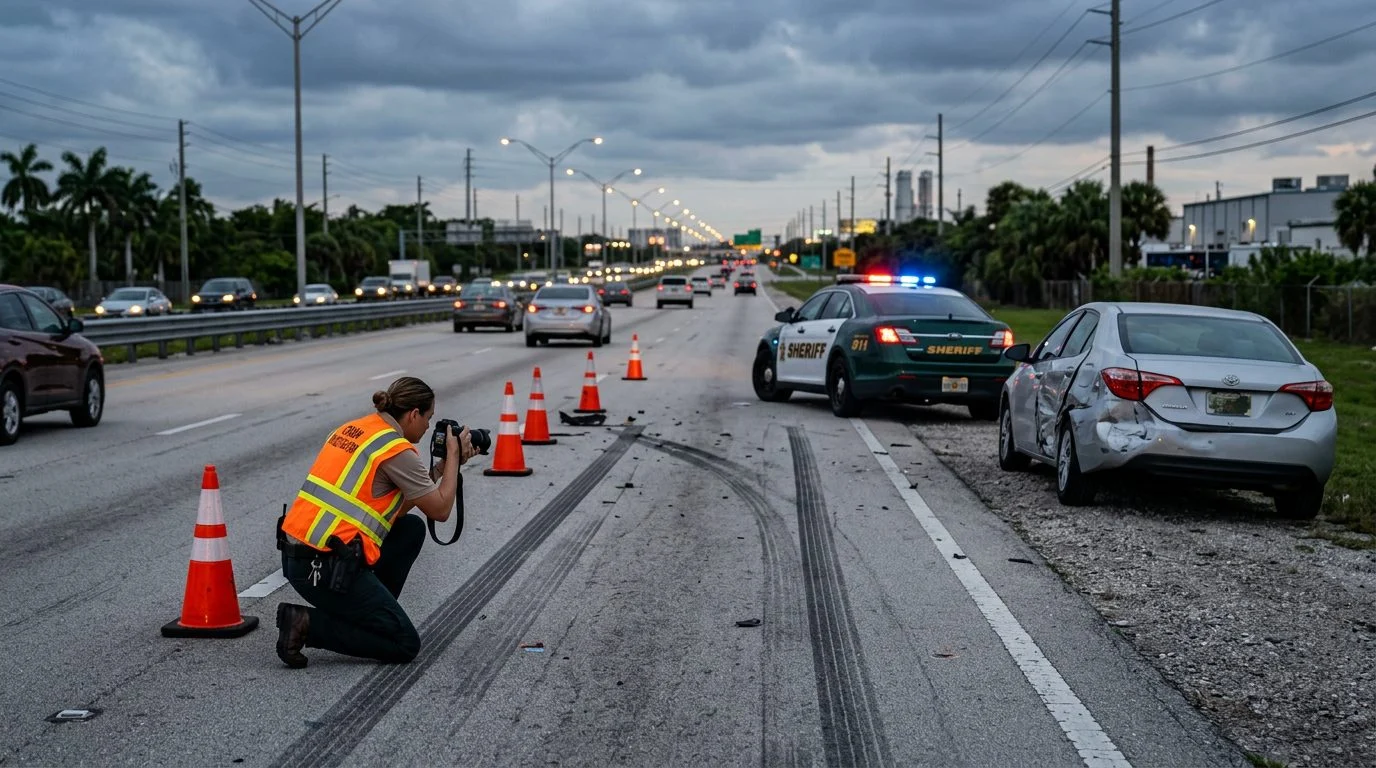
Florida Truck Crash Deaths: What the Federal Crash Data Shows, and What Families Can Do Next
Behind every statistic is a family trying to make sense of a loss. Here is how the numbers are gathered and what they can mean for the people left behind.
By CHG Lawyers · Published November 27, 2026
Losing someone in a truck crash brings questions that come long before any lawsuit. Many families first want to know what the official numbers say.
The federal FARS database is a core source for Florida truck crash deaths statistics. It counts fatal crashes and describes patterns, not fault. Here is what it shows, what it cannot show, and what your family can do next.
What FARS Is and What It Counts
FARS is the Fatality Analysis Reporting System, a federal database of motor vehicle crashes that result in a death. The National Highway Traffic Safety Administration (NHTSA) maintains it.
Each record covers one fatal crash. It typically notes the date, the location, the vehicles involved, and whether a large truck was part of the crash. That detail lets researchers compare years, counties, and vehicle types.
FARS has limits. It counts deaths, not every injury. Many people hurt in truck crashes survive, so they do not appear in the death count. Final figures for a year can also take time to publish, so the newest year may be incomplete.
Most important, FARS records describe what happened. They are counts and descriptions. They are not findings about who caused a crash. A record can show that a truck was involved. It does not say why the crash happened.
If a truck crash took someone you love, our team can talk through what your family may be able to do next, at no cost to you. Talk it through with our team — the first consultation is free, confidential, and carries no obligation.
What the FARS Data Shows About Florida Truck Crash Deaths
You can sort FARS fatal crash data by year, state, county, and vehicle type. That shows how trucks fit into Florida’s totals.
Ask three questions of any number you read. Which year? Which place? What counts as a truck? A figure without those answers can mislead. A count for one county in one year tells a different story than a multi-year rate.
Safety agencies often express truck crash risk as a rate, meaning fatal crashes per 100 million vehicle miles traveled. The FMCSA crash rate data uses this measure. A rate adjusts for how much driving happens, so a higher count does not always mean higher risk.
If your family lives in Miami-Dade, Broward, Palm Beach, Hillsborough, Orange, or Duval County, start with your county. Local numbers answer local questions more directly than statewide totals. Write down the year and filters you used, so you can check the figures yourself.
Where and When Florida Truck Crashes Turn Fatal
Florida’s crash report records the date, time, and location of a crash. Florida law requires the long-form crash report for crashes that result in death, personal injury, or complaints of pain.
Under Fla. Stat. § 316.066, the long-form report must be submitted within 10 days after the officer finishes the investigation. It covers crashes that cause death, personal injury, or any indication of complaints of pain or discomfort, crashes that involve a violation of s. 316.061(1) or s. 316.193, crashes that render a vehicle inoperable to a degree that requires a wrecker to remove it from the scene, and crashes involving a commercial motor vehicle.
Work zones deserve close attention. Lane shifts, narrow space, and slowing traffic put drivers and trucks close together. Scene records may help answer questions about signs, lane setup, and who controlled the area, but they do not always resolve them.
When you read a report, look closely at the time, lighting, and weather entries. These details help investigators and attorneys rebuild the scene. Ask for the complete report, not a summary, so you see every entry.
Contributing Factors Recorded in Crash Data and Lawsuits
Crash records, investigator conclusions, and lawsuit allegations are three different things. Each describes cause with a different level of proof.
A crash record can list factors an officer observed. An investigator’s finding comes after review. A lawsuit allegation is a claim one party makes and must support. None of the three settles a case on its own.
Factors often examined include distracted driving, driver fatigue, speeding, and impairment. For trucks, fatigue often ties back to hours-of-service records.
Federal rules require drivers to record duty status for each 24-hour period. No driver or carrier may make a false report about it (49 C.F.R. § 395.8). Florida’s highway safety agency describes electronic logging device requirements for commercial operations. After certain truck crashes, employers must test surviving drivers for alcohol and drugs (49 C.F.R. § 382.303).
These records can be central to a single case.
What the Numbers Cannot Tell a Family
Statewide statistics cannot establish fault or the value of one family’s loss. Those answers come from the records of one crash.
In a single case, the records that matter include the Florida crash report, witness statements, vehicle and carrier records, and inspection history. Each adds facts that statewide totals leave out.
Florida’s Wrongful Death Act provides that when a death is caused by the wrongful act, negligence, default, or breach of contract or warranty of any person, including events on navigable waters, and the injured person could have brought a claim and recovered damages had they survived, the person or watercraft that would have been liable remains liable for damages under the Act, even though the person injured has died (Fla. Stat. § 768.19). The responsible party can be liable under § 768.19. The decedent’s personal representative brings the action for the survivors and the estate (§ 768.20).
A surviving spouse may recover for lost companionship and mental pain and suffering. Minor children may recover for lost parental guidance (§ 768.21).
Two rules affect timing and fault. Florida law generally gives two years to bring a wrongful death action. A narrow exception under § 95.11(11) allows a wrongful death action to be brought at any time when it is against a natural person for an intentional tort causing death that is described in s. 782.04 or s. 782.07. This is not a general extension of the deadline and does not apply to typical crash deaths. Deadlines apply, so families should act promptly.
How Families Can Respond After a Fatal Truck Crash
The first steps are to get the official crash report, record witness details, and save evidence before it disappears.
Florida limits access to crash reports. Parties, their legal representatives, and their insurers can access the report (§ 316.066).
Write down witness names and phone numbers while memories are fresh. Save photos, text messages, and any dashcam footage. Keep originals unchanged.
Keep one folder for losses: funeral bills, medical bills, and household income that stopped. A survivor who paid medical or funeral expenses may recover them (§ 768.21).
Our truck accident checklist lists these steps in order. Follow the guidance of the treating doctors and the authorities handling the case.
How long do families have to file a Florida wrongful death claim?
Florida law gives two years, so families should act early.
Who brings a Florida wrongful death claim?
The decedent’s personal representative brings it, for the survivors and the estate.
Not sure what your next step is?
Talk it through with our team — the first consultation is free, confidential, and carries no obligation.

Talk With Our Team About Your Family’s Situation
If your family is facing a fatal truck crash and unsure what comes next, our team can talk it through with you.
Igor Hernandez, one of the firm’s lawyers, is responsible for this page. CHG Personal Injury Lawyers is a Florida-based firm that serves families across Florida, including Miami, Orlando, Tampa, and Jacksonville. The firm’s attorneys are admitted to The Florida Bar.
CHG charges no attorney’s fees and no case costs unless there is a recovery.
If a truck crash took someone you love, contact our team to talk through your family’s options. Your first consultation is free, confidential, and has no obligation to continue.
La consulta inicial es gratuita, confidencial y sin compromiso de continuar.
How CHG Personal Injury Lawyers Can Help Your Family
Florida-Based Representation
CHG Personal Injury Lawyers represents people and families throughout Florida, including those affected by serious and fatal truck crashes.
Licensed Attorneys
Our attorneys are licensed to practice law and admitted to The Florida Bar. Igor Hernandez is the responsible attorney for this page.
Careful Case Review
We look at crash reports, records, and other evidence to understand what happened and who may be responsible.
Support for Families
We understand that a wrongful death claim comes at the hardest time in a family's life, and we explain each step in plain language.
No Fees Unless There Is a Recovery
CHG charges no attorney's fees and no case costs unless there is a recovery.
Time Matters
Deadlines apply to Florida wrongful death and truck accident claims. Contact our team promptly so that your family's options are reviewed while there is still time to act.
Steps Families Often Consider After a Fatal Truck Crash
Keep the Records
Save the crash report, police report, medical and funeral bills, and any letters from insurance companies.
Preserve Evidence
Photos, dashcam or surveillance video, and witness names can be important. Ask us about what to preserve before it is lost.
Follow Medical and Legal Guidance
Our team can explain your options, and any medical questions should be answered by the professionals treating your family.
Talk With a Lawyer Early
Early conversations help families understand who may bring a claim and what information the case will need.