
Florida | FedEx Truck Accidents
Hurt in a FedEx Truck Crash? Talk With a Florida Injury Lawyer
Delivery crashes can involve drivers, contractors and companies, and sorting out who is involved takes careful investigation. Here is how to protect yourself and your family.
Why Florida Families Call CHG
Florida
Florida-based personal injury firm
Licensed
Attorneys admitted to The Florida Bar
Free
Confidential first consultation
By CHG Lawyers · Published November 23, 2026
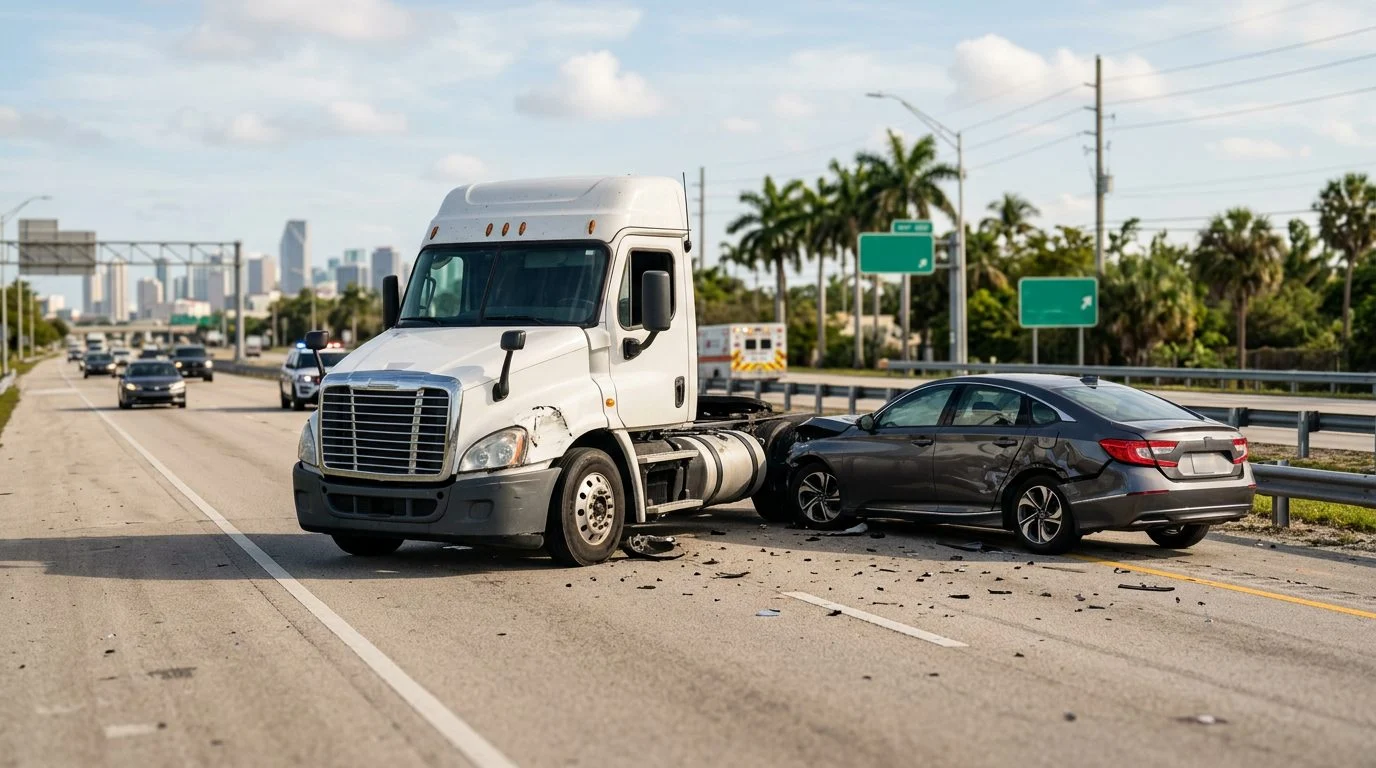
A FedEx truck hit your car, your motorcycle, your bike, or someone you love. Now the bills are piling up. No one has said who will pay.
Here is the short answer. A driver’s job title on paper does not decide who is responsible. In a FedEx truck accident in Florida, a title like “independent contractor” is not the final word. More than one party may share responsibility.
This guide covers:
- The employee-or-independent-contractor question
- How insurance can pay, including when the at-fault driver has no insurance
- Florida deadlines
- Steps to take now
Why an Independent Contractor Driver’s Status Matters After a FedEx Truck Accident in Florida
The driver’s status helps decide which companies may be legally responsible for the crash.
An independent contractor is a self-employed worker. This person is not a company employee. If the driver is an independent contractor, the answer can be different. That is why status matters, even when the driver was on the job.
Delivery work can be arranged in different ways. Contracts and business arrangements vary. Check the driver’s status in every crash. Do not assume it from the truck’s paint.
Answering this question early helps you find out who to ask for insurance details and records.
If you are recovering from a FedEx truck crash, or helping a family member through one, you do not have to sort out the employee question alone. Talk it through with our team — the first consultation is free, confidential, and carries no obligation.

Employee or Independent Contractor in a FedEx Truck Accident: How Florida Courts Look at It
Useful questions include:
- Who set the route, schedule, and delivery stops?
- Who required uniforms, vehicle markings, or equipment?
- Who trained the driver and set performance rules?
- Did the company set delivery quotas or track the driver through scanners or apps?
- Did dispatch instructions or a company handbook tell the driver how to work?
Federal rules also place duties on motor carriers. A carrier is a company that moves goods by truck. The carrier must make sure drivers follow the federal driver rules that apply to them.
Duty-status records show when a driver was working, driving, or resting. These logs can show what the driver was doing before a crash.
Who Can Be Held Responsible After a FedEx Truck Crash
More than one party may be responsible. We review each party’s role separately.
- The driver. A driver who speeds, is distracted, is fatigued, or breaks traffic rules may be personally responsible.
- The company. Whether a company is responsible for a driver’s work-related driving depends on the facts of each case.
- The truck’s owner. Florida’s “dangerous instrumentality doctrine,” a Florida rule, can apply. It can make an owner who voluntarily lets someone drive the vehicle answer for that driver’s negligence (carelessness). The owner can be liable even without being at fault. Lawyers call this “strict vicarious liability.”
- Other contributors. A maintenance contractor, a loading company, or a parts maker may have played a role. Each one is reviewed case by case.
Crashes on busy South Florida roads, such as those in Palm Beach County, can involve several vehicles, companies, and insurers at once. Sorting out who did what is often the first real task in the claim.
Florida divides fault among those responsible. Under Florida’s comparative fault statute, a court enters a judgment against each liable party. A judgment is the court’s final decision. Each judgment matches that party’s percentage of fault.
Under Fla. Stat. § 768.81(6), in a negligence action to which that section applies, a party found more than 50 percent at fault for his or her own harm may not recover any damages. This subsection does not apply to an action for personal injury or wrongful death arising out of medical negligence under chapter 766.
Evidence That Shows Who Was Responsible
Records matter most here. They show who controlled the driver. They also show what happened on the road.
Some of this evidence can disappear quickly. Electronic logs, GPS data, dispatch messages, and truck data can be overwritten or lost over time. Ask for them early. Preserve what you already have.
Useful evidence includes:
- Under Florida’s crash report statute, the investigating law enforcement officer must complete and submit a long-form report to the department within 10 days after the investigation is completed, for a crash that resulted in death of, personal injury to, or any indication of complaints of pain or discomfort by any of the parties or passengers involved in the crash. The report lists the parties, vehicles, and insurance companies. Parties and their legal representatives can access it.
- Duty-status and dispatch records. Logs and messages can show the driver’s hours and the instructions the driver received.
- Photos of the scene, the vehicles, and your injuries.
- Witness names and contact details.
- Medical records and bills.
- Maintenance and inspection records for the truck, when available.
- Truck event data, such as speed and braking. This data may show what happened before impact.
Keep your own notes about pain, missed work, and daily limits. Accident reconstruction professionals can use physical evidence and truck data. They can test what each driver did before impact.
How Insurance Pays After a FedEx Truck Crash in Florida
Insurance can pay from more than one source. These include the truck’s coverage, your own policy, and Florida’s required personal injury protection (PIP). PIP is no-fault coverage. It pays certain medical and income benefits.
PIP is separate coverage for certain benefits. It is not the same as a claim against the at-fault party.
Commercial trucks often carry higher insurance limits than personal vehicles. The amount available in a given crash depends on the policies involved.
What if the At-Fault Driver Has No Insurance?
This is one of the most common questions after a crash. The answer depends on the facts.
- Your own uninsured motorist coverage. This coverage may apply if your policy includes it. Check your declarations page, the summary page that lists your policy limits, before your consultation.
- An insurer that becomes insolvent. Coverage questions can arise when the at-fault driver’s liability insurer is insolvent. That means it cannot pay its debts. The policy dates and terms matter.
- An owner who lacked required security. An owner who did not have required security in effect at the time of the accident may face personal liability for PIP benefits.
Uninsured motorist coverage, insolvency, and a missing-security owner are different situations. Which one applies depends on the policies, the dates, and the vehicles involved. Bring every policy and the crash report to your consultation.
If you have Medicare, its rules apply. Under CMS guidance, liability insurance pays first for accident-related care. A conditional Medicare payment is money Medicare paid while a claim was pending. It must be repaid from a settlement or judgment.
Florida Deadlines and the Steps to Take Now
Florida sets filing deadlines for these claims. Waiting can narrow your options.
Florida Statutes § 95.11 sets time limits for filing many civil actions. Deadlines can differ by claim type. Do not assume you have time left. Contact the firm promptly.
When a crash causes a death, Florida’s wrongful death law allows the family of the person who died to seek damages. Families should contact the firm promptly to learn which deadlines apply.
Take these steps now:
- Get medical care and follow your doctors’ treatment plan.
- Report the crash to police and get the report number.
- Photograph the scene, the vehicles, and your injuries.
- Collect witness names and contact details.
- Keep receipts, bills, and records of missed work.
- Talk with a lawyer before giving a recorded statement to any insurer.
Not sure what your next step is?
Talk it through with our team — the first consultation is free, confidential, and carries no obligation.
What to Expect When You Contact CHG Personal Injury Lawyers
Your first step is a free, confidential consultation. We review the crash facts. Then we explain who may be responsible.
CHG Personal Injury Lawyers is a Florida-based firm. We serve clients throughout Florida. Igor Hernandez is the responsible lawyer on this page. Our lawyers are licensed attorneys with Florida Bar admission.
The process usually works like this:
- Intake. You tell us what happened and who was involved.
- Document review. We look at the crash report, photos, medical records, insurance declarations, and any truck records.
- Explanation. We explain who may be responsible and how insurance may apply. This includes uninsured motorist coverage if the at-fault driver is uninsured.
- Options. We talk through your choices and the next steps.
The initial consultation is free, confidential, and carries no obligation to continue. La consulta inicial es gratuita, confidencial y sin compromiso de continuar.
CHG charges no attorney’s fees and no case costs unless there is a recovery. Depending on the case, the matter may be referred to, or handled together with, another law firm.
If you are recovering from a FedEx truck crash, or helping a family member through one, you do not have to sort out the employee question alone. Contact us to talk through the facts.
Frequently Asked Questions
What should I do if a FedEx truck hits my car?
Get medical care, report the crash to police, and photograph the scene. Avoid recorded statements to insurers until you have spoken with a lawyer.
Can a FedEx driver be an independent contractor?
Delivery work can be arranged through contractors. The contract label is only part of the answer.
Who pays if the at-fault driver has no insurance in Florida?
Your own uninsured motorist coverage may apply. Other responsible parties may also be part of the claim. The answer depends on the policies and facts involved.
Does the truck’s owner pay?
An owner can be responsible under Florida’s dangerous instrumentality doctrine. This applies when the owner voluntarily lets someone else drive and that driver’s negligence causes injury.
How long do I have to file?
Florida Statutes § 95.11 sets filing deadlines. They can differ by claim type. Contact the firm promptly.
What to Do After a FedEx Truck Crash
Get medical care
Even if you feel okay after the crash, see a doctor promptly and follow your doctor's care plan. Some serious injuries take days to show symptoms.
Report the crash
Call the police so the crash is documented. Ask for the report number and the name of the officer who responded.
Document the scene
If you can, photograph vehicle damage, the truck's markings, road conditions and your injuries. Note witnesses and the time of the crash.
Speak with a lawyer first
Insurance adjusters may ask for recorded statements soon after a crash. Talk with a lawyer before giving one.
Key Warning
Do not sign releases or accept early settlement offers from any insurer before you understand your injuries and your options. Once a release is signed, it can be hard to undo.
How CHG Works With You
Serving Florida
Our attorneys represent people injured across Florida, from Miami and Fort Lauderdale to Orlando, Tampa and Jacksonville.
Licensed Florida attorneys
Igor Hernandez is the responsible lawyer for this page. Our lawyers are admitted to The Florida Bar.
Focus on your recovery
We handle the investigation, insurance communication and paperwork so you can concentrate on your health and your family.
No fees unless there is a recovery
CHG charges no attorney's fees and no case costs unless there is a recovery.