
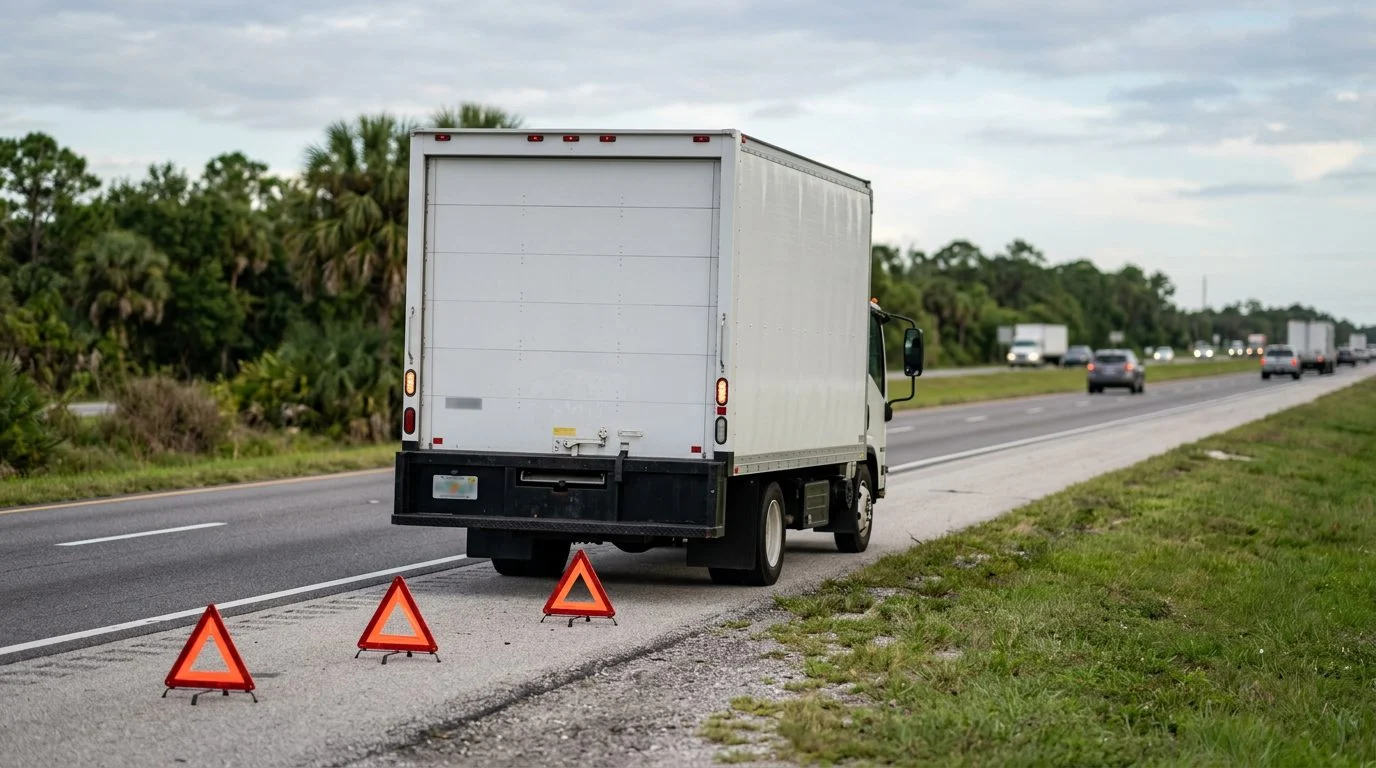
Truck Accidents | Serving Florida
Hurt in a FedEx Truck Rear-End Crash? Clear Steps to Take Next
A plain-language guide for injured drivers, passengers, and families, from the Florida-based team at CHG Personal Injury Lawyers.
By CHG Lawyers · Published November 7, 2026
A FedEx truck hit your car from behind, or backed into you in a parking lot. Now you’re juggling pain, medical visits, and bills you never planned for.
A FedEx truck rear end accident in Florida may give you a claim against the people responsible for the crash. Florida law generally allows two years to file a negligence lawsuit, so acting early matters. If you were hurt in a crash, our team can talk through what happened in a free, confidential consultation with no obligation to continue.
What This Page Covers and Who It Is For
This page is for people hurt in a rear-end or backing crash involving a FedEx truck, and for the family members who help them.
A rear-end crash happens when a truck strikes the back of another vehicle. A backing crash happens when a truck moves in reverse and hits a car, a person, or an object. Both can happen on a busy highway, in a driveway, or in a parking lot in communities such as Miami, Orlando, Tampa, and Jacksonville.
This page may help:
- An injured driver, passenger, motorcyclist, or pedestrian.
- A spouse, adult child, or friend handling bills, calls, and paperwork.
- A family facing a fatal crash.
This page covers general Florida rules. Your own crash facts will shape what happens next.

If you were hurt in a crash, our team can talk through what happened in a free, confidential consultation with no obligation to continue. Talk it through with our team — the first consultation is free, confidential, and carries no obligation.
How Rear-End and Backing Crashes Happen With Delivery Trucks
Most of these crashes start with a driver who didn’t leave enough room, didn’t see someone in time, or couldn’t stop in time.
Common causes include:
- Following too closely in traffic
- Braking late or stopping suddenly
- Distraction, such as a phone or a rushed route
- Fatigue on long or tight delivery routes
- Blind spots and poor sight lines when backing up
Large trucks need much more distance to stop than passenger cars. Their blind spots are wide, especially behind and beside the trailer. A backing move near people or vehicles calls for extra care.
Even a crash at low speed can cause serious harm. A rear impact can injure the neck, spine, and head. Some symptoms appear hours or days later, so see a doctor promptly and follow the care plan your doctors set.
Federal rules set standards for these trucks. Florida commercial vehicle enforcement also covers commercial vehicle safety. Most trailers and semitrailers made on or after January 26, 1998, with a gross vehicle weight rating of 10,000 pounds or more must be equipped with a rear impact guard, though some types, such as pole trailers and low chassis vehicles, are excepted. Under 49 C.F.R. § 393.86, the guard’s bottom edge cannot sit more than 22 inches above the ground. A guard that is missing or out of spec can matter after a rear-end crash.
Who Can Be Liable: The Driver, FedEx, or a Contracted Operator
More than one party can be responsible, including the driver, the company that employed the driver, and any contracted operator involved.
Some FedEx deliveries are run by contracted operators rather than by FedEx directly. Who employed the driver affects who may be responsible. The facts of the crash shape the rest.
Other parties may matter too. A vehicle maintenance provider or a company that loaded or secured cargo may share responsibility if the facts support it. A company can also face claims tied to how it hired, trained, or supervised a driver.
If the other driver was partly at fault, you may still have a claim. Florida divides fault among the people responsible under its comparative fault law, Fla. Stat. § 768.81.
Evidence to Preserve Right Away
The evidence that matters most is often the evidence that disappears first. Protect it early.
Start with the basics:
- Police crash report. Under Fla. Stat. § 316.066, a Long Form crash report must be submitted within 10 days after the investigation of a crash that resulted in death, personal injury, or any indication of complaints of pain or discomfort by any party or passenger, that involves a violation of s. 316.061(1) or s. 316.193, that rendered a vehicle inoperable to a degree requiring a wrecker, or that involves a commercial motor vehicle.
- Photos of the vehicles, the scene, and your injuries.
- Video from dashcams or security cameras.
- Witness names and phone numbers.
- Medical records that link your injuries to the crash.
Truck records can be the most important. Under 49 C.F.R. § 395.8, except for a private motor carrier of passengers (nonbusiness), a motor carrier subject to the requirements of this part must require each driver used by the motor carrier to record the driver’s duty status for each 24-hour period, generally by using an electronic logging device (ELD). The rule lets a carrier require manual recording instead in certain situations, including when the driver is operating a commercial motor vehicle that was manufactured before model year 2000, as reflected in the vehicle identification number as shown on the vehicle’s registration. No one may tamper with those devices so they fail to record accurately.
Driver qualification files are kept while a driver works for the carrier and for three years afterward, though some records in the file, such as annual driving-record checks and medical certificates, may be removed three years after they were made, under 49 C.F.R. § 391.51.
After certain crashes, employers must test surviving drivers for alcohol and drugs as soon as practicable, under 49 C.F.R. § 382.303. Those rules set time limits for each test.
Records can be overwritten or removed after set periods. A written request to preserve evidence, sent early, can help. Keep a personal journal of symptoms, missed work, and medical visits. In serious cases, accident reconstruction professionals and medical reviewers may study the evidence.
Not sure what your next step is?
Talk it through with our team — the first consultation is free, confidential, and carries no obligation.
Florida Deadlines and Fault Rules
For most negligence claims, Florida’s general deadline to sue is two years (Fla. Stat. § 95.11(5)(a)).
Florida’s limitations statute sets two years for an action founded on negligence, Fla. Stat. § 95.11. Missing a deadline can end a claim, so don’t wait. Read more about Florida’s filing deadlines.
In Florida, wrongful death claims are brought under the Florida Wrongful Death Act. Families should speak with a lawyer promptly after a fatal crash.
A crash in which more than one person shares fault can still lead to a claim, but under Florida law, a person found more than 50 percent at fault may not recover any damages (Fla. Stat. § 768.81(6)). If your share of fault is 50 percent or less, your damages are reduced by your percentage of fault.
Talk with a lawyer early so deadlines and evidence stay protected.
What a Claim May Cover, Including Catastrophic Injuries and Wrongful Death
A claim can seek money for medical care, lost income, and the way an injury changes daily life.
Florida law defines economic damages to include past and future lost income, medical and funeral expenses, and other losses caused by the injury. Medical bills already paid are limited to the amount actually paid, under Fla. Stat. § 768.0427.
Some crashes cause catastrophic harm. These include spinal cord injuries, paralysis, traumatic brain injuries, amputations, and severe burns. These injuries often need long-term planning for therapy, equipment, and home changes.
When a crash causes a death, the Florida Wrongful Death Act lets certain survivors pursue a claim. Under Fla. Stat. § 768.21, a surviving spouse may recover for loss of companionship and protection. Minor children of the decedent, and all children if there is no surviving spouse, may recover for lost parental companionship, instruction, and guidance and for mental pain and suffering from the date of injury. Each parent of a deceased minor child may recover for mental pain and suffering. Learn more about wrongful death claims.
The value of any claim depends on the facts. No outcome can be promised.
How the Process Works and Why Work With CHG Personal Injury Lawyers
A case usually starts with a free consultation, then moves to investigation, medical review, and a demand to the responsible parties.
- Free, confidential consultation. You can talk through the crash with no obligation to continue.
- Preservation letters. These ask the responsible parties to keep records.
- Investigation. This includes requests for the crash report and truck records.
- Medical review. We review your treatment and records with your doctors’ care in mind.
- Settlement demand. A demand goes to the responsible parties.
- Lawsuit if needed. If the claim doesn’t settle, a lawsuit may follow.
Timelines vary. A clear claim may move in months. A serious injury or disputed fault can take much longer.
CHG Personal Injury Lawyers is a Florida-based personal injury firm. It handles car, truck, and other accident claims of every severity, including catastrophic injuries and wrongful death. Igor Hernandez is the responsible lawyer for this page. Our lawyers are licensed in Florida and admitted to The Florida Bar.
CHG charges no attorney’s fees and no case costs unless there is a recovery. Some matters may be handled together with, or referred to, another law firm.
Frequently Asked Questions
Can I still have a claim if I was partly at fault?
Florida divides fault among the responsible people, so a shared-fault crash can still lead to a claim.
Who pays after a FedEx truck rear end accident in Florida?
The responsible parties depend on who employed the driver and how the crash happened.
What if the crash was a backing accident in a parking lot?
Backing crashes in lots and driveways can still lead to claims, especially when the driver could have seen nearby people or vehicles.
Should I give a recorded statement to an insurer?
Talk with a lawyer before giving a recorded statement or signing a release.
What if a family member died in the crash?
Florida’s Wrongful Death Act lets certain surviving family members pursue a claim. We’re sorry for your loss, and prompt contact protects your options.
You’re likely still handling bills, appointments, and missed work. When you’re ready, request a free case evaluation with CHG Personal Injury Lawyers.
Have questions about what happened?
Ask our team directly. The first conversation is free, confidential, and there is no obligation to continue.
Why Florida Families Turn to CHG Personal Injury Lawyers
Florida-Based Firm
We represent people hurt in crashes and accidents throughout Florida, including Miami, Orlando, Tampa, and Jacksonville.
Licensed Attorneys
Our attorneys are admitted to The Florida Bar, and our team handles each case with care and attention to detail.
Focused on Serious Injuries
We take personal injury cases of every severity, from everyday car accidents to catastrophic injuries and wrongful death.
Free, Confidential Consultation
Your first consultation is free, confidential, and comes with no obligation to continue.
No Fees Unless There Is a Recovery
CHG charges no attorney's fees and no case costs unless there is a recovery.
Act Promptly to Protect Your Claim
Deadlines apply to injury claims in Florida, and evidence can disappear quickly after a crash. Follow your doctors' care, keep every medical record and bill, and contact our team as soon as you can.
Steps That Can Help After a FedEx Truck Crash
Get Medical Care
Seek care right away, even if you feel you have only minor pain. Follow your doctors' treatment plan and attend every appointment.
Document the Scene
If you are able, photograph vehicles, road conditions, and visible injuries, and note the names of any witnesses.
Keep Your Records
Save the police report, insurance letters, medical bills, pay stubs, and any notes about how the crash has affected your daily life.
Talk With Our Team
Our attorneys can explain your options under Florida law, answer your questions, and help you decide what comes next.