
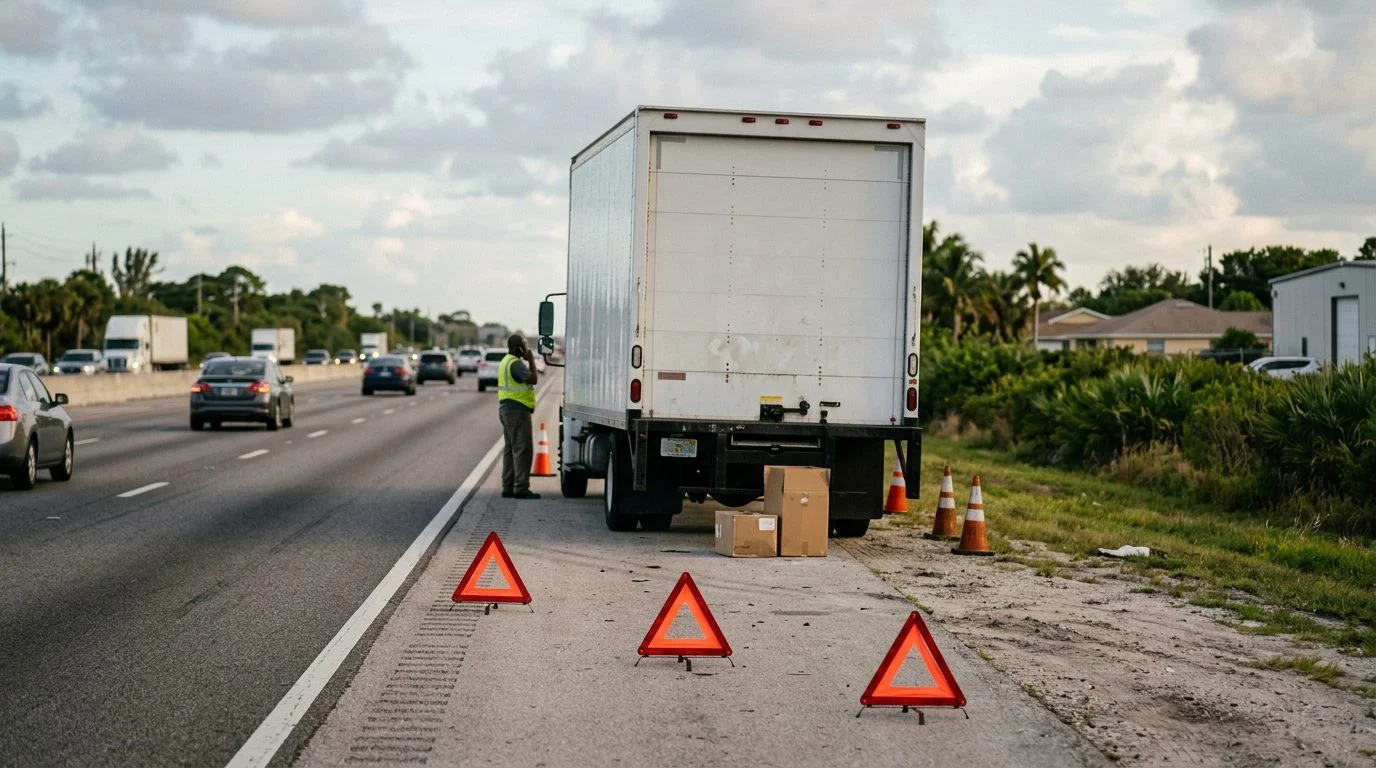
FedEx Truck Accidents | Florida
After a FedEx Truck Crash, Key Evidence Can Disappear Fast
Knowing what to preserve, and who to call, can help protect your family's options while the details are still fresh.
Serving Florida Families
Florida
Florida-based firm serving clients throughout the state
Licensed
Attorneys admitted to The Florida Bar
Free
Confidential first consultation with no obligation to continue
By CHG Lawyers · Published November 22, 2026
Evidence After a FedEx Truck Crash in Florida: What to Save and What Can Disappear
If a FedEx truck crash has left you or someone you love hurt, some of the best proof may already be at risk. The most important evidence to collect after a FedEx truck accident is what records the crash itself: photos, witness details, the police report, and any video or truck data that still exists.
This guide explains what to save, why timing matters in Florida, and how to start.
If a FedEx truck crash left you or someone you love hurt, the proof that matters most may be disappearing now, and our team is ready to talk through your options with you. Talk it through with our team — the first consultation is free, confidential, and carries no obligation.

What This Page Covers and Who It Is For
This page is for people hurt in a Florida crash involving a FedEx truck, and for the family and friends helping them. You may be reading this while someone you love is still in the hospital or recovering at home. That’s a hard place to be, and you don’t have to sort everything out at once.
Here’s what you’ll learn: which evidence matters most, why some of it disappears fast, what to save in the first days, and how Florida’s deadlines affect your next step. What you should do next depends on the facts of your crash, so use this as a starting point.
CHG Personal Injury Lawyers is a Florida-based personal injury firm. Igor Hernandez is the responsible lawyer for this page. Our attorneys are admitted to The Florida Bar, and our team serves people throughout Florida.
Why Evidence From a Commercial Truck Can Disappear Quickly
Some of the most useful evidence from a commercial truck can be erased or overwritten within days. A truck is a rolling data system, and much of that data sits with the trucking company, not with you.
Dashcam video is often recorded over on a loop unless someone saves it. Electronic logs and engine data can be changed, lost, or left out of a file if nobody asks for them.
Federal rules protect some records. A motor carrier must not alter or erase, or permit or require alteration or erasure of, the original hours-of-service information, under 49 C.F.R. § 395.30. Records may also be kept by any technology, as long as it accurately reflects all of the information in the record and remains accessible in a form that can be accurately reproduced later. That rule helps, but it doesn’t mean the company will hand over its records on its own.
Trucks also get repaired and returned to service, and scenes get cleared within hours. A written request to preserve evidence, sent early, puts the company on notice. Acting early gives the best chance to keep what still exists.
If evidence is lost or destroyed after a crash, that loss does not have to be the end of your claim. Our lawyers can raise missing or destroyed evidence within your injury case itself, so the court can address it there rather than in a separate lawsuit.
Evidence to Collect at the Scene and in the First Days
Start with what you can record yourself. Photos, names, the police report number, and your own medical trail are the first things to protect.
- Photos and video of vehicle damage, the truck’s markings and license plate, skid marks, traffic signals, and weather.
- Names, phone numbers, and insurance details for drivers, passengers, and witnesses.
- The police or crash report number and the name of the responding agency.
- Medical records, appointment dates, and missed work, kept together in one folder.
- A written note of the time, the exact location, which direction everyone was traveling, and what you remember, written while it is still fresh.
Florida’s crash report, the Long Form, must be submitted within 10 days after the investigating officer finishes the investigation of a crash that resulted in death, personal injury, or any indication of complaints of pain or discomfort, or that involved a commercial motor vehicle, under Fla. Stat. § 316.066.
Insurance information matters too. Under Fla. Stat. § 627.4137, an insurer that does or may provide liability insurance coverage must provide, within 30 days of the claimant’s written request, a sworn statement of its coverage. Keep your requests in writing.
Be careful with recorded statements. Talk with a lawyer before giving one to the trucking company’s insurer. Think twice before posting about the crash on social media, since company insurers can review public posts.
Dashcam and Forward-Facing Camera Footage
Dashcam footage is often the most direct record of how a crash unfolded, if the truck had a camera and the clip was saved. Forward-facing cameras can show lane position, following distance, braking, and signals.
Some systems also record the driver’s face and actions. That footage can show what happened in the seconds before impact, which photos cannot.
The video may sit on a device in the cab or in a cloud account. Many systems overwrite older clips automatically, sometimes within days.
A useful request names the camera system if you know it, the date, and the time window. It also asks for the clip itself, not just a note that one exists.
If the truck had no camera, your lawyer can still look at the logs and records described below.
Electronic Logs, Engine Data, and Telematics Records
Electronic logs and engine data can show when the truck was moving and how long the driver had been on duty. An electronic logging device (ELD) records automatically. Under 49 C.F.R. § 395.26, an electronic logging device (ELD) automatically records the date, time, commercial motor vehicle geographic location, engine hours, vehicle miles, driver or authenticated user identification, vehicle identification, and motor carrier identification, except that for an intermediate recording made during authorized personal use, engine hours and vehicle miles are left blank and location is recorded with a single decimal point resolution (approximately within a 10-mile radius).
No motor carrier, its agents, officers, representatives, or employees may make or cause to make fraudulent or intentionally false entries on required records, under 49 C.F.R. § 390.35.
Engine control module (ECM) data can capture speed, braking, and fault codes. Telematics and GPS records can show the route, location history, and dispatch messages. Ask for each of these by name, because a general request may not reach them.
After certain serious crashes, federal rules require testing of surviving drivers. If a test was not given within the required time, the employer must keep a record explaining why, under 49 C.F.R. § 382.303.
These records are held by the company, so ask for them early.
Not sure what your next step is?
Talk it through with our team — the first consultation is free, confidential, and carries no obligation.
Identifying the Right FedEx Company: Express, Ground, or Freight
The truck’s markings and the driver’s paperwork can help show which FedEx operation was responsible for the truck. FedEx Express, FedEx Ground, and FedEx Freight are different operations, and each may have its own records and insurers. The label on the truck is a starting clue, not the final answer.
The driver might be a company employee or work under a contractor. Each arrangement can affect who may be part of the claim, and the records will show which arrangement applied on the day of your crash.
Paperwork matters here. Federal rules require the name of the motor carrier for which the driver is working to appear on the driver’s record of duty status, under 49 C.F.R. § 395.8.
Write down the truck’s DOT number, the trailer number, and any company name you can see. Those details help identify which records to request and which insurance policies may apply.
Medical Bills and Medicare
If you are on Medicare, the order of payment can matter. Under CMS guidance, when a person entitled to Medicare was in an accident involving liability insurance, that insurance pays primary for accident-related health care services.
Medicare may also make a conditional payment for services another payer may be responsible for. As CMS explains, that payment must be repaid when a settlement, judgment, award, or other payment is made.
A conditional payment letter is not the final amount. As CMS notes, Medicare may make additional conditional payments while a claim is pending. Save every Medicare letter and bill, and share them with your lawyer.
Florida Deadlines and How to Begin With Our Firm
Florida sets filing deadlines for injury lawsuits, and they are strict. Early action protects your options.
Florida’s limitations rules appear in Fla. Stat. § 95.11. A missed deadline can end a claim, so ask about yours promptly.
Under Florida law, a person found more than 50 percent at fault for their own injury may not recover any damages (Fla. Stat. § 768.81(6)). Except as otherwise expressly provided in ch. 2023-15, Laws of Florida, that act applies to causes of action filed after its effective date. Where fault is shared, Florida courts enter judgment against each liable party based on that party’s percentage of fault, not on a joint basis.
At a free consultation, a lawyer reviews the crash facts, the evidence you already have, and your options. CHG Personal Injury Lawyers is Florida-based and serves people throughout Florida.
CHG charges no attorney’s fees and no case costs unless there is a recovery.
Frequently Asked Questions
How long do I have to file a lawsuit?
Florida sets filing deadlines in Fla. Stat. § 95.11. Because they are strict, speak with a lawyer soon after the crash.
Do I have to speak with the trucking company’s insurer?
You should not give a recorded statement before talking with a lawyer. Your lawyer can handle communication with the insurer for you.
What if the dashcam footage was already deleted?
Other evidence may still exist, including photos, witness accounts, the police report, and ELD or engine records. A lawyer can request whatever remains and raise any missing evidence within your case.
Can I still gather evidence while I’m recovering?
Yes. Family members can take photos, save texts and voicemails, and keep a simple log of symptoms and appointments.
What is the first step in gathering evidence after a FedEx truck accident?
Preserve what you can see and reach: photos, witness names, and the report number. Then contact a lawyer quickly so the company’s records can be requested.
Does the firm charge if my case is lost?
CHG charges no attorney’s fees and no case costs unless there is a recovery.

Talk With Our Team About Your FedEx Truck Crash
Talking with our team is a simple next step when a FedEx truck crash has left you or a family member hurt. You may be reading this for a parent, spouse, or child who can’t yet handle the paperwork.
Perhaps the truck was on a Florida road, no photos were taken, and footage may still exist. Time is short, so reach out to CHG Personal Injury Lawyers at our contact page for a free, confidential consultation.
La consulta inicial es gratuita, confidencial y sin compromiso de continuar.
Why the Evidence Matters
Records can be overwritten
Trucking companies keep electronic logs, maintenance files, and dispatch records, but routine business practices can change or replace them over time.
Scenes change quickly
Vehicles are moved, repaired, or returned to service, and roadway conditions and skid marks can fade within hours or days.
Witnesses move on
Memories of what people saw and heard become less reliable as weeks pass, and some witnesses become hard to reach.
Your recovery comes first
Gathering proof should never delay your medical care. Follow your doctors' guidance, and let a lawyer help with the paperwork.
Before You Speak With an Insurer
A trucking company's insurance adjuster may contact you soon after a crash.
Evidence Our Team Looks to Preserve
Crash and scene details
Photos and video of the vehicles, the roadway, signage, and any damage, taken as soon as it is safe.
Truck and company records
Electronic logging data, driver hours, maintenance history, inspection reports, and dispatch communications.
Police and witness information
Crash reports, names and contact details of witnesses, and any nearby security or traffic camera footage.
Medical and daily-life records
Doctors' notes, treatment plans, bills, and a simple journal of how the injury affects work, home, and family.