
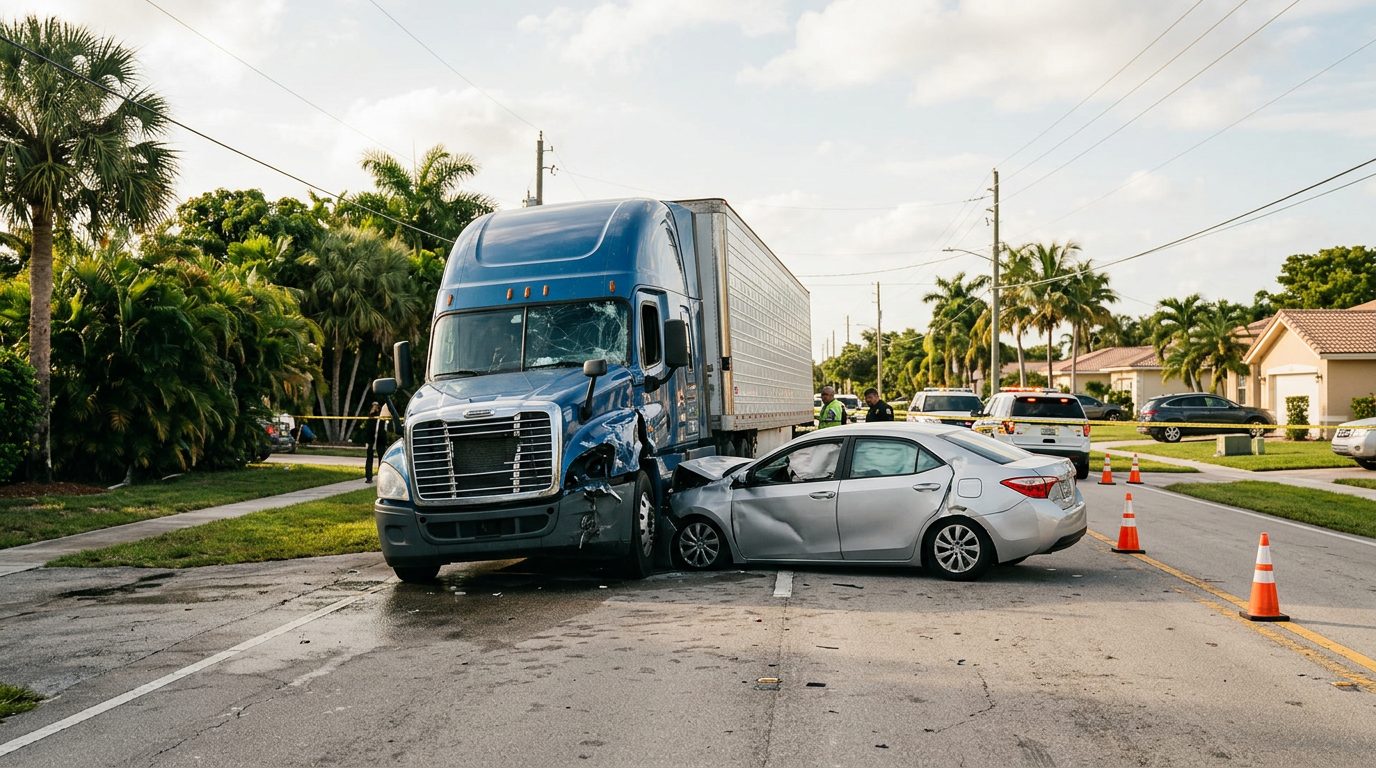
Florida Truck Accident Claims | Power Line Electrocution
Hurt by a Power Line Electrocution in a Truck Accident? You Do Not Have to Figure Out Your Next Steps Alone
When energized equipment and a commercial vehicle meet, the aftermath can be frightening and confusing. Here is how Florida families can begin to understand their options and protect what matters most.
Serving Florida Families
Florida
Florida-based personal injury firm
Licensed
Attorneys admitted to The Florida Bar
$0
No fees unless there is a recovery
By CHG Lawyers · Published November 11, 2026
If a truck, crane, or other equipment touched an overhead power line, someone nearby may have been shocked, burned, or killed. The aftermath can feel overwhelming.
A power line electrocution claim from a truck accident may be possible in Florida. The claim may be against the people or companies that controlled the vehicle, equipment, or worksite.
Florida also sets deadlines for filing and rules for fault. These rules affect the case early on. Here is how these claims usually work.
What Happens When a Truck or Crane Touches a Power Line?
When a truck, boom, or crane touches an overhead line, electricity can travel through its metal body and load. From there, it can reach people nearby.
The danger does not always end at the first contact. The vehicle or load can stay energized, which means it still carries electricity. People who step down, touch the ground, or try to help can still be shocked.
OSHA electrical guidance covers workplace shock hazards. OSHA flash-hazard guidance explains how arc flashes cause burns. An arc flash is a sudden burst of electrical energy.
The people most often hurt include:
- Drivers
- Utility and roadway workers
- Construction crews
- Bystanders
- People inside vehicles
FloridaHealthFinder’s electrical injury entry describes the causes, effects, and first-aid steps for electrical injuries. Miami-Dade County’s electrical hazards guidance also covers electrocution risks.
If a truck or crane touched a power line and you or someone you love was shocked, burned, or killed, you may have a claim, and our team can review the facts with you. Talk it through with our team — the first consultation is free, confidential, and carries no obligation.
Who May Be Responsible for a Power Line Electrocution?
More than one party may share responsibility. Who is responsible depends on who owned, drove, loaded, rigged, or controlled the equipment and the site.
Possible parties include:
- The truck company, the driver, or the vehicle owner.
- The crane owner, the crane operator, and the rigging crew.
- The general contractor or subcontractor that ran the job.
- The property or site owner. Florida courts describe a business owner’s duty to keep premises reasonably safe and to warn of hidden dangers. This is explained in Valladares v. Bank of America Corp.
Florida divides fault by percentage. Under § 768.81, the court enters a judgment against each liable party. A judgment is the court’s final decision. Each judgment is based on that party’s percentage of fault.
In plain terms, each party’s share is set separately. That means every party’s role matters.
What Evidence Usually Matters in These Claims?
Records made at the time of the contact often matter most. Preserving them early is important. Preserving means keeping them safe so they are not lost.
- Truck records: 49 C.F.R. § 395.8 requires commercial drivers to keep current duty-status records. These records show when a driver was on or off duty. The rule also requires drivers to show the vehicles they operate. Electronic logs, GPS data, dispatch records, and maintenance files can show where and when the vehicle traveled.
- Crash report: A long-form Florida Traffic Crash Report must be completed within 10 days after the investigation ends. This applies to a crash involving death, personal injury, or any indication of complaints of pain or discomfort; a crash that rendered a vehicle inoperable to a degree that required a wrecker to remove it from the scene; a violation of s. 316.061(1) or s. 316.193; or a crash involving a commercial motor vehicle. A commercial motor vehicle is a large truck or bus used for business. See § 316.066.
- Site records: Crane setup, load charts, daily logs, clearance and lockout steps, and photos taken soon after the event.
- Utility records: Outage and fault reports, line inspection and tree-trimming records, and the utility’s response timeline.
- Video and witnesses: Traffic camera footage, dashcam or phone video, and statements from coworkers or bystanders.
Some footage and logs can be overwritten or discarded quickly. Outside engineers and reconstruction professionals may later review how the contact occurred. Reconstruction professionals rebuild how an event happened.
What Are the Florida Deadlines and Fault Rules?
Florida generally requires negligence and wrongful death lawsuits to be filed within two years. Negligence means carelessness that causes harm. Fla. Stat. § 95.11 sets these time limits.
Exceptions can apply. Contact the firm promptly.
Fault matters too. Under § 768.81, an injured person’s own share of fault reduces the award. The award is the money a court grants.
In a negligence action, a party found more than 50 percent at fault for his or her own harm may not recover any damages, except in an action for damages for personal injury or wrongful death arising out of medical negligence pursuant to chapter 766. Many people hurt by someone else’s carelessness talk with a lawyer to learn whether they may have a claim for compensation. See Chapter 2023-15, Laws of Florida.
When a death occurs, the decedent’s personal representative brings the wrongful death action. The decedent is the person who died. The personal representative is the person legally in charge of the deceased person’s estate. The action is brought for the survivors and the estate. Survivors are the family members left behind.
Under § 768.21, survivors may recover certain losses. Under § 768.21, survivors may recover certain losses. Lost companionship and mental pain and suffering are limited to specific survivors: the surviving spouse, minor children (and all children if there is no surviving spouse), and parents of a deceased minor child or of an adult child when there are no other survivors.
How a Claim With Our Firm Works, Step by Step
A claim with CHG Personal Injury Lawyers usually begins with a consultation. Next, the claim moves through evidence gathering, investigation, and negotiation. Negotiation means talks with insurers and other parties. Here is what to expect.
- Initial consultation. The consultation is free, confidential, and carries no obligation to continue. We review what happened, the injuries, and any records you have.
- Preserving evidence. We send preservation requests to the trucking company, contractor, property owner, and utility where appropriate. A preservation request asks them to keep important records.
- Investigation. We gather records and review medical treatment with your doctors. We work with outside professionals as the facts require. Follow your doctors’ care throughout.
- Negotiation. We present the claim to insurers and responsible parties.
- Litigation if needed. Litigation means a lawsuit. If a fair resolution is not reached, the case moves through the Florida court process. Timelines vary with complexity. No timeline or result can be promised.
CHG charges no attorney’s fees and no case costs unless there is a recovery.
Why Families Choose CHG Personal Injury Lawyers
CHG Personal Injury Lawyers is a Florida-based firm. It handles personal injury claims of every severity.
Our work covers:
- Car, truck, and construction accidents
- Catastrophic injuries, such as spinal cord injury and amputation
- Wrongful death
We also offer the following:
- Responsible lawyer: Igor Hernandez, a lawyer admitted to The Florida Bar.
- Florida clients: We serve people throughout Florida, including Miami, Orlando, Tampa, and Jacksonville.
- Family support: Our team helps families keep track of paperwork, deadlines, and communication.
- Language: The firm publishes educational content for prospective clients in English and Spanish.
Not sure what your next step is?
Talk it through with our team — the first consultation is free, confidential, and carries no obligation.
Common Questions About Power Line Electrocution Claims
Can I have a claim if I was shocked but never touched the truck?
Yes. Bystanders can be hurt by energized equipment. Whether a claim exists depends on how the contact happened and who controlled the area.
What if the driver says the line was not live?
We check those accounts against logs, vehicle data, crash reports, and utility records. We do not assume either side’s version is correct.
Should I wait for the police report?
No. Get medical care first, and follow your doctors’ care. Crash reports are available to the parties and their legal representatives under § 316.066.
What if a family member was killed?
Florida law has the decedent’s personal representative bring the wrongful death action for the survivors. We can explain who may bring it in your situation.

Talk With Our Firm About Your Power Line Injury
If a truck or crane touched a power line, and you or someone you love was shocked, burned, or killed, you may be facing hard decisions now. Evidence can be lost, and Florida deadlines apply.
Contact CHG Personal Injury Lawyers through our contact page. We will review what happened and talk through your options.
Why Florida Families Contact CHG Personal Injury Lawyers
Confidential, Free First Consultation
Your initial consultation is free, confidential, and comes with no obligation to continue.
Florida-Based Attorneys
Our lawyers are licensed attorneys who serve clients throughout Florida, from Miami and Orlando to Tampa and Jacksonville.
Evidence-Focused Investigation
We work to identify the records that help explain how a contact with power lines happened, including crash reports, vehicle data, and utility records.
Plain-Language Guidance
We explain each step in clear terms so you and your family can make informed decisions at your own pace.
Fees Only If There Is a Recovery
CHG charges no attorney's fees and no case costs unless there is a recovery.
Safety First After a Power Line Contact
If a truck is touching or near power lines, do not approach it or touch it, even to help. Stay at least 35 feet away, warn others to keep back, and call 911. Electricity can travel through the ground and the vehicle. Follow the instructions of first responders and your doctors.
Steps Families Often Take After a Power Line Accident
Get Medical Care Right Away
Some electrical injuries are not obvious at first. Even if you feel fine, seek evaluation and follow your doctors' care plan.
Keep Records
Save medical bills, photographs, witness names, and any notes about what happened while the details are still fresh.
Report the Incident
Make sure the accident is reported to law enforcement and, where appropriate, to the utility company and the trucking company involved.
Speak With a Florida Lawyer
A free, confidential consultation can help you understand what records may matter and who may be responsible for your injuries.