
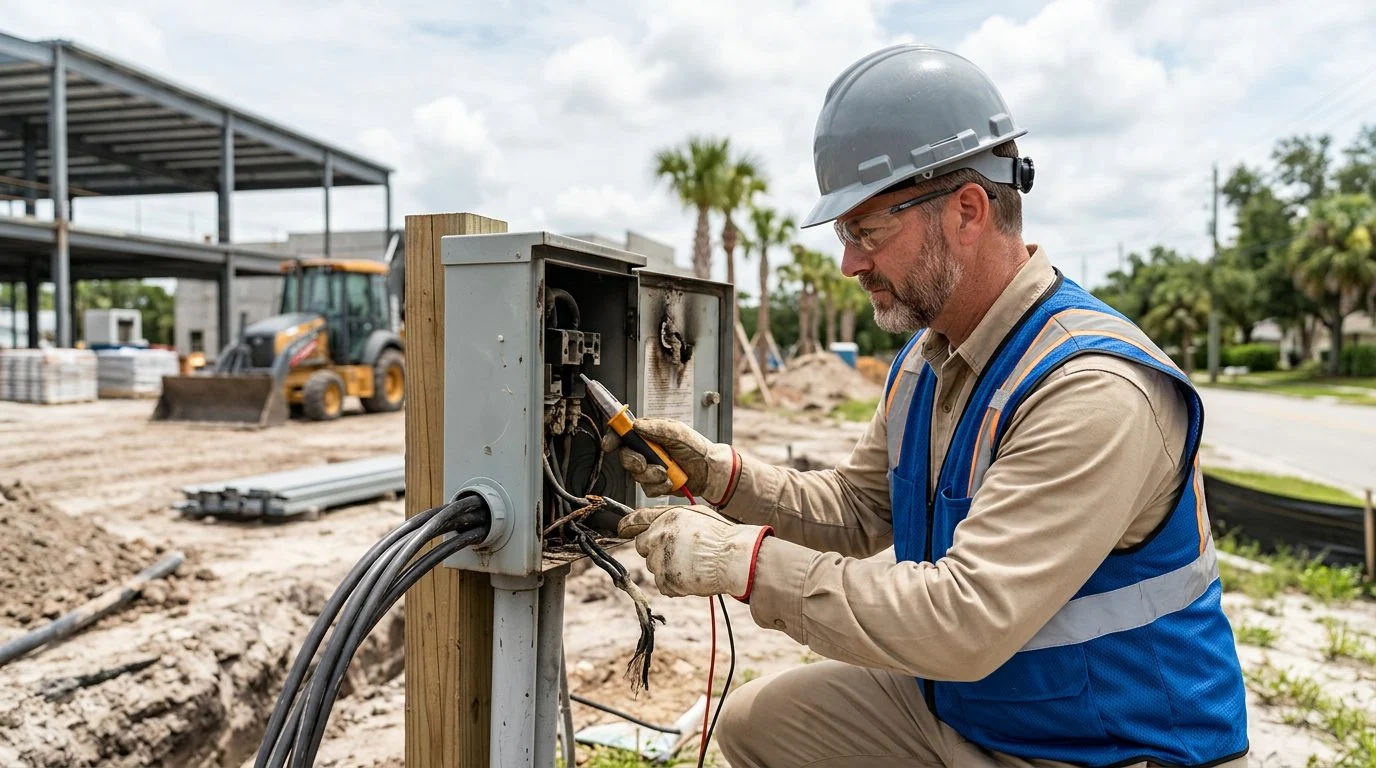
Work Injuries | Serving Florida
Hurt by Electricity at Work? Understand Your Options in Florida
Igor Hernandez and the attorneys of CHG Personal Injury Lawyers help Florida workers and their families sort out who may be responsible and what steps to take next.
Why Families Contact CHG
Florida
Florida-based firm serving clients throughout the state
Licensed
Attorneys admitted to The Florida Bar
Free
Confidential first consultation with no obligation to continue
By CHG Lawyers · Published November 15, 2026
An electrocution at work can change a life in seconds. If you or a family member was hurt, you may have more than one way to seek compensation. Compensation is money paid for your losses.
Workers’ compensation is usually the main way to get benefits from your employer. A separate claim may be possible against an outside party. That party may have failed to use reasonable care. Lawyers call this failure negligence. That failure may have helped cause the shock.
Both paths have deadlines. The early weeks matter.
What Electrocution at Work Is and Who This Page Is For
An electrocution at work happens when electric current passes through a worker’s body. The harm often goes far beyond the shock itself.
Burns, heart rhythm problems, nerve damage, and falls caused by the jolt can all follow.
OSHA’s arc flash guidance describes how electrical energy can cause serious burn injuries.
Some effects do not show up right away. Follow your doctors’ care. Keep your discharge papers and follow-up instructions. Tell every provider how the injury happened.
This page is for two kinds of readers:
- The worker who was hurt.
- The family of a worker who died, including each survivor who lost support and services, a surviving spouse, minor children (and all children if there is no surviving spouse), parents in the limited cases the statute allows, and the personal representative on behalf of the estate.
Electrical hazards exist in many places:
- Construction sites
- Areas around power lines
- Industrial and commercial facilities
- Contractor job sites
If you or a family member was hurt, you may have more than one way to seek compensation. Talk it through with our team — the first consultation is free, confidential, and carries no obligation.
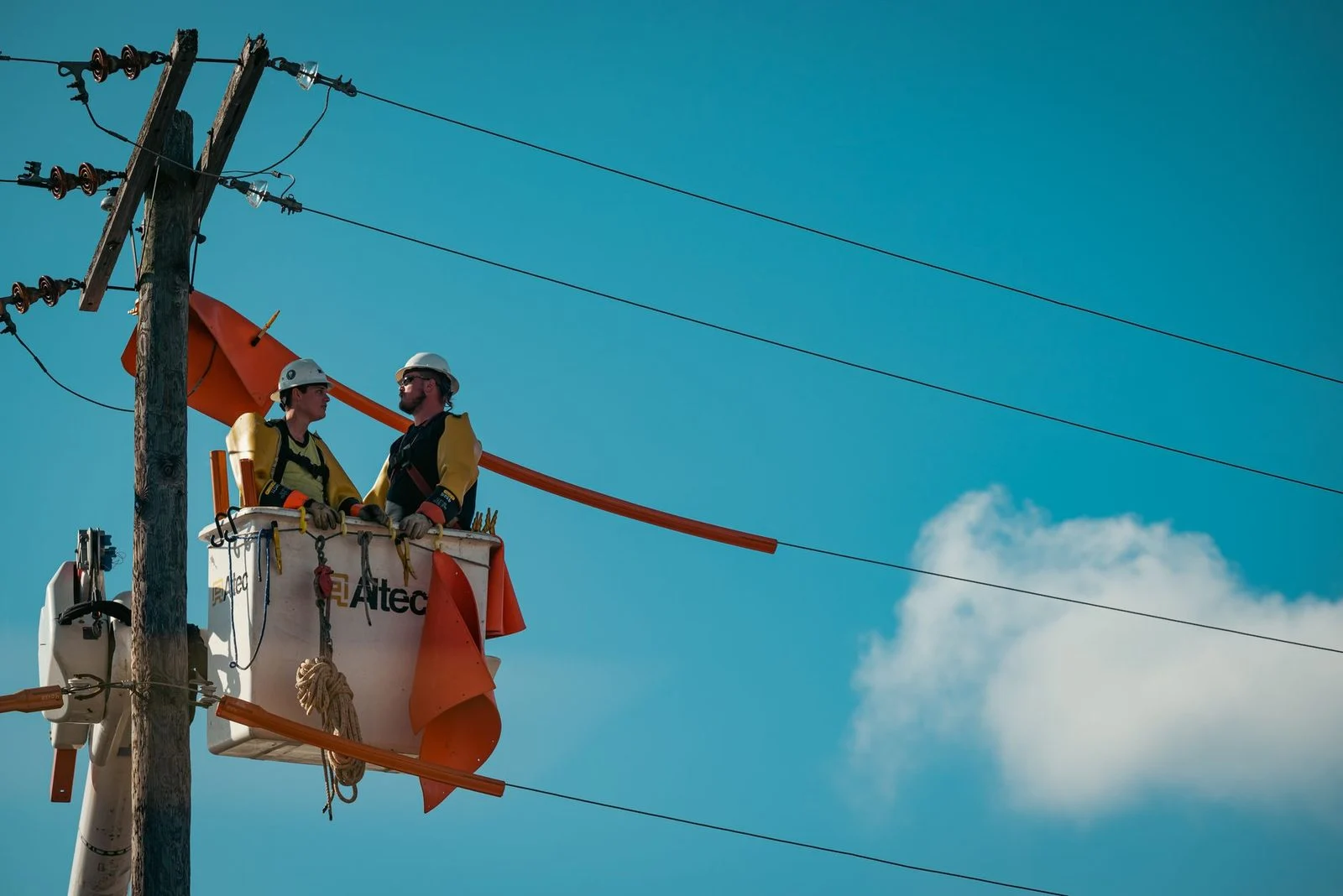
Electrocution at Work in Florida: Workers’ Compensation
Workers’ compensation is usually the main way to get benefits from your employer for a job injury.
Under Fla. Stat. § 440.11, the employer’s workers’ compensation liability is exclusive. In plain terms, this means it takes the place of most other liability to the employee. The statute lists some exceptions.
Each exception applies only when its conditions are met. Examples include:
- When an employer fails to secure payment of compensation.
- When an employer commits an intentional tort, the exception applies only when the employee proves, by clear and convincing evidence, that the employer deliberately intended to injure the employee or met the statute’s other conditions for an intentional tort.
One exception matters most here. If an employer fails to secure payment of compensation, the injured employee may choose to claim benefits or to sue for damages, under the same statute.
Filing a claim helps protect your benefits. Follow the instructions of the authorized treating doctors. Keep copies of every notice.
Workers’ comp covers your medical care and related benefits. It runs alongside any third-party claim.
Third-Party Claims: When Someone Other Than the Employer May Be Liable
A third-party claim is a lawsuit against an outside party. That party’s negligence may have helped cause the electrocution.
Possible parties include:
- An equipment maker
- A subcontractor
- A general contractor
- A maintenance company
- A property owner
Equipment claims. A products liability action is a lawsuit over a harmful product. It covers damages caused by the manufacture, design, formulation, installation, preparation, or assembly of a product. See Fla. Stat. § 768.81.
The state of the art means the scientific and technical knowledge available at the time of manufacture. It does not mean knowledge at the time of the loss or injury. See Fla. Stat. § 768.1257.
Lawsuits may allege that a cord, tool, or panel failed to protect users.
Site and property claims. Florida courts say businesses owe invitees a duty to keep premises reasonably safe. An invitee is a person invited onto the property.
Lawsuits may allege a site failed to:
- De-energize lines (turn off the electricity)
- Lock out equipment (block it from being turned on during work)
- Warn workers of hazards
Evidence that often matters includes:
- Incident reports
- Maintenance and inspection records
- Lockout and safety logs
- Equipment history
- Site photographs
How Workers’ Comp and Third-Party Claims Work Together
The two tracks run separately. But they affect each other.
Under Florida law, benefits paid under the Workers’ Compensation Law are not treated as a “collateral source.” A collateral source is money from another place, such as insurance, that may reduce a claim. See Fla. Stat. § 768.76.
Some other providers have a right to be repaid. They can seek payment from a recovery, but only if the claimant has recovered all or part of those collateral sources from the at-fault party, and then only up to the actual amount recovered, minus their pro rata share of costs and attorney’s fees. This happens after their share of costs and fees is taken out.
Fault is divided among the parties under Fla. Stat. § 768.81; Fla. Stat. § 768.76 instead requires the court to reduce an award by amounts paid for your benefit from collateral sources, with no reduction for collateral sources for which a subrogation or reimbursement right exists. In a negligence action, the court enters judgment against each party based on its percentage of fault under Fla. Stat. § 768.81; Fla. Stat. § 768.76 instead requires the court to reduce an award by amounts paid for your benefit from collateral sources, unless a subrogation or reimbursement right exists for them. In a negligence action, Fla. Stat. § 768.81 provides that the court enters judgment against each liable party based on that party’s percentage of fault, not on the doctrine of joint and several liability, but this section does not apply to any action brought by any person to recover actual economic damages resulting from pollution, to any action based upon an intentional tort, or to any cause of action as to which application of the doctrine of joint and several liability is specifically provided by chapter 403, chapter 498, chapter 517, chapter 542, or chapter 895. See Fla. Stat. § 768.81.
A defendant that wants to blame someone who is not a party to the case must formally plead that person’s fault. Unless there is good cause, the defendant must identify that person, if known. Otherwise, the defendant must describe that person as specifically as practicable.
That is why finding every responsible party early matters.
Florida Deadlines for Electrocution at Work Claims
Florida sets filing deadlines for negligence lawsuits. They can be shorter than many people expect.
Workers’ compensation and wrongful death claims raise their own timing questions. Check each track against the dates in your file. Deadlines apply to each track, and the dates depend on the facts.
Contact the firm promptly.
What to Expect: The Step-by-Step Process
Most cases move through the same clear steps. They run from medical care to final resolution.
- Get medical care. Keep every record, including discharge papers and follow-up instructions.
- Report the injury in writing. Tell your employer in writing. Keep a copy for yourself.
- Contact CHG Personal Injury Lawyers. The firm reviews the workers’ comp and third-party options together.
- Investigate. This can include requests for site and equipment records. It can also include a review of any agency reports.
- Negotiate or litigate. The firm pursues claims with the carrier and third-party insurers. It considers a lawsuit when a settlement is not appropriate.
- Resolve and handle liens. A lien is a legal claim on money owed to someone, such as a medical provider. Court approval may be needed in some wrongful death matters. The firm reviews these steps with you.
CHG charges no attorney’s fees and no case costs unless there is a recovery.
Not sure what your next step is?
Talk it through with our team — the first consultation is free, confidential, and carries no obligation.
Why Work With CHG Personal Injury Lawyers
CHG Personal Injury Lawyers is a Florida-based personal injury firm. It serves people throughout Florida, including Miami, Orlando, Tampa, and Jacksonville.
Igor Hernandez is the responsible lawyer for this page. Our attorneys are licensed and admitted to The Florida Bar.
Our team handles everyday and catastrophic injury cases. These include truck accidents, construction zone accidents, and wrongful death. The firm also publishes educational content in English and Spanish for families who prefer Spanish.
We explain your options in plain language. No lawyer can promise a particular result.
Frequently Asked Questions
Can I sue my employer for electrocution at work in Florida?
In most cases, suing your employer is not the usual route. Florida’s workers’ compensation system is the usual way to recover benefits for a work injury.
Under Florida Statutes § 440.11, an employer’s workers’ compensation liability is exclusive. The statute lists exceptions.
One exception applies when the employer fails to secure payment of compensation. Another applies when the employee proves, by clear and convincing evidence, that the employer engaged in conduct it knew, based on prior similar accidents or explicit warnings specifically identifying a known danger, was virtually certain to cause injury or death, and that the employee was not aware of the risk because the danger was not apparent. It must also have deliberately concealed or misrepresented the danger. Each exception has its own conditions.
Can I sue someone other than my employer?
Possibly. An equipment maker, contractor, or property owner may be a defendant. This is true if its negligence helped cause the shock.
What if I was partly at fault?
Florida generally reduces damages by your share of fault, but in an action against an employer that failed to secure workers’ compensation, the defendant may not plead that the injury was due to your comparative negligence. Under Fla. Stat. § 768.81, in a negligence action, fault chargeable to you reduces the amount awarded in proportion to your share, but if you are found more than 50 percent at fault for your own harm, you may not recover any damages, except in an action for personal injury or wrongful death arising out of medical negligence under chapter 766. It does not bar recovery by itself, subject to subsection (6) of the statute.
Contact the firm promptly so the dates can be reviewed.
What should a family do after a worker dies?
Keep all medical and funeral receipts and records. Florida’s Wrongful Death Act allows families to pursue these claims.
Under Fla. Stat. § 768.21, a surviving spouse may recover for loss of the decedent’s (the person who died) companionship and protection. A surviving spouse may also recover for mental pain and suffering. Minor children may recover for lost parental companionship, instruction, and guidance.
If a shock on the job has left you or someone you love facing these questions, you do not have to sort out workers’ comp, third-party claims, and deadlines alone.
Request a free, confidential first consultation with CHG Personal Injury Lawyers, with no obligation to continue, at our contact page.
How CHG Can Help After an Electrical Injury
Clear explanations
We explain, in plain language, how workers' compensation and third-party claims may apply to your situation.
Attention to the whole family
Electrical injuries can change work, income, and daily life. We listen to what matters most to you and your loved ones.
Respect for your recovery
We coordinate with the medical care you are receiving, and we encourage you to follow your doctors' guidance at every stage.
No fees unless there is a recovery
CHG charges no attorney's fees and no case costs unless there is a recovery.
Electrical Injuries Can Be Hidden
Electrical burns and nerve or heart effects may not be fully visible right away. Get medical evaluation promptly after any electrical contact at work, and keep records of every visit and every report you make.
Steps to Consider Right Now
Get medical care
Your health comes first. Follow the care plan your doctors recommend and keep copies of your medical records and bills.
Report the incident
Let your supervisor or employer know what happened, in writing if possible, and keep a copy of anything you sign.
Preserve evidence
Photos of the scene, equipment, warning signs, and witness names can help explain what happened.
Ask about all possible sources
Depending on the facts, a equipment maker, contractor, or property owner may also be involved. Our team can review your situation with you.