

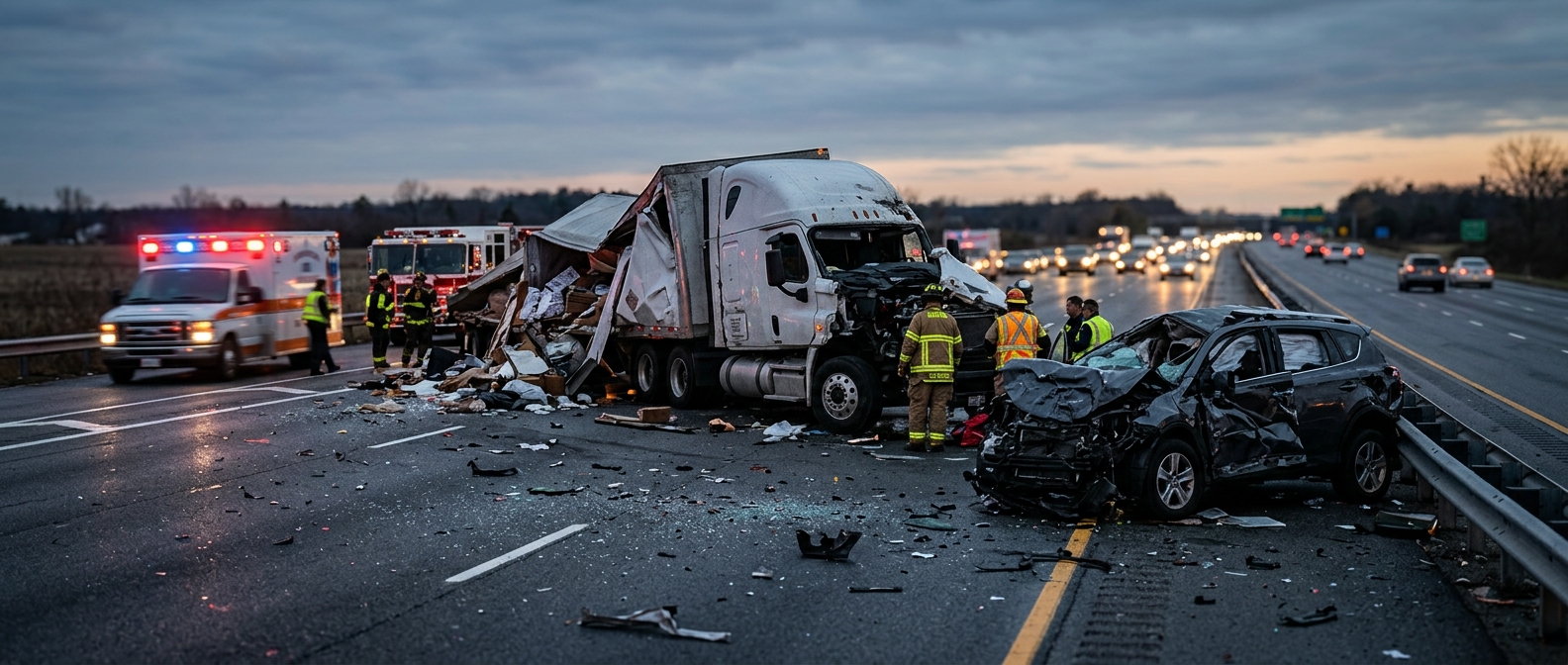
Truck Accidents · Florida & Nationwide
When a Truck Crash Changes Everything
The physics of a fully loaded semi are unforgiving. Learn how different truck crashes happen and why they so often leave victims with permanent, life-altering injuries — or take a life entirely.
Serious Injuries Are the Only Cases We Handle
Nationwide
Catastrophic-injury cases accepted across the U.S.
Bilingual
English & Spanish resources for families
Licensed
Florida Bar–admitted attorneys
By CHG Lawyers · Published August 03, 2026
Rollover, Jackknife & Underride Truck Crashes and the Injuries They Cause
Three kinds of truck crashes cause a large share of severe, life-changing harm. They are rollovers, jackknifes, and underride crashes. Each one puts the huge force of a big truck onto a much smaller vehicle — and onto the people inside.
That is why these crashes so often end in permanent injury or death. They rarely end in just a bruise and a repair bill.
The Federal Motor Carrier Safety Administration says a fully loaded tractor-trailer can weigh up to 80,000 pounds. That is about 20 to 30 times the weight of a normal car. At highway speed, a truck can take the length of about two football fields to stop (FMCSA). When something goes wrong, the smaller vehicle absorbs that huge difference in force.
This page explains how these three crashes happen. It also covers why they tend to cause spinal cord injuries, paralysis, brain injuries, amputation, severe burns, and deaths — and what a family can do next. It is educational, not legal advice. For a broader overview, see our pillar page on catastrophic truck accident injuries.
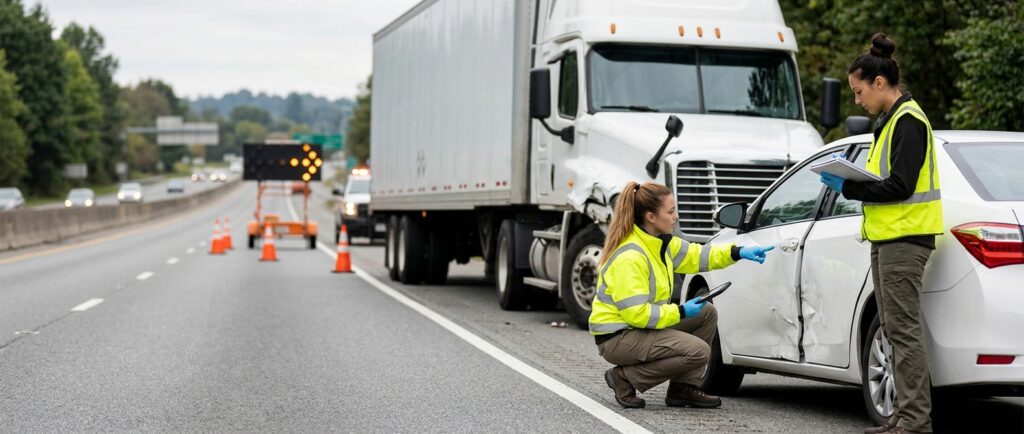
Not sure what your next step is?
Talk it through with our team — the first consultation is free, confidential, and carries no obligation.
Why some truck crashes cause catastrophic injuries
In a car-versus-car crash, both cars have crumple zones and airbags. These absorb energy before it reaches the body. A large truck overwhelms those systems.
Car crashes are among the top causes of spinal cord injury in the United States, according to the Mayo Clinic. A truck’s weight can turn a survivable crash into a catastrophic one.
Not every truck crash is catastrophic. But rollover, jackknife, and underride crashes defeat a car’s built-in protection in specific ways. In the cases our attorneys handle, these are the crash types that cause the deepest, longest-lasting harm.
Rollover truck crashes: how they happen and who gets hurt
A rollover happens when a truck tips onto its side or roof. Several things can start it. The truck may have a high center of gravity. The cargo may shift or be overloaded. A tire may blow out, or the driver may swerve hard. Once a loaded trailer starts to roll, it is very hard to stop.
People in nearby cars are hurt in a few ways. The trailer can fall on a car and crush it. It can strike a car and push it off the road. Or it can trap people inside a pinned cabin.
These crashes often cause spinal cord injuries and paralysis, traumatic brain injury (TBI), and crush injuries that lead to amputation. Some are fatal.
A rollover often traces back to how the cargo was loaded and secured, how the truck was maintained, and how it was driven. So the way the crash happened often points to who was at fault.
Jackknife truck crashes: when the trailer swings out
A jackknife happens when the trailer swings out and folds toward the cab at a sharp angle. It looks like a folding pocket knife — that is where the name comes from.
It usually starts with a braking or traction problem. Hard or improper braking locks the wheels. Slick roads, high speed, unbalanced or worn brakes, and skipped maintenance all raise the risk.
The danger comes from the sweep of the trailer. As it slides sideways, it can cross several lanes and hit many vehicles at once. It can force a car underneath it or pin a car against a barrier. Drivers often have no room to escape.
The injuries we see are severe. They include catastrophic back and neck injuries, TBI, and internal or crush injuries. A jackknife can also cause paralysis when the spinal cord is damaged. Learn more about spinal cord injuries and how they affect the body.
Underride truck crashes: the most severe configuration
An underride crash happens when a smaller vehicle slides under a truck’s trailer. It is often the most deadly type because the impact hits the passenger area directly.
Underride can happen in two ways. In a rear impact, a car hits the back of a trailer and slides under. In a side impact, a car hits the long side of a trailer. In both, the top of the car can shear off.
A normal crash uses the hood, bumper, and crumple zone to absorb energy. In an underride, the trailer skips all of that. It reaches the windshield and cabin — sometimes before the airbags can help.
Underride guards are meant to prevent this. Rear underride guards are strong bars that hang below the back of a trailer. Some trailers also use side guards. The Insurance Institute for Highway Safety has shown that stronger rear guards prevent more underride in higher-speed tests than older, weaker guards (IIHS). A key question after a crash is whether a guard was there, strong enough, and well maintained.
Because underride crashes hit the head and upper body, they often cause traumatic brain injury, severe head and neck trauma, and deaths. When a family loses someone, that is the most catastrophic outcome there is. We handle these cases with dignity. We focus on the family left behind and what they can do next, never on the graphic details.
Have questions about what happened?
Ask our team directly. The first conversation is free, confidential, and there is no obligation to continue.
Most common vs. most catastrophic: an important distinction
People often ask, what is the most common type of truck accident? The honest answer is not the three crashes above.
Rear-end collisions and blind-spot (“no-zone”) crashes are among the most common. They are driven by following too closely and by the large blind spots that run along both sides and behind the trailer (FMCSA). Wide right turns and tire blowouts add to the count.
Rollover, jackknife, and underride crashes are less common. But they cause permanent, life-altering harm at a much higher rate. That is the distinction that matters to a family. A crash type can be rare and still be the one that changes a life forever.
For the national picture, the National Highway Traffic Safety Administration publishes the Fatality Analysis Reporting System (FARS). This is a public record of every crash with a death on U.S. public roads. These datasets help investigators and safety experts understand how serious crashes happen. Behind each figure is a real person and a grieving family.
The catastrophic injuries these crashes cause
Rollover, jackknife, and underride crashes tend to cause the same group of permanent, life-altering injuries.
Spinal cord injuries and paralysis. Damage to the spinal cord can cause loss of movement and feeling below the injury, per the Mayo Clinic. A neck-level injury can cause quadriplegia (loss of function in the arms, trunk, and legs). A lower injury can cause paraplegia (loss of function in the legs and lower body). The National Spinal Cord Injury Statistical Center keeps the country’s largest SCI database. Doctors grade severity using the ASIA Impairment Scale — the grade you may see in your loved one’s chart as “ASIA A through E.”
Traumatic brain injury (TBI). A blow to the head can change memory, mood, speech, and the ability to work. The effects can last a lifetime.
Amputation and limb loss. Crushing and entrapment can damage a limb beyond repair. Sometimes surgeons have no choice but amputation.
Severe burns. When fuel catches fire after a crash, burns can be deep and disfiguring. Recovery often needs many surgeries and skin grafts.
Catastrophic back and neck injuries. These can cause chronic pain and permanent limits on movement.
Fatal outcomes. When someone dies, the surviving family may be able to bring a wrongful-death claim. This is a legal claim that helps the family recover for their loss. The Christopher & Dana Reeve Foundation estimates that about 5.4 million Americans live with some form of paralysis. Each number is a real person and family.
Who may be responsible when a truck crash happens
More than one party can share the blame. This can include the driver, the trucking company, the crew that loaded the cargo, the maintenance shop, and parts makers.
The crash type often points to the cause. A rollover may trace to improper loading. A jackknife may involve worn brakes or skipped maintenance. An underride may involve a missing or defective guard. Driver fatigue can be a factor in any of them.
Federal rules require carriers to keep records. Driver hours-of-service logs and electronic logging device (ELD) data are covered by 49 CFR Part 395. Inspection and maintenance records are covered by 49 CFR Part 396. This evidence can be overwritten or thrown away on a schedule. So acting early matters. Every case is different, and no lawyer can guarantee a result.
What families can do next
After a catastrophic truck crash or a death in the family, focus first on medical care and on getting through each day. A few practical steps can also protect your options:
- Keep records of the crash and all medical care. Save vehicle photos, the police/crash report, and hospital paperwork.
- If you can, do not let the vehicles be repaired or scrapped. They may hold key evidence about how the crash happened.
- Be careful about signing anything or giving recorded statements to an insurer before you know your rights.
In Florida, the general deadline to file a negligence-based injury lawsuit is two years for claims arising on or after March 24, 2023, under Fla. Stat. §95.11. Florida also follows modified comparative negligence. Under Fla. Stat. §768.81, a person found more than 50% at fault generally cannot recover damages.
A free case evaluation with a licensed attorney can help you understand your options — with no obligation. To learn more, read our page on catastrophic truck accident injuries or contact CHG Personal Injury Lawyers.
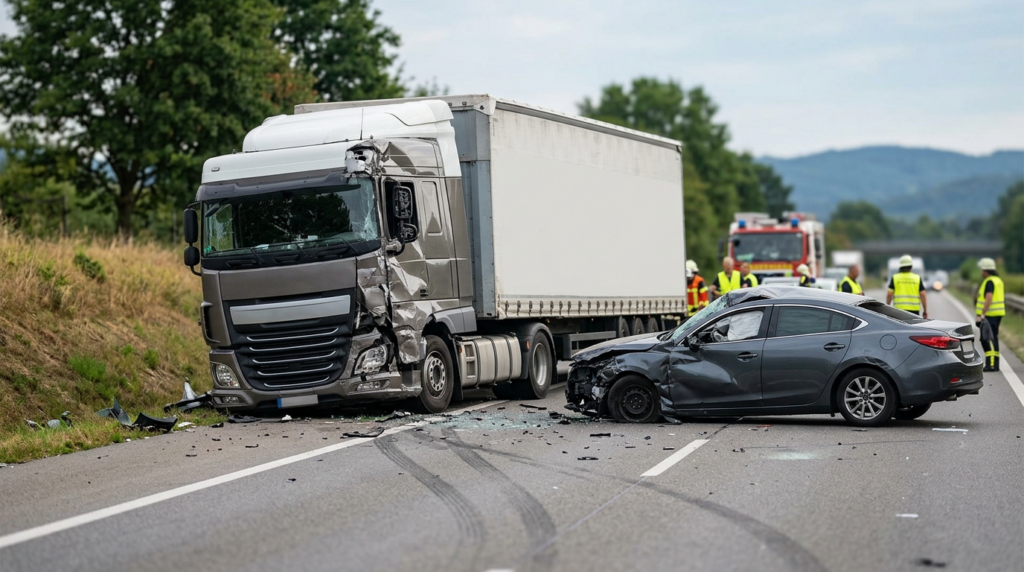
Want to know where you stand?
Tell us what happened and our team will walk you through the options available to you, at no cost.
Frequently asked questions
What is the most common type of truck accident?
Rear-end and blind-spot (“no-zone”) crashes are among the most common. Rollover, jackknife, and underride crashes are less common but cause a higher share of permanent, life-altering injuries.
Why are underride crashes so severe?
The car slides under the trailer. So the impact hits the passenger area directly and bypasses the car’s airbags and crumple zones.
Can a truck crash cause permanent paralysis?
Yes. Damage to the spinal cord can cause permanent paralysis — paraplegia or quadriplegia — depending on where the cord is injured. Doctors grade severity using the ASIA Impairment Scale.
How long do I have to file a truck accident claim in Florida?
The general deadline is two years for negligence claims arising on or after March 24, 2023, under Fla. Stat. §95.11. Confirm your specific deadline with an attorney.
What can a family do after a loved one is killed in a truck crash?
A surviving family may be able to bring a wrongful-death claim. Preserve the vehicles and records, keep medical and crash paperwork, and speak with a licensed attorney about your options.
Common Types of Truck Crashes
Rear-End & No-Zone Crashes
A loaded truck needs far more distance to stop, and its large blind spots ("no-zones") hide smaller vehicles. When a truck rear-ends a car or fails to see one beside it, the force can cause spinal cord and brain injuries.
Underride Crashes
A car slides beneath the trailer, so the impact hits the passenger compartment directly instead of the vehicle's crumple zones. These crashes cause a disproportionate share of fatal and catastrophic head and neck injuries.
Jackknife Crashes
The trailer swings out of line with the cab, sweeping across lanes. The truck can strike multiple vehicles at once, causing amputations, crush injuries, and severe trauma.
Rollover Crashes
A tall, heavy trailer can tip and roll, spilling cargo and crushing anything nearby. Rollovers are less common but frequently produce paralysis, traumatic brain injury, and death.
The Injuries These Crashes Leave Behind
Spinal Cord Injuries & Paralysis
Damage to the spinal cord can cause paraplegia or quadriplegia — permanent loss of movement and sensation that changes a family's life forever.
Traumatic Brain Injuries
Even with a helmet or airbag, the violent forces in a truck crash can cause TBI, affecting memory, speech, mobility, and the ability to work.
Amputation & Severe Burns
Crush trauma and fuel fires can lead to limb loss and severe burns requiring lifelong treatment and reconstructive care.
Fatal Crashes & Wrongful Death
A death is the most catastrophic outcome of all. Families who have lost a loved one may pursue a wrongful-death claim — and we approach these cases with dignity and care.
Evidence Disappears Fast After a Truck Crash
Trucking companies can move quickly to preserve their own interests — and critical evidence like electronic logs, dash-cam footage, and maintenance records may be lost or overwritten. If you or a loved one suffered a serious injury, it is important to speak with an attorney promptly.