

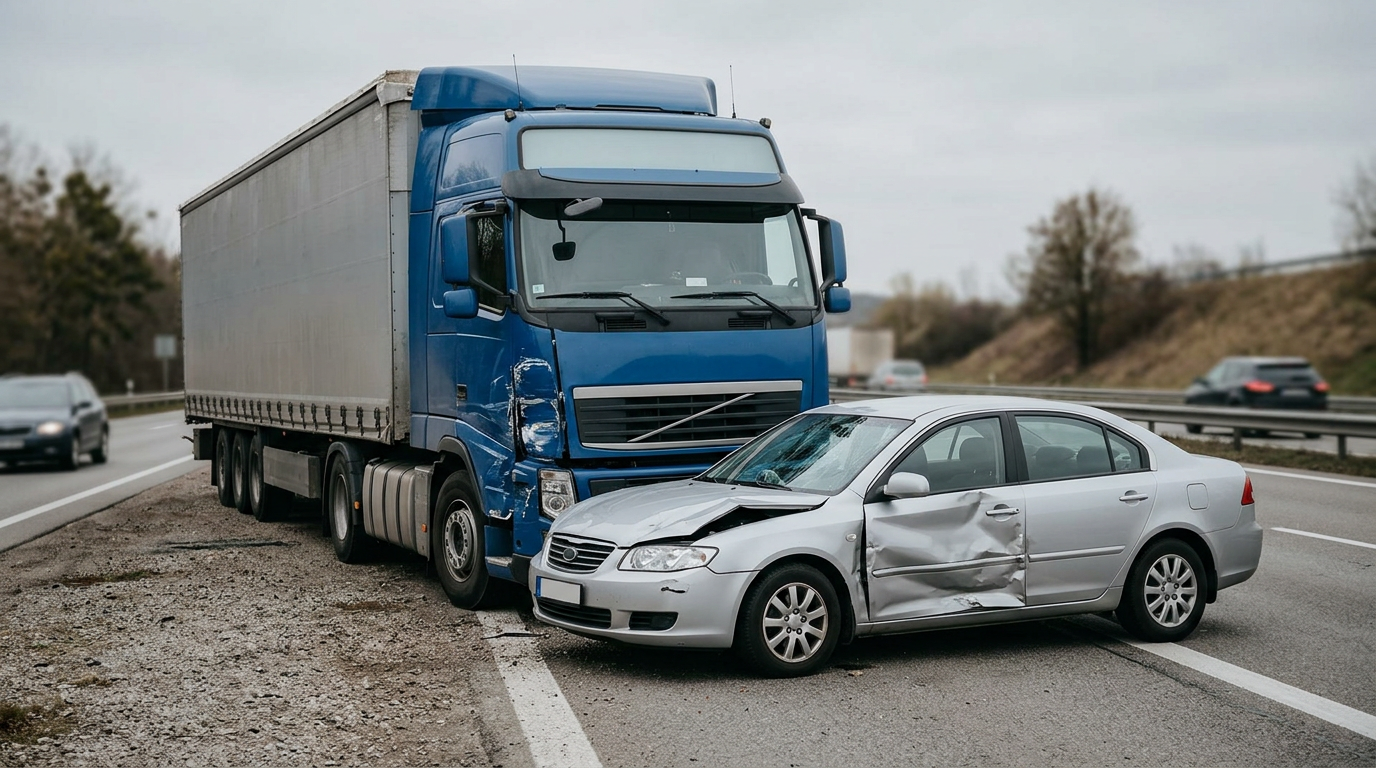
Truck Accidents · Severe Burn Injuries
Severe Burns From a Truck Crash Change Everything. You Don't Have to Face It Alone.
When a truck collision causes life-altering burns, the road to recovery is long and the costs are staggering. Learn what these injuries involve, who may be responsible, and how a claim can help your family move forward.
Why Families Turn to CHG Personal Injury Lawyers
Nationwide
Catastrophic-injury cases accepted across the U.S.
Florida
Florida Bar–admitted, licensed attorneys
Bilingual
English & Spanish client resources
Catastrophic
Focused only on serious, permanent injuries
By CHG Lawyers · Published August 03, 2026
Severe Burn Injuries From Truck Fires and Fuel Explosions
A severe burn from a truck crash is often catastrophic. The reason is simple. Large commercial trucks carry huge amounts of diesel. Tankers carry thousands of gallons of fuel or hazardous liquid. This fuel can catch fire in seconds. When a tank breaks open or dangerous cargo ignites, the flames, heat, and toxic smoke can cause deep, permanent burns. In the worst cases, they cause death.
If you or someone you love was badly burned in a truck crash, you are likely frightened and exhausted. This page explains a few things in plain language. It covers why these injuries happen. It explains how burn centers rate them. It describes what recovery involves. And it shows how a legal claim may work. Our focus is serious, life-altering burns — not minor ones. (Si prefiere leer esto en español, nuestro equipo puede ayudarle; ofrecemos apoyo en inglés y español.)

Not sure what your next step is?
Talk it through with our team — the first consultation is free, confidential, and carries no obligation.
Why truck crashes cause some of the most severe burn injuries
The fire risk starts with the amount of fuel. A typical tractor-trailer has two side tanks. Together they hold about 100 to 300 gallons of diesel. Cargo tankers can carry even more. Under U.S. DOT hazardous-materials rules, they may hold thousands of gallons of flammable liquid or compressed gas.
A high-speed crash can break open a side tank or a cargo tank. When that happens, a fire or explosion can start almost instantly. Some cargo — chemicals, gases, or other reactive loads — burns hotter and spreads faster than a normal car fire.
Then there is entrapment. This means a person is pinned in the wreckage and cannot escape. That leads to longer exposure to flame, heat, and hot smoke. This is a big reason truck-fire burns are so often permanent, not minor. These are among the hardest injuries a family will ever face. You do not have to sort through it alone.
How burn injuries happen in a truck fire or fuel explosion
Truck-crash burns come from several sources. Many survivors suffer more than one at once.
- Thermal burns — from direct flame and intense heat. This is the most common type in a truck fire.
- Chemical burns — from spilled diesel, battery acid, or hazardous cargo that damages skin on contact.
- Electrical burns — when downed power lines or the vehicle’s electrical system are involved.
- Inhalation injuries — damage to the airway and lungs from smoke, steam, and toxic fumes. These are often as dangerous as skin burns. They can be fatal even when the skin looks mostly spared.
- Blast or pressure injuries — when an explosion comes with the fire.
Severe burns rarely happen alone. In the catastrophic cases our attorneys handle, a person may face a deep burn and another serious injury. That could be a traumatic brain injury, a spinal cord injury, or an amputation from the same crash. When injuries happen together, the medical picture gets far more complex. A claim must plan for all of them, not just one.
Understanding the degrees of burn injuries (first through fourth degree)
Doctors rate burns by how deep they reach. The deeper the burn, the more severe and permanent the damage.
First-degree burns affect only the outer skin layer — like a mild sunburn. They are usually minor. They are not the focus of this page.
Second-degree burns reach deeper skin layers. They cause blisters and pain. Depending on their size and location, they can be serious.
Third-degree (full-thickness) burns destroy all layers of skin. “Full-thickness” means the burn goes through the whole skin. They often need skin grafts. They cause permanent scarring and loss of function. Third-degree burns are life-altering.
Fourth-degree burns are the most severe. They reach past the skin into muscle, tendon, and bone. They are often life-threatening and can lead to amputation.
Depth is not the whole story. Burn teams also look at other things. One is the total body surface area (TBSA) burned — how much of the body the burn covers. Another is location. Burns to the face, hands, feet, or airway are especially dangerous. They also weigh the patient’s age and overall health.
Widely used medical guidance says certain burns should go to a specialized burn center. These include deep partial-thickness or full-thickness burns. They also include burns to the face, hands, feet, or airway, and burns covering a large area. This page focuses on exactly those catastrophic burns — not minor ones.
Is a burn considered a traumatic injury?
Yes. A severe burn is a traumatic injury. It is often treated as catastrophic. Deep or widespread burns can cause massive fluid loss, shock, and organ stress. These can put a person’s life at risk within hours.
That is why severe burns often need emergency care, intensive care, and treatment at a burn center. Calling a burn catastrophic is not just a label. It reflects the scale of care needed right now. It also reflects the lifelong needs that may follow.
What treatment and recovery actually look like
Serious burn survivors usually face emergency stabilization first. Then comes a long road of surgeries, wound care, and rehab. This can stretch over months or years. Recovery from a deep burn is one of the most demanding journeys in medicine.
Treatment often includes:
- Emergency stabilization, fluid replacement, wound care, and infection control.
- Skin grafts and reconstructive surgeries — sometimes many procedures over years.
- Pain management through a long and difficult recovery.
- Physical and occupational therapy to fight scarring, tight scars (contractures), and lost range of motion.
- Mental-health support for the trauma that follows. This includes PTSD, anxiety, and depression.
Timelines vary widely from person to person. Some effects can be permanent. These include scarring, nerve damage, and lost function. We will not predict how any one person will heal. But knowing these facts helps you plan for the care ahead. It also shows why a claim must look at a lifetime, not just the first hospital bill.
Have questions about what happened?
Ask our team directly. The first conversation is free, confidential, and there is no obligation to continue.
How life-altering burns change daily life and future needs
Severe burns can permanently change how a person looks, moves, works, and lives. The impact reaches far beyond the hospital.
Common long-term effects include permanent scarring and disfigurement, and loss of function. The deepest injuries can cause amputation or limb loss. Many survivors can no longer work. Others cannot earn what they once did.
The costs add up over a lifetime. They include future surgeries, home changes, assistive devices, and in-home care. Family members often become caregivers. Household roles shift under real financial strain.
When a burn injury is fatal, the family may be able to bring a wrongful-death claim. A death is the most catastrophic outcome there is, and we treat it that way. In Florida, wrongful-death cases follow the Florida Wrongful Death Act, Fla. Stat. §§768.16–768.26. This law sets out who may recover and what losses the law recognizes. No claim undoes the loss. But it can help a grieving family cover the costs left behind. It can also hold responsible parties accountable.
Who may be responsible for burn injuries in a truck accident
Responsibility for a truck fire can reach well beyond the driver. That is why these cases need careful investigation. Parties who may share fault include:
- The trucking company that employed the driver or controlled the truck.
- The cargo loader or shipper — especially with poorly secured or mislabeled hazardous materials.
- A maintenance provider that failed to fix a known defect.
- A parts or vehicle maker if a defective fuel system or part helped cause the fire. This is a product-liability issue.
Broken safety rules can also matter. These are the Federal Motor Carrier Safety Regulations. They include hours-of-service limits that guard against driver fatigue. They also include rules for handling hazardous materials. Several insurers are often involved. That makes these claims complex. Learn more about who may be liable in a truck accident and federal trucking safety regulations.
Evidence that supports a severe burn injury claim
Strong burn claims rest on evidence from the truck, the scene, and the medical record. Much of this can disappear fast. Key evidence often includes:
- The truck’s electronic control module (“black box”) data. See truck black box evidence.
- Maintenance and inspection records for the truck and its fuel system.
- A fire cause-and-origin investigation and fuel-system inspection.
- Cargo manifests and hazardous-materials (hazmat) documents.
- Medical records showing burn depth, TBSA, treatment, and outlook.
- Photographs, scene evidence, and expert analysis.
A damaged truck can be repaired or scrapped. Electronic data can be written over within days. That is why it helps to involve an attorney early. A preservation demand can then go out before the proof is gone.
Compensation after a severe burn injury from a truck crash — how it is really determined
People understandably want to know, “How much is my case worth?” The honest answer is that no lawyer can give you a number up front. Be careful of anyone who promises one. Compensation depends on how severe and permanent the injury is. It also depends on the specific facts of your life. What we can explain is how the categories work.
Injured people generally may seek these types of damages:
- Past and future medical care — surgeries, grafts, therapy, and long-term treatment.
- Lost wages and lost earning capacity.
- Pain and suffering.
- Disfigurement and scarring.
- Reduced quality of life.
Several factors affect these categories. They include the burn’s depth and TBSA. They include the number of future surgeries expected. They include whether the person can return to work. They also include the strength of the liability evidence and the available insurance coverage.
Deadlines to file vary by state. In Florida, most negligence claims that arose on or after March 24, 2023 must be filed within two years. This is set by Fla. Stat. §95.11. Florida also follows a modified comparative-negligence rule. Under this rule, a person found more than 50% at fault generally recovers nothing. See Fla. Stat. §768.81. These rules differ by state, so do not wait to get guidance.
Want to know where you stand?
Tell us what happened and our team will walk you through the options available to you, at no cost.
Frequently asked questions
Can I make a claim for a minor burn from a truck crash?
Our firm and this page focus on severe, life-altering burns. These are third- and fourth-degree burns, large-TBSA burns, or airway burns. Minor burns are generally not catastrophic claims.
How long do I have to file a burn injury claim after a truck accident?
Deadlines vary by state. Florida generally allows two years for most negligence claims under Fla. Stat. §95.11. Speak with an attorney promptly so you do not miss your deadline.
Do I have a case if the fire started after the crash?
Yes. A fire or explosion set off by the collision can be part of your claim. The burns are still tied to the crash and to the parties responsible for it.
What if my loved one died from their burn injuries?
Families may be able to bring a wrongful-death claim under the Florida Wrongful Death Act. It lets them seek accountability and help with the losses they have suffered. We handle these cases with care and privacy.
Talk with a catastrophic injury attorney about your burn injury
If you or a family member suffered a severe burn in a truck accident, you deserve clear answers and steady support. CHG Personal Injury Lawyers represents victims of catastrophic truck-crash injuries nationwide. We are Florida-based, licensed attorneys. We offer support in both English and Spanish.
Learn more about truck accident injuries and catastrophic injury claims. When you are ready, request a free case evaluation. There is no pressure — just a conversation about what happened and what you can do next.
What Makes a Truck-Crash Burn Catastrophic
Deep Burns (Third- & Fourth-Degree)
Burns that destroy the full thickness of skin — and sometimes muscle, tendon, or bone beneath — often require surgery, grafting, and lifelong care.
Large-Surface Burns
Burns covering a significant portion of the body (large total body surface area) can be life-threatening and demand extended hospitalization.
Airway & Inhalation Burns
Diesel fires and explosions can burn the airway and lungs, creating hidden, serious complications that may not appear right away.
Permanent Impact
Scarring, disfigurement, amputation, chronic pain, and emotional trauma can affect a survivor and their loved ones for a lifetime.
Important: Deadlines Apply
Every state sets a legal deadline (a statute of limitations) for filing an injury claim, and it varies by location and circumstance. Waiting can make evidence harder to preserve. If you're unsure how much time you have, ask a licensed attorney as soon as possible.
How a Truck Fire Causes Severe Burns
Fuel & Cargo Fires
Commercial trucks carry large diesel tanks and sometimes flammable or hazardous cargo. A crash can rupture these and ignite intense, fast-moving fires.
Electrical & Chemical Sources
Damaged wiring, spilled chemicals, and hazardous materials can cause burns from heat, flame, or corrosive exposure at the scene.
Who May Be Responsible
Depending on the facts, the truck driver, trucking company, cargo loader, maintenance provider, or a parts manufacturer may share responsibility.
Damages a Claim Can Cover
Surgeries and grafting, long-term care, lost income, disfigurement, pain and suffering, and — in the most tragic cases — a family's wrongful-death claim.