


Truck Accidents · Florida & Nationwide
The Truth About Your Crash May Be Recorded Inside the Truck
After a catastrophic truck crash, a commercial truck's electronic 'black box' can capture speed, braking, and hours of driving before impact. That data can be critical to proving what happened — but only if it's preserved before it's lost.
By CHG Lawyers · Published August 06, 2026
Truck Black Box Data Evidence: How It Proves Your Injury Claim
A truck’s “black box” is the electronic data a commercial truck records before, during, and after a crash. It captures speed, braking, throttle, and how long the driver was behind the wheel. This truck black box data is often the most objective account of what really happened. It can also be erased or destroyed within days. So acting quickly is not optional.
Were you badly hurt in a truck crash? Maybe a spinal cord injury, a traumatic brain injury (a serious brain injury), an amputation, or a severe burn. Or maybe you are grieving someone who did not survive. Either way, you deserve the truth about how it happened.
No eyewitness saw the final three seconds. The truck’s own computers did. Below, in plain language, is what that data is. We explain how it proves fault, how accurate it is, whether it survives a crash, and how a family saves it before it disappears.
Not sure what your next step is?
Talk it through with our team — the first consultation is free, confidential, and carries no obligation.
What is a truck’s black box?
A truck’s “black box” is a nickname, not one single device. An airplane’s recorder is built to survive a crash. A truck is different. Its data lives across several onboard computers. Each one records a different slice of the same event:
- Engine Control Module (ECM) — the engine’s brain. It captures speed, RPM, throttle, and braking.
- Event Data Recorder (EDR) — it logs the seconds around hard braking or a crash.
- GPS / telematics — location, route, and speed over time.
- Electronic Logging Device (ELD) — federally required under 49 CFR §395.8. It records how long the driver was on duty.
These systems overlap, so they can back each other up. Say the GPS speed, the ECM data, and the skid marks all point to the same fact. That fact becomes very hard for a trucking company to argue with. This is true in an injury claim or in a wrongful-death claim brought by a family.
For the larger picture, see our catastrophic truck accident guide.
Can truck black box data evidence prove who is at fault?
Yes. A truck’s black box can help prove fault. But it rarely does so alone. It gives objective data that can flatly contradict the driver’s story.
Suppose a driver says, “I was at the speed limit and braked right away.” The ECM may show the truck was going well over the limit. It may also show the brakes were never used. Hard data beats a self-serving memory.
Still, no single piece of evidence usually wins a case. Attorneys combine black box data with the crash report, physical evidence, witness statements, and the Federal Motor Carrier Safety Regulations. Together, they build the full picture.
In Florida this matters even more. The state follows a modified comparative-negligence rule under Fla. Stat. §768.81. This means a person found more than 50% at fault generally recovers nothing. Objective data that puts fault on the truck driver can be the difference between a recovery and none at all.
What information can truck black box data reveal?
Each data point tells part of the story of how the driver ran the truck:
- Vehicle speed in the seconds before impact — this shows whether the truck was speeding.
- Braking activity — whether and when the brakes were used. Late braking, or none at all, can point to distraction or fatigue.
- Throttle and acceleration — how hard the driver was pushing.
- Steering input and sudden moves — a swerve or an overcorrection.
- Engine RPM, cruise-control status, and seatbelt use.
- Hours-of-service data from the ELD. This can expose fatigue when matched against the driver’s logs and the carrier’s dispatch records.
Federal rules limit driving time. In general, there is an 11-hour driving limit within a 14-hour window under 49 CFR §395.3. When the data shows a driver went over those limits, that violation can help prove the trucking company was negligent — not just the driver.
Have questions about what happened?
Ask our team directly. The first conversation is free, confidential, and there is no obligation to continue.
How accurate is a truck’s black box — and is it crash-proof?
Truck black box data is generally seen as highly reliable. Courts across the country accept it as evidence. But it is not indestructible.
Accuracy depends on how the data is pulled. Downloading an ECM takes qualified technicians using the maker’s own tools and software. Raw numbers mean little without proper reading. Done right, the readout is objective and repeatable.
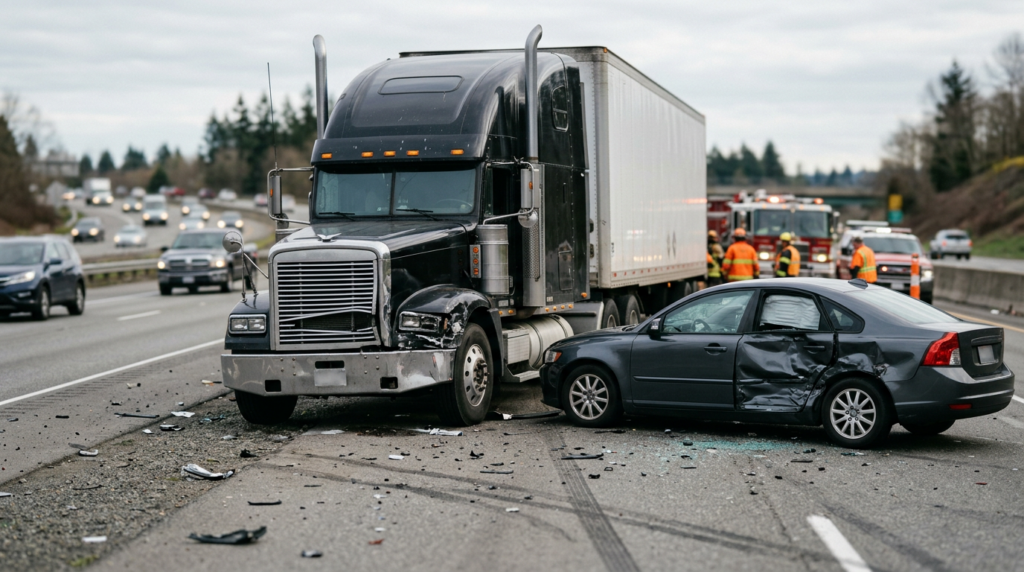
Is it crash-proof? No. Aviation recorders are built to survive extreme heat and impact. A truck’s systems are not. A severe crash, a fire after the crash, or heavy damage to the engine and wiring can corrupt or erase the data completely. That fragility is exactly why saving it cannot wait. This brings us to the biggest risk families face.
Why black box data can disappear fast
Truck data can vanish within days or weeks of a crash. Several ordinary events erase it:
- The truck is repaired and put back on the road.
- The electrical system is turned off and on.
- Newer trips overwrite the older crash data on systems that only record a limited window.
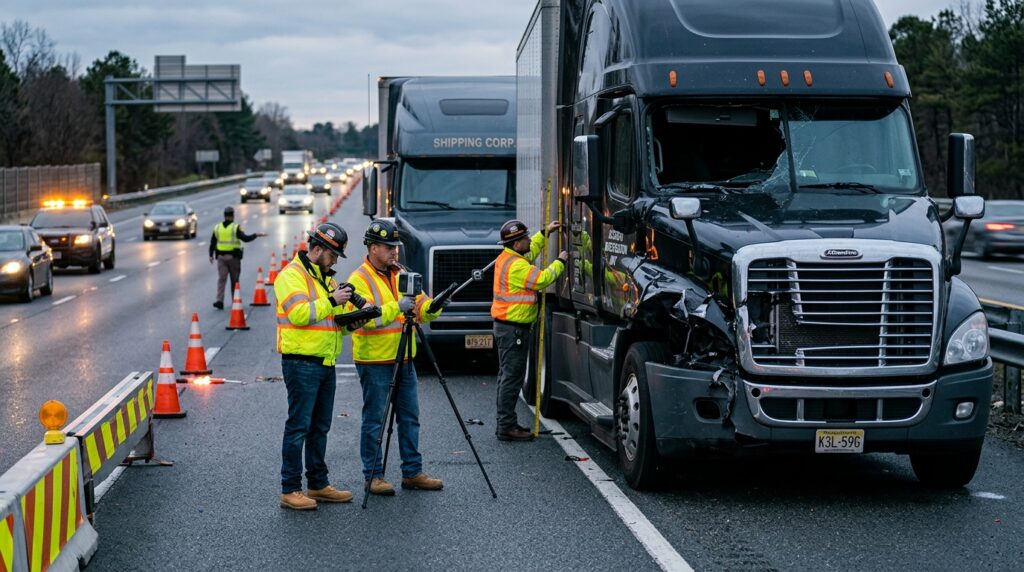
Here is the hard part: the trucking company controls the truck. It does not have to save the data on its own. And its interests may not match your family’s. Unless someone steps in to protect that evidence, no one is guarding it for you.
Preserving the evidence: the spoliation letter, step by step
The main tool for protecting black box data is a spoliation letter. This is a formal written notice. It tells the trucking company, in clear terms, not to destroy or change the evidence. (“Spoliation” simply means the loss or destruction of evidence.)
A good preservation letter does more than say “keep the truck.” In our catastrophic cases, it usually names each thing that must be saved:
- The truck itself, in its post-crash condition, with no repairs.
- The ECM, EDR, and telematics data, without powering the systems up or resetting them.
- The ELD records and paper logs covering the days before the crash.
- Dispatch records, bills of lading, and maintenance history.
- The driver’s qualification and drug-testing file.
It also demands notice before any inspection or download. That way, an expert can be present.
Why does this letter carry weight? In Florida, a party may destroy evidence it had a duty to keep. When that happens, courts can impose consequences. In the right case, that includes an adverse-inference instruction. This lets the jury decide the missing evidence would have been bad for the party that lost it. That risk gives the letter teeth.
This is not a scare tactic. It is standard, responsible preparation. No lawyer can promise what any piece of evidence will show. A lawyer can only ask that it be saved, so the truth is knowable.
This is why the clock matters twice over. Florida’s general deadline to file a personal-injury lawsuit is two years under Fla. Stat. §95.11 (changed from four years for negligence claims that begin on or after March 24, 2023). But black box data can disappear long before that deadline. Sometimes it goes in the first week. Saving evidence early is what protects your ability to use that filing window.
How a truck accident lawyer secures and uses the data
Securing black box data is the firm’s job, not the injured family’s. The usual steps:
- Send the spoliation letter right away — often within days of being hired.
- Seek a court order if the carrier will not cooperate.
- Inspect the vehicle with the right experts present.
- Professionally download the data using proper tools.
- Have accident-reconstruction experts read it and turn the numbers into a clear account of what happened.
That data does two jobs. It helps prove the driver or carrier was negligent. And it helps show how the crash caused life-altering harm — a spinal cord injury, a traumatic brain injury, an amputation, a severe burn, or a death.
Motor-vehicle crashes are a leading cause of spinal cord injuries. These often bring permanent changes in strength and feeling, according to the Mayo Clinic. Doctors grade how severe an injury is using tools like the ASIA Impairment Scale. The National Spinal Cord Injury Statistical Center tracks how common they are. For fatal crashes, the NHTSA Fatality Analysis Reporting System (FARS) is the authoritative public dataset. Strong evidence of both fault and severity is what supports a full, fair claim.
Want to know where you stand?
Tell us what happened and our team will walk you through the options available to you, at no cost.
Talk to a truck accident attorney about your claim
Are you facing a permanent injury? Or did you lose someone you love? You should not have to sort through this alone. We understand how heavy this moment is. We also know how confusing the legal side can feel.
CHG Personal Injury Lawyers offers a free, confidential case evaluation. We are a Florida-based firm that handles catastrophic cases nationwide. We serve clients in English and Spanish — también en español.
Truck black box data can disappear fast. So reaching out sooner rather than later gives your claim the best chance to protect the truth. Contact us for a free case evaluation.
Frequently asked questions
Can a truck’s black box prove who was at fault?
It can strongly support fault by showing objective data like speed and braking. But it is usually combined with the crash report, witnesses, and physical evidence to prove a case.
How accurate is truck black box data?
It is generally seen as highly reliable and is accepted as evidence. This holds as long as qualified experts download and read it correctly.
Is a truck’s black box crash-proof?
No. Unlike an airplane’s recorder, a truck’s systems are not built to survive extreme damage. A severe crash or fire can destroy the data.
How fast can truck black box data be lost?
It can be overwritten or lost within days or weeks. This is even more likely if the truck is repaired or returned to service. That is why fast preservation matters.
What is a spoliation letter?
It is a formal notice from your attorney. It tells the trucking company to preserve the truck, its data, and related records. This keeps evidence from being destroyed before your claim moves forward.
Black Box Data Can Disappear — Act Quickly
Truck electronic control modules can be overwritten, reset, or lost when a truck is repaired or put back into service. Trucking companies are not required to preserve this evidence for you. A prompt legal request — sometimes called a spoliation or preservation letter — may be the only way to protect it.
What a Truck's Black Box Can Reveal
Speed at Impact
Electronic data can show how fast the truck was traveling in the seconds before a catastrophic crash.
Braking and Steering
Records may show whether — and how hard — the driver braked or tried to avoid the collision.
Hours of Service
Electronic logs can indicate whether a fatigued driver had been on the road too long.
Objective Evidence
Unlike memory or testimony, this data is a neutral record that supports the physical evidence of the crash.
Common Questions About Black Box Evidence
Can a black box prove who was at fault?
It can strongly support a fault finding by showing objective data like speed and braking. It is usually combined with the crash report, witness accounts, and physical evidence to build the full picture of a case.
How reliable is the data?
Black box data is generally considered highly reliable and is widely accepted as evidence, so long as it is properly downloaded and interpreted by qualified professionals.
How is the data retrieved?
Downloading the data requires specialized equipment and expertise. Because the evidence can be altered or lost, it should be preserved and retrieved as early as possible after a crash.
What if a loved one did not survive?
When a crash is fatal, this same data can help a grieving family understand what happened and pursue a wrongful-death claim. We handle these cases with care and dignity.
Injured in a truck crash? Let us help preserve the evidence and pursue your claim.
Related practice areas
- Catastrophic Truck Accident Injuries: A Guide for Victims and Families
- How Truck Accident Compensation Works for Permanent Injuries
- Understanding Truck Insurance and Why Serious-Injury Claims Are Fought Hard
- Federal Trucking Regulations and How Violations Prove Negligence
- What Evidence Do You Need After a Catastrophic Truck Crash?
- How Much Is a Catastrophic Truck Accident Claim Worth in Florida?