

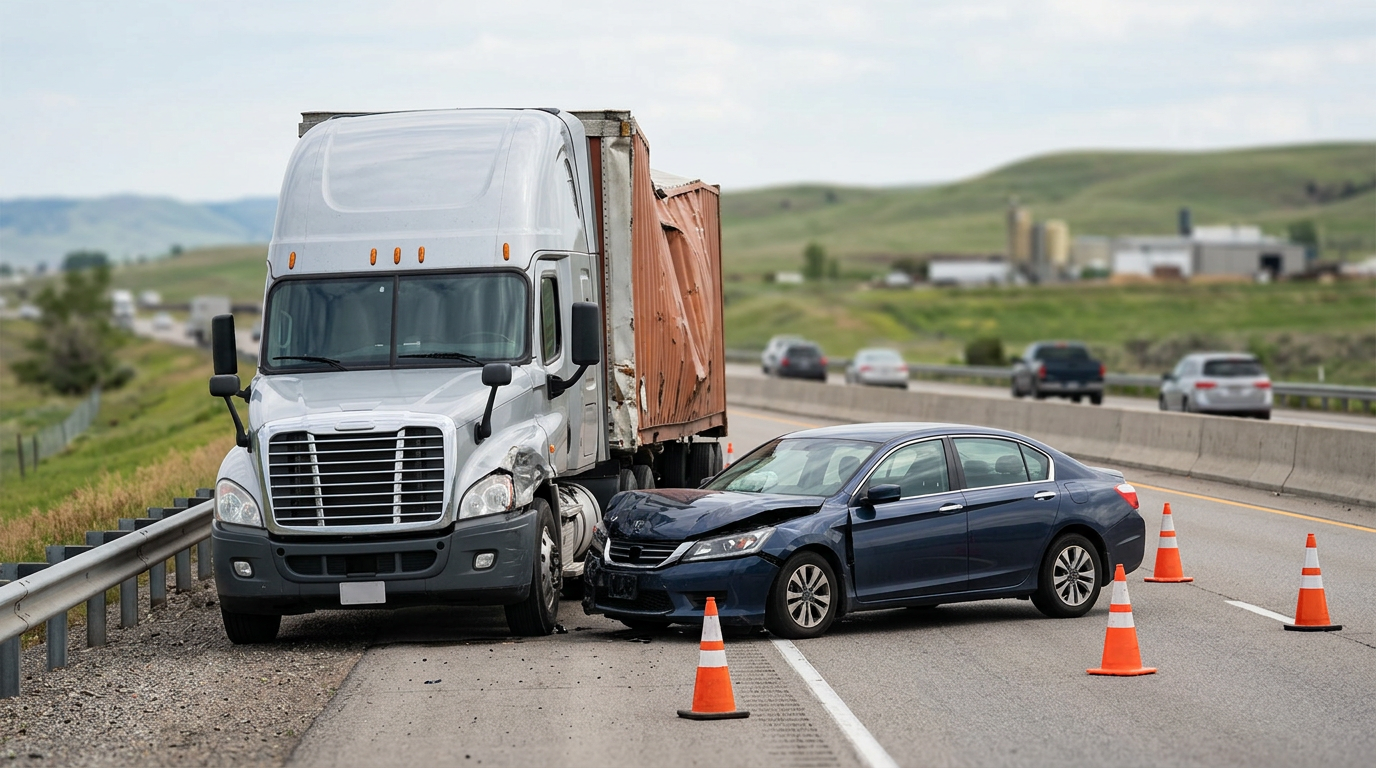
Truck Accidents · Evidence Preservation
The Black Box Data That Could Prove Your Truck Crash Case Can Vanish in Days
After a catastrophic truck crash, critical evidence — electronic logs, black box data, dashcam footage — can be overwritten or destroyed on routine schedules. A spoliation letter demands the trucking company preserve it. Here is why it matters and how it works.
Serious Injury Advocacy You Can Rely On
Nationwide
Catastrophic injury cases accepted
Florida Bar
Licensed, admitted attorneys
EN / ES
Bilingual client resources
24/7
Free case evaluations
By CHG Lawyers · Published August 05, 2026
Spoliation Letter After a Truck Crash: Stop Evidence From Disappearing
A truck crash can leave someone you love paralyzed, brain-injured, or gone. In the days after, no one hands you a checklist. You are in an ICU waiting room, or planning a funeral.
Meanwhile, the proof of what really happened is disappearing. The trucking company may be deleting it, repairing it away, or scrapping it. Often, this is quiet and even legal.
That is the problem this page is about. There is a legal term for evidence being lost or destroyed: spoliation. And there is a letter that can stop it. It is called a spoliation letter. This is a formal written demand. It tells the trucking company to preserve the crash evidence, not destroy it.
You don’t need to memorize the term. You just need to know what can disappear, and how fast.
Not sure what your next step is?
Talk it through with our team — the first consultation is free, confidential, and carries no obligation.
Why the evidence you need is not in your hands
Here is the hard part. After a truck crash, the most important evidence usually belongs to the trucking company, not your family. They control the truck, its onboard computers, and its paperwork. The proof of who was at fault sits inside someone else’s business.
Much of it is built to overwrite itself:
- Electronic control module (ECM), or “black box,” data. This records speed, braking, throttle, and engine activity in the seconds before impact.
- Electronic logging device (ELD) records. These track a driver’s hours. Since December 2017, the FMCSA’s ELD mandate has required most commercial drivers to log driving time electronically. Under 49 C.F.R. §395.8(k), carriers must keep those supporting documents for only six months.
- Dashcam and telematics footage. These often run on short loops and record over themselves.
- GPS logs. These show the route, stops, and speed.
- Dispatch records. These show what the company told the driver to do, and when.
- Maintenance and inspection files. These show whether brakes, tires, or other parts were neglected.
Federal rules set minimum time limits for keeping records. Several are short. Routine “safety records” retention under 49 C.F.R. §379 and the six-month ELD window are examples. A company can legally throw records away before your family even knows they exist. That is true unless someone demands they be kept.
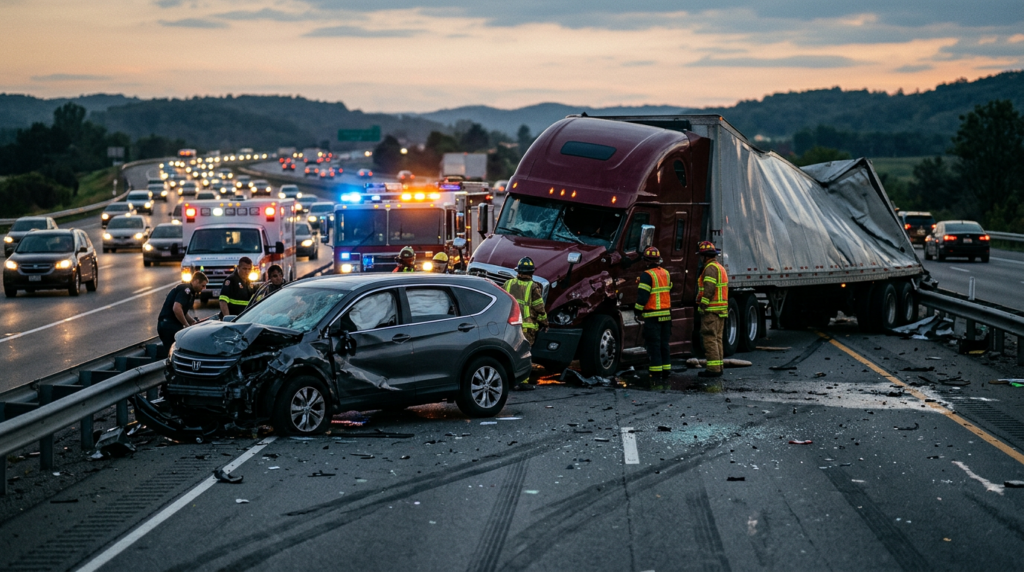
The wrecked truck itself is also at risk. It can be repaired, sold, or scrapped within days. Once it is gone, so is the physical proof of a brake failure, a bald tire, or an overloaded trailer.
What a spoliation letter actually does
A spoliation letter is a formal written notice. It demands that a person or company keep specific evidence intact. An attorney usually sends it. It goes to the trucking company, the driver, the insurer, and any other party that controls key evidence.
A well-written letter asks that these be preserved:
- The truck and all of its parts, exactly as they are.
- All electronic data — ECM/black box, ELD records, telematics, and GPS.
- Driver hours-of-service and duty-status logs.
- Maintenance and inspection history.
- Dispatch messages and communications.
Here is the legal weight behind it. Once a company is formally on notice to preserve evidence, destroying it anyway can carry consequences in court. A judge may let the jury be told that the company got rid of proof. A judge may also impose other penalties. No one can promise how a court will respond. But a timely letter removes the “we didn’t know” defense. It puts the duty in writing, on a date the company cannot dispute.
Why speed matters — honestly stated
Timing decides what survives. The letter should go out as soon as possible. Ideally, that means within days of the crash. That is before automatic deletion cycles run, and before the truck is repaired or sold.
We want to be clear here, because trucking companies move fast. Injured families should understand why: acting quickly won’t guarantee any outcome, but it gives your case its best chance of being built on complete, first-hand facts. Waiting does the opposite. A letter sent after the ELD’s six-month window has closed cannot bring back data that no longer exists.
Some families are dealing with a spinal cord injury, a traumatic brain injury, an amputation, severe burns, or a wrongful death. They are rarely able to chase down a carrier’s servers. You are focused on survival, surgery, and grief. That is exactly why the demand usually comes from an attorney, early — while the evidence is still there to preserve.
Have questions about what happened?
Ask our team directly. The first conversation is free, confidential, and there is no obligation to continue.
What can go wrong without a timely demand
Data gets overwritten. ECM and telematics systems record over old data in normal use. The numbers showing the truck’s speed at impact can simply be gone.
The truck gets repaired or scrapped. You can no longer inspect it for brake failure, tire defects, or bad loading.
Logs go missing. Without hours-of-service and dispatch records, it is much harder to show a driver was tired or pushed past legal limits.
Why does losing this proof hit so hard in Florida? The state follows a modified comparative-negligence rule. This means fault is shared based on who caused the crash. Under Fla. Stat. §768.81 — as amended in 2023 — a person found more than 50% at fault generally recovers nothing. So the evidence proving the company’s fault is not a technicality. It directly protects your family’s ability to recover anything at all.
The stakes are permanent. As the Mayo Clinic explains, a spinal cord injury can cause lifelong loss of movement and feeling. The Christopher & Dana Reeve Foundation reports that roughly 5.4 million Americans live with some form of paralysis. Proving fault is often what funds the decades of care these injuries require.
What families can do right now
This is practical help, not legal advice. Here are a few steps you can take while a lawyer handles the rest:
- Keep the crash report and any paperwork from the scene or hospital.
- Save photos and videos of the vehicles, the scene, and visible injuries.
- Write down witness names and phone numbers while memories are fresh.
- Keep all medical records and bills tied to the injury.
One caution deserves its own line: do not sign anything or give a recorded statement to the trucking company’s insurer before you get advice. Those statements are often used to shift blame onto the injured person later.
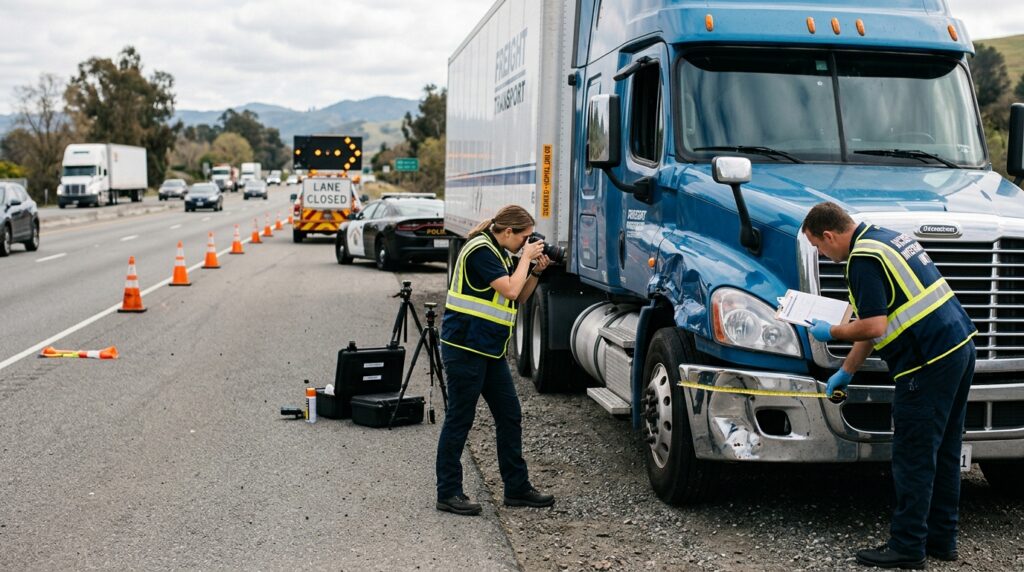
A lawyer can send a spoliation letter and start an investigation quickly for your family. That means locating the truck, demanding the data, and preserving the proof before it is gone.
The clock is also running on your right to file. Under Fla. Stat. §95.11, most Florida negligence claims must generally be filed within two years of the injury. That deadline is separate from — and much longer than — how fast evidence disappears. That is why waiting is risky on both fronts.
CHG Personal Injury Lawyers are licensed Florida attorneys. We handle catastrophic truck-crash and wrongful-death cases nationwide. We offer a free, confidential case evaluation in English and Spanish. Because evidence can be lost so quickly, please contact us promptly.
Related reading
- Catastrophic truck accident injuries: an overview
- Spinal cord injuries and paralysis
- Traumatic brain injuries after a crash
Want to know where you stand?
Tell us what happened and our team will walk you through the options available to you, at no cost.
Frequently asked questions
What is a spoliation letter in a truck accident case?
It is a formal written demand. It tells a trucking company and others to preserve crash evidence — such as black box data and driver logs — instead of letting it be destroyed on routine schedules.
How long does a trucking company have to keep black box and log data?
It varies. Under federal rules, ELD supporting documents must be kept for only six months. Telematics or dashcam footage can be overwritten within days unless a preservation demand is sent first.
Can a trucking company legally destroy evidence after a crash?
Often, yes — until they receive a spoliation letter putting them on notice. After that, destroying it can carry consequences in a lawsuit.
Who sends a preservation letter and who receives it?
An attorney usually sends it. It goes to the trucking company, the driver, the insurer, and any other party controlling key evidence.
Should I give a recorded statement to the trucking company’s insurer?
No. Don’t give a recorded statement or sign anything before speaking with a lawyer. Those statements can be used to reduce or deny your claim.
Time-Sensitive Warning
Trucking companies are not required to hold evidence forever. Some records — including certain electronic logging data and camera footage — cycle out or are overwritten on routine schedules within days or weeks of a crash. The sooner a preservation demand goes out, the better the chance key evidence survives.
Evidence a Spoliation Letter Can Help Protect
Black Box / ECM Data
The truck's engine control module can record speed, braking, and throttle in the moments before a crash — details that may show how the collision happened.
Driver Logs & ELD Records
Electronic logging device data can reveal hours behind the wheel and possible fatigue or hours-of-service violations.
Dashcam & Camera Footage
In-cab and forward-facing cameras may capture what led to the crash. This footage is often on a limited retention cycle.
Maintenance & Inspection Files
Repair records, inspection reports, and driver qualification files can point to a mechanical failure or a driver who should not have been on the road.
How a Preservation Demand Works
A Formal Written Demand
A spoliation letter is a formal notice to the trucking company — and sometimes others, like a leasing firm — to preserve crash evidence rather than destroy it.
Sent Quickly
Because some data overwrites on routine schedules, an attorney typically works to send a preservation demand as early as possible after the crash.
Creates Accountability
Once a company is on notice, destroying relevant evidence anyway can carry legal consequences — which encourages preservation.
Protects Injured Families
For families facing spinal cord injury, TBI, amputation, or the loss of a loved one, preserved evidence can be central to understanding what happened.
If a truck crash caused a catastrophic injury or a death in your family, don't wait — evidence can disappear.
Related practice areas
- Catastrophic Truck Accident Injuries: A Guide for Victims and Families
- What to Do After a Serious Truck Accident: A Family’s Step-by-Step Guide
- Lesiones Catastróficas de Espalda y Cuello en Miami