

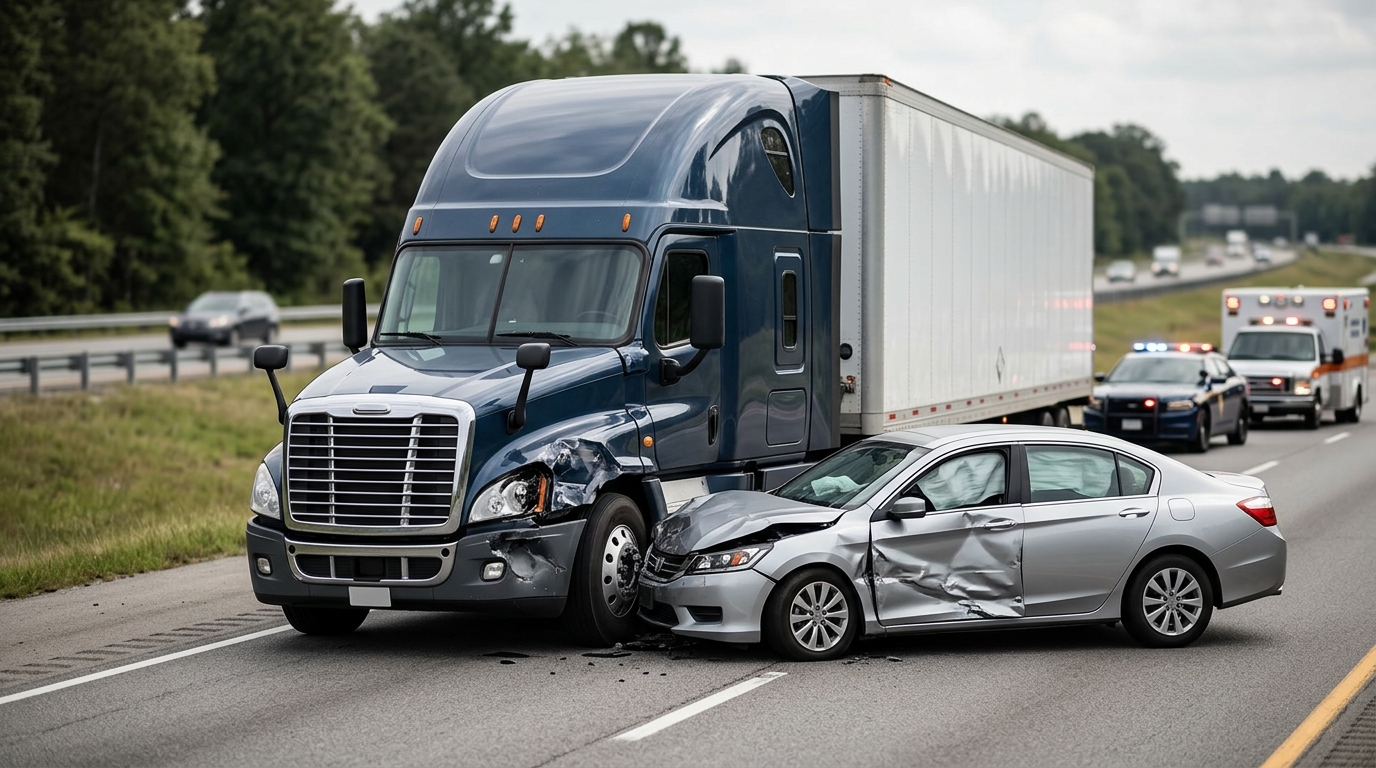
Truck Accidents · Florida & Nationwide
A Truck Crash Changed Everything. Your Settlement Should Reflect That.
When a commercial truck causes a spinal cord injury, brain injury, amputation, or the loss of someone you love, the value of your claim is measured in a lifetime. We help catastrophic-injury families understand what a real recovery looks like.
Why Families Turn to CHG
Nationwide
Cases accepted across the U.S.
Bilingual
English & Spanish support
FL Bar
Licensed, admitted attorneys
Catastrophic
Serious injury cases only
By CHG Lawyers · Published August 04, 2026
How Truck Accident Settlements for Catastrophic Injuries Work
A catastrophic truck accident claim is not a bigger fender-bender claim. It has to cover a whole lifetime. That means surgeries you haven’t had yet. It means wages you’ll never earn. It means care you’ll need at 40 and again at 70.
That is a very different kind of math. It often involves more than one possible defendant. It also involves layered commercial insurance policies. There is more than one driver’s limit to think about.
There is no fixed dollar figure. The value depends on a few things:
- How severe and permanent the injury is
- How clearly fault can be proven
- How much insurance coverage exists
- The real, documented cost of the harm
Did you or someone you love suffer a life-altering injury in a truck crash? Was the crash fatal? You are facing hard questions fast. Often you face them before you even leave the hospital.
This guide explains how these settlements really work. We use plain language. We assume you know no legal words. It reflects what our attorneys see in catastrophic cases. Nothing here promises a specific result. Every case is different.

Not sure what your next step is?
Talk it through with our team — the first consultation is free, confidential, and carries no obligation.
What counts as a catastrophic truck accident injury?
A catastrophic injury is permanent and life-altering. It changes how a person moves, works, thinks, or cares for themselves. Often it lasts the rest of their life.
These are the injuries we focus on:
- Spinal cord injuries and paralysis — this includes paraplegia and quadriplegia (also called tetraplegia). A spinal cord injury can cause permanent loss of function below the injury. It can affect movement, breathing, and bladder and bowel control, per the Mayo Clinic. Doctors grade how severe it is with the ASIA Impairment Scale (ISNCSCI). Long-term outcome data is tracked by the National Spinal Cord Injury Statistical Center (NSCISC). The Christopher & Dana Reeve Foundation is a helpful non-legal resource for families adjusting to paralysis.
- Traumatic brain injury (TBI) — lasting changes to thinking, memory, mood, or behavior.
- Amputation and limb loss — losing an arm, leg, hand, or foot. This can happen in the crash or in surgery afterward.
- Severe burns — deep burns that cause scarring, disfigurement, and repeated reconstructive surgeries.
- Catastrophic back and neck injuries — damage that causes permanent impairment.
A fatal crash is the most catastrophic outcome of all. When a loved one dies, the family may bring a wrongful-death claim. This is a legal case the family files after a death. We handle these with the same care and dignity as any other case. The focus stays on the family left behind.
Why are these cases handled differently? It comes down to one fact. The costs don’t stop when the hospital sends you home. They continue for decades. That is what makes the detailed work worth it.
Why truck settlements differ from car accident settlements
Two things set truck cases apart. First, more parties may share fault. Second, far larger insurance policies are usually involved. A typical car crash involves two drivers. A commercial truck crash can involve many players.
Parties who may be legally responsible include:
- The truck driver
- The trucking company that employed the driver
- The company that loaded or secured the cargo
- A repair shop that serviced the truck
- The maker of a defective truck part
Commercial carriers must follow federal safety rules. These are enforced by the Federal Motor Carrier Safety Administration (FMCSA). The rules cover how long a driver may work (hours-of-service). They cover how trucks are maintained. They cover what records companies must keep. When a carrier breaks these rules, that violation can support your claim.
Trucks also carry evidence that cars don’t. This includes:
- Electronic logging device (ELD) data
- The engine control module (the “black box”)
- Driver qualification files
- Dispatch and payroll records
- Inspection logs
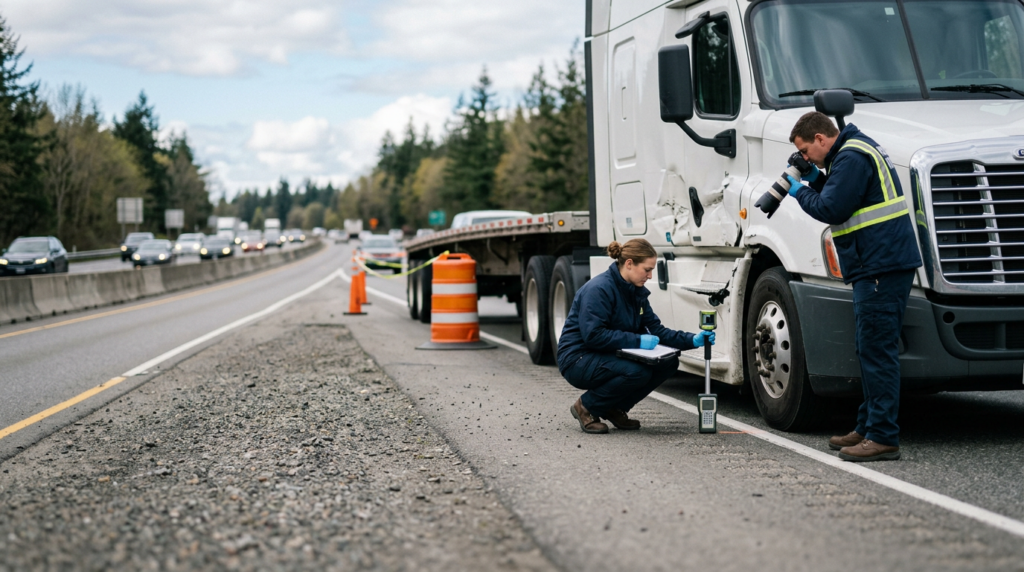
Much of this can be overwritten or lost within days or weeks. That is why our attorneys move quickly. We send a spoliation (preservation) letter. This is a formal legal notice. It demands that the company not destroy the data. Waiting can quietly cost you the strongest proof in the case.
The settlement process, step by step
The process moves through clear phases. We investigate. We document the injury. We demand, negotiate, and finalize.
1. Investigation and finding who’s responsible
We gather evidence. We find every party that may share fault. We send preservation letters. We obtain the crash report. We interview witnesses.
Finding all liable parties matters. Each one may carry separate insurance. That can be the difference between a policy that runs out and one that covers a lifetime of care.
2. Documenting the full extent of the injury
We document how serious and permanent the injury is. This often involves your treating doctors. It may involve a life-care planner. This expert predicts your future medical needs. It may involve an economist, who calculates lost earning power. In catastrophic cases, this step is the heart of the claim.
3. Presenting the demand
We present a written demand to the insurers. It lays out the fault, the injuries, and the losses. Negotiation usually begins here.
4. Filing suit if needed
If insurers won’t offer fair value, we file a lawsuit. Filing does not mean a trial is certain. Many cases still settle. But filing adds pressure. It also unlocks formal discovery. Discovery includes sworn depositions. It includes documents the company would otherwise never hand over.
5. Finalizing
Once both sides agree, you sign a release. Medical liens are negotiated and resolved. Then funds are distributed. A settlement permanently ends the claim. So the number has to be right before you sign. You cannot come back later for costs you missed.
What damages can a catastrophic truck settlement include?
A catastrophic settlement can include three kinds of damages. These are economic damages, non-economic damages, and — in a fatal crash — wrongful-death damages.
Economic damages are money losses you can measure:
- Past and future medical bills
- Surgeries and rehabilitation
- Assistive devices — wheelchairs, prosthetics
- Home and vehicle changes (ramps, hand controls, roll-in showers)
- In-home nursing or attendant care
- Lost wages and lost future earning power
Non-economic damages cover human harm that has no receipt:
- Pain and suffering
- Loss of enjoyment of life
- Disfigurement and scarring
- Mental anguish
In catastrophic cases, future and lifetime costs are usually the largest part of the claim. A life-care plan projects, year by year, what a person will need for decades. That includes surgeries, therapy, and replacement equipment. A power wheelchair doesn’t last forever. It also includes daily help. This is exactly where a thin, generic claim leaves real money on the table. For more on how compensation is calculated, see our guide on catastrophic injury claims.
When a crash is fatal, surviving family members may recover wrongful-death damages. These can include funeral and burial costs. They can include lost financial support. They can include the loss of the person’s companionship and guidance.
Does PTSD have a “settlement value”?
This is one of the most common questions people ask. So let’s answer it directly. There is no set “PTSD settlement” number. Any page quoting one is guessing.
Here’s the honest truth. A psychological injury can be paid for. But it isn’t priced by diagnosis. It’s priced by impact and proof.
Many crash survivors develop post-traumatic stress disorder (PTSD). This is a lasting mental-health condition after trauma. What matters is how it changes daily life. Can you drive? Sleep? Work? Be around traffic? It also matters whether a treating mental-health professional documents that change.
PTSD isn’t a separate price tag bolted onto the case. It’s part of the non-economic harm the whole claim already covers. The stronger the treatment record, the more real and undeniable that harm becomes.
Have questions about what happened?
Ask our team directly. The first conversation is free, confidential, and there is no obligation to continue.
Do medical treatment and injections affect settlement value?
Yes — but not the way the internet suggests. This gets asked constantly, so here is the straight answer.
Steady, medically needed treatment documents how serious your injury is. That record is what supports the claim. Treatment doesn’t “inflate” a claim. It proves it. Follow-up visits, imaging, injections, and therapy create the medical record. That record shows the injury is real and permanent. It becomes the backbone of the settlement.
So get the care your doctors recommend because your body needs it — not to boost a number. And know this: gaps in treatment can hurt you. When someone skips appointments or stops treatment, insurers argue the injury must not have been serious.
In catastrophic cases, we work to document lasting impairment with objective evidence. That includes imaging, specialist evaluations, and standardized testing. One example is ASIA classification for spinal injuries. This way the file matches the reality of your life.
Is there an “average” truck accident settlement?
No reliable average applies to your case. Any single number online is misleading. Averages blend minor claims with catastrophic ones. So they tell you almost nothing about a permanent, life-altering injury.
Value turns on the facts:
- How severe and permanent the injury is
- How clearly fault (liability) can be proven
- How much insurance coverage is actually available
- The projected cost of future medical care
- Lost income and lost earning power
We won’t quote you a figure or promise a result. That would be misleading. It would also violate Florida attorney-advertising rules. A real number comes from a case-by-case review, not an internet average. That’s why a free case evaluation is worth more than any headline statistic.
How long does a catastrophic case take?
Catastrophic cases usually take longer than routine claims. There’s a good medical reason for it. Attorneys often wait until you reach maximum medical improvement (MMI). This is the point where your condition stabilizes. Doctors can then reliably predict your long-term needs.
Settling before MMI is risky. New complications and costs may appear later. You cannot reopen a closed settlement.
Other things add time too. These include multiple defendants, disputed fault, and large amounts of evidence. Cooperative insurers and clear medical records shorten it. We can’t promise a specific timeline. We can promise not to trade your future for a fast check.
How Florida law and comparative fault affect your claim
For Florida crashes, two laws matter most.
Comparative fault. Florida uses a modified comparative-negligence rule. This rule splits fault between the people involved. Under Fla. Stat. §768.81, a person found more than 50% at fault generally recovers nothing. Say you’re partly at fault but not mostly. Then your recovery is reduced by your share. For example, take $1,000,000 in damages with 20% fault assigned to you. The award drops by that 20%. Insurers know this rule cold. That’s why they work so hard to shift blame onto the injured person. Documenting fault carefully protects your recovery.
Deadline to file. Under Fla. Stat. §95.11, the general deadline for a Florida negligence lawsuit is two years. This applies to claims arising on or after March 24, 2023. Miss it and you can permanently lose the right to sue. You can check the official text through Florida’s Online Sunshine.
Our firm handles cases nationwide from Florida. Deadlines and fault rules differ from state to state. So confirm the exact rule for your case with a licensed attorney before you assume anything.
For more on fault and liability, see our pillar guide on catastrophic truck accident injuries.
Want to know where you stand?
Tell us what happened and our team will walk you through the options available to you, at no cost.
Talk to a catastrophic injury attorney
You don’t have to figure this out alone. CHG Personal Injury Lawyers offers a free case evaluation. You’ll speak with licensed attorneys admitted to The Florida Bar. There is no obligation to move forward.
We focus on catastrophic, life-altering injuries. These include spinal cord injuries and paralysis. They include traumatic brain injuries, amputations, and severe burns. They also include catastrophic back and neck injuries. We handle fatal crashes as wrongful-death claims too. We’re a Florida-based firm that takes cases nationwide. We serve clients in both English and Spanish.
Not sure where to start? Start with a conversation. Request your free case evaluation and we’ll explain your options in plain language.
You can also learn more about specific injuries we handle: spinal cord injuries, traumatic brain injuries, and amputation injuries.
Frequently asked questions
What is considered a catastrophic injury in a truck accident?
A permanent, life-altering injury. Examples include spinal cord injury, paralysis, traumatic brain injury, amputation, severe burns, or catastrophic back/neck injury. A fatal crash is the most catastrophic outcome of all.
Who can be held liable in a truck accident claim?
Possibly the truck driver, the trucking company, the cargo loader, a repair shop, or the maker of a defective part. Each may carry separate insurance.
How much is a PTSD settlement after a truck accident?
There’s no fixed amount. PTSD is paid for based on how it affects daily life. A treating mental-health professional must document it. It is part of your overall claim, not a separate price tag.
Do medical treatment and injections increase your settlement value?
Steady, medically needed treatment documents how serious the injury is. That record supports the claim. Care should follow medical need, not an effort to inflate a claim. Gaps in treatment can weaken your case.
Is there an average truck accident settlement amount?
No reliable average applies to a specific catastrophic case. Value depends on injury severity, liability, available insurance, and future care needs.
How long does a catastrophic truck accident settlement take?
Often longer than routine claims. This is because of the complex investigation. You also need to reach maximum medical improvement (MMI) first. Only then is the long-term cost known.
This article is for general information and isn’t legal advice. For guidance about your specific situation, speak with a licensed attorney.
What Drives the Value of a Catastrophic Truck Injury Claim
Lifetime Medical Care
Spinal cord injuries, paralysis, brain injuries, amputations, and severe burns often require surgeries, rehabilitation, equipment, and in-home care for the rest of a person's life. A serious settlement accounts for future costs, not just today's bills.
Lost Earnings & Earning Capacity
When a permanent injury ends a career or limits the work someone can ever do again, both past lost wages and diminished future earning capacity are part of the claim.
Pain, Loss & Quality of Life
The law recognizes the physical pain, emotional harm, and lasting changes to daily life that follow a life-altering injury. These non-economic damages are a central part of a catastrophic case.
Available Insurance & Liability
Trucking companies often carry large commercial policies. Identifying every responsible party can expand the coverage available to fund a full recovery.
Don't Accept an Early Offer Before You Know the Full Extent of Your Injuries
Insurers may reach out quickly after a serious truck crash. For catastrophic injuries, the true cost — future surgeries, care, and lost income — often isn't clear for months. Speak with an attorney before signing anything or giving a recorded statement.
Who Can Be Held Responsible After a Truck Crash
The Truck Driver
A driver who was fatigued, distracted, impaired, or violated safety rules may bear direct responsibility for a serious or fatal crash.
The Trucking Company
Employers can be liable for negligent hiring, inadequate training, or pressuring drivers past legal hours-of-service limits.
Maintenance & Parts Providers
Brake failures, tire defects, or skipped maintenance can shift responsibility to the companies charged with keeping a truck safe.
Cargo Loaders
Improperly loaded or unsecured cargo can cause a truck to lose control — and can bring another party into the claim.