

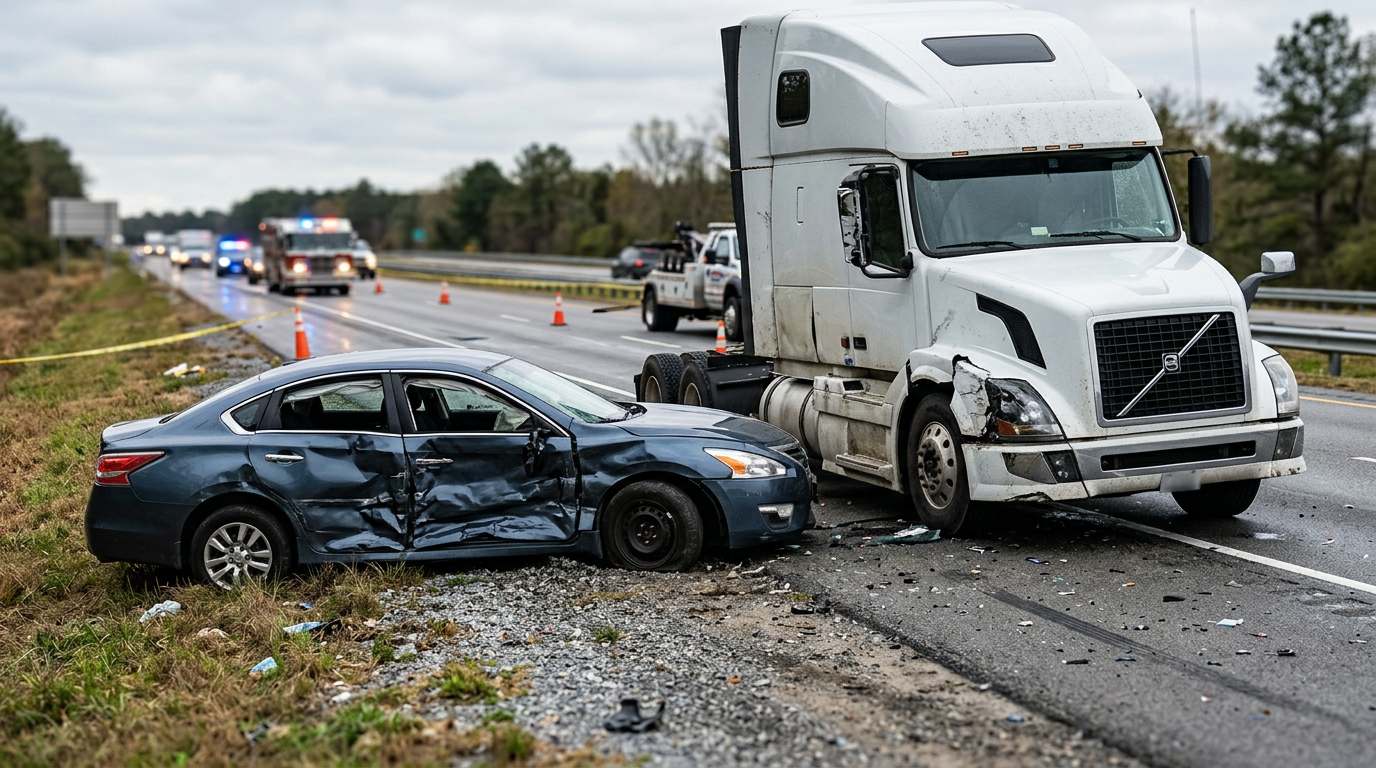
Truck Accident Claims
When a Trucking Company Breaks Federal Safety Rules, It Can Change Your Case
Federal FMCSA regulations govern how commercial trucks operate. When a company ignores them and someone is catastrophically injured or killed, those violations can become powerful evidence. Here's what families need to understand.
Why Families Turn to Us After a Serious Truck Crash
Nationwide
Catastrophic injury cases accepted
Bilingual
English & Spanish resources
Florida Bar
Licensed, admitted attorneys
Free
Case evaluations
By CHG Lawyers · Published August 05, 2026
How the FMCSA Rules Affect Your Catastrophic Truck Accident Claim
Sometimes a trucking company or driver breaks a federal safety rule. Say someone is badly hurt or killed as a result. That broken rule can become direct evidence of negligence in your truck accident claim.
These rules come from the Federal Motor Carrier Safety Administration (FMCSA). They set the safety standard every commercial trucking company must follow.
This page explains what the FMCSA is in plain language. It also shows how these rules can support your case. This is educational information, not legal advice for your situation.
Maybe you’re recovering from a spinal cord injury or a traumatic brain injury (a serious brain injury). Maybe you lost a loved one. Our goal is to help you understand what these rules mean for you.
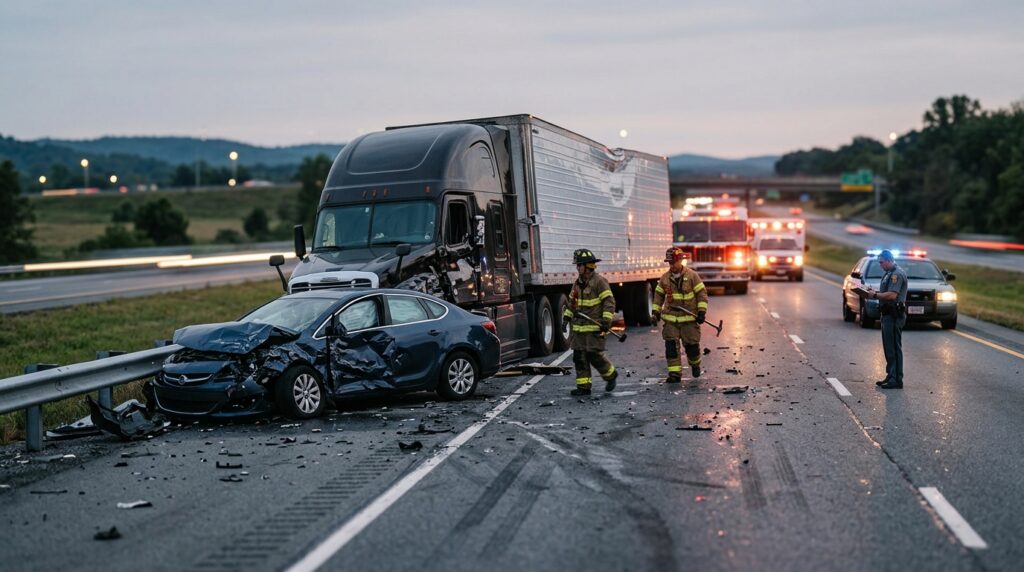
Not sure what your next step is?
Talk it through with our team — the first consultation is free, confidential, and carries no obligation.
What Is the FMCSA and Why Does It Matter to Your Claim?
The FMCSA is the federal agency that sets nationwide safety rules. These rules cover commercial trucks and the companies that run them. They are published as federal regulations, known as the 49 CFR (Code of Federal Regulations).
They apply everywhere. The same federal standards cover interstate trucking companies. It doesn’t matter if the crash happened in Miami, Orlando, Tampa, Jacksonville, or another state. Our firm is based in Florida. We handle these catastrophic cases nationwide.
Here’s why this matters. A fully loaded semi-truck can weigh 80,000 pounds. Say a company or driver ignores a safety rule. Someone suffers a life-altering injury. That violation isn’t just paperwork. It can be a key piece of evidence that helps prove fault.
How Breaking an FMCSA Rule Helps Prove Negligence
A broken FMCSA rule helps prove negligence. These rules define the “standard of care.” That means what a safe, responsible trucking company is supposed to do. A company or driver falls below that standard and causes harm. That is a core part of a truck accident claim.
Think of it this way. The rules answer one question: “What should a careful trucking company have done?” A violation shows the company did something different. That gap between the rule and the conduct can support your case.
These rules apply to the company itself, not just the driver. That’s important. The company — called the “motor carrier” — often carries far more insurance than one driver. Holding the business accountable can matter a great deal. Medical bills can reach into the millions.
A violation still has to connect to how your crash and injuries happened. A lawyer investigates that link. In the catastrophic truck cases our attorneys handle, we look closely at which rules were broken. We also look at how those failures led to the harm.
Hours-of-Service Rules: Fatigued and Overworked Drivers
Federal hours-of-service rules limit how long a driver can drive and work. Drivers must take required rest. These limits exist for one reason: a tired driver is a dangerous driver.
Fatigue slows reaction time and blurs judgment. At highway speed, a few seconds of drowsiness can cause a violent crash. These crashes lead to spinal cord injuries and permanent paralysis. As the Mayo Clinic explains, the high-force impact of a vehicle crash can cause a permanent loss of function.
How do these violations show up? Drivers now use electronic logging devices (ELDs). These record driving time automatically. We look for fake or missing logs. We also check whether the ELD data matches the crash timeline. And we look for company pressure to keep driving past legal limits. To understand why these crashes are so devastating, see our page on why truck accidents cause severe injuries.
Driver Qualification and Training Rules
Federal rules require commercial drivers to be properly qualified. This must happen before they ever get behind the wheel. It means a valid commercial driver’s license (CDL), proof of medical fitness, and a review of their driving record.
What happens if a CDL driver gets in an accident? CDL drivers and their employers face added scrutiny after a crash. Federal rules require more record-keeping. Certain violations can even bar a driver from operating a commercial vehicle at all.
This is where a company’s hiring choices come into play. Say a trucking company put an unqualified or unsafe driver behind the wheel. That can support a “negligent hiring” or “negligent retention” claim. In plain terms, the company should have known better. Handing an 80,000-pound truck to a driver who shouldn’t have one can cause catastrophic, preventable harm.
Drug and Alcohol Testing Rules
Federal rules require trucking companies to test drivers for drugs and alcohol. This includes testing before hiring and random testing. Most important, it includes testing after serious crashes.
Post-crash testing is often required after a fatal or serious accident. The results can be powerful evidence. So can a failure to test at all. Did a company skip required testing after a catastrophic crash? That gap raises serious questions.
An impaired driver in a massive commercial vehicle is a recipe for a preventable tragedy. These records are time-sensitive. Test results and related documents must be requested and preserved quickly, before they’re lost.
Have questions about what happened?
Ask our team directly. The first conversation is free, confidential, and there is no obligation to continue.
Truck Maintenance and Cargo Securement Rules
Federal rules require trucking companies to inspect, repair, and maintain their vehicles. They must also load and secure cargo safely. When a company ignores these duties, the results can be deadly.
Failed brakes, worn tires, or shifting, unsecured cargo can cause rollovers, jackknifes, and underride crashes. These are exactly the crashes that lead to amputations, severe burns, and traumatic brain injuries. A victim’s injuries often trace directly back to a maintenance failure someone chose to ignore.
The evidence lives in the records. This includes inspection reports, repair logs, and daily driver vehicle inspection reports. These documents can reveal problems a company knew about but didn’t fix. But they can disappear unless someone acts to preserve them. We cover this in the section below.
Insurance and Financial Responsibility Rules
Interstate trucking companies must carry much higher minimum insurance than an ordinary driver. Federal financial-responsibility rules set these minimums. The reason is simple. The harm a large truck can cause is so severe.
Why does this matter to you? A catastrophic injury creates enormous costs. Think of surgeries, rehabilitation, lost income, home changes, and often lifelong care. The National Spinal Cord Injury Statistical Center tracks the long-term impact of these injuries. The Christopher & Dana Reeve Foundation reports how many Americans live with paralysis. Enough insurance coverage affects whether a family can truly be made whole.
How much can you get from a semi-truck accident settlement? We can’t promise a number. Be careful of anyone who does. A claim’s value depends on the severity of the injuries, the strength of the evidence, and the insurance coverage available. Every case is different and is judged on its own facts.
DOT-Reportable Accidents and the Accident Register
What makes a crash a DOT-reportable accident? Generally, a crash is reportable in three cases. First, it involves a death. Second, it involves an injury needing immediate medical treatment away from the scene. Third, a vehicle has to be towed away.
Trucking companies must keep an “accident register.” This is a record of their reportable crashes. It can reveal a company’s safety history. A pattern of prior crashes or repeated violations can support your claim. It shows the company had a habit of cutting corners.
When a crash takes a life, the focus shifts to the family left behind. A fatal crash is the most catastrophic outcome there is. Families in this situation may have a wrongful-death claim. Understanding a company’s safety record is often part of finding answers. Learn more about wrongful-death claims.
Can You Sue if a Truck Driver Hits You?
Yes. Say a truck driver’s or trucking company’s negligence caused your catastrophic injury. Say it caused a loved one’s death. You may have a claim. The right first step is to talk with a lawyer who can review the facts.
More than one party can be responsible. Often both the driver and the motor carrier share fault. Sometimes a cargo loader, a maintenance contractor, or another company is involved too. A thorough investigation finds everyone who may be accountable.
Florida law affects these claims. Under Fla. Stat. §768.81, Florida follows a modified comparative-negligence rule. This means a person found more than 50% at fault generally recovers nothing. Outcomes depend on the facts of each case. So an honest review matters.
Why Acting Quickly Protects the Evidence
Federal trucking records can vanish fast. Logs, ELD data, drug and alcohol test results, and maintenance files can be overwritten, thrown out, or simply lost over time. So can the data stored in a truck’s black box.
A legal team can send a “spoliation” letter. This is a formal demand to preserve evidence. It requires the company to hold onto this evidence. This step often needs to happen within days, not months. The engine control module is the truck’s electronic recorder. It can hold speed and braking data that proves what really happened. See our page on truck black box and ECM evidence.
Time also matters under Florida law. Under Fla. Stat. §95.11, a negligence action for injuries starting on or after March 24, 2023 generally must be filed within two years. Deadlines vary by situation. So it’s wise to ask a lawyer early. Focus on healing, and let your legal team investigate the rules and records.
Talk to a Catastrophic Truck Accident Lawyer
FMCSA regulations exist to protect people. When those rules are broken and a crash causes life-altering harm, the violation can become powerful evidence in your truck accident claim. That’s the heart of how these federal rules work for you.
Our licensed attorneys are admitted to The Florida Bar. We handle catastrophic truck cases nationwide from our Florida base. We offer a free, confidential case evaluation, with bilingual English and Spanish support. We can’t promise a specific result. But we can promise an honest, careful review of your situation.
Did you or a loved one suffer a catastrophic injury in a truck crash? Contact us for a free case evaluation. To learn more about how these cases work, visit our pillar guide on catastrophic truck accident injuries.
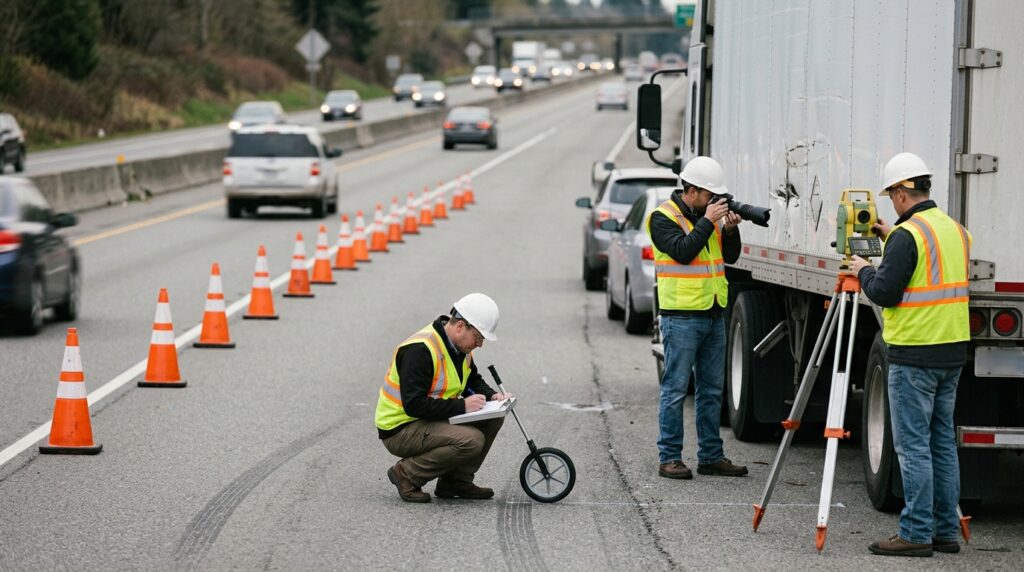
Want to know where you stand?
Tell us what happened and our team will walk you through the options available to you, at no cost.
Frequently Asked Questions
What is the FMCSA and why does it matter in a truck accident claim?
The FMCSA is the federal agency that sets nationwide safety rules for commercial trucks. A company breaks one of its rules and causes harm. That violation can be strong evidence of negligence.
What happens if a CDL driver gets in an accident?
CDL drivers and their employers face added scrutiny and record-keeping rules after a crash. Certain violations can also bar a driver from operating a commercial vehicle.
What makes a crash a DOT-reportable accident?
A crash is generally DOT-reportable in three cases. It involves a death. It involves an injury needing immediate medical treatment away from the scene. Or a vehicle is towed from the scene.
Can you sue if a truck driver hits you?
Yes. Say the driver’s or trucking company’s negligence caused your catastrophic injury or a loved one’s death. You may have a claim. Both the driver and the company can be responsible.
How long do I have to file a truck accident claim in Florida?
Under Fla. Stat. §95.11, most negligence claims starting on or after March 24, 2023 must be filed within two years. Talk to a lawyer early because deadlines vary.
FMCSA Rules That Often Matter Most
Hours-of-Service Limits
Federal rules cap how long a driver can be behind the wheel. When a fatigued driver exceeds those limits, logbooks and electronic records can reveal it.
Inspection & Maintenance Records
Trucks must be regularly inspected and repaired. Missing or ignored maintenance can point to a company's negligence.
Driver Qualification & CDL Standards
Carriers must properly vet, train, and license their drivers. A driver who never should have been on the road raises serious questions.
Drug & Alcohol Testing
FMCSA rules require testing after certain crashes. Skipped or failed tests can be central to a claim.
Evidence Can Disappear Fast
Logs, electronic data, and inspection records are often controlled by the trucking company and may be deleted on routine schedules. Acting quickly to preserve this evidence can be critical after a catastrophic or fatal crash.
Common Questions About FMCSA Rules and Your Claim
What is the FMCSA?
The Federal Motor Carrier Safety Administration sets nationwide safety rules for commercial trucks. When a company breaks one of these rules and causes serious harm, that violation can be strong evidence of negligence.
What if a CDL driver caused the crash?
Commercial drivers and their employers face added scrutiny under federal rules. Both the driver's conduct and the company's practices may be examined when someone is catastrophically injured or killed.
Do these rules apply to fatal crashes?
Yes. A death is the most devastating outcome of any crash. Families pursuing a wrongful-death claim may rely on the same federal safety records to understand what went wrong.
Who can be held responsible?
Depending on the facts, responsibility may extend beyond the driver to the trucking company, maintenance providers, or others whose choices contributed to the harm.