

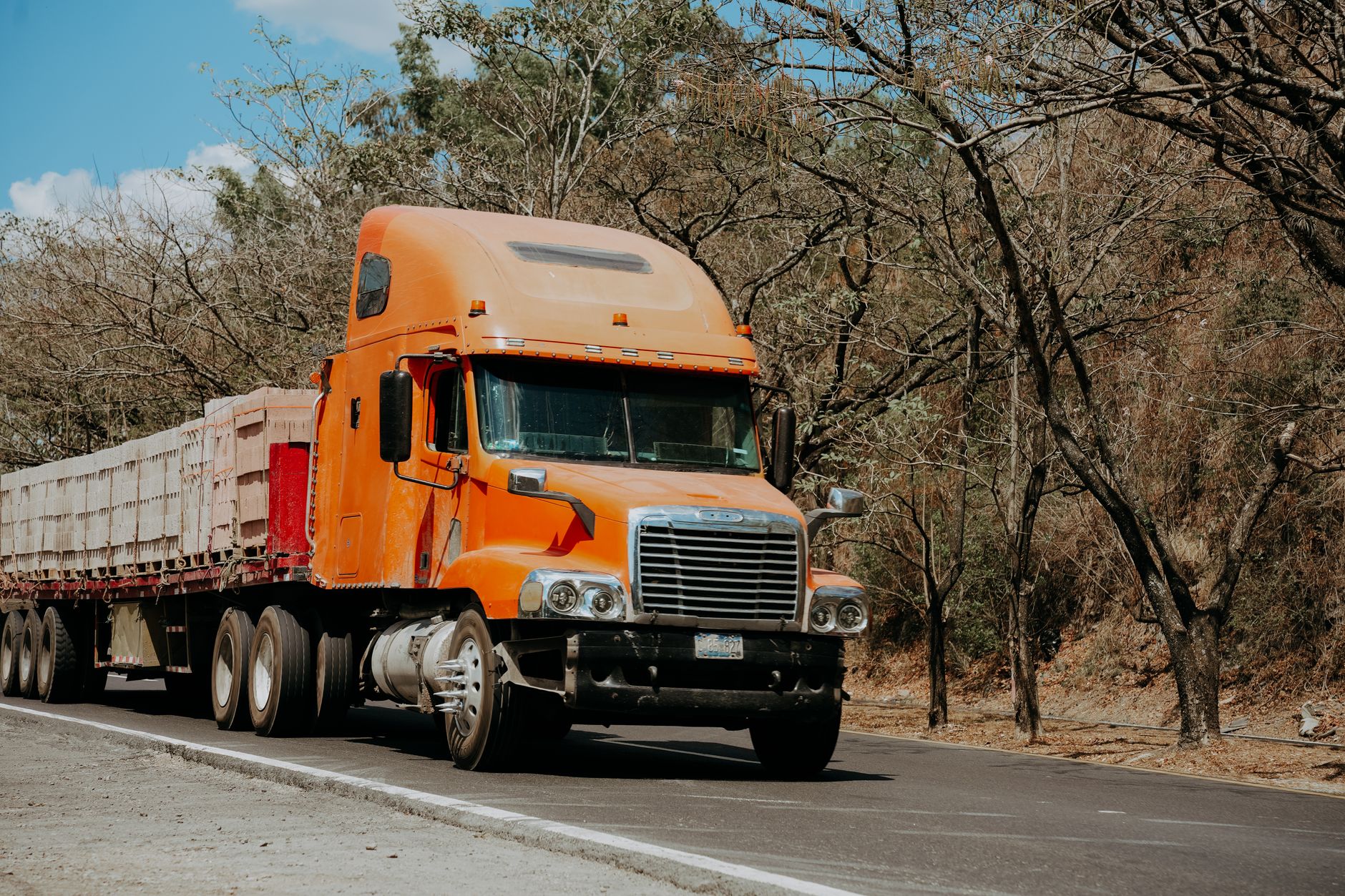
Truck Accidents | Florida & Nationwide
Why a Truck Crash Can Change a Life in an Instant
When an 80,000-pound truck collides with a passenger vehicle, the physics leave little margin. We help families facing spinal cord injuries, brain trauma, amputations, and wrongful death understand what happened and what comes next.
By CHG Lawyers · Published August 01, 2026
Why Truck Accidents Cause More Severe Injuries Than Car Crashes
Truck accidents are so severe because a fully loaded semi can weigh 20 to 30 times more than a passenger car. When that much mass hits a smaller vehicle, the forces are enormous. The people in the smaller vehicle absorb most of that energy, and the human body can only take so much.
This page explains the physics behind that mismatch. We cover the truck-specific dangers, the catastrophic injuries that result, and what families can do next. We write for injured people and grieving families, so we keep it plain and honest — no hype, no scare tactics.
In the truck-crash cases our attorneys handle, this size-and-force gap is almost always the reason injuries turn out to be permanent instead of temporary.

If you or someone you love suffered a life-altering injury in a truck crash — or if your family lost someone — you don't have to sort through this alone. Talk it through with our team — the first consultation is free, confidential, and carries no obligation.
The Short Answer: Why Are Truck Accidents So Severe?
Truck accidents are so severe because of a massive mismatch in size, weight, and height between a commercial truck and a passenger vehicle. A car weighs about 3,000 to 4,000 pounds. A fully loaded tractor-trailer can weigh up to 80,000 pounds.
That difference changes everything. The bigger, heavier vehicle carries far more energy into the crash. The smaller vehicle — and the people inside it — take the brunt of that force. This is why a truck crash often causes life-altering harm when a similar car-on-car crash might not.
It Comes Down to Physics: Mass, Force, and Energy
The core reason truck accidents are so severe is basic physics: more mass moving at speed means far more energy released in a crash.
Every moving vehicle carries kinetic energy. That energy grows with both weight and speed. A loaded semi at highway speed carries many times the energy of a car at the same speed. In a collision, that energy has to go somewhere. Much of it transfers into the smaller vehicle and its occupants.
The human body can only withstand so much force. When the force in a crash goes beyond those limits, tissue, bone, and the nervous system fail. That’s the moment a temporary injury becomes a catastrophic one. Vehicle crashes are a leading cause of spinal cord injury, which can cause permanent loss of movement and feeling below the injury, according to the Mayo Clinic.
Occupants of the smaller vehicle bear most of this energy transfer. That’s not bad luck. It’s the direct result of the size and weight gap.
Truck-Specific Dangers That Make Crashes Worse
Beyond weight, trucks carry design and handling features that make crashes worse. Several truck-specific dangers push these collisions from serious to catastrophic.
Height mismatch and underride crashes
Trucks sit much higher off the ground than cars. In some crashes, a car slides under the trailer. This is called an underride crash. Because the impact hits the passenger cabin directly, these crashes often cause severe head, neck, and spinal injuries.
Longer stopping distances
Loaded trucks can’t stop quickly. Loaded tractor-trailers need 20% to 40% more distance than cars to stop, and the gap grows on wet roads or with worn brakes, per the Insurance Institute for Highway Safety (IIHS). A truck that can’t stop in time often hits at a higher effective speed, which raises injury severity.
Jackknifes, rollovers, and cargo
A truck can jackknife when the trailer swings out of line with the cab. It can also roll over. Both can involve several vehicles at once. Heavy or poorly secured cargo adds crush risk. Fuel and some cargo can catch fire, adding the risk of severe burns.
Blind spots and wide turns
Trucks have large blind spots and need wide turns. A driver may not see a nearby car. These factors raise the odds of a crash before the physics even come into play.
Common Catastrophic Injuries in Truck Crashes
The most common catastrophic injuries in truck crashes are spinal cord injuries, traumatic brain injuries, amputations, severe burns, and catastrophic back and neck trauma. These injuries share one thing: they often last a lifetime.
- Spinal cord injuries and paralysis. A spinal cord injury can cause paraplegia or quadriplegia. Doctors classify severity using the ASIA Impairment Scale. Roughly 5.4 million Americans live with some form of paralysis, reports the Christopher & Dana Reeve Foundation.
- Traumatic brain injuries (TBI). A hard blow to the head can cause lasting changes in thinking, memory, and mood. Learn more on our traumatic brain injury page.
- Amputations and limb loss. Crush forces in a truck crash can cause traumatic limb loss.
- Severe burns. Fuel or cargo fires can cause severe burn injuries that require surgery and long recovery.
- Catastrophic back and neck injuries. These can involve nerve damage, multiple injuries, and long-term pain.
These injuries are so often permanent because the force involved damages tissue that doesn’t fully heal. Spinal cord injury can affect breathing, bladder and bowel control, circulation, and pain, notes the Mayo Clinic. That’s why we treat every one of these cases with real care. You can read more on our spinal cord injuries page.
Not sure what your next step is?
Talk it through with our team — the first consultation is free, confidential, and carries no obligation.
When Truck Crashes Are Fatal: What Families Face
The most catastrophic outcome of any crash is the death of a loved one. When a truck crash is fatal, families face grief, sudden loss of income, and hard questions all at once.
Public safety data show how deadly these crashes can be. In 2024, 5,218 large trucks were involved in a fatal crash, a small drop from 2023 but roughly a 30% rise over ten years, according to the National Safety Council. Federal fatality data collected in the NHTSA Fatality Analysis Reporting System (FARS) and the IIHS show that people in passenger vehicles make up most large-truck crash deaths. The size mismatch explains why.
If a family lost someone in a truck crash, they may be able to bring a wrongful-death claim. That claim can seek to hold the responsible parties accountable and help cover losses the family now carries. We handle these matters with dignity and never with pressure.
What Causes Truck Crashes in the First Place
Most truck crashes trace back to human error, though several factors often combine. Understanding the cause helps explain why a crash was so severe — and who may be responsible.
The FMCSA Large Truck Crash Causation Study identifies fatigue, drinking alcohol, and speeding — including driving too fast for conditions — among major crash factors, per the Federal Motor Carrier Safety Administration. Other common causes include:
- Distracted or impaired driving. A driver looking at a phone or under the influence reacts too late.
- Speeding and tailgating. Given long stopping distances, these habits are especially dangerous in a truck.
- Equipment failure. Worn brakes and bad tires can cause a crash or make one worse.
- Improper loading. A shifting or overloaded trailer can trigger a rollover.
- Company pressure. Tight schedules can push drivers to skip rest or maintenance.
More than one party may share fault. The driver, the trucking company, a maintenance shop, or a cargo loader could each bear responsibility.
Why Injury Severity Matters for Your Claim
Severe truck crashes require more proof, because the stakes and the evidence are both bigger. High-force crashes leave complex evidence, and multiple parties may be involved.
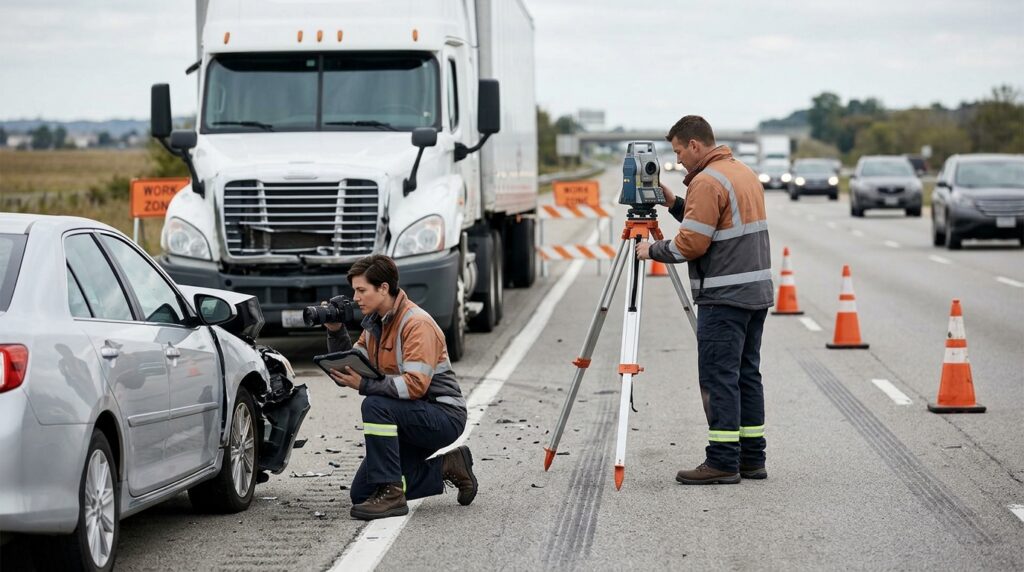
Commercial trucks follow federal safety rules that don’t apply to ordinary cars, including limits on how long a driver can work. Trucks also carry electronic data recorders — often called black boxes — that can record speed, braking, and hours driven. That data can help reconstruct exactly what happened.
Evidence can disappear fast. Trucks get repaired, and records get overwritten. Acting quickly helps preserve the black-box data, driver logs, and maintenance records that matter most.
Florida law also sets deadlines. Most negligence claims that accrue on or after March 24, 2023 must be filed within two years, under Fla. Stat. §95.11. Florida also uses a modified comparative-negligence rule (shared fault): a person found more than 50% at fault generally recovers nothing, under Fla. Stat. §768.81. We handle cases nationwide, so rules in your state may differ.
To learn more, see our pillar guide on catastrophic truck accident injuries.
Frequently Asked Questions
What is the #1 killer in driving?
Human error is the leading factor in most crashes. The FMCSA study points to fatigue, alcohol, and speeding as major contributors to serious truck crashes, according to the FMCSA.
What are 90% of accidents caused by?
Studies consistently trace the large majority of crashes to human error rather than pure mechanical failure. Fatigue, distraction, speeding, and impaired driving are common causes cited by the FMCSA.
Why are truck accidents so severe compared to car accidents?
Trucks can weigh up to 80,000 pounds, while cars weigh 3,000 to 4,000 pounds. That weight gap means far more force hits the smaller vehicle and the people inside it.
Are truck accident injuries always permanent?
No, but many are, because the force involved often damages the spine, brain, or limbs beyond full healing. The Mayo Clinic notes that spinal cord injuries can cause permanent loss of movement and feeling.
Why do loaded trucks take longer to stop?
Extra weight requires more distance to slow down. Loaded tractor-trailers need 20% to 40% more stopping distance than cars, per the IIHS.
Have questions about what happened?
Ask our team directly. The first conversation is free, confidential, and there is no obligation to continue.
Talk to a Catastrophic Truck Accident Lawyer
If you or someone you love suffered a life-altering injury in a truck crash — or if your family lost someone — you don’t have to sort through this alone. Our licensed attorneys are admitted to The Florida Bar and take catastrophic cases nationwide.
We’ll listen, explain your options in plain language, and answer your questions with honesty. We can’t promise a specific result, but we can help you understand what happened and what you can do next.
Request a free case evaluation whenever you’re ready. There’s no pressure, just answers.
What Makes Truck Crashes So Devastating
Enormous Weight and Size
A fully loaded commercial truck can weigh 20 to 30 times more than a car. That mass transfers overwhelming force into everyone in a smaller vehicle.
Longer Stopping Distances
Large trucks need far more distance to stop. At highway speeds, even a fully alert driver may not be able to brake in time to avoid a serious collision.
Human Error Behind the Wheel
Federal research points to fatigue, alcohol, and speeding as major factors in serious truck crashes, according to the FMCSA. Human error, not mechanical failure, drives most of them.
Catastrophic, Permanent Harm
The forces involved often cause life-altering injuries: paralysis, traumatic brain injury, limb loss, severe burns, and, in the most tragic cases, death.
Evidence Can Disappear Fast
Trucking companies often begin investigating within hours, and critical records like driver logs, electronic control module data, and maintenance history can be lost or overwritten. Getting help early can make a difference in preserving what happened.
The Kinds of Serious Injuries We See in Truck Cases
Spinal Cord Injuries & Paralysis
High-impact crashes can damage the spinal cord, leading to paraplegia or quadriplegia and a lifetime of medical needs.
Traumatic Brain Injuries
Even with airbags, the violent forces of a truck collision can cause lasting cognitive, physical, and emotional changes.
Amputation & Severe Burns
Crush injuries, fires, and fuel spills can result in limb loss and severe burns requiring long-term surgery and rehabilitation.
Wrongful Death
The most catastrophic outcome of all. When a family loses a loved one, we help them pursue accountability and support during an unimaginable time.
If a Truck Crash Has Turned Your Life Upside Down, You Don't Have to Face It Alone
Related practice areas
- Contact
- Tetraplegia