

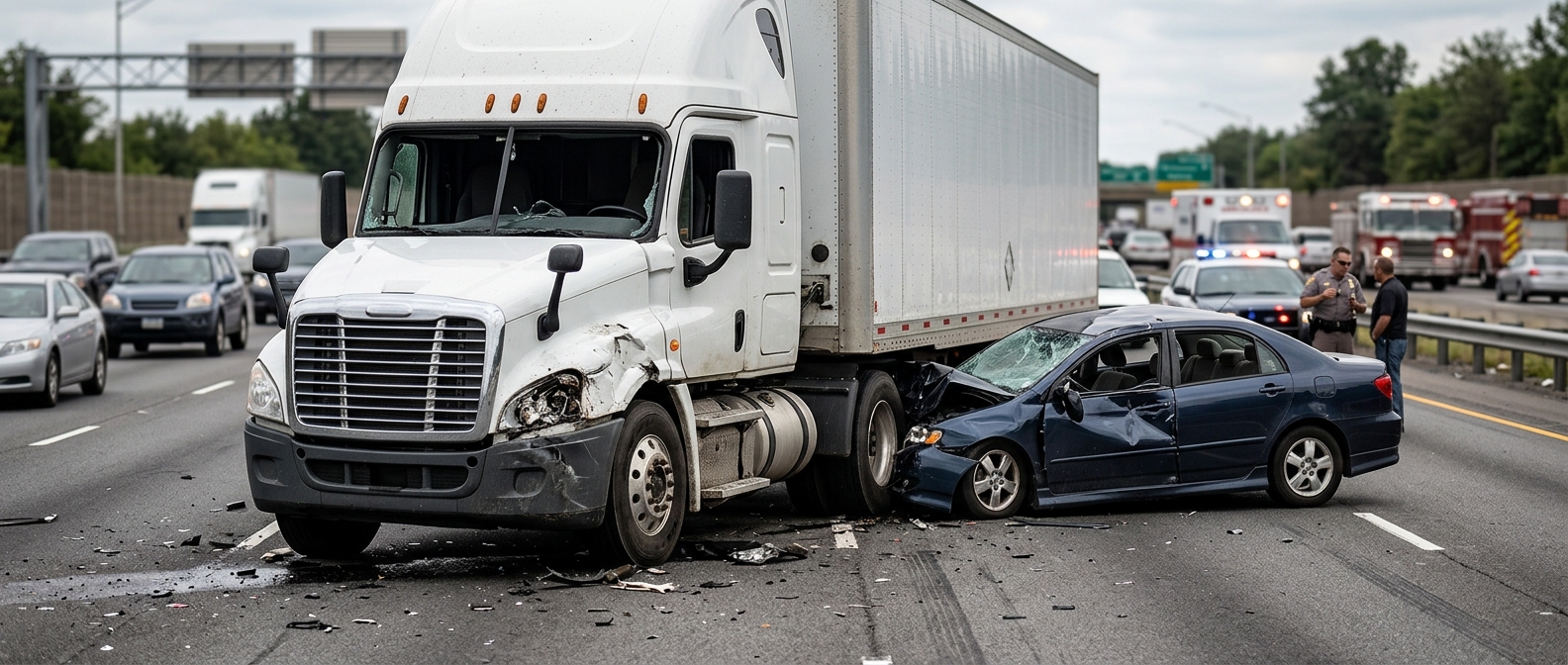
Truck Accidents · Florida & Nationwide
What Causes the Truck Crashes That Change Lives Forever
A fully loaded semi can weigh 20 to 30 times more than your car. When something goes wrong, the injuries are catastrophic — spinal cord damage, traumatic brain injury, amputation, or the loss of someone you love. Understanding the cause is the first step toward accountability.
By CHG Lawyers · Published August 01, 2026
Common Causes of Catastrophic Truck Accidents
The leading causes of catastrophic truck accidents are driver fatigue, speeding, distracted driving, and impaired driving. Brake and tire failures, unsafe or overloaded cargo, and poor driver training or hiring also cause them. These crashes turn deadly because a loaded tractor-trailer carries far more force than a car. As a result, the people in the smaller vehicle absorb the harm.
Were you seriously hurt in a truck crash? Did you lose someone you love? You likely want to know why it happened. Understanding the cause is the first step. It helps you see who may be responsible. It also shows what evidence must be saved before it disappears. This page explains the real-world causes in plain language. It shares the federal data behind them, with respect for what you are going through.
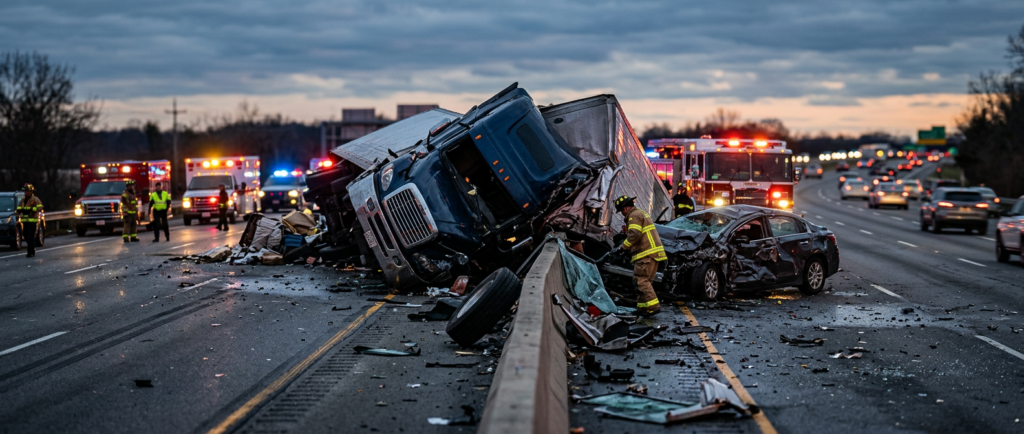
Not sure what your next step is?
Talk it through with our team — the first consultation is free, confidential, and carries no obligation.
Why truck crashes so often cause catastrophic injuries
It comes down to size, weight, and physics. Federal rules cap most loaded tractor-trailers at 80,000 pounds on interstate highways (FMCSA / 23 U.S.C. § 127). That’s roughly 20 to 30 times the weight of a typical car. In a crash, that weight transfers huge force to the smaller vehicle and the people inside it.
That physics explains the outcomes. The National Safety Council’s Injury Facts reports something telling. A large share of the people who die in large-truck crashes are in the other vehicle — not the truck. The people in the car bear the greatest risk.
The injuries we see are permanent and life-altering. They include spinal cord injuries and paralysis (paraplegia and quadriplegia). They also include traumatic brain injury (TBI), amputation and limb loss, severe burns, and catastrophic back and neck injuries. Motor vehicle crashes are among the leading causes of spinal cord injury. That injury can cause permanent loss of movement and feeling below the injury, according to the Mayo Clinic.
Some families are facing the most catastrophic outcome of all — a death. If that is you, this page is for you too. A fatal truck crash becomes a wrongful-death claim brought by the surviving family. The same causes and the same evidence discussed below apply. We write about this with care, never sensationalizing. Behind every statistic is a family deciding what to do next.
Driver fatigue and hours-of-service violations
Fatigue is one of the most common and dangerous causes of serious truck crashes. Long hours behind the wheel and pressure to meet delivery times lead to drowsy driving. A tired driver reacts slowly, drifts across lanes, or falls asleep.
Federal Hours-of-Service (HOS) rules limit driving time. In general, drivers get an 11-hour daily driving limit within a 14-hour on-duty window (FMCSA HOS summary). Drivers must record their hours with an Electronic Logging Device (ELD). This device time-stamps driving and rest. When a driver or carrier breaks these rules, the ELD data often points straight back to the company’s schedule.
The FMCSA Large Truck Crash Causation Study found the most frequent driver-related factors in serious crashes. These included fatigue, inattention, and being unfamiliar with the road. In the cases we investigate, fatigue often ties back to dispatch pressure — not just the person in the seat.
Speeding and driving too fast for conditions
Speeding raises both the odds and the severity of a truck crash. A fully loaded truck needs far more distance to stop than a car. Stopping distance grows sharply as speed climbs. So a small error becomes catastrophic.
Speed is also about conditions, not just the posted limit. Driving too fast in Florida rain, at night, on curves, or in heavy traffic can be unsafe even below the limit. Work zones on I-4, I-95, and Florida’s Turnpike add more danger. The FMCSA study lists driving too fast for conditions among the top driver factors in truck crashes.
Distracted driving
Distraction turns a routine moment into a life-altering crash. Phones, texting, dispatch tablets, eating, and in-cab technology all pull a driver’s eyes off the road.
Consider the math. At 55 mph, five seconds of looking away covers about 400 feet. That’s more than the length of a football field (NHTSA). A truck can travel that far before the driver ever touches the brakes. Traffic ahead can stop cold in those seconds. For a professional driver, distraction is a serious breach. Company policies, dispatch logs, and cell-phone records often show what really happened before impact.
Impaired and drugged driving
Impaired driving covers alcohol and illegal drugs. It also covers misuse of stimulants used to stay awake on long routes. That choice slows reaction time and clouds judgment.
Commercial drivers face strict federal drug and alcohol testing rules. Testing after certain serious crashes may be required under 49 CFR § 382.303. Results — and violations logged in the FMCSA Drug and Alcohol Clearinghouse — can reveal what went wrong. They can also show whether the carrier ignored a warning sign. Impaired driving is preventable. Responsibility can fall on the driver and, in some cases, the company that put them on the road.
Have questions about what happened?
Ask our team directly. The first conversation is free, confidential, and there is no obligation to continue.
Mechanical failures: brakes, tires, and maintenance neglect
Brake and tire problems are a recurring cause of catastrophic crashes. Worn pads, air-system leaks, and bald or defective tires can cause a driver to lose control. A blowout at highway speed can trigger a rollover or jackknife.
Carriers must inspect, repair, and maintain their equipment under 49 CFR Part 396. They must keep vehicles with certain defects off the road. When a company skips maintenance or ignores an out-of-service defect, it can share responsibility. A repair shop that did shoddy work may share fault too. So may a manufacturer whose part was defective. This is why the cause matters so much for finding who is accountable.
Improperly loaded or overloaded cargo
Bad cargo loading is a hidden but serious cause of crashes. Unbalanced, unsecured, or overweight loads change how a truck handles. Shifting freight can cause a rollover, a jackknife, or debris in the road. Federal cargo-securement standards (49 CFR Part 393, Subpart I) set out how loads must be secured.
An overloaded truck also takes longer to stop. A top-heavy load raises the risk of tipping on a curve or ramp. These are not always the driver’s fault. The company that loaded the trailer or the shipper who packed it may bear responsibility. In these cases, more than one party often shares the blame.
Inadequate driver training, hiring, and supervision
Poor training, hiring, and supervision cause crashes that never had to happen. Commercial driving takes skill. When a carrier rushes training or puts an unqualified driver on the road, people get hurt.
A carrier can also be liable for negligent hiring and retention. That means ignoring a driver’s dangerous record and keeping them behind the wheel. Some operators try to shed a bad safety score. They shut down and reopen under a new name and USDOT number. This pattern is known as a “chameleon carrier.” Spotting it takes trucking knowledge and careful digging through FMCSA records.
Blind spots (“no-zones”) and unsafe maneuvers
Large trucks have big blind spots on all four sides — called “no-zones.” A driver may not see a car directly behind, beside, or right in front of the cab. Unsafe lane changes and wide turns can trap a smaller vehicle in these zones. Merging errors and sudden turns cause many crashes near ramps and intersections. A careful investigation sorts out what each factor added.
Who can be held responsible
Several parties may share responsibility for a catastrophic truck crash. Depending on the cause, that can include the driver or the trucking company (motor carrier). It may also include a maintenance shop, the cargo loader or shipper, or a parts manufacturer.
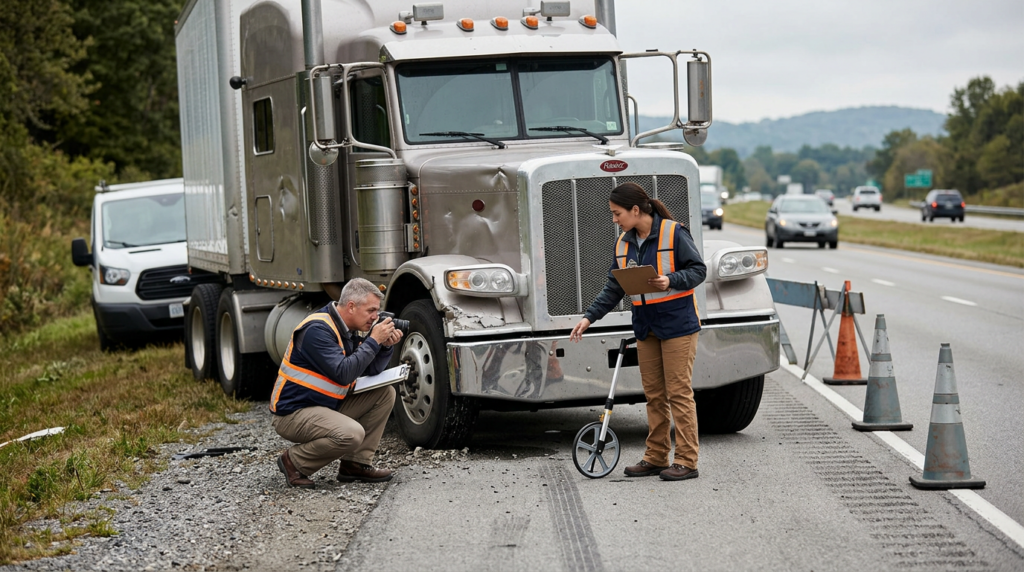
That is why identifying the cause matters. It tells us where to look for responsibility. It also tells us what evidence to save. That evidence includes ELD data and the truck’s event data recorder (“black box”). It also includes maintenance logs, driver qualification files, and inspection reports. Some of this evidence can be overwritten or lost within weeks.
Florida law shapes these claims. The state follows modified comparative negligence under Fla. Stat. § 768.81. A person found more than 50% at fault generally recovers nothing. Most negligence claims must be filed within two years under Fla. Stat. § 95.11. A licensed attorney can help you apply these rules to your facts.
Want to know where you stand?
Tell us what happened and our team will walk you through the options available to you, at no cost.
What survivors and families can do next
- Get medical care and follow up on every symptom. Injuries like TBI and spinal cord damage can worsen over days or weeks. Your records also document the harm.
- Preserve evidence early. If you can, photograph the scene and vehicles and save witness names. Ask a lawyer about sending a “spoliation” letter. This asks the carrier to keep the ELD and black-box data.
- Be careful with the insurer. You do not have to give a recorded statement before you understand your rights. Early settlement offers rarely reflect a lifetime of care.
- Ask questions. You deserve straight answers about what caused the crash and who may be responsible.
Our licensed attorneys are admitted to the Florida Bar. We handle catastrophic truck-crash and wrongful-death cases nationwide. We publish this information in English and Spanish. Families deserve to understand their options in the language they live in. If you have questions about your situation, you can request a free case evaluation — no pressure, and no promises about a specific outcome.
To learn more, visit our truck accident overview and our page on catastrophic injury claims.
Frequently asked questions
What are the most common causes of serious truck accidents?
Driver fatigue, speeding, distracted driving, and impaired driving. Brake and tire failures, unsafe or overloaded cargo, and inadequate driver training or hiring also cause them.
What does the FMCSA say is a leading factor in serious truck crashes?
The FMCSA Large Truck Crash Causation Study found driver-related reasons assigned most often to trucks in serious crashes. These included fatigue, inattention, and driving too fast.
Is the truck driver always at fault?
No. The motor carrier, a maintenance shop, the cargo loader or shipper, or a parts manufacturer may also share responsibility, depending on the cause.
How is a truck crash different from a regular car accident?
Truck cases often involve more parties who may be liable. They also involve federal safety rules and time-sensitive evidence like ELD and black-box data. A car crash usually does not.
How long do I have to file a truck accident claim in Florida?
Under Fla. Stat. § 95.11, most negligence claims carry a two-year deadline. So it is wise to speak with an attorney early.
Common Causes of Serious Truck Accidents
Driver Fatigue
Long hours behind the wheel slow reaction time and impair judgment. Federal hours-of-service rules exist to prevent it — but violations are common, and the results can be devastating.
Speeding & Distracted Driving
A heavy truck needs far more distance to stop. Speeding, texting, and other distractions strip away the margin that could have prevented a catastrophic collision.
Impaired Driving
Alcohol, drugs, or certain medications behind the wheel of a commercial vehicle put everyone on the road at grave risk of life-altering injury or death.
Brake & Tire Failures
Neglected maintenance, worn brakes, and blown tires can cause a driver to lose control. Poor upkeep may point to negligence by the driver or the trucking company.
Unsafe or Overloaded Cargo
Improperly loaded, unsecured, or overweight cargo can shift, spill, or cause rollovers — turning routine hauls into catastrophic crashes.
Inadequate Training & Hiring
Trucking companies that put undertrained or unqualified drivers on the road can be held responsible when that decision leads to serious harm.
Evidence Disappears Fast
Trucking companies move quickly to protect themselves. Driver logs, black-box data, and maintenance records can be lost or overwritten within days. Acting early helps preserve the proof that shows what really caused the crash.
Who May Be Responsible
The Truck Driver
When fatigue, speeding, distraction, or impairment plays a role, the driver's conduct is examined closely against federal safety rules.
The Trucking Company
Employers can be liable for pushing unsafe schedules, skipping maintenance, overloading cargo, or hiring drivers they should not have.
Third Parties
Cargo loaders, maintenance contractors, and parts manufacturers may share responsibility when their failures contribute to a catastrophic crash.