
Florida Car Accidents | Serving Miami, Orlando, Tampa and Jacksonville
After a Florida Car Accident, Know Your Next Steps
The first days after a crash can shape your health, your paperwork and your options. Here is how to move forward with a clear plan.
Why Clients Turn to CHG Personal Injury Lawyers
Florida
Based in Florida and serving people across the state
Licensed
Attorneys admitted to The Florida Bar
Free
Confidential first consultation with no obligation to continue
By CHG Lawyers · Published November 10, 2026
What This Guide Covers and Who It Is For
For most Florida car accident claims, the lawsuit deadline is two years. Other dates often come first. This guide explains the car accident claim deadline set by Florida law. It also explains the steps that come before that deadline.
If you were hurt in a crash, you may be helping a family member who was. Either way, this can feel like a lot at once. Medical visits, insurance calls, and paperwork often arrive together. You do not need legal training to get started.
This guide covers:
- Medical care and Florida’s no-fault insurance
- Crash reports and calls from insurance adjusters
- Proving who was at fault
- The serious injury threshold
- Florida’s filing deadlines
- Settlements, government claims, and lawsuits
This is general information about Florida law. It is not legal advice about any one case. Follow your doctors’ care.
Florida has changed some deadlines in recent years. Older articles may show outdated time limits. Check the dates carefully.
If a crash has changed your life or a loved one's, you may have a claim, and you don't have to sort out the dates alone. Our team can talk with you for free. Talk it through with our team — the first consultation is free, confidential, and carries no obligation.
Step 1: Medical Care and Florida’s No-Fault Insurance
Your health comes first. Prompt care creates records. Your doctors’ recommendations also create records. A claim depends on those records.
Florida requires vehicle owners and registrants to carry insurance with personal injury protection, or PIP. PIP is no-fault coverage. PIP can help pay part of certain medical bills and lost income after a crash.
Keep every record:
- Visit notes and test results
- Prescriptions and therapy schedules
- Referrals and bills
- A simple daily log of pain, sleep, and activities you can no longer do
Gaps in treatment often lead insurers to question how serious an injury was. Going to every scheduled visit protects your health and your claim.
Under § 627.737(1), a driver with PIP coverage generally cannot be sued for injuries that PIP pays. The exception is the serious injury threshold. Step 4 covers it.
Step 2: Reporting the Crash and Handling Adjusters
Get the crash report. Be careful with insurance calls. These two steps shape much of what comes next.
Florida requires a Long Form crash report after many crashes that cause injury. The investigating officer must submit it within 10 days after the investigation is complete. Fla. Stat. § 316.066 also lets the parties and their legal representatives get the report. Ask the officer for the report number. Write it down.
Adjusters work for insurance companies, not for you. Early offers often arrive before anyone knows the full extent of an injury. Before you give a recorded statement, keep these points in mind:
- You can say you want to speak with a lawyer first.
- Stick to facts you know. Do not guess about speed, distance, or symptoms.
- Do not accept a settlement until you understand your injuries.
You can also ask the insurer in writing for its coverage details. Under § 627.4137, an insurer must provide a sworn statement of its limits within 30 days of a written request.
An insurance claim is a separate process from a lawsuit. The lawsuit deadline runs on its own track under § 95.031.
Step 3: Proving Who Was at Fault
Every case is different, and the facts of each accident shape how it is evaluated. Fault is often the central question in these claims, and a lawyer can explain how the facts of your situation affect it. Negligent means careless. Questions about what caused your injuries are also often central, and a lawyer can explain how they apply to your case. Fault is often the main point of disagreement in these cases.
Evidence that tends to matter includes:
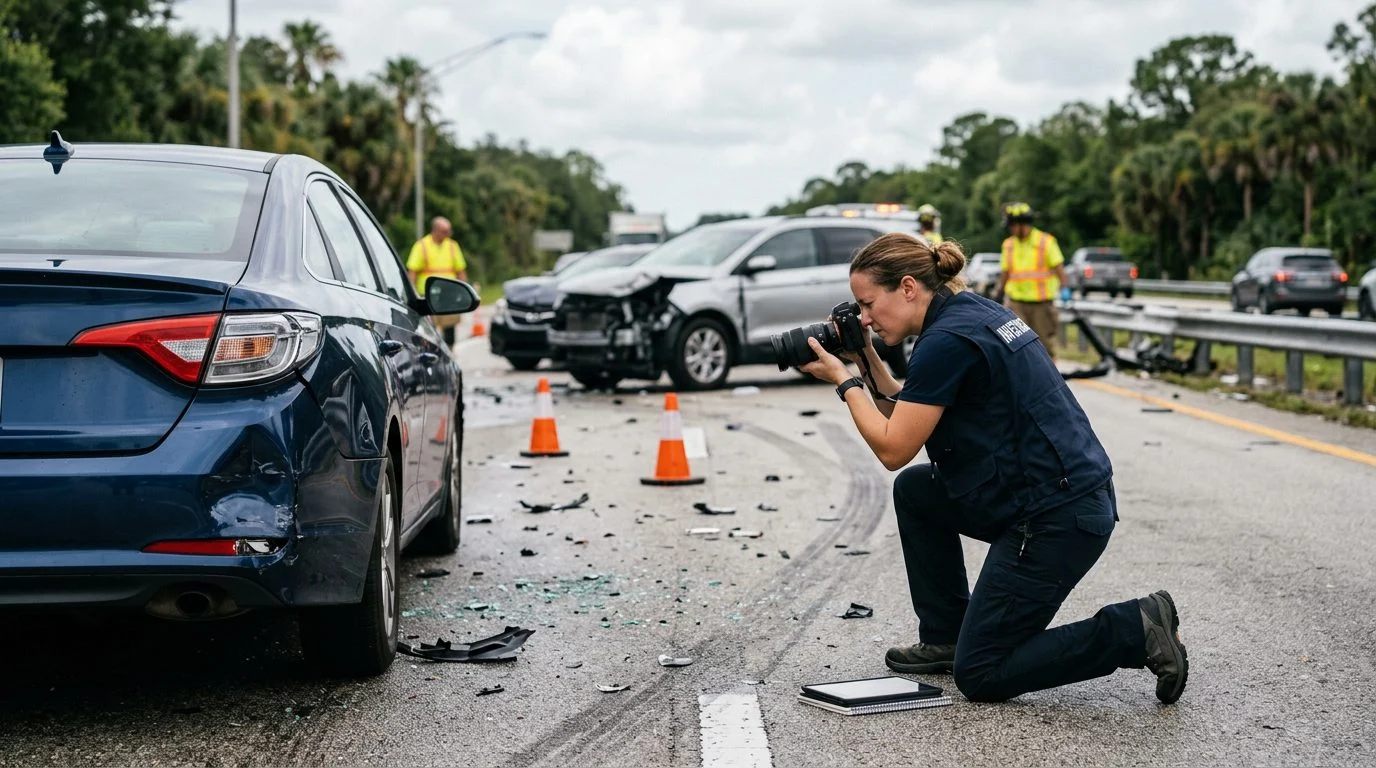
- The crash report, plus photos of vehicles, the road, and traffic signals
- Dashcam or nearby traffic camera footage
- Names and phone numbers of witnesses
- Medical records that link your injuries to the crash
- Repair estimates and vehicle damage records
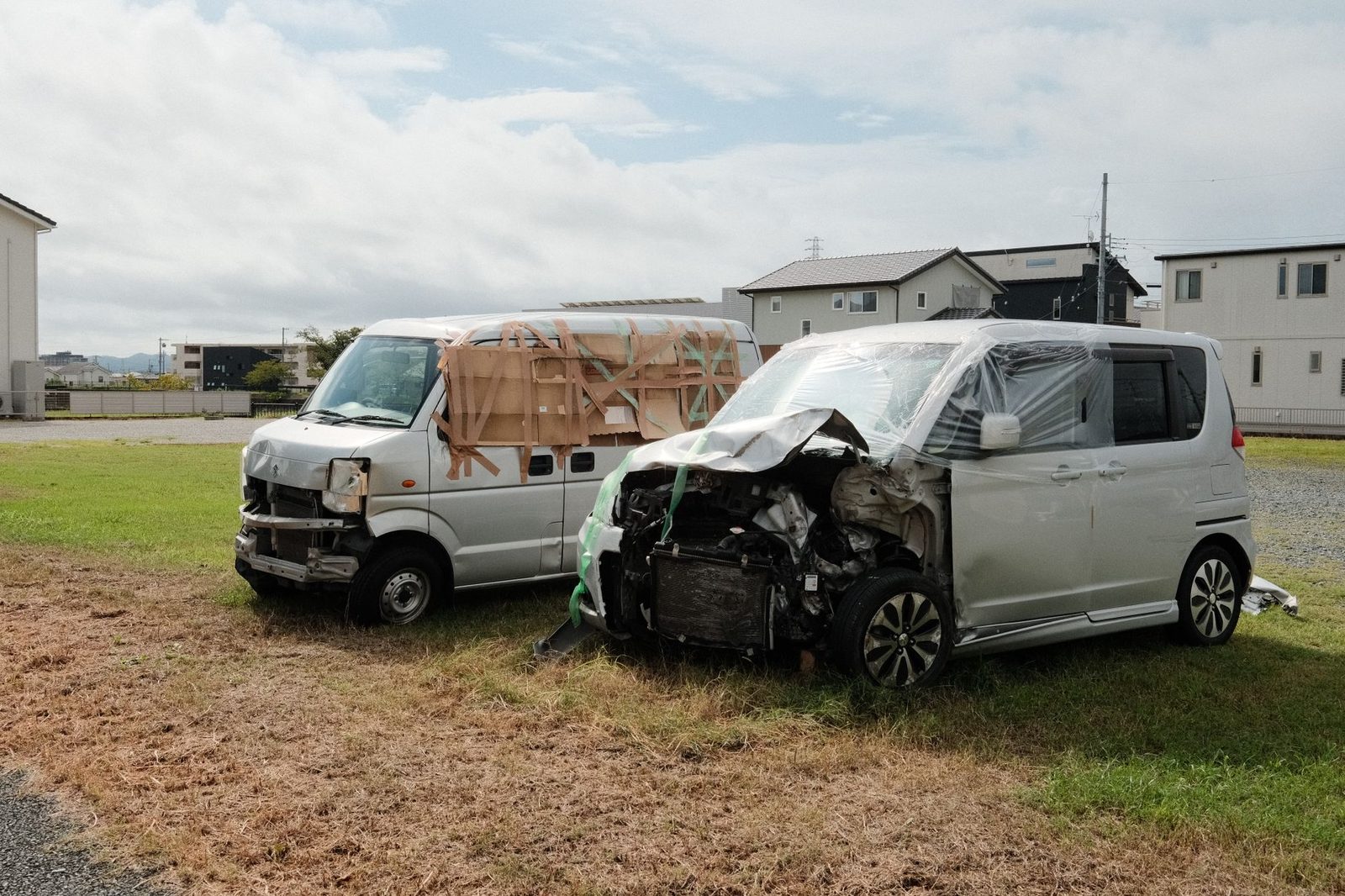
Act early. Video can be written over. Damaged vehicles are often repaired or sold.
Florida uses a comparative fault rule. Under § 768.81(6), in a negligence action to which this section applies, a person found more than 50 percent at fault for their own harm may not recover any damages. Fla. Stat. § 768.81 reads: “This subsection does not apply to an action for damages for personal injury or wrongful death arising out of medical negligence pursuant to chapter 766.” This rule does not apply to medical negligence cases. Because fault is measured by percentage, every detail of the crash matters.
Step 4: The Serious Injury Threshold
Under Fla. Stat. § 627.737(2), in a tort action against the owner, registrant, operator, or occupant of a motor vehicle covered by Florida’s no-fault security requirements, a plaintiff may recover damages for pain, suffering, mental anguish, and inconvenience only if the injury consists in whole or in part of one of these conditions: significant and permanent loss of an important bodily function, permanent injury within a reasonable degree of medical probability (other than scarring or disfigurement), significant and permanent scarring or disfigurement, or death. This limit applies unless a person is entitled to maintain such an action under the provisions of subsection (2).
- Significant and permanent loss of an important bodily function
- Permanent injury within a reasonable degree of medical probability, other than scarring or disfigurement
- Significant and permanent scarring or disfigurement
- Death
Economic damages work differently. Under § 768.81(1)(b), they include past and future lost income. They also include medical and funeral expenses and other losses caused by the injury.
Catastrophic injuries are documented over time. These include spinal cord injury, traumatic brain injury, amputation, and severe burns. Medical records and treating doctors’ opinions carry much of the weight.
Step 5: The Car Accident Claim Deadline Florida Law Sets
For most negligence-based car accident claims, Florida gives two years to file a lawsuit. Fla. Stat. § 95.11 sets a two-year limit for an action based on negligence.
Keep these points in mind:
- The clock generally starts when the claim accrues. That means when its last required element occurs. See § 95.031.
- PIP steps and insurance talks run on their own schedule. They do not replace the lawsuit deadline.
- When a crash causes a death, the person who would have been liable if the injured person had lived can still be held liable for damages. Fla. Stat. § 768.19 allows a claim against the person who would have been liable if the death had not occurred.
- Some claims, such as those against government entities, follow different rules. See Step 6.
Deadlines apply in every case. No page can confirm how much time remains in your case. Contact CHG Personal Injury Lawyers promptly to protect your claim. CHG charges no attorney’s fees and no case costs unless there is a recovery.
Not sure what your next step is?
Talk it through with our team — the first consultation is free, confidential, and carries no obligation.
Step 6: Settlements, Special Timelines, and Lawsuits
If a claim does not settle, it may move into a lawsuit. The National Center for State Courts reports that civil litigation can be slow and costly. It also reports that alternative dispute resolution may resolve disputes more quickly.
Claims against government entities follow different rules. Under § 768.28(5)(a), the state and its agencies are liable for tort claims much like a private person, but liability does not include punitive damages or interest for the period before judgment. However, payment limits apply. The limits are $200,000 for one person’s claim and $300,000 total for one incident, subject to the statute.
Uninsured and underinsured motorist coverage matters when the at-fault driver’s policy is not enough. Under § 627.727(2), uninsured motorist limits shall be not less than the bodily injury liability limits purchased by the named insured, or a lower limit the named insured selects under the insurer’s rating plan. The exceptions are when you chose a lower limit under the company’s rating plan, or when the policy does not provide primary liability insurance that includes coverage for liabilities arising from the maintenance, operation, or use of a specifically insured motor vehicle. Even for such a policy, an insurer issuing it shall make available, as part of the application and at the written request of an insured, limits up to the bodily injury liability limits contained in the policy or $1 million, whichever is less.
If you plan to settle with the at-fault insurer for less than the full claim, you must act first. § 627.727(6)(a) requires that written notice of a proposed settlement be submitted by certified or registered mail to all underinsured motorist insurers that provide coverage. Those insurers then have 30 days after receipt to consider authorization of the settlement or retention of subrogation rights.
A lawsuit usually moves through several stages:
- Filing the complaint
- Discovery, when each side exchanges information
- Depositions, which are sworn testimony outside the courtroom
- Mediation, a settlement meeting led by a neutral person
- Trial, if the case does not resolve
Timelines vary widely. Some matters may be handled with, or referred to, another law firm. No outcome, amount, or timeline can be promised. Each case turns on its own evidence and medical facts.

Frequently Asked Questions
How long do you have to file a car accident claim in Florida?
For most negligence claims, Florida law gives two years to file a lawsuit (Fla. Stat. § 95.11(5)(a)). PIP steps happen sooner and run separately.
What are the exceptions to the statute of limitations in Florida?
Some claims follow different rules. These include claims against government entities. Contact CHG Personal Injury Lawyers promptly so the applicable deadline can be identified.
What should I avoid saying to my insurance company?
Avoid guessing about details. Avoid giving a recorded statement before you speak with our team at CHG Personal Injury Lawyers. Describe only what you know.
Does filing an insurance claim stop the clock?
No. An insurance claim is a separate process from a lawsuit. The lawsuit deadline is set by statute, so track it on its own.
Knowing the car accident claim deadline Florida sets can feel urgent. If a crash has changed your life or a loved one’s, you may have a claim. You do not have to sort out these dates alone. Contact CHG Personal Injury Lawyers for a free, confidential, no-obligation initial consultation.
Responsible lawyer: Igor Hernandez, CHG Personal Injury Lawyers. Some matters may be handled with, or referred to, another law firm.
Five Steps to Take After a Car Accident in Florida
Get Medical Care Right Away
Some injuries, including neck, back and brain injuries, may not show symptoms until later. Follow your doctors' care and keep every appointment and record.
Report the Crash
Call the police and make sure a crash report is filed. Write down the date, time, location and the names and contact details of everyone involved.
Document the Scene
Photograph vehicles, road conditions, traffic signals and visible injuries. Note any witnesses, since their accounts can matter later.
Keep Every Record
Save medical bills, receipts, repair estimates, lost-pay records and any letters from insurers. Organized records make a claim easier to review.
Contact a Lawyer Promptly
Florida deadlines apply to car accident claims, and some steps run on their own timelines. Reaching out early gives your case the best chance to be reviewed while evidence is still fresh.
What Your Free Consultation Includes
A Confidential Conversation
Tell us what happened in your own words. What you share with us is kept confidential.
A Review of Your Situation
We look at the facts of your crash, your injuries and the paperwork you already have, and explain the options we see.
No Obligation
The first consultation is free, and there is no obligation to continue with our firm.
Support for Your Family
We understand that a crash affects everyone at home. We explain each step in plain language so you can make informed choices.
Important: Do Not Wait
Deadlines to bring a Florida car accident claim are strict, and missing one can limit your options. Do not wait for symptoms to fade or for insurers to contact you before getting advice.