
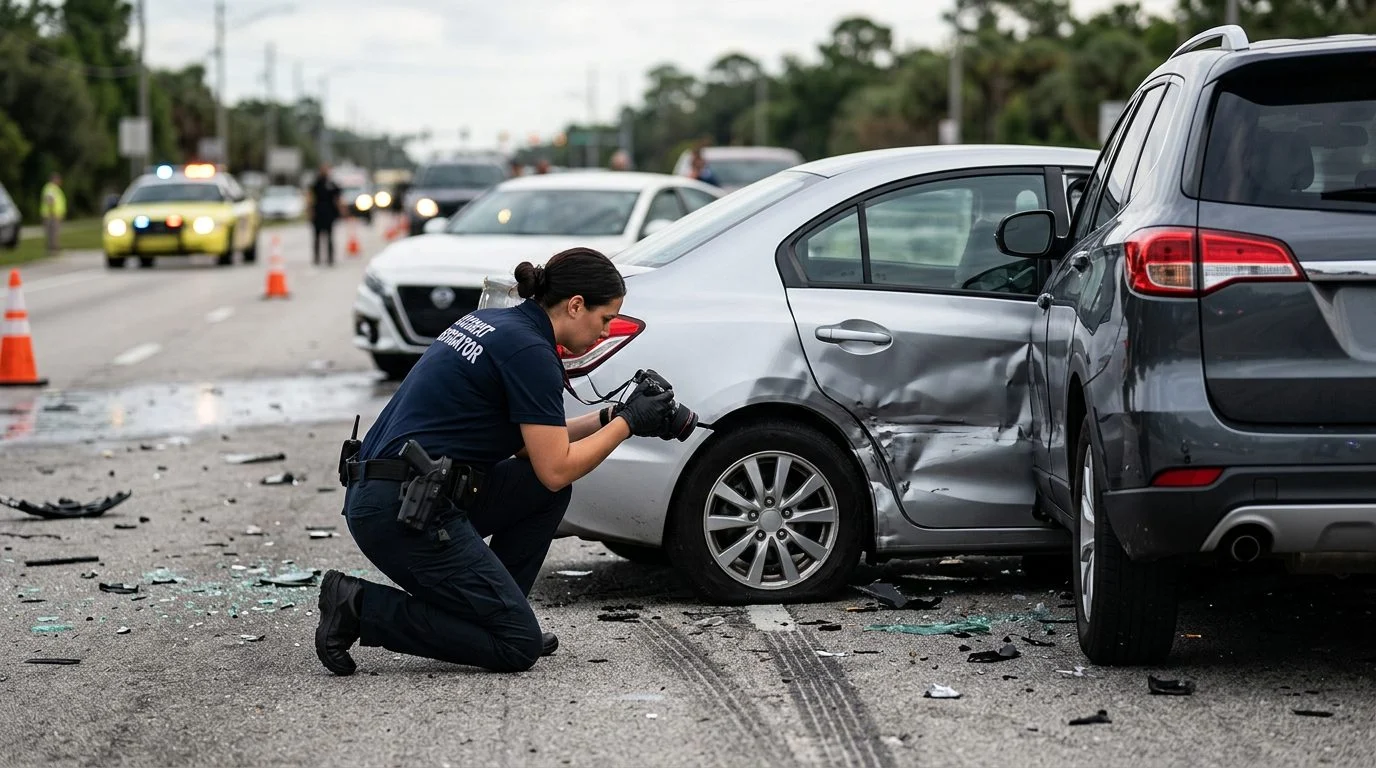
Car Accidents | Serving Florida
Anxiety After a Car Accident in Florida: Your Mental Health Is Part of Your Recovery
A crash can leave lasting fear, nightmares, and worry long after the bruises fade. Learn how anxiety after a car accident can be part of your injury, and how CHG Personal Injury Lawyers can help you understand your options.
By CHG Lawyers · Published October 19, 2026
Can I Claim for Anxiety After a Car Accident in Florida?
Under Fla. Stat. § 627.736, required PIP insurance must provide personal injury protection to the named insured, relatives residing in the same household (unless excluded under s. 627.747), and, subject to conditions set out in the statute, persons operating the insured motor vehicle, passengers, and other persons struck by the motor vehicle and suffering bodily injury while not an occupant of a self-propelled vehicle. Under Fla. Stat. § 627.737, the tort threshold limits pain, suffering, and mental anguish damages in claims against an owner, registrant, operator, or occupant of a vehicle with the required PIP security (or someone legally responsible for that person), and allows them only when your injury fits one of the statute’s listed categories. Anxiety by itself does not automatically qualify. The medical facts and the type of injury decide whether the claim can move forward.
If you were in a crash and now feel constant worry, panic, or trouble sleeping, you are not alone in dealing with this. This page explains how Florida law treats emotional harm after a crash. It also covers the time limits and fault rules that affect your claim.
If you were in a crash and now feel constant worry, panic, or trouble sleeping, you are not alone in dealing with this. Talk it through with our team — the first consultation is free, confidential, and carries no obligation.
What does anxiety after a car accident look like?
Anxiety after a crash can show up as constant worry, racing thoughts, panic attacks, poor sleep, or fear of getting back behind the wheel. Some people develop post-traumatic stress disorder (PTSD) after a serious crash. The Florida Department of Financial Services notes that PTSD can follow a serious car accident.
These symptoms are real, even when there is no broken bone or visible wound. Your doctor can evaluate what you are feeling and recommend care. Follow your doctors’ care plan, and tell them about every symptom, including the emotional ones.
Can you recover damages for anxiety under Florida law?
In claims covered by the tort threshold, Florida allows recovery for mental anguish only if the crash caused an injury that meets the statute’s categories. Anxiety can be part of a claim when it arises from a qualifying injury. Whether your situation qualifies depends on the facts.
Under Fla. Stat. § 627.737, you may sue for pain, suffering, mental anguish, and inconvenience only if the injury consists in whole or in part of one of these:
- A significant and permanent loss of an important bodily function.
- A permanent injury within a reasonable degree of medical probability, other than scarring or disfigurement.
- Significant and permanent scarring or disfigurement.
- Death.
This is sometimes called the “tort threshold.” It applies to bodily injury from the ownership, maintenance, operation, or use of a motor vehicle. Under Fla. Stat. § 627.737(2), in a tort case against the owner, registrant, operator, or occupant of a motor vehicle that has the security required by ss. 627.730-627.7405 (or against someone legally responsible for that person’s acts or omissions), a plaintiff may recover damages for pain, suffering, mental anguish, and inconvenience from a bodily injury, sickness, or disease arising out of that vehicle’s ownership, maintenance, operation, or use only if the injury or disease consists in whole or in part of a significant and permanent loss of an important bodily function, a permanent injury within a reasonable degree of medical probability (other than scarring or disfigurement), significant and permanent scarring or disfigurement, or death. Anxiety that stands alone usually needs a closer look at the medical record.
How does personal injury protection (PIP) fit in?
Florida’s required personal injury protection (PIP) coverage pays certain medical costs and some disability benefits first. Under Fla. Stat. § 627.736, PIP provides $10,000 in medical and disability benefits and $5,000 in death benefits, but medical benefits are limited to $2,500 unless a physician, osteopath, dentist, PA or APRN determines that the person had an emergency medical condition. Under Fla. Stat. § 627.736, PIP medical benefits pay eighty percent of all reasonable expenses for medically necessary medical, surgical, X-ray, dental, and rehabilitative services, if the injured person receives initial services and care within 14 days after the motor vehicle accident.
The timing matters. To use the medical benefits, you must receive initial services and care within 14 days after the crash. Waiting too long can cause problems, even if your symptoms started later. PIP is separate from a lawsuit for pain and suffering, so the two work differently.
What are the time limits for filing?
Florida sets a deadline for filing a lawsuit, and missing it can end your right to sue. For most negligence claims accruing after March 24, 2023, the deadline is two years under the Florida statute of limitations, Fla. Stat. § 95.11; claims that accrued earlier had a four-year period.
Do not wait to get help. Anxiety symptoms can grow over time, and the paperwork and medical records take time to collect. Contact CHG Personal Injury Lawyers early so the deadline does not slip past you.
Not sure what your next step is?
Talk it through with our team — the first consultation is free, confidential, and carries no obligation.
How does fault affect an anxiety claim?
Your own share of fault reduces your damages, and you may recover nothing if you are found more than 50 percent at fault. Under Fla. Stat. § 768.81, contributory fault does not bar recovery on its own, subject to the 50 percent bar described above; otherwise, the amount awarded is reduced by your share of fault.
Keep notes about how the crash happened, where you were, and who said what at the scene.
What if alcohol or drugs were involved?
Florida’s alcohol or drug defense can bar recovery in limited cases. Under Florida law, a plaintiff may not recover any damages for loss or injury to his or her person or property if the trier of fact finds that, at the time the plaintiff was injured, the plaintiff was under the influence of any alcoholic beverage or drug to the extent that normal faculties were impaired, or had a blood or breath alcohol level of 0.08 percent or higher, and that as a result of that influence the plaintiff was more than 50 percent at fault for his or her own harm (Fla. Stat. § 768.36). The defense applies only when that influence caused the plaintiff to be more than 50 percent at fault for their own harm (Fla. Stat. § 768.36). If this applies to your crash, talk with CHG Personal Injury Lawyers about how it affects your claim.
Frequently asked questions
Can I sue for anxiety after a car accident in Florida?
Under Florida’s no-fault law, the injury threshold limits only pain-and-suffering (non-economic) damages, and it applies only to claims against owners, operators or occupants of vehicles with the required PIP security. Anxiety by itself does not automatically qualify.
Does Florida allow compensation for mental anguish after a crash?
Under Fla. Stat. § 627.737, the injury categories apply only to claims against owners, operators or occupants of vehicles with the required PIP security.
How long do I have to file?
Missing it can end your right to sue, so act promptly.
Can PTSD from a car accident be part of a claim?
PTSD can follow a serious car crash, according to the Florida Department of Financial Services. Whether it fits into a claim depends on the medical facts and the threshold rules.
Next steps after a crash
Your health comes first. Follow your doctors’ care, keep every appointment, and save records of your symptoms and treatment. Read our overview of car accident claims in Florida to learn more about how these cases work.
CHG Personal Injury Lawyers is a Florida-based firm that focuses on personal injury cases, including car accidents. Our attorney, Igor Hernandez, is licensed and admitted to The Florida Bar. CHG charges no attorney’s fees and no case costs unless there is a recovery.
If anxiety or panic started after your crash, our team can review what happened and explain your options in plain terms. Our free first consultation is confidential and comes with no obligation to continue.
Have questions about what happened?
Ask our team directly. The first conversation is free, confidential, and there is no obligation to continue.
How CHG Personal Injury Lawyers Can Help
A Free, Confidential Consultation
Your first consultation is free, confidential, and comes with no obligation to continue. Bring your questions and we will listen.
Organizing Your Records
We help gather accident reports, medical records, and treatment notes that show how the crash has affected your daily life and mental health.
Focus on Your Recovery
Our team keeps the focus on your care. We coordinate with your doctors so you can concentrate on getting better.
No Fees Unless There Is a Recovery
CHG charges no attorney's fees and no case costs unless there is a recovery. Ask us to explain how this works in your case.
Every Case Is Different
Anxiety, fear, and sleep problems after a crash are real and deserve attention. Tell your doctor about every symptom, follow the care plan you are given, and keep notes on how the anxiety affects your work, family, and driving. Those details help any attorney understand what you have been through.
Symptoms to Mention to Your Doctor
Constant Worry or Fear
Feeling on edge, anxious, or afraid even when you are safe, including fear of riding in or driving a car.
Flashbacks and Nightmares
Replaying the crash in your mind or having frightening dreams about the accident.
Sleep and Concentration Problems
Trouble falling or staying asleep, or difficulty focusing at work, school, or at home.
Physical Symptoms
A racing heartbeat, tightness in the chest, headaches, or stomach problems that appear with stress.