
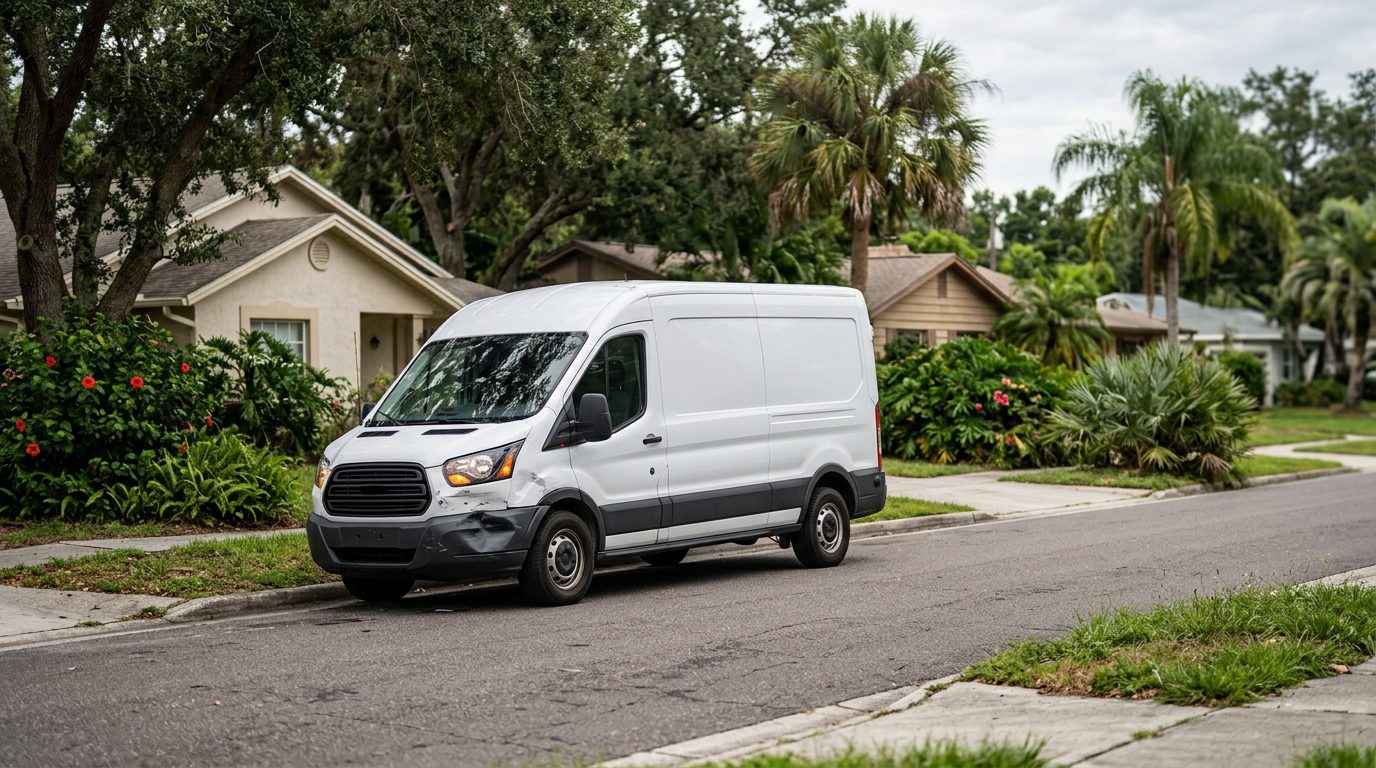
Amazon Truck Accidents | Serving Florida
Hurt in a Crash With an Amazon Delivery Truck? Start With Who Was Involved.
Delivery vans and trucks are often driven for companies that contract with Amazon, so the path to answers can be less direct than it looks from the roadside.
By CHG Lawyers · Published November 22, 2026
Who Handles Amazon Auto Claims? A Florida Guide
If a delivery van hit you or someone you love, you probably want one answer fast. Who handles the claim? Often, it is not Amazon itself. Most of these claims go to an insurance company, not a customer service line.
Three things decide the right insurer:
- Who employed the driver
- Who owns the vehicle
- What the driver was doing at the time
If you are trying to figure out who pays after a crash, we can help. Talk it through with our team — the first consultation is free, confidential, and carries no obligation.
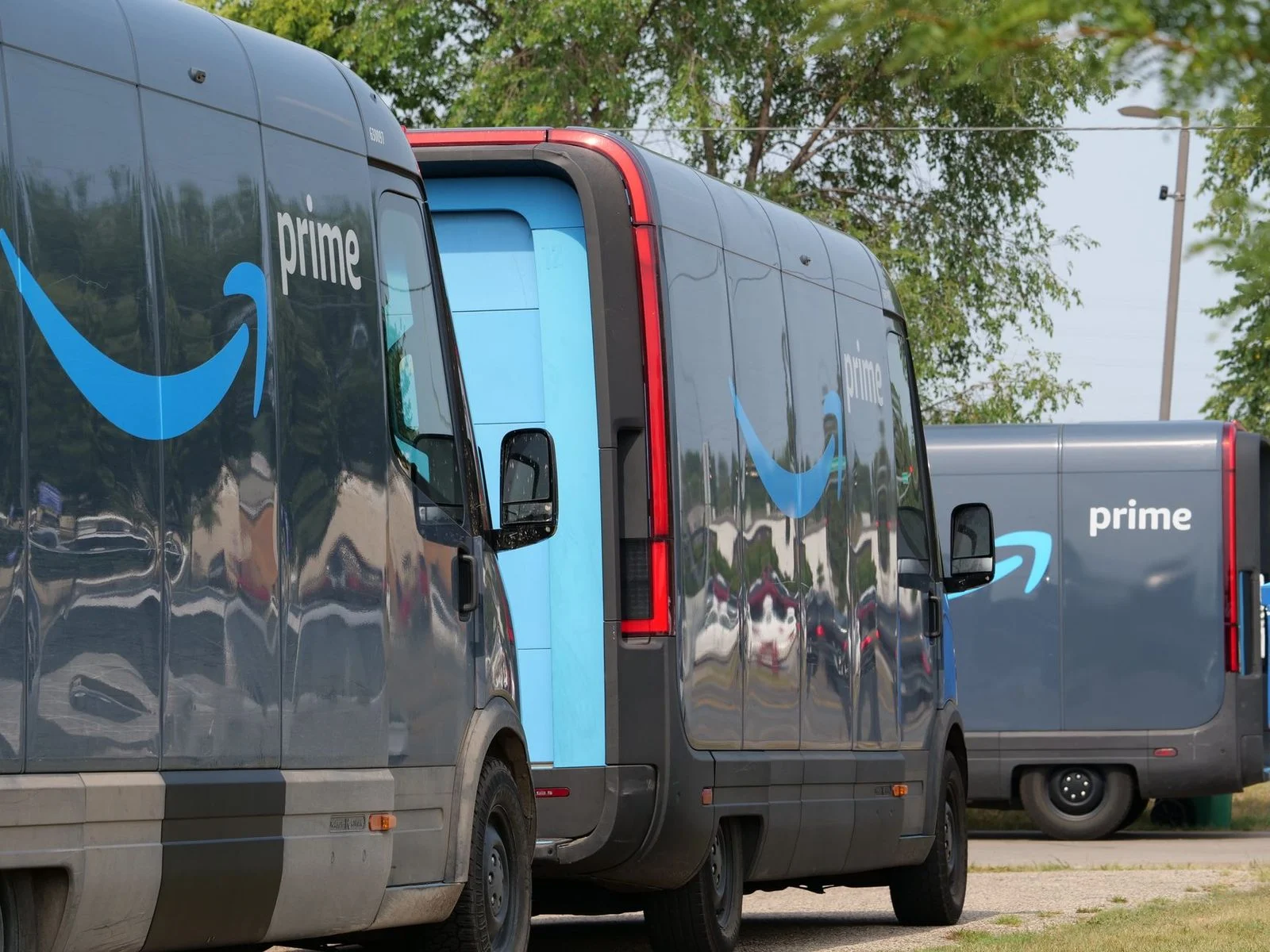
Who usually handles Amazon auto claims for a delivery vehicle
The insurance of the company that runs the delivery usually handles an injury claim. This includes claims involving an Amazon delivery van.
Many deliveries involve several parties. Amazon may contract with a delivery service partner (DSP). A DSP is a separate company. It hires and manages its own drivers. Some drivers work through Amazon Flex, a program for independent drivers.
The vehicle may belong to the driver, the delivery company, or a leasing company. Each of these parties may carry its own insurance. After a crash, three kinds of coverage may apply:
- The driver’s personal auto policy may apply.
- A commercial auto liability policy held by the delivery company may cover injuries its driver causes.
- The vehicle owner’s policy may also be involved.
An injury claim can touch more than one of these policies. For the bigger picture, read our guide to Amazon truck accident claims.
Why the answer is not always Amazon itself
Amazon is not always the party that pays. The driver may work for a contracted company instead.
Responsibility usually depends on three questions:
- Who employed or contracted the driver?
- Who owned or leased the vehicle?
- Was the driver making a delivery at the time?
An Amazon account or customer service line is not the same as the insurer that pays bodily injury claims. Personal injury protection benefits are paid for specified people, such as an owner of a motor vehicle who is injured in Florida while occupying it, not for every person who was hurt. Reporting a crash through a shopping account does not, by itself, tell you who will pay.
Do not assume fault from the logo on the van. A logo shows a brand. It does not show the legal relationship between the driver and the company. Responsibility depends on the facts of each crash. That is why the details you collect early matter.
Three paths after an Amazon delivery vehicle crash
Injured people often assume there is only one route: a lawsuit. In practice, there are three separate paths. They can run at the same time.
Path 1: An insurance claim, without a lawsuit. Personal injury protection (PIP) is a type of auto insurance coverage. PIP benefits are governed by Fla. Stat. § 627.736. Under that statute, PIP benefits are overdue if they are not paid within 30 days after the insurer receives written notice of the fact of a covered loss and of the amount of same.
If an insurer pays only part of a claim, or rejects it, the insurer must do several things, including giving an itemized explanation of each reduced or declined item, giving the name and address of the person the claimant should respond to, and giving a claim number to use in future correspondence. It must give an itemized explanation of each reduced or declined item. It must also give you the name and address of the person to whom you should respond and a claim number for future letters. You can file this kind of claim without filing a lawsuit.
Path 2: A lawsuit against the driver and owner. A lawsuit is brought against the people and businesses responsible for the crash. Florida also places duties on vehicle owners.
Under Fla. Stat. § 627.733, an owner who fails to have the required security in effect at the time of an accident has no immunity from tort liability. Tort liability means legal responsibility for harm one person causes another. That owner is personally liable for PIP benefits.
A PIP insurer also has no lien on a tort recovery for PIP benefits paid. A lien is a legal claim on money you recover. As Fla. Stat. § 627.736 explains in its subsection on recovery of special damages, this rule applies to those benefits. Special damages are your out-of-pocket losses, such as medical bills and lost wages.
Path 3: A direct claim against the insurer. Florida law does not let you sue the liability insurer right away. Under Fla. Stat. § 627.4136, a person who is not an insured must first get a settlement or verdict against a person who is an insured. This must be for a covered cause of action. Only then can the claim against the insurer begin or continue.
Insurers may be added as a party, by motion of any party, once a judgment is entered or a settlement is reached during litigation, for the purposes of entering final judgment or enforcing the settlement, unless the insurer denied coverage under the provisions of s. 627.426(2) or defended under a reservation of rights pursuant to s. 627.426(2). A motion is a formal written request to the court. A judgment is the court’s final decision.
If the at-fault driver’s coverage is not enough, underinsured motorist coverage may matter. This coverage applies when the at-fault driver has too little insurance. Under Fla. Stat. § 627.727, written notice must go by certified or registered mail if a proposed settlement would not fully satisfy the claim. The notice goes to underinsured motorist insurers. Each insurer has 30 days after receipt to respond.
Commercial vehicles and business-owned trucks can face different coverage rules
A personal car and a company delivery vehicle do not always follow the same insurance minimums. Minimums are the lowest amounts the law requires.
Under Fla. Stat. § 324.021, the standard proof of financial responsibility is $10,000 for one person’s bodily injury or death in one crash. It is $20,000 for two or more persons in any one crash, subject to the $10,000 limit for one person. It also requires $10,000 for property damage. Proof of financial responsibility shows that a driver can respond in damages for liability on account of crashes arising out of the use of a motor vehicle.
For commercial motor vehicles, the statute points to different amounts set in separate sections. So a commercial vehicle claim can involve different policies and limits than a claim against an ordinary driver.
Florida’s property damage requirement for motor vehicle owners is also set out in Fla. Stat. § 324.022. Whether a delivery vehicle is covered, and to what limit, depends on the policies actually in force that day. A policy’s limits may be far lower or higher than the statutory minimums.
A 2026 federal decision about freight brokers
In May 2026, the U.S. Supreme Court decided Montgomery v. Caribe Transport II, LLC, No. 24-1238. The Court held that a state-law claim can proceed. The claim says a broker carelessly hired an unsafe motor carrier. A freight broker arranges shipments. A motor carrier moves them. The Court held that this claim falls within the safety exception of the federal FAAAA and is not preempted. Preempted means a federal law overrides a state claim.
This is a development in claims against freight brokers. It does not, by itself, establish who is responsible in any particular delivery arrangement. That includes arrangements involving Amazon or its contractors. Each case turns on its own facts. You can read the decision at the Supreme Court opinion link.
Not sure what your next step is?
Talk it through with our team — the first consultation is free, confidential, and carries no obligation.
Florida deadlines and rules that affect your claim
Deadlines apply to these claims. Florida law sets them. Waiting can make evidence harder to gather.
Florida also reduces damages based on the injured person’s own share of fault. Under Fla. Stat. § 768.81, in a negligence action, contributory fault chargeable to the claimant reduces the amount awarded, but a person found more than 50 percent at fault for their own harm may not recover any damages, except in personal injury or wrongful death cases arising out of medical negligence under chapter 766. Contributory fault is the part of the blame that falls on you. If you are 50 percent or less at fault, the reduction matches your share of fault, and it does not bar your recovery.
Video can be overwritten. Witnesses can move. Contact a lawyer promptly. Do not rely on a general estimate of time.
If you are on Medicare
If you have Medicare, the insurance claim can affect how your medical bills are paid. Medicare.gov explains the following. Delays in paying a PIP claim can affect when and how doctors and other providers are paid, and that can change how Medicare is involved. Medicare may then make a conditional payment. Medicare may later recover payments that the primary payer should have made, as described on Medicare.gov.
The Centers for Medicare & Medicaid Services (CMS) says the proper term for its claim is a Medicare or MSP “recovery claim.” It says the term is not a “lien.” CMS also says no formal recovery demand is issued until there is a settlement, judgment, award, or other payment. See the CMS attorney services page.
Follow your doctors’ care. Tell your lawyer about your Medicare coverage early.
How to start a claim after an Amazon delivery vehicle crash
Start with your health. Call 911 if anyone is hurt. Follow your doctors’ care, even if your injuries seem minor at first. Some symptoms can show up days later.
Get a police report. Ask for the crash report from the investigating agency. It can help identify the parties and vehicles involved.
Document the scene. If you can, take photos of:
- Both vehicles
- The road
- Any delivery markings
Collect witness names and phone numbers. Write down the driver’s name, the company name on the vehicle, and any route or package details you noticed.
Keep your records. Save copies of:
- Medical bills
- Missed-work records
- Every letter from an insurer
Florida’s insurer disclosure rule requires each insurer to provide a sworn statement of its policy information. A sworn statement is one signed under oath. The insurer must provide it within 30 days of a claimant’s written request. The statement includes the insurer’s name, each insured, the liability limits, and a copy of the policy.
Keep every insurer letter. The 30-day clock matters.
Insurers may ask you for a recorded statement. You can speak with a lawyer before you give one.
How CHG Personal Injury Lawyers can help after an Amazon vehicle crash
Many people reading this are looking out for a loved one. You may be asking about a parent or spouse who is still in the hospital or recovering at home. You may not be ready to hire anyone yet. That is normal.
CHG Personal Injury Lawyers is a Florida-based personal injury firm. It serves people throughout Florida. Igor Hernandez is the responsible lawyer for this page.
Our lawyers can work to identify the insurers involved. We can handle communication with them. We can also explain the options that may apply to your situation. You can learn more about our Amazon truck accident work in Florida.
CHG charges no attorney’s fees and no case costs unless there is a recovery. The initial consultation is free and confidential, with no obligation to continue.
If you are trying to figure out who pays after a crash, we can help. Contact us for a free, confidential consultation.
Frequently Asked Questions
Who is responsible when an Amazon delivery truck causes a crash?
Many Amazon delivery vehicles are driven by workers employed by independent delivery companies. Those companies contract with Amazon. Responsibility can fall on the driver, the delivery company, and sometimes Amazon. It depends on who controlled the work and what insurance applies.
Which insurance company pays an Amazon truck accident claim?
Claims often involve the commercial auto insurance carried by the delivery company that ran the vehicle. The at-fault driver’s coverage may also apply. Which policies apply depends on the facts of each crash. So an injured person should not assume who will pay.
Can I file an insurance claim without filing a lawsuit?
Yes. A PIP claim is made to the insurer. It does not require a lawsuit. A direct claim against a liability insurer by a person who is not an insured under the policy is a condition precedent to that cause of action: the person must first obtain a settlement or verdict against the insured for a cause of action covered by the policy. See Fla. Stat. § 627.4136. See [Fla.
Does CHG Personal Injury Lawyers handle Amazon truck accident claims?
Yes. CHG Personal Injury Lawyers handles Amazon truck accident claims for people injured in Florida. The firm charges no attorney’s fees and no case costs unless there is a recovery. The first consultation is free and confidential, with no obligation to continue.
What should I do after being hurt in a crash with an Amazon delivery vehicle?
Get medical care right away. Follow your doctors’ advice. Make sure the crash is reported to the police. Florida deadlines for these claims are set by law and can be short. Contact CHG Personal Injury Lawyers promptly for a free, confidential consultation.
Why Florida Families Bring These Questions to CHG
Florida-based representation
CHG Personal Injury Lawyers represents people injured in accidents throughout Florida, from Miami and Fort Lauderdale to Orlando, Tampa and Jacksonville.
Licensed attorneys
Our attorneys are admitted to practice law in Florida and are members of The Florida Bar.
Clear answers, plainly stated
We explain who may be involved, what insurance may apply, and what the next steps look like, in language you can follow.
Built around the injured person
Whether the injury is a broken arm or a life-changing spinal cord injury, we listen first and then work through the details with you.
Before you speak with an insurer
Insurance representatives may contact you soon after a crash involving a commercial vehicle. Consider speaking with a lawyer before giving a recorded statement or signing any release. Your doctors should guide your medical care.
Questions Our Team Can Help You Sort Out
Who may be responsible
The driver, the company that employed or contracted the driver, and other parties can each play a role. Looking at who controlled the work is often part of the review.
Which insurance may apply
Commercial vehicles can carry several layers of coverage. Our team can help identify the policies that may be involved in your case.
Evidence that often matters
Photos, police reports, dash camera footage, delivery records and witness details can all help tell the story of what happened.
What happens after you call
Your first consultation is free and confidential, with no obligation to continue. We will listen, answer your questions and explain your options.